火箭结构件

Search documents
超捷股份(301005) - 2026年02月26日投资者关系活动记录表
2026-02-26 15:00
Group 1: Automotive Business Overview - The company focuses on the research, production, and sales of high-strength precision fasteners and special connectors, primarily used in automotive engine turbocharging systems, transmission parking control systems, exhaust systems, and key components in both interior and exterior automotive systems [2] - The automotive business capacity layout has been completed across multiple bases, including Shanghai, Wuxi, and Zhenjiang, which can meet the production demand for the next three to five years [2][3] - The automotive business is expected to maintain stable growth due to the gradual ramp-up of key projects with domestic major clients and overseas export business [3] Group 2: Competitive Advantages - Key advantages include: 1) High-quality customer resources; 2) Rich technical accumulation providing design solutions; 3) Strong quality control capabilities; 4) Stable and sufficient production capacity; 5) Enhanced customer service; 6) Combination of metal and plastic components to meet automotive lightweight requirements [3] - The company has established good relationships with international suppliers such as Magna, Valeo, and Bosch, facilitating overseas market expansion [3] Group 3: Market Insights - The estimated value of fasteners for a mid-range passenger vehicle is around 2,000 RMB, while the value for small and medium-sized fasteners is approximately 800 RMB [3] - The commercial aerospace sector is expanding, focusing on the manufacturing of commercial rocket structural components, with a significant market demand [4] - The structural components of commercial rockets account for over 25% of the total cost of mainstream-sized rockets [4] Group 4: Technological Development - The company is currently unable to use 3D printing for large or ultra-large thin-walled structural components due to strict requirements on size precision and mechanical uniformity [4] - Continuous monitoring of advanced manufacturing technologies, including 3D printing, is planned to assess their potential impact on product structure and manufacturing systems [4]
超捷股份(301005.SZ):将持续跟踪包括3D打印在内的先进制造技术发展
Ge Long Hui· 2026-02-10 15:29
Core Viewpoint - The company has indicated that its rocket structural components do not currently utilize 3D printing technology due to stringent requirements for size precision, mechanical uniformity, and cost control [1] Group 1: 3D Printing Technology - The company's rocket structural components are classified as large or super-large thin-walled structures, which have strict requirements for overall size precision and mechanical uniformity [1] - Current metal 3D printing equipment is limited in terms of forming size and the maturity of post-processing techniques, making it unfeasible for large structural components to be manufactured economically and at scale through 3D printing [1] Group 2: Technological Development - The company will continue to monitor the development of advanced manufacturing technologies, including 3D printing, and actively assess the potential impact of new technologies on its product structure and manufacturing system [1] - The company is committed to steadily advancing technological innovation and capacity building [1]
商业航天量缩分化非终结,百万卫星蓝图夯实长期逻辑,三大关键信号引契机,优质企业详细解读
Xin Lang Cai Jing· 2026-02-04 12:20
Group 1 - AVIC Chengfei is a core subsidiary of China Aviation Industry Group, specializing in the research and development of military fighter jets and trainer aircraft, holding a leading position in the aviation equipment manufacturing sector [1] - The company has successfully provided key structural components for various domestic commercial rocket enterprises and has participated in multiple commercial space launch missions, gaining high industry recognition for its technical reliability and product stability [1] - With the accelerated development of commercial aerospace, the company is expected to benefit from the increasing demand for aerospace structural components and special materials, expanding its market share significantly [1] Group 2 - AVIC Xifei is a major manufacturer of military transport aircraft, bombers, and early warning aircraft, possessing top-tier technical strength in the aviation equipment manufacturing field [2] - The company has actively expanded its commercial aerospace business by providing core products such as structural components and lightweight parts for commercial rockets, meeting the industry's demand for high reliability [2] - As the frequency of commercial space launches continues to rise, the company aims to deepen its innovation in aerospace technology and solidify its position as a core supplier in the commercial aerospace structural component sector [2] Group 3 - Xiamen Xiangyu is a leading bulk commodity supply chain service provider, leveraging its unique location in the Xiamen Free Trade Zone to build a global logistics, trade, and financial service network [3] - The company has successfully provided fuel transportation and supply chain support services for multiple domestic commercial rocket launch missions, gaining wide recognition from industry clients [3] - With the acceleration of global commercial aerospace layout, the demand for cross-border transportation and supply chain services for aerospace materials is expected to grow significantly [3] Group 4 - Hisense Visual is a domestic leader in display technology, with a comprehensive industrial layout from panel manufacturing to terminal products, holding international leadership in high-resolution display and laser display technologies [4] - The company has provided customized display components for domestic commercial satellite projects, meeting stringent aerospace-grade requirements and gaining high recognition from aerospace enterprises [4] - As the construction of low-orbit satellite constellations accelerates, the demand for spaceborne optical equipment is expected to grow significantly, positioning the company to benefit from this trend [4] Group 5 - Far East Holdings is a leading enterprise in the cable and superconducting materials sector, with strong technical capabilities and a comprehensive industrial chain [5] - The company has successfully provided core cable products for multiple domestic commercial rocket launch missions, gaining wide recognition for its technical performance and product quality [5] - As commercial aerospace equipment evolves towards intelligence, lightweight, and high power, the demand for high-performance cables and superconducting materials is expected to continue to grow [5] Group 6 - AVIC Heavy Machinery is a core supplier in the aerospace forging sector, possessing advanced forging technology and a complete processing system [6] - The company has provided key forged products for various commercial rocket enterprises, participating in multiple key commercial aerospace launch projects [6] - With the increasing frequency of commercial rocket launches, the demand for high-end alloy forgings is expected to continue to rise, allowing the company to expand its production capacity in this area [6] Group 7 - Taiyuan Iron and Steel is a leading enterprise in the stainless steel industry, with global-leading production technology and a large capacity scale [7] - The company has provided core stainless steel materials for multiple domestic commercial aerospace projects, meeting aerospace-grade standards and gaining recognition from aerospace enterprises [7] - As the demand for high-end stainless steel and special alloy materials continues to grow, the company plans to deepen its research and development in aerospace-specific materials [7] Group 8 - Jiugang Hongxing is a leading enterprise in the steel industry in Northwest China, with a complete steel production industrial chain [8] - The company has provided customized steel products for several commercial aerospace projects, gaining industry recognition for its technical performance [8] - With the scale development of commercial aerospace equipment, the demand for high-strength steel is expected to continue to grow, prompting the company to optimize its production processes [8] Group 9 - Wind Power Equipment and Aerospace Supporting Equipment is a key enterprise in the field, with strong technical capabilities and a comprehensive production system [9] - The company has provided structural components for commercial rockets and precision processing parts for aerospace ground equipment, gaining industry recognition [9] - As the frequency of commercial rocket launches increases, the demand for precision structural components is expected to continue to grow [9] Group 10 - Yiyang Technology is a leading enterprise in the field of high-end castings and forgings, with a complete production system [10] - The company has provided engine castings for domestic commercial rocket enterprises, participating in the supply of satellite thrusters [10] - With the development of commercial rockets towards high thrust and reusability, the demand for high-temperature alloy castings is expected to continue to grow [10]


超捷股份:火箭结构件制造供给紧张,市场仍将维持供不应求格局
2 1 Shi Ji Jing Ji Bao Dao· 2026-02-04 10:38
Core Viewpoint - The manufacturing of rocket structural components is currently in a state of supply tightness, which is a bottleneck restricting the rapid development of the commercial aerospace industry [1] Industry Summary - The commercial aerospace sector is entering an accelerated development phase, and if the overall industry progresses smoothly, the capacity gap is expected to further widen, maintaining a supply-demand imbalance in the market [1]
广联航空20260201
2026-02-02 02:22
Summary of Guanglian Aviation Conference Call Company Overview - Guanglian Aviation has transitioned from a single-client model to a multi-sector client base, demonstrating robust revenue growth even amidst industry fluctuations in 2022, indicating strong risk resilience [2][3] Industry and Market Position - The company is strategically positioned in the commercial aerospace sector, focusing on rockets and satellites. It has signed agreements with China Unicom and Wenchang Super Satellite Factory, which are expected to yield significant orders [2][4] - The demand for rockets is projected to grow by 8 to 10 times over the next five years, benefiting from the acquisition of Tianjin Yufeng Technology, a leading supplier of rocket structural components [2][6] Key Developments - The acquisition of Yufeng Technology will enhance Guanglian's capabilities in auxiliary structural components, improving overall competitiveness and market reach, which is anticipated to drive sustained revenue growth [2][8] - Guanglian has become a key supplier for several large aircraft manufacturing projects and is actively involved in the domestic large aircraft project, expected to see significant performance improvements by 2026 due to capacity expansion during the 14th Five-Year Plan [2][9] Financial Projections - The commercial aviation sector is expected to experience a technological and industrial turning point in 2026, with Guanglian's investments in capacity at Shanghai Lingang Industrial Park aimed at supporting commercial aircraft production [5][10] - The large aircraft project is a national priority, with the 919 model's mass production and export anticipated to enhance China's position in the international market, potentially creating a competitive landscape with Boeing and Airbus [11] Strategic Advantages - Yufeng Technology's focus on non-engine rocket components and its strong client relationships, particularly with the Aerospace Science and Technology Corporation, position it well for future growth as demand increases [6][7] - The merger is expected to create synergies, combining Guanglian's complex processing capabilities with Yufeng's metal processing strengths, thereby enhancing competitive advantages and order acquisition [8] Long-term Growth Potential - Guanglian is well-positioned for long-term growth in both commercial aerospace and aviation sectors, with ongoing expansion efforts and new client acquisitions contributing to revenue increases [13] - The company's current valuation is considered undervalued, with significant potential for order acquisition due to its core supply capabilities [13]

超捷股份:火箭结构件尚无法通过3D打印实现规模化、经济化制造
Zheng Quan Shi Bao Wang· 2026-01-08 14:01
Core Viewpoint - The company acknowledges the significant application of 3D printing technology in the commercial aerospace sector, but emphasizes that its application scenarios have clear technical boundaries [1] Group 1: 3D Printing in Aerospace - 3D printing is currently utilized mainly for engine components in rockets [1] - The company's rocket structural components are classified as large or oversized thin-walled structures, which have stringent requirements for overall dimensional accuracy, mechanical uniformity, and cost control [1] - Due to limitations in the current metal 3D printing equipment's forming size and the maturity of post-processing techniques, large structural components cannot yet be manufactured at scale or economically through 3D printing [1]
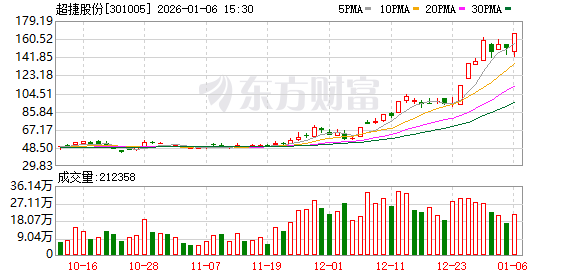
超捷股份:公司在过去一年已实现对头部民营火箭公司的稳定、小批量产品交付
Zheng Quan Ri Bao· 2026-01-06 13:40
Core Viewpoint - The manufacturing of rocket structural components is a critical link in the commercial aerospace industry chain, currently facing supply constraints that hinder rapid industry development [2] Industry Summary - The commercial aerospace sector is entering a phase of accelerated development, with potential for an expanding capacity gap if overall industry progress is smooth, leading to a persistent supply-demand imbalance [2] - The number of domestic suppliers capable of large-scale delivery of structural components is limited, primarily concentrated in regions such as Beijing-Tianjin-Hebei, Chengdu-Chongqing, and Shandong [2] - The field has high technical barriers, with core teams often composed of professionals with "national team" backgrounds, creating significant talent and engineering experience barriers [2] Company Summary - The company has achieved stable, small-batch product deliveries to leading private rocket companies over the past year, accumulating solid R&D and manufacturing experience [2] - The company possesses two notable advantages: 1. Talent advantage, with a dedicated commercial aerospace business team that includes experienced core technical, manufacturing, and business personnel [2] 2. Resource advantage, leveraging the financial strength of a publicly listed company to purchase equipment and build production lines based on market conditions [2] - Given the high industry prosperity and capacity constraints, the company is expected to continue consolidating its market position through its early accumulation and comprehensive capabilities [2]

广联航空:公司已与部分商业航天企业建立合作关系
Zheng Quan Ri Bao Zhi Sheng· 2026-01-05 12:39
Group 1 - The company, Guanglian Aviation, is strategically positioning itself in the commercial aerospace sector by leveraging its core aerospace technologies for the development of rocket structural components and related products [1] - The company has established partnerships with several commercial aerospace enterprises, and the research, production, and marketing of related products are progressing as planned [1] - Currently, the revenue from the commercial aerospace business constitutes a small portion of the company's overall revenue, and it is not expected to significantly impact the company's operating performance in the short term [1] Group 2 - The commercial aerospace industry is in a rapid development phase, with factors such as industry policies, market demand, and technological iterations potentially having a significant impact on business development [1]
广联航空(300900.SZ):已与部分商业航天企业建立合作关系
Ge Long Hui· 2026-01-05 07:05
Core Viewpoint - The company is strategically expanding into the commercial aerospace sector, focusing on the development and support of rocket structural components, leveraging its core aerospace technologies [1] Group 1: Business Development - The company has established partnerships with several commercial aerospace enterprises to advance the research, production, and marketing of related products [1] - The development of this business segment is progressing as planned, despite being in a rapidly evolving industry [1] Group 2: Market Context - The commercial aerospace industry is still in a phase of rapid growth, with factors such as industry policies, market demand, and technological iterations potentially impacting business development significantly [1] - Currently, the revenue from this business segment constitutes a small proportion of the company's overall operating income, indicating that it will not have a major impact on the company's financial performance in the short term [1]
商业航天燃起来了 资本竞逐万亿新赛道
经济观察报· 2025-12-17 08:50
Core Viewpoint - The commercial space industry, encompassing rocket launches, satellite manufacturing and operation, and space tourism, is experiencing rapid growth and transformation, with a potential market size reaching trillions of yuan, marking a significant shift from policy discussions to a vibrant economic sector by the end of 2025 [1][3]. Market Dynamics - Investor sentiment has been significantly boosted by commercial space concept stocks, with notable price surges in companies like Tongguang Cable and Zhonggang Luoni, reflecting a strong market interest [2]. - The establishment of "Space Technology City" in Beijing, in collaboration with major state-owned enterprises, indicates a strategic push towards developing a robust commercial space ecosystem [2][5]. Government Initiatives - Local governments are actively promoting the commercial space sector, with Guangdong aiming for a 300 billion yuan industry scale by 2026 and offering financial incentives for companies setting international standards [6]. - The Beijing Economic and Technological Development Zone has launched a 10-point plan to support the commercial space industry, including a 10 billion yuan investment fund [5]. Industry Developments - The number of new commercial space enterprises has surged, with over 15 companies established in August 2025 alone, indicating a growing interest in the sector [7]. - Major companies like Star Glory and Blue Arrow are collaborating with local state-owned enterprises to explore ecosystem development [5]. Capital Involvement - The commercial space sector has seen a rise in financing activities, with significant funding rounds for leading companies like Star Glory and Tianbing Technology [8]. - The inclusion of commercial space in the Sci-Tech Innovation Board's listing criteria has opened new avenues for funding, allowing unprofitable companies with core technologies to access capital markets [8]. Competitive Landscape - Companies are adopting diverse strategies, with some focusing on high-capital, high-risk rocket launches, while others are carving niches in specialized segments of the industry [9][10]. - The trend of "R&D in Beijing, production in the Yangtze River Delta" is becoming common among commercial space firms, optimizing their operational efficiency [12]. Market Evaluation - The capital market is increasingly scrutinizing commercial space companies, emphasizing the need for tangible performance and profitability [14]. - Companies like Srey New Materials and Superfast Co. are experiencing growth due to increased orders from the commercial space sector, reflecting a positive market response [15][16]. Role of State-Owned Enterprises - State-owned enterprises are transitioning to compete in the commercial market, focusing on market competitiveness and restructuring to align with commercial objectives [19]. - Collaborations between state-owned and private enterprises are becoming more prevalent, with state-owned firms leveraging their technological advantages while private firms offer efficiency and cost control [20][21]. Future Outlook - The commercial space market is projected to reach $680.25 billion globally, with China's market potentially exceeding 2.5 trillion yuan, highlighting the immense growth potential [21]. - The integration of state-owned and private enterprises is expected to foster innovation and efficiency, positioning them for success in the evolving commercial space landscape [22].