
煮面机器人

Search documents
(新春走基层)杭州首家机器人餐厅里的“人情味”
Zhong Guo Xin Wen Wang· 2026-02-08 13:22
Core Viewpoint - The first robot restaurant in Hangzhou, "Twenty-Four Solar Terms Robot Restaurant," combines technology with a human touch, aiming to serve the elderly community effectively [1][4]. Group 1: Restaurant Operations - The restaurant features various robots, including noodle, stir-fry, and coffee robots, which operate in view of customers to enhance transparency and trust [1][3]. - The stir-fry robot can cook over a hundred Hangzhou dishes, and the noodle cooking time was adjusted from 90 seconds to 120 seconds based on feedback from elderly customers [3][4]. Group 2: Customer Experience - The restaurant maintains affordable pricing, with a five-dish set meal costing less than 30 RMB, a bowl of noodles priced at 12 RMB, and American coffee at 6 RMB, along with discounts for customers over 60 [4]. - The restaurant emphasizes the use of health-oriented ingredients, such as medicinal food combinations, to promote wellness among customers [4]. Group 3: Business Philosophy - The introduction of robots is intended to relieve human staff from repetitive tasks, allowing chefs to focus on menu development and enhancing service quality for elderly patrons [3][4]. - The company operates over 30 community elderly canteens in Hangzhou, with the robot restaurant being a new initiative aimed at better serving the elderly population [4].


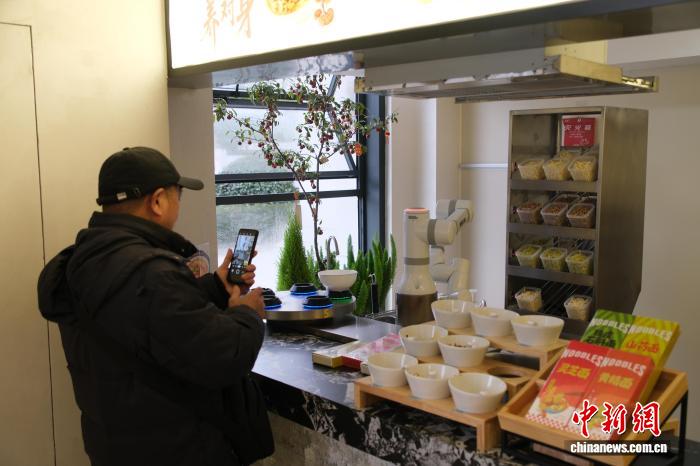
西湖区这家餐厅全员机器人上岗
Mei Ri Shang Bao· 2026-01-14 03:14
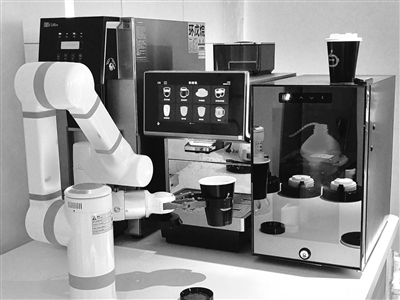
Core Insights - The "Twenty-Four Solar Terms Robot Restaurant" in Xihu District integrates various service robots to provide a high-tech dining experience, combining AI with local culture and dietary principles [1][2] Group 1: Restaurant Features - The restaurant employs over ten types of robots, including cooking, coffee, and delivery robots, to enhance customer experience [1] - An AI facial diagnosis robot greets customers and recommends dishes based on their physical condition, aligning with seasonal dietary practices [1] - The cooking robots can prepare over a hundred home-style dishes and are designed to clean themselves after cooking, improving efficiency [1] Group 2: Product Offerings - The restaurant plans to introduce a health-focused product line, including dumplings, noodles, and tea, which will be available for local community dining and online sales [2] - The coffee robot can prepare various types of coffee in under three minutes, showcasing the speed and efficiency of the robotic service [2] - The restaurant is currently in a trial operation phase, with a grand opening scheduled for January 26, coinciding with the Laba Festival [2]
杭州这家餐厅“掌勺的”全是机器人
Hang Zhou Ri Bao· 2026-01-14 02:38
Core Insights - The article highlights the opening of the "24 Solar Terms Fire Robot Restaurant" in Hangzhou, which integrates AI technology with local culture and dietary principles, creating a unique dining experience that combines "AI + culture + dining" [1] Group 1: Restaurant Features - The restaurant spans approximately 260 square meters and has a seating capacity of 50, featuring over ten types of robots that handle various tasks from cooking to cleaning [1] - The AI diagnosis robot offers personalized dietary recommendations based on individual health assessments, promoting a tailored dining experience [1] Group 2: Cooking Technology - The noodle-cooking robot can prepare three servings in just two to three minutes, while the stir-frying robot boasts a repertoire of over a hundred recipes, ensuring high-quality dishes [2] - The restaurant emphasizes collaboration between humans and robots, aiming to enhance the dining experience rather than replace human workers [2] Group 3: Community Engagement - Special discounts are offered to elderly customers, with varying rates based on age, to cater to the local community [2] - The restaurant is part of a broader initiative to enhance elderly care services through technology, providing a more intelligent and considerate dining experience [3] Group 4: Broader Initiative - The restaurant is located within the "Xialianghui Silver Age Health and Wellness Living District," which integrates various services such as high-end caregiving, smart healthcare, and AI fitness, aimed at providing comprehensive support for the elderly [3]
推动服务机器人从单一功能到群体智能跨越 云迹科技加速布局“协同智能”
Zheng Quan Ri Bao· 2025-12-01 07:40
Core Insights - The article discusses the transformation of service robots from novelty items in hotels to standard configurations, emphasizing the need for technology to become a more empathetic partner rather than just a cold tool [1] - The Beijing Smart Hotel Robot Application Competition showcased 26 technology companies, with Beijing Yunji Technology Co., Ltd. winning three major awards, highlighting the warmth and intelligence of technology [1][2] - Yunji Technology's innovative "embodied intelligence + disembodied intelligence + ecological collaboration" framework represents a significant leap from single-function robots to collective intelligence, providing new upgrade ideas for smart hotels [1][7] Competition Overview - The competition featured four core categories: room service, welcoming guidance, cleaning, and entertainment interaction, all based on real hotel service scenarios [2] - 26 participating teams engaged in a rigorous competition format, testing equipment stability and understanding of service essence [2] Performance Highlights - In the room service category, Yunji Technology's robot team demonstrated excellent task execution capabilities, completing full delivery tasks autonomously, including elevator navigation and precise docking [3] - The self-developed HDOS system showcased efficient scheduling capabilities under pressure, intelligently prioritizing service requests and integrating with external systems for automated service delivery [4] Innovations in Service - The cooking robots presented in the entertainment interaction category highlighted the integration of technology in hotel dining services, with products like the intelligent stir-fry robot and coffee robot enhancing the service system [5] - The coffee robot demonstrated a fully automated process from cup retrieval to brewing, working in tandem with delivery robots to redefine hotel dining service boundaries [5] Flexible Robot Utilization - Hotels can dynamically adjust the roles of robots based on time and demand, enhancing utilization rates and return on investment [6] - The HDOS system acts as a central hub for coordinating robot activities, transitioning from individual operations to collaborative efforts [6] Ecosystem Development - Yunji Technology is building an open API ecosystem, integrating robots into the hotel's digital framework, addressing the "last 100 meters" of delivery challenges [7] - The shift from "digitalization" to "intelligent digitalization" in the hotel industry necessitates comprehensive automation solutions, with Yunji Technology's three-in-one architecture providing a replicable transformation path for the industry [7]