牛仔布

Search documents
From Pakistan Floods to California Drought: Climate Risks Shake the Cotton Industry
Yahoo Finance· 2026-02-18 13:00
Core Insights - The WWF aims to catalyze systemic change in the textile sector, focusing on sustainable practices such as nature-positive agriculture and water stewardship [1] - Climate change is recognized as an immediate threat to the textile supply chain, necessitating coordinated solutions across sectors [5][6] Group 1: Climate Impact on Supply Chains - Pakistan's cotton industry is vulnerable to climate impacts, with WWF training farmers in sustainable practices like organic and regenerative cotton [2] - Climate-related risks are disrupting supply chains, as seen in the 2022 and 2025 floods in Pakistan, which exposed structural vulnerabilities [7] - The floods led to significant raw material instability for companies like Artistic Milliners, which only recovered 20% of its regenerative cotton yield in 2022 [8] Group 2: Resilience and Adaptation Strategies - Building resilience in textile supply chains requires a system-wide approach, including restoring natural systems and embedding climate adaptation into sourcing decisions [3][4] - Effective management of soil health and water resources, along with strong partnerships, can help stabilize cotton yields and quality [11][12] - Bergman/Rivera emphasizes financial aid and technical assistance to farmers, viewing cotton as a vehicle for transformation rather than just a commodity [16][17] Group 3: Collaboration and Community Support - Collaboration among stakeholders is crucial for addressing climate challenges, with a focus on connecting farmers with brands to enhance sustainability efforts [18] - The approach of Bergman/Rivera includes honoring traditional farming practices while implementing modern techniques to improve farmers' livelihoods and environmental impact [15][17]
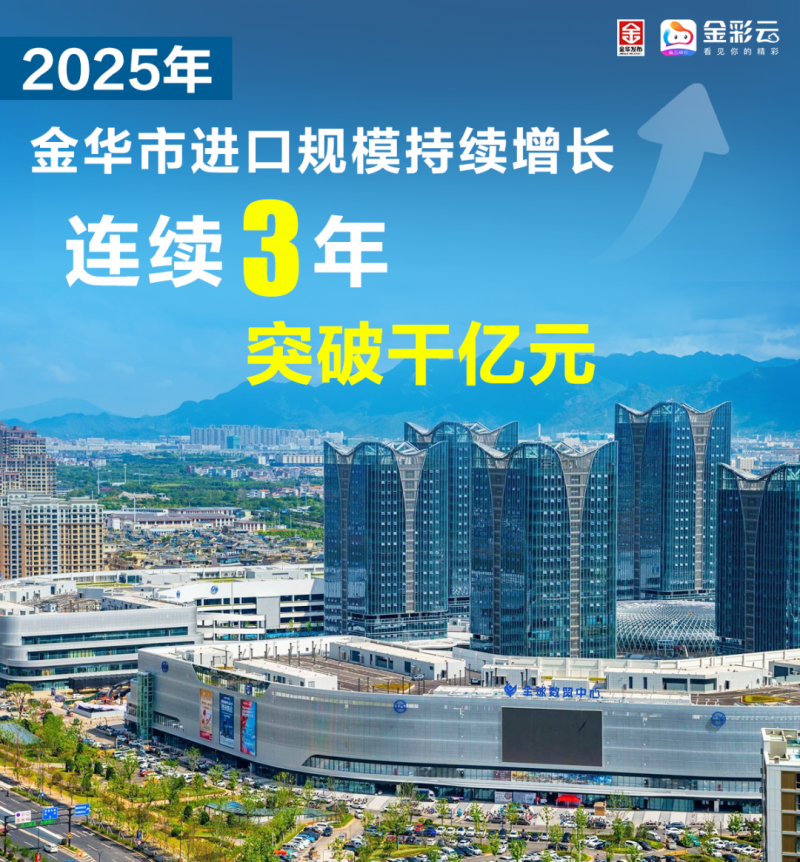
浙江金华跻身“外贸万亿之城”
Zhong Guo Fa Zhan Wang· 2026-01-20 08:37
Core Insights - In 2025, Jinhua achieved a total foreign trade import and export value of 1.05 trillion yuan, marking a 19.5% year-on-year growth and becoming the eighth city in China to surpass the 1 trillion yuan foreign trade threshold [1] Group 1: Export Performance - Jinhua's exports reached 921.29 billion yuan in 2025, with a year-on-year growth of 19.4%, leading the province in both growth rate and contribution [1] - Private enterprises are the backbone of Jinhua's foreign trade, with 21,000 out of 22,000 import and export enterprises being private, accounting for 98.3% of the city's total exports [3] - The city has over 60,000 active cross-border e-commerce sellers, with 54,000 overseas merchants operating in 131 countries and regions [3] Group 2: Market Diversification - Jinhua maintains trade relations with 233 countries and regions, with exports exceeding 1 billion yuan to over 100 countries [4] - Exports to emerging markets in Africa, Latin America, the Middle East, and ASEAN achieved double-digit growth, collectively accounting for 54.2% of total exports [4] - Yiwu, a city within Jinhua, played a significant role, achieving exports of 730.7 billion yuan, a 24.1% increase [4] Group 3: Trade Facilitation and Infrastructure - Jinhua is enhancing its open economy by deepening international trade reforms and establishing a China-Europe freight train hub [5] - The city exported 599.17 billion yuan through market procurement trade, representing 70.7% of the national total for this trade type [5] - The Zhejiang China-Europe freight train has opened 26 routes, covering over 50 countries and 160 cities, with 3,005 trains operated in the year, a 14.7% increase [5] Group 4: Industrial Upgrading - Jinhua is optimizing its industrial structure, enhancing the international competitiveness of traditional industries like textiles and hardware [6] - The export of electric vehicles surged by 99.6%, while high-end products like photovoltaic components and smart equipment are being exported to over 30 countries [6] - The continuous increase in product added value is helping "Jinhua manufacturing" move towards the mid-to-high end of the global value chain [6]

黑牡丹:直接向欧盟成员国出售产品形成的收入占比极低
Zheng Quan Ri Bao· 2026-01-16 12:15
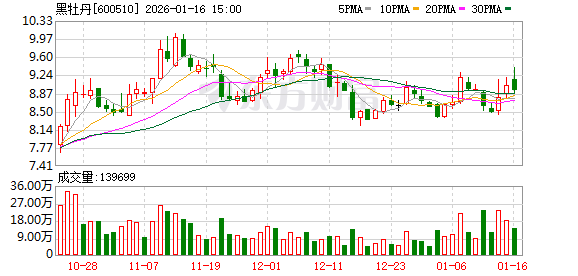
Group 1 - The company, Heibodian, indicated that its revenue from selling products directly to EU member states is very low, based on the disclosed "2025 Semi-Annual Report" [2] - The company's textile business primarily serves denim fabric manufacturers [2]

Boot Barn(BOOT) - 2026 FY - Earnings Call Transcript
2026-01-12 16:30
Financial Data and Key Metrics Changes - The company achieved a merchandise margin expansion of 110 basis points, exceeding the guidance of 30 basis points year-over-year [2][3] - Over the past seven years, the company has seen a total of 700 basis points of merchandise margin expansion [5] Business Line Data and Key Metrics Changes - The exclusive brand penetration met expectations, contributing to growth but not the margin beat [3] - Lower markdowns compared to historical levels have allowed for better full-price selling, positively impacting margins [4] Market Data and Key Metrics Changes - The total addressable market (TAM) was increased from $40 billion to $58 billion, with the Country Lifestyle segment contributing to this growth [22][23] - The company is expanding its store count target from 900 to 1,200, indicating a broad-based growth strategy across various markets [24][25] Company Strategy and Development Direction - The company is focusing on building a proper sourcing team for exclusive brands to enhance margin gains [7][8] - Marketing initiatives are being tailored to attract the Country Lifestyle customer, with partnerships in mainstream events like NASCAR and the NFL [20][21] Management's Comments on Operating Environment and Future Outlook - Management expressed optimism about the economic landscape, noting that tax refunds and increased disposable income could positively impact sales trends [44][45] - The company is targeting a mid-teens EBIT margin over time, with current projections around 13% for the fiscal year [38] Other Important Information - The company is leveraging social media, particularly TikTok, to enhance brand visibility and drive store traffic [35][36] - The ideal new store format is approximately 12,000 sq ft, with an average new store volume of about $3.2 million [24][27] Q&A Session Summary Question: What are the drivers behind the merchandise margin expansion? - The company attributed the margin expansion to better buying economies of scale and lower markdowns compared to previous years [2][4] Question: How is the company approaching pricing in relation to tariffs? - The company has decided to hold exclusive brand pricing through the holiday season and plans to implement low single-digit price increases post-holiday to preserve margin [16] Question: What is the strategy for reaching the Country Lifestyle customer? - The company is engaging in mainstream marketing initiatives and partnerships to attract this demographic, which includes sponsoring events like Stagecoach [20][21] Question: How does the company view the economic landscape affecting its core customer? - Management noted that the core customer, with a household income of around $75,000-$80,000, could benefit from tax refunds and increased disposable income, which may positively influence sales [44][45]

Boot Barn(BOOT) - 2026 Q2 - Earnings Call Transcript
2025-10-29 21:30
Financial Data and Key Metrics Changes - Revenue increased by 19% year-over-year to $505 million, driven by new store openings and same-store sales growth of 8.4% [5][18] - Earnings per diluted share rose 44% to $1.37 compared to $0.95 in the prior year [5][19] - Merchandise margin rates increased by 80 basis points year-over-year [5][19] Business Line Data and Key Metrics Changes - Same-store sales growth was 8.4%, with brick-and-mortar sales increasing by 7.8% and e-commerce sales growing by 14.4% [9][18] - The ladies' business saw positive mid-teens comp growth, while men's business comped positive high single digits [10] - Exclusive brand penetration increased by 290 basis points to 41% of sales [14][19] Market Data and Key Metrics Changes - The total addressable market (TAM) expanded from $40 billion to $58 billion, a 45% increase [8][33] - The company estimates a long-term U.S. store count potential of 1,200 stores, with plans to open 12-15% new units annually [8][9] Company Strategy and Development Direction - The company is focused on a "stores-first" strategy, emphasizing new store growth and omnichannel initiatives [9][13] - Marketing efforts include sponsorship of rodeos and partnerships with country music artists to enhance brand visibility [10] - The company aims to leverage AI to improve customer experience and operational efficiencies [12][13] Management's Comments on Operating Environment and Future Outlook - Management expressed cautious optimism about the current business tone and preparation for a strong holiday season [17] - There is a recognition of macroeconomic uncertainties affecting consumer sentiment, leading to a conservative outlook for the second half of the year [31][68] - The company raised its full-year guidance, expecting total sales of $2.235 billion, representing a 17% growth over fiscal 2025 [21][22] Other Important Information - Inventory increased by 20% year-over-year to $855 million, with markdowns below last year and historical levels [20] - The company repurchased approximately 73,000 shares for $12.5 million as part of its share repurchase program [20] Q&A Session Summary Question: Drivers of October's comp acceleration and long-term store count potential - Management noted that October's performance aligned with major merchandise categories, with work boots showing notable improvement [28][29] Question: Details on the TAM increase - The increase in TAM was driven by demographic studies and the trend of casualization in wearing occasions [33] Question: Pricing strategy and exclusive brand penetration - Exclusive brand pricing will be adjusted post-holiday to preserve margins, with current penetration at 41% [34][35] Question: Success of exclusive brand websites - The websites for exclusive brands aim to drive customer traffic to Boot Barn stores, with no plans for wholesale or international sales [38][39] Question: Online penetration and margin implications - Online business is expected to hover around 10% penetration, with no significant shifts anticipated [62] Question: Regional performance and consumer behavior - Management reported widespread growth across geographies, with no significant changes in shopping behavior among Hispanic consumers [58] Question: Margin dynamics and tariff impacts - The company is managing tariff impacts through negotiations with factories and has factored these into margin guidance [60]
兴纺控股发布中期业绩,股东应占亏损1041万港元 同比减少39.28%
Zhi Tong Cai Jing· 2025-08-28 12:21
Core Viewpoint - The company reported a revenue of HKD 108 million for the six months ending June 30, 2025, representing a year-on-year decrease of 1.7% [1] - The loss attributable to shareholders was HKD 10.41 million, a reduction of 39.28% compared to the previous year, with a loss per share of HKD 0.0163 [1] Group 1 - The denim business experienced two distinct phases during the first half of 2025, benefiting from the "China Plus One" strategy established in 2024 [1] - The production facilities in Vietnam showed strong performance in the initial months, following a successful "seed phase" that led to significant growth [1] - There was an increase in demand from premium denim brands in the United States, particularly those seeking reliable suppliers for tariff-advantaged production solutions, which further enhanced the performance of the high-margin segment [1]
兴纺控股(01968)发布中期业绩,股东应占亏损1041万港元 同比减少39.28%
智通财经网· 2025-08-28 12:15
Core Viewpoint - The company reported a revenue of HKD 108 million for the six months ending June 30, 2025, representing a year-on-year decrease of 1.7% and a loss attributable to shareholders of HKD 10.41 million, a reduction of 39.28% compared to the previous year [1]. Group 1: Financial Performance - The company achieved a revenue of HKD 108 million, which is a 1.7% decrease year-on-year [1]. - The loss attributable to shareholders was HKD 10.41 million, showing a 39.28% decrease year-on-year [1]. - The loss per share was HKD 0.0163 [1]. Group 2: Business Operations - The denim fabric business experienced two distinct phases during the first half of 2025 [1]. - The production facilities in Vietnam performed strongly in the initial months, benefiting from the "China Plus One" strategy established in 2024 [1]. - The successful "seeding period" led to significant growth, attracting new customers and encouraging existing brand owners to increase order volumes and product options [1]. - There was a growing demand from premium denim brands in the U.S., particularly those seeking reliable suppliers for tariff-advantaged production solutions, which further enhanced the performance of the high-margin segment [1].
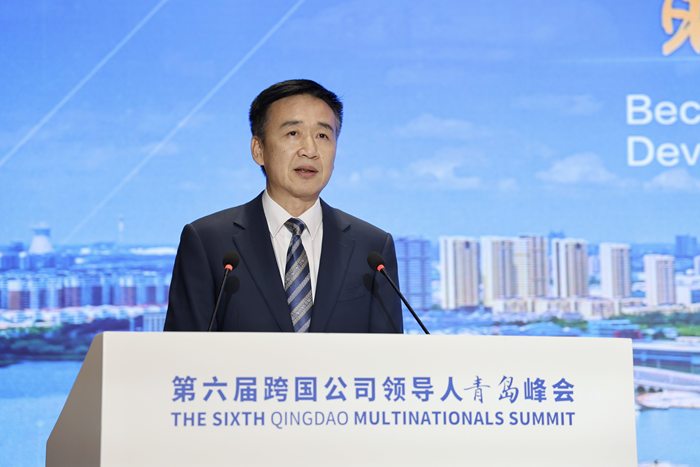
时评 | “鲁北雄心”起势,从滨州看中德产业耦合的轨迹
Xin Lang Cai Jing· 2025-06-20 04:36
Group 1 - The core event is the Sino-German Multinational Company Development Exchange Forum, which is part of the 6th Multinational Company Leaders Qingdao Summit, highlighting the importance of Sino-German cooperation [1] - Binzhou has been actively expanding its trade with Germany, with a trade volume of 1.53 billion yuan in 2024, accounting for 1.2% of the city's total foreign trade, and 20.3% of its trade with EU countries [3] - By the first quarter of 2025, Binzhou's trade with Germany reached 387 million yuan, showing a year-on-year growth of 20.1%, making Germany the largest trading partner in the EU for Binzhou [3] Group 2 - Binzhou has a strong industrial foundation with 38 out of 41 national industrial categories represented, fostering five trillion-level industrial clusters, which align well with Germany's strengths in machinery, chemicals, and automotive industries [5] - The city has 67 products that hold the top market share globally or nationally, which are relevant to German companies' interests [5] - The collaboration with German companies is driven by Binzhou's need for industrial transformation towards high-end, intelligent, and green manufacturing, particularly in the context of low-carbon development [6] Group 3 - Binzhou is focusing on attracting investment, project construction, and industrial economy, implementing actions to enhance market vitality and create a favorable business environment [8] - The city aims to shift from "policy-based investment attraction" to "scenario-based investment attraction," customizing approaches for German companies [8] - During the Qingdao Summit, Binzhou's mayor invited enterprises to collaborate, emphasizing the city's diverse open platforms and development opportunities [8]