靴子

Search documents
美媒称美国皮革制品或将涨价22%
Xin Lang Cai Jing· 2025-12-27 12:30
Group 1 - The core viewpoint of the article highlights that U.S. tariff policies and supply chain disruptions are expected to increase the prices of leather goods, such as boots and handbags, by nearly 22% in the next one to two years due to inflation, supply chain bottlenecks, and high tariffs [1] - The American company Tapestry, which owns brands like Coach, has indicated that its tariff-related expenses could total approximately $160 million, warning that the negative impacts of tariffs will be greater than anticipated [1]

美媒:关税将推动美国皮革制品价格显著上涨
Xin Hua She· 2025-12-26 08:56
Core Viewpoint - The article highlights that U.S. tariff policies and their impact on supply chains have led to increased prices for leather goods such as boots and handbags, with further significant price hikes expected in the next two years due to tariffs and a decrease in domestic cattle numbers [1] Group 1 - U.S. tariff policies are driving up prices for leather products, including boots and handbags, as of 2025 [1] - The prices of leather goods are projected to continue rising significantly over the next two years due to tariffs and a reduction in the domestic cattle population [1]
全球瞭望|美媒:关税将推动美国皮革制品价格显著上涨
Xin Hua Wang· 2025-12-26 08:55
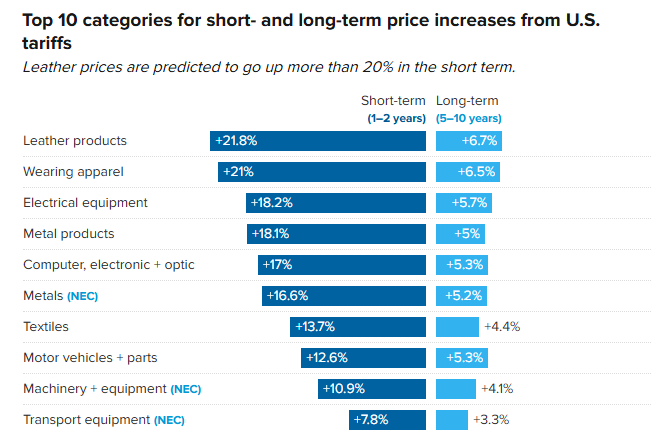
Group 1 - The article highlights that U.S. tariff policies and supply chain disruptions are expected to significantly increase the prices of leather goods such as boots and handbags by 2025, with further increases anticipated in the next two years due to tariffs and a decrease in domestic cattle numbers [1] - Texas-based footwear company, known for its Western-style boots, faced chaos after the tariff announcement in April, with rising import costs and logistics disruptions forcing employees to constantly recalculate profit margins [1] - The parent company of Coach, a handbag brand, reported that tariff-related expenses could reach $160 million, indicating that the negative impact on profits would be greater than previously expected [1] Group 2 - Experts predict that as pre-tariff import inventories are depleted, products on shelves will require more expensive leather materials, alongside rising foreign processing and shipping costs, leading to higher retail prices for leather goods that are unlikely to decrease in the short term [1] - The Yale University Budget Lab forecasts that U.S. leather goods prices will rise by nearly 22% in the next one to two years due to inflation, supply chain bottlenecks, and high tariffs [1] - The price impact on the leather industry is expected to be more pronounced in 2026, prompting companies to decide whether to pass on increased costs to consumers or reduce workforce [2]
供应链锁死,皮革制品遭关税“精准阻击”明年美国涨价冲击将更明显?
Feng Huang Wang· 2025-12-26 05:10
Group 1 - The core impact of tariffs on leather products has led to significant price increases, with an estimated rise of nearly 22% over the next one to two years due to inflation, supply chain bottlenecks, and high tariffs, particularly affecting imports from China, Vietnam, Italy, and India [1][6] - Major companies like Tapestry, which owns brands such as Coach and Kate Spade, are facing substantial tariff-related costs, potentially reaching $160 million, and are warning of unexpected profit pressures [3][6] - The leather industry is heavily reliant on imports, with the U.S. importing $1.37 billion worth of leather apparel in 2023 while only exporting $92.7 million, resulting in a trade imbalance of approximately 15 to 1 [5][6] Group 2 - The global supply chain model, which previously reduced costs, is now becoming a liability due to new tariffs, as manufacturers like Twisted X struggle with increased production costs and longer delivery times from alternative sourcing countries [4][6] - The U.S. leather industry is experiencing a significant decline, with the number of tanneries dropping from about 1,000 in the 1950s to a projected 500 by 2025, leading to a workforce reduction from over 300,000 to around 50,000 [6][7] - The current shortage of raw materials, particularly due to a decrease in cattle numbers, is exacerbating the cost of leather production, as fewer cattle lead to higher prices for the remaining leather [8][9]

85岁品牌如何断腕千家门店,却赢回年轻市场?
财富FORTUNE· 2025-12-09 13:05
Core Insights - The article discusses how CEO Patrice Louvet has successfully revitalized Ralph Lauren, a luxury brand that faced significant challenges a decade ago, by refocusing on high-end products and reducing exposure in discount channels [1][4][22] Group 1: Brand Strategy and Leadership - Patrice Louvet has shifted the company's strategic focus back to high-end branding, emphasizing women's fashion as a key growth area [3][4] - Under Louvet's leadership since 2017, Ralph Lauren has exited over a thousand discount retail locations, enhancing its luxury positioning [7][16] - The brand's revenue reached $7.1 billion in the most recent fiscal year, with profits and operating margins hitting a 13-year high [7][8] Group 2: Market Positioning and Consumer Engagement - The brand has successfully attracted younger consumers, ranking fourth in brand equity among luxury apparel in the eyes of younger demographics, a significant improvement over the past five years [20][21] - Louvet's strategy includes a clear delineation of sub-brands, allowing for coexistence of high-end and more accessible products without brand confusion [19] - The recent fashion show in Manhattan showcased the brand's commitment to modern luxury, drawing attention from both fashion authorities and social media influencers [1][3] Group 3: Historical Context and Challenges - Ralph Lauren's past expansion strategies led to brand dilution, with a significant drop in sales and profits from 2016 to 2018, highlighting the risks of overexposure in discount channels [10][16] - The brand's historical significance and its role as a cultural icon in American fashion have been emphasized, with a focus on storytelling and aspirational marketing [9][12] Group 4: Future Directions - The company plans to expand its women's clothing line, which currently accounts for only 30% of apparel sales, and explore new markets such as India [22] - Louvet emphasizes the need for continuous innovation and freshness in the brand's offerings to maintain relevance in the competitive fashion landscape [22]


Boot Barn(BOOT) - 2026 Q2 - Earnings Call Transcript
2025-10-29 21:30
Financial Data and Key Metrics Changes - Revenue increased by 19% year-over-year to $505 million, driven by new store openings and same-store sales growth of 8.4% [5][18] - Earnings per diluted share rose 44% to $1.37 compared to $0.95 in the prior year [5][19] - Merchandise margin rates increased by 80 basis points year-over-year [5][19] Business Line Data and Key Metrics Changes - Same-store sales growth was 8.4%, with brick-and-mortar sales increasing by 7.8% and e-commerce sales growing by 14.4% [9][18] - The ladies' business saw positive mid-teens comp growth, while men's business comped positive high single digits [10] - Exclusive brand penetration increased by 290 basis points to 41% of sales [14][19] Market Data and Key Metrics Changes - The total addressable market (TAM) expanded from $40 billion to $58 billion, a 45% increase [8][33] - The company estimates a long-term U.S. store count potential of 1,200 stores, with plans to open 12-15% new units annually [8][9] Company Strategy and Development Direction - The company is focused on a "stores-first" strategy, emphasizing new store growth and omnichannel initiatives [9][13] - Marketing efforts include sponsorship of rodeos and partnerships with country music artists to enhance brand visibility [10] - The company aims to leverage AI to improve customer experience and operational efficiencies [12][13] Management's Comments on Operating Environment and Future Outlook - Management expressed cautious optimism about the current business tone and preparation for a strong holiday season [17] - There is a recognition of macroeconomic uncertainties affecting consumer sentiment, leading to a conservative outlook for the second half of the year [31][68] - The company raised its full-year guidance, expecting total sales of $2.235 billion, representing a 17% growth over fiscal 2025 [21][22] Other Important Information - Inventory increased by 20% year-over-year to $855 million, with markdowns below last year and historical levels [20] - The company repurchased approximately 73,000 shares for $12.5 million as part of its share repurchase program [20] Q&A Session Summary Question: Drivers of October's comp acceleration and long-term store count potential - Management noted that October's performance aligned with major merchandise categories, with work boots showing notable improvement [28][29] Question: Details on the TAM increase - The increase in TAM was driven by demographic studies and the trend of casualization in wearing occasions [33] Question: Pricing strategy and exclusive brand penetration - Exclusive brand pricing will be adjusted post-holiday to preserve margins, with current penetration at 41% [34][35] Question: Success of exclusive brand websites - The websites for exclusive brands aim to drive customer traffic to Boot Barn stores, with no plans for wholesale or international sales [38][39] Question: Online penetration and margin implications - Online business is expected to hover around 10% penetration, with no significant shifts anticipated [62] Question: Regional performance and consumer behavior - Management reported widespread growth across geographies, with no significant changes in shopping behavior among Hispanic consumers [58] Question: Margin dynamics and tariff impacts - The company is managing tariff impacts through negotiations with factories and has factored these into margin guidance [60]

总部位于香港的制服供应商Angie Holdings拟在美IPO
Zheng Quan Shi Bao Wang· 2025-09-15 01:25
Group 1 - Angie Holdings, a Hong Kong-based apparel supplier, has submitted an IPO application to the U.S. Securities and Exchange Commission [1] - The company specializes in providing corporate uniforms, design, tailoring, and functional consulting services, with clients including contractors, utility companies, government departments, and service providers [1] - Angie Holdings also sells safety products such as helmets, boots, and gloves [1] Group 2 - Founded in 2015, the company reported revenue of $10 million for the 12 months ending June 30, 2025 [1] - The IPO plans to issue 1.5 million shares at a price range of $4 to $6 per share, aiming to raise $8 million [1] - The company intends to list on NASDAQ under the ticker symbol AGHO.RC, with Cathay Securities serving as the sole bookrunner for the IPO [1]
【女鞋】行业市场规模:2024年中国女鞋行业市场规模超过2200亿元 美低帮鞋市场份额占比超45%
Qian Zhan Wang· 2025-04-28 08:26
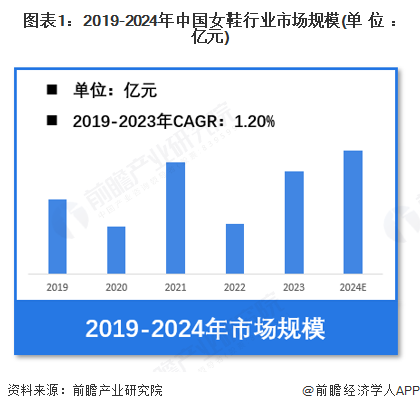
Core Insights - The Chinese women's footwear market is projected to exceed 220 billion yuan in 2024, following a market size of over 215 billion yuan in 2023, with a compound annual growth rate of 1.20% over the past four years [1][3]. Market Overview - The women's footwear industry includes products made from leather, synthetic leather, textile materials, and rubber, categorized into men's, women's, and children's shoes [1]. - Low-top shoes and boots are the primary consumer products in the Chinese women's footwear market, with low-top shoes accounting for over 45% of the market share in 2023 [3]. Competitive Landscape - The domestic women's footwear market is highly competitive, featuring numerous brands, including both global and local players such as Red Dragonfly, Qianbaidu, Daphne, and Belle [4]. - Most domestic fashion and casual brands focus on diversified business strategies, covering high heels, sports shoes, and casual shoes, while sports brands primarily emphasize sports shoes and extend into casual and flip-flop segments [4].