玻璃线路板(GCP)

Search documents
破局“后摩尔时代”:玻璃基板迈向全球商业化新纪元
Jin Rong Jie· 2026-02-10 03:54
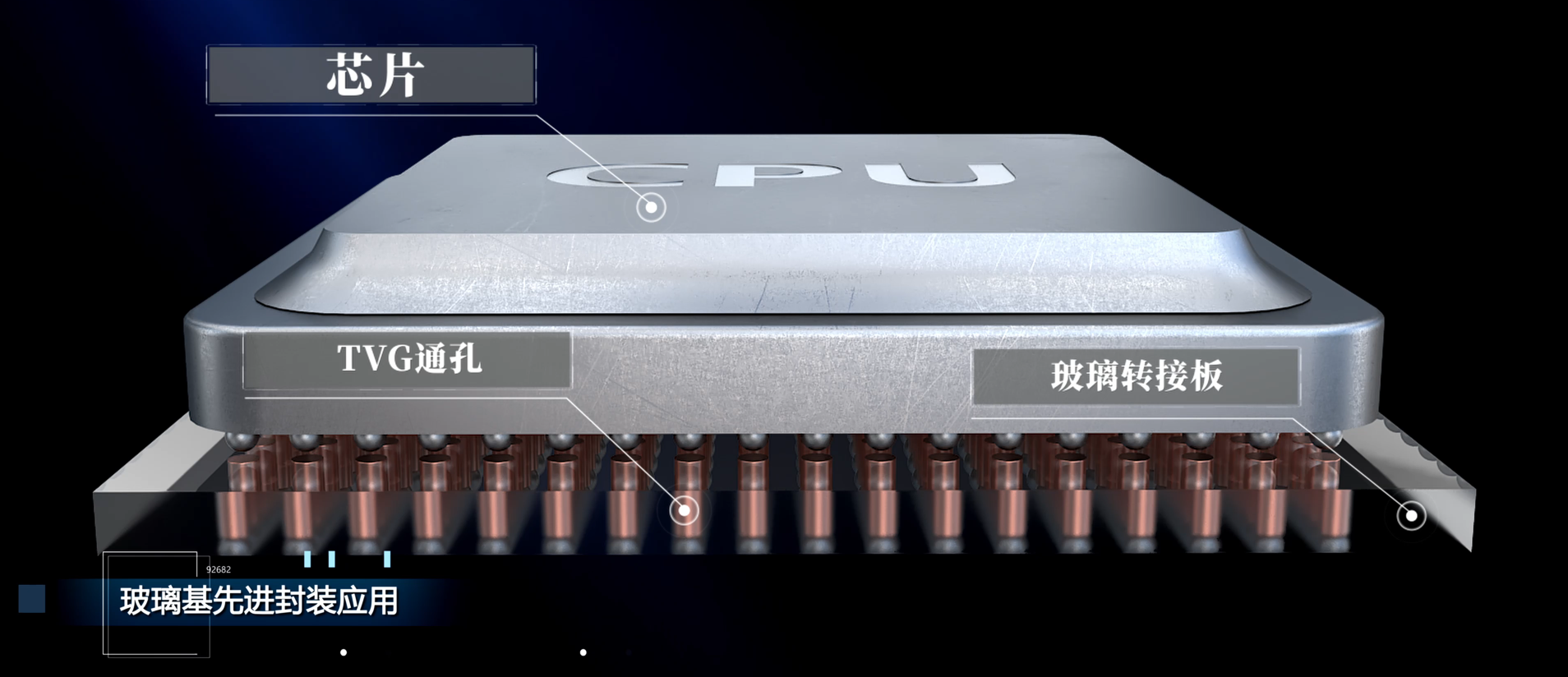
Core Insights - The demand for computing power driven by generative AI is pushing the limits of chip packaging, leading to a shift from traditional organic substrates to glass substrates, which offer superior flatness, thermal stability, and insulation properties [1] - 2026 is identified as a critical year for the transition of glass substrates from small-scale validation to mass production [1] Industry Dynamics - Intel is advancing its glass substrate commercialization plans and showcased a large glass chip substrate prototype at a recent exhibition in Japan, targeting mass production post-2026 [2] - Samsung is actively pursuing glass substrate development, announcing a joint venture and a commercialization roadmap, while also investing in building a glass substrate ecosystem [2] - Companies from Japan and mainland China, such as BOE and Lens Technology, are making significant progress in glass substrate technology, with predictions of over 10% annual growth in semiconductor glass wafer shipments from 2025 to 2030 [2] Technical Challenges - The main hurdle for the commercialization of glass substrates, particularly for advanced semiconductor packaging, lies in the TGV (Through Glass Via) process, which requires creating micro-sized vias in thin glass and perfect metallization [3] - The current process heavily relies on hydrofluoric acid, posing safety and environmental compliance challenges, prompting experts to explore alternatives like high-temperature alkaline solutions [3] Competitive Advantages - Chinese companies, exemplified by Woge Optoelectronics, are leveraging their extensive experience in chemical management to overcome challenges associated with TGV processing, significantly reducing initial investment and operational costs [6][7] - Woge Optoelectronics has developed a comprehensive management system for handling hazardous chemicals, allowing for a smoother transition to TGV production lines [6] Future Prospects - Woge Optoelectronics is leading the development of GCP (Glass Circuit Board) technology, which is becoming a crucial component in the global electronic information supply chain [7] - The commercialization wave of glass substrates is gaining momentum, with Chinese firms poised to leverage their unique advantages in core processes to compete in the high-end semiconductor packaging materials market [8]


沃格光电2026年1月23日涨停分析:Mini LED+商业航天+研发投入
Xin Lang Cai Jing· 2026-01-23 05:27
Group 1 - The core viewpoint of the news is that Woge Optoelectronics (stock code: sh603773) has reached its daily limit up, with a price of 42.55 yuan, reflecting a 10.01% increase and a total market capitalization of 9.559 billion yuan [1] Group 2 - Woge Optoelectronics is transitioning from traditional display business to high-end fields such as Mini LED, focusing on glass-based Mini LED backlight modules with an annual production capacity of 6.05 million pieces, aligning with new display technology trends [2] - The company has full-process capabilities in the commercial aerospace sector, including UTG processing and CPI slurry, meeting the flexible substrate and protection needs for satellite flexible solar wings, with ongoing business collaborations and product testing [2] - In the first half of 2025, the company's R&D expenses accounted for 7.44%, higher than the industry average, with a total of 439 patents, indicating strong ongoing investment in R&D to enhance technical strength and drive business transformation [2]
沃格光电:公司目前玻璃线路板(GCP)及玻璃基封装载板相关产品主要聚焦在Mini/Micro LED显示等领域
Zheng Quan Ri Bao Zhi Sheng· 2026-01-14 13:11
Core Viewpoint - The company is focusing on the production of glass circuit boards (GCP) and glass-based packaging substrates for various advanced technology applications, including Mini/MicroLED displays and 5G-A/6G RF antennas [1] Group 1: Product Focus - The company's GCP and glass-based packaging products are primarily targeted at Mini/MicroLED displays, 5G-A/6G RF antennas, optical modules/CPO, and advanced packaging for high-performance chips [1] - The microfluidic biochip products are set to enter mass production and shipment soon [1]
沃格光电2025业绩预告:营收6年复合增长率超30%,多业务引擎开启增长新周期
Jin Rong Jie· 2026-01-14 09:38
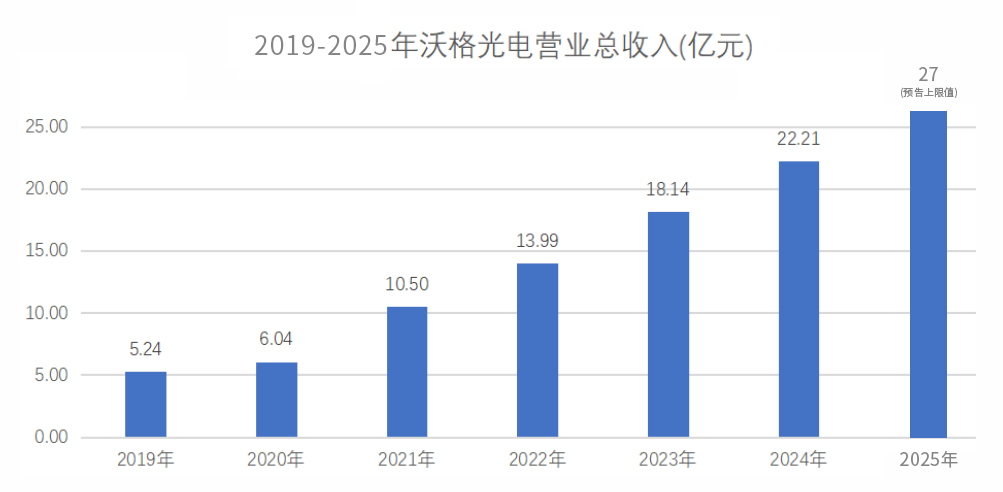
Core Viewpoint - The company, Woge Optoelectronics, is projected to achieve an annual revenue of 2.4 billion to 2.7 billion yuan in 2025, reflecting a year-on-year growth of 8.07% to 21.58%, showcasing strong growth resilience with a compound annual growth rate exceeding 30% since 2019 [1][7]. Group 1: Traditional Business Performance - The traditional business of glass processing and optical device manufacturing is expected to maintain stable revenue and profit growth in 2025, supported by technical advantages and stable customer relationships [3]. - This business segment focuses on high-end display precision processing, providing solid performance support and cash flow for the company [3]. - The robust performance of the traditional business enhances the company's market competitiveness and supports R&D investments for new business lines [3]. Group 2: New Business Developments - 2025 is anticipated to be a breakthrough year for Woge Optoelectronics' new business, with significant advancements in multiple strategic areas [4]. - The Chengdu Woge 8.6-generation AMOLED glass processing project is progressing well, expected to achieve mass production in 2026 with a monthly capacity of 24,000 pieces [4]. - The company has become the sole supplier for BOE's 8.6-generation AMOLED panel production line, which will enhance its competitive position in the large-size AMOLED market [4]. Group 3: Semiconductor and Advanced Materials - The TGV glass substrate business in the semiconductor sector is a core demonstration of the company's technical strength, with small-scale supply completed in 2025 and high market recognition [5]. - The company is positioned to benefit from the rapid growth of the global semiconductor glass substrate market, with expectations for explosive growth in 2026 as the industry enters a mass production phase [5]. - In the commercial aerospace sector, the company has successfully provided CPI films for satellite applications, showcasing its technological capabilities and expanding its business boundaries [6]. Group 4: Financial Outlook - The company anticipates a net loss of 100 million to 140 million yuan in 2025 due to increased R&D investments and production line construction costs [6]. - Despite short-term losses, the long-term development logic remains intact, supported by continuous technological accumulation and capacity layout [6]. - The company has established a diversified business matrix covering traditional glass processing, new display technologies, semiconductor materials, and aerospace materials, aligning with trends in consumer electronics and advanced technology sectors [6][7].