珠串

Search documents
拉萨商圈夏冬换季,小商户灵活转型迎客群
Xin Lang Cai Jing· 2026-01-31 02:59
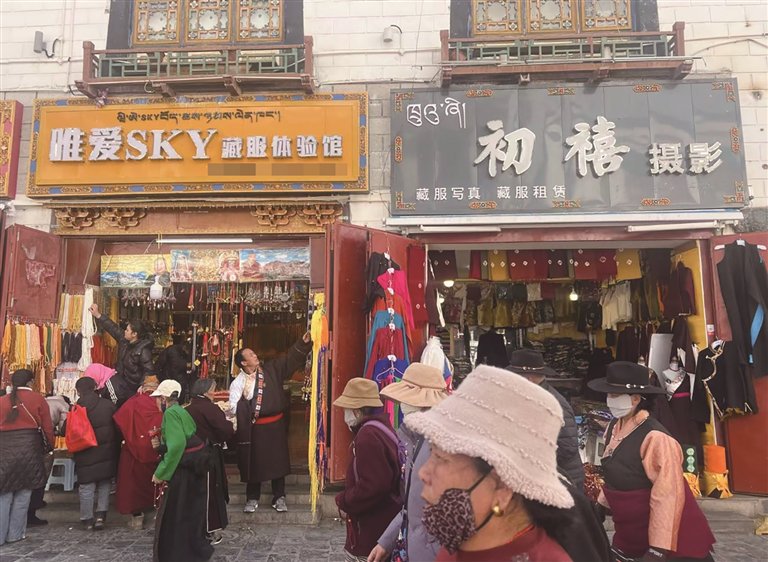
Core Insights - The article discusses the seasonal economic transformation in Lhasa, Tibet, where local shops adapt their offerings based on the influx of tourists during summer and the needs of local residents in winter [5][6][9]. Group 1: Seasonal Economic Changes - Lhasa experiences a significant shift in consumer demographics and business offerings as seasons change, with summer focusing on tourist-oriented products and winter catering to local needs [5][6]. - From mid-October, local residents and farmers become the primary consumers, leading to increased demand for traditional items such as Tibetan clothing, dried meat, and grains [5][6][10]. Group 2: Business Adaptation Strategies - Local merchants employ a "seasonal switch" strategy, transforming their shops from tourist-focused businesses in summer to local goods providers in winter [6][7]. - Shop owners like Tashi Yongda have successfully adapted their business models by hiring photography teams during peak seasons and selling traditional crafts during off-peak times, demonstrating effective inventory management [7][11]. Group 3: Community and Cultural Significance - The winter market in Lhasa serves as a cultural hub for local residents, fostering community ties and providing essential goods, which enhances the local economy [9][10]. - The relationship between seasonal businesses and local consumers reflects a unique commercial ecosystem that thrives on mutual trust and understanding of seasonal demands [9][11].

港股Labubu效应来袭,A股哪些新消费公司受机构青睐?
2 1 Shi Ji Jing Ji Bao Dao· 2025-06-27 12:09
Core Viewpoint - The new consumption sector in the Hong Kong stock market is performing well, with "Pop Mart, Lao Pu Gold, and Mixue Group" being viewed as the three giants. Meanwhile, the A-share market is also seeing significant interest in new consumption leaders, with many companies experiencing stock price increases of over 30% since Q2 of this year [1]. Group 1: A-Share Market Performance - Several A-share new consumption companies, such as Mankalon (300945.SZ) and Zhou Dazheng (002867.SZ), have attracted over 10 institutional research visits since May, indicating strong institutional interest [1]. - Mankalon's stock price has increased nearly 50% in the last two months, reflecting the growing attention from institutions [2]. - In Q1, Mankalon reported revenue of 714 million yuan, a year-on-year increase of 42.87%, and a net profit of 43.01 million yuan, up 33.52% year-on-year [2]. Group 2: Institutional Research Focus - Institutions are particularly interested in sectors such as gold and jewelry, food and beverage, apparel, and pet products, with topics like gold prices, trendy IPs, and young consumer preferences being key areas of focus [2]. - Mankalon has been researched 16 times by 77 institutions, while Zhou Dazheng has been visited 14 times by 144 institutions, ranking among the top in the A-share market [2]. Group 3: Impact of Rising Gold Prices - The surge in gold prices has negatively impacted consumer willingness to purchase, particularly affecting mid-to-high weight gold jewelry [3]. - Zhou Dazheng's management acknowledged the significant disruption caused by rising gold prices and emphasized the need to adapt to changing consumer preferences [3]. - Companies like Mankalon and Zhou Dazheng are focusing on brand positioning and product innovation to capture market share amidst these challenges [3][4]. Group 4: Targeting Young Consumers - The focus on young consumer demographics is a common strategy among consumption companies, with Mankalon aiming to align product design with young consumers' cultural aesthetics [5]. - Zhou Dazheng is launching a new brand "Zhuan Zhu Ge" targeting young consumers with a focus on cultural and trendy products [6]. - Companies are also enhancing their presence in high-end shopping centers to attract younger customers [6]. Group 5: AI Empowerment Strategies - Institutions are increasingly interested in how companies are leveraging AI technology, with Zhou Dazheng establishing an AI project team to enhance operational efficiency [7]. - Mankalon plans to integrate AI into its design and customer service processes to better understand consumer needs [7]. - Other companies, such as Chuangyuan Co., are also adopting AI-driven strategies to improve customer insights and product development cycles [7]. Group 6: Market Resilience and Innovation - The consumer market is showing resilience, with a gradual recovery expected, prompting companies to innovate continuously to meet diverse consumer demands [8]. - Companies are encouraged to shift from traditional sales models to innovative product offerings and new distribution channels to thrive in a competitive environment [8].