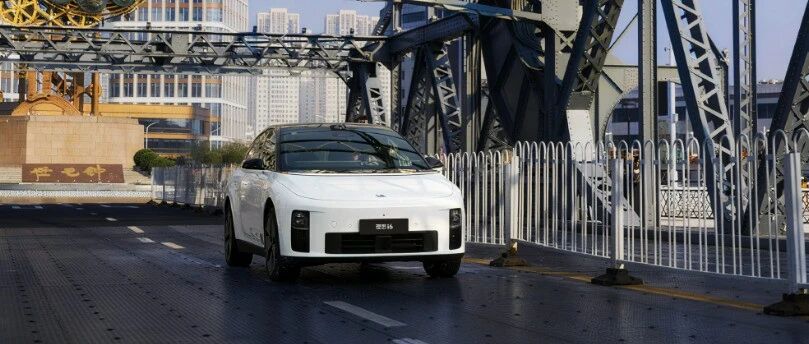
理想第一代AI眼镜

Search documents
如果存在理想第一代AI眼镜, 先降低预期可能是上策
理想TOP2· 2025-11-24 11:54
Core Insights - The exploration of physical AI terminals, such as glasses, involves necessary trial and error, and lowering expectations may be a prudent approach [1] - By April 2025, the characteristics of AI terminals identified by Li Xiang include: 1) 360-degree perception of the physical world 2) Cognitive decision-making ability 3) Action capability 4) Self-reflection and feedback [1] - The development of robots requires research and analysis based on industry progress, and certain capabilities must be addressed internally [1] Group 1 - The current state of glasses technology presents a "impossible triangle" regarding display capability, wearability, and battery life, with Vision Pro scoring 9 in display, 6-7 in battery life, and nearly 0 in wearability, while Rokid glasses score 7-8 in wearability and battery life but only 3 in display [2] - Achieving simultaneous scores of 7-8 in display, wearability, and battery life will require advancements across various technologies, including batteries, materials, semiconductors, optics, and communications [2] - The overall performance of the company in various departments, including sales management and supply chain, has been average, indicating challenges in meeting high-frequency user demands [2] Group 2 - Current AI glasses are unlikely to be particularly impressive in their first generation, as significant issues remain to be resolved [2] - The direction for AI glasses appears clear, but achieving the desired performance metrics will require overcoming numerous technical challenges [2]



对理想所有非共识本质是四点非共识
理想TOP2· 2025-11-16 09:27
Core Viewpoints - The article discusses four main areas of non-consensus regarding Li Auto, including perceptions of Li Xiang's capabilities, reasons for the company's poor sales this year, the direction and ultimate goals of smart vehicles, and the prospects of physical AI [1][2]. Group 1: Non-Consensus Areas - The first area of non-consensus revolves around how to evaluate Li Xiang's abilities and the implications of leadership errors [1]. - The second area focuses on differing opinions regarding the reasons behind Li Auto's disappointing sales performance this year [1]. - The third area addresses the advanced directions and ultimate goals of smart vehicles, highlighting two main schools of thought: one prioritizing high sales models and the other focusing on end goals [3][4]. - The fourth area concerns the future of physical AI, including its exploration necessity and potential pathways for realization [1]. Group 2: Bayesian Reasoning - The article emphasizes that differing beliefs about the future stem from individuals' Bayesian reasoning, where the strength of prior beliefs and the likelihood of new evidence vary among people [1]. - Those who "believe it to see it" tend to have strong priors that may lead to a higher tolerance for errors, while those who "see it to believe it" have weaker priors, making them more responsive to new evidence [2]. Group 3: Smart Vehicle Directions - Two main factions exist regarding the direction of smart vehicles: one that focuses on high sales models and another that starts with the end goal in mind [3][4]. - The "high sales model" faction emphasizes current successful vehicle features, while the "end goal" faction believes in a future defined by AI and automated driving [5]. Group 4: Evaluation of Li Auto's Strategy - The article notes that perceptions of Li Auto's long-term strategy and capabilities vary significantly, with some believing in the company's potential for recovery through iterative improvements, while others doubt Li Xiang's abilities due to repeated errors [6]. - The evaluation of Li Auto's products and strategies is influenced by whether individuals focus on immediate performance or the foundational principles guiding the company's design [5][6].