智能车

Search documents
华域汽车:2025 年年报点评25Q4业绩稳健向上,中性化、智能电动化持续推进-20260401
GUOTAI HAITONG SECURITIES· 2026-04-01 04:45
Investment Rating - The report maintains a "Buy" rating for the company [2][5]. Core Viewpoints - The company achieved an operating revenue of 184 billion yuan in 2025, with a net profit attributable to shareholders of 7.2 billion yuan, reflecting a year-on-year increase of 8.5% and 7.5% respectively [2][11]. - The company is transitioning towards market-oriented, new energy vehicles, and smart vehicle businesses, with 64.6% of its main business revenue coming from customers outside SAIC Group [11]. - The core subsidiary, Yanfeng, reported a revenue of 131.8 billion yuan in 2025, up 10.3% year-on-year, with a net profit of 4.07 billion yuan, up 35.6% year-on-year [11]. Financial Summary - Total operating revenue is projected to grow from 169.6 billion yuan in 2024 to 183.999 billion yuan in 2025, with a growth rate of 8.5% [4]. - The net profit attributable to shareholders is expected to increase from 6.7 billion yuan in 2024 to 7.2 billion yuan in 2025, reflecting a growth rate of 7.5% [4]. - The earnings per share (EPS) for 2026, 2027, and 2028 are forecasted to be 2.51 yuan, 2.69 yuan, and 2.77 yuan respectively [11]. Market Data - The target price for the stock is set at 27.66 yuan, with a current price-to-earnings (P/E) ratio of 9.03 for 2024, decreasing to 8.40 for 2025 [5][12]. - The stock has a market capitalization of 60.564 billion yuan and a price-to-book (P/B) ratio of 0.9 [6][7]. Dividend Policy - The company plans to distribute a total dividend of 3.153 billion yuan in 2025, which accounts for 43.74% of its net profit, indicating a consistent increase in the dividend payout ratio over the past two years [11].

恒生科技险守4800点,较去年高点回撤27%,恒生科技ETF天弘(520920)连续40日“吸金”60亿,中信证券:港股将迎来估值修复及业绩复苏行情
Ge Long Hui· 2026-03-05 01:30
Group 1 - The Hang Seng Technology ETF Tianhong (520920) index has seen a decline, with the Hang Seng Technology Index dropping below 4800 points, marking a cumulative decrease of 27% since last October [1] - The Hang Seng Technology ETF Tianhong (159128) has also experienced a decline of 28.99% during the same period [1] - Despite the downturn, there has been a consistent inflow of funds into the Hang Seng Technology ETF Tianhong (520920), with a net inflow of 10.1 billion last year and an additional 6.07 billion this year, marking 40 consecutive days of net subscriptions [1] Group 2 - The upcoming peak of lock-up releases in March, particularly in sectors such as non-ferrous metals, tea beverages, automotive, and pharmaceuticals, may lead to a resolution of current market pressures [2] - The earnings report peak for major components of the Hang Seng Technology Index is expected in mid to late March, which may alleviate negative market sentiment [2] - A potential visit by Trump to China at the end of March or early April could boost market sentiment [2] Group 3 - A report from CITIC Securities forecasts a rebound in the Hong Kong stock market by 2026, driven by a recovery in fundamentals and significant valuation discounts [2] - The report suggests focusing on the technology sector, including AI-related sub-sectors and consumer electronics, as well as the healthcare sector, particularly biotechnology [2]

南向资金周度净流入转正!华泰证券:港股一季度胜率更高
Mei Ri Jing Ji Xin Wen· 2025-12-22 05:08
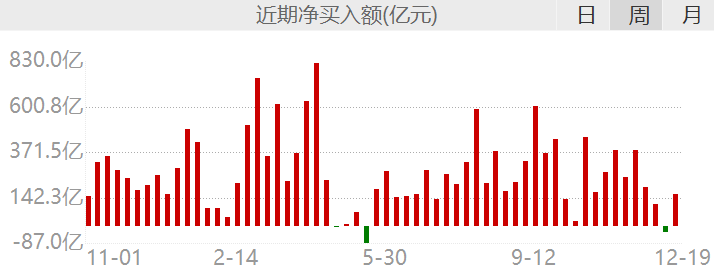
Group 1 - Since late November, net inflows of southbound funds have continued to shrink, with a net outflow observed in the second week of December. CICC suggests that the new public fund regulations may have led to a reallocation or outflow of funds, but this factor is expected to have only a short-term impact and should not be extrapolated indefinitely [1] - Looking ahead, CICC notes that the Hong Kong stock market is more sensitive to liquidity compared to A-shares and is structurally more responsive to fundamentals. The true support for the Hong Kong market and valuation elasticity comes from technology (especially AI) and consumption. The technology sector in Hong Kong is more focused on applications and internet platforms, particularly in the "application layer" of AI rather than the "hardware layer," where current hardware has higher short-term certainty. The consumption sector mainly consists of discretionary and new consumption, which currently shows weak sentiment and lacks catalysts [2] - Huatai Securities indicates that the current market is still in a left-side layout phase, with the right-side turning point not yet clear. There is a strong consensus expectation for an early spring rally, but the Hong Kong market still faces supply and demand pressures at year-end, leading to uncertainty regarding the "Christmas rally." The first quarter may present a higher probability phase for gains [2] Group 2 - For the first quarter's market layout in Hong Kong, several ETFs are highlighted: the Hang Seng Technology Index ETF (513180.SH), which tracks the largest technology index; the Hang Seng Internet ETF (513330.SH), focusing on internet giants and having the highest number of holders among Hong Kong ETFs; and the Hong Kong Stock Connect Technology ETF (159101.SZ), which covers a wide range of Hong Kong technology sub-sectors, including AI applications, innovative pharmaceuticals, robotics, and smart vehicles [3] - From December 15 to December 19, the Hong Kong market experienced a rebound after an initial decline, with the Hang Seng Technology Index showing a weekly decline of 2.82%. Southbound funds returned to net inflows, totaling 16.2 billion yuan, reversing the previous week's net outflow trend [4]


中信建投:港股中期交易窗口打开,调整充分的成长板块或成核心主线
Mei Ri Jing Ji Xin Wen· 2025-12-19 01:35
Core Viewpoint - The Hong Kong stock market is entering a significant trading window as it approaches the end of the year, following a period of adjustment influenced by fluctuating overseas macro expectations [1] Group 1: Market Conditions - After a unilateral rise in September, the Hong Kong stock market has experienced fluctuations and adjustments since October due to overseas macro expectations [1] - The current market is in the mid-stage of a bull market, with previously adjusted growth sectors expected to lead the market as sentiment improves and macro uncertainties decrease [1] Group 2: Factors Contributing to Trading Window - The recent market adjustment has increased the safety margin, providing ample space for a new round of rebound [1] - Southbound capital continues to show net inflow, which may lead to a resonance of internal and external liquidity as overseas liquidity expectations recover [1] - Recent improvements in China's macro fundamentals, including rising inflation data and marginal improvements in exports, are expected to broaden the valuation recovery beyond just the prosperous sectors [1] - The U.S. new National Security Strategy has not prioritized China, potentially reducing the intensity of confrontation, combined with domestic policies to boost internal demand, which may positively stimulate the Hong Kong stock market [1] Group 3: Relevant ETFs - The Hang Seng Technology Index ETF (513180.SH) is the largest ETF tracking the Hang Seng Technology Index [2] - The Hang Seng Internet ETF (513330.SH) focuses on major internet giants and has the highest number of holders among Hong Kong-related ETFs [2] - The Hong Kong Stock Connect Technology ETF (159101.SZ) covers a wide range of Hong Kong technology sub-sectors, including popular concepts like AI applications, innovative pharmaceuticals, robotics, and smart vehicles [2]

美元兑人民币逼近7!历史上人民币升值周期股市大多上涨
Mei Ri Jing Ji Xin Wen· 2025-12-16 06:37
Core Viewpoint - The offshore RMB against the USD reached a high of 7.04, marking the highest level since October 4, 2024, while the onshore RMB also peaked at 7.04, the highest since October 8, 2024. This appreciation contrasts with the recent decline in the Hong Kong stock market, which has seen a greater adjustment compared to the A-share market. External liquidity constraints are identified as a primary reason for the adjustment in the Hong Kong market [1]. Group 1: Currency and Market Dynamics - The Federal Reserve's decision to cut interest rates by 25 basis points has been accompanied by an early expansion of its balance sheet, leading to rising US Treasury yields [1]. - Concerns are growing regarding the Bank of Japan potentially restarting its interest rate hike cycle on December 19, which, along with a large-scale economic stimulus plan, could further increase Japanese bond yields and trigger capital repatriation worries [1]. - Historically, since the currency reform, the RMB has experienced nine appreciation cycles, during which the stock market has generally risen [1]. Group 2: Investment Opportunities in Hong Kong Stocks - The Hong Kong stock market exhibits greater elasticity compared to the A-share market, with higher growth potential [1]. - Analysis from Huatai Securities indicates that the performance of the Hang Seng Technology Index tends to be strong in the first quarter of each year, suggesting that the current decline may have pre-released risks, providing an opportunity for re-entry and positioning for 2026 at year-end [1]. Group 3: Relevant ETFs in Hong Kong Market - The Hang Seng Technology Index ETF (513180.SH) is the largest ETF tracking the Hang Seng Technology Index [2]. - The Hang Seng Internet ETF (513330.SH) has the highest number of holders among Hong Kong-related ETFs [2]. - The Hong Kong Stock Connect Technology ETF (159101.SZ) covers a wide range of technology sub-sectors, including AI applications, innovative pharmaceuticals, robotics, semiconductors, and smart vehicles [2].
小鹏汽车-W:出海增程新阶段,预测Q4一致预期营收217.34~340.34亿元,同比35.0%~111.3%
Xin Lang Cai Jing· 2025-12-10 13:56
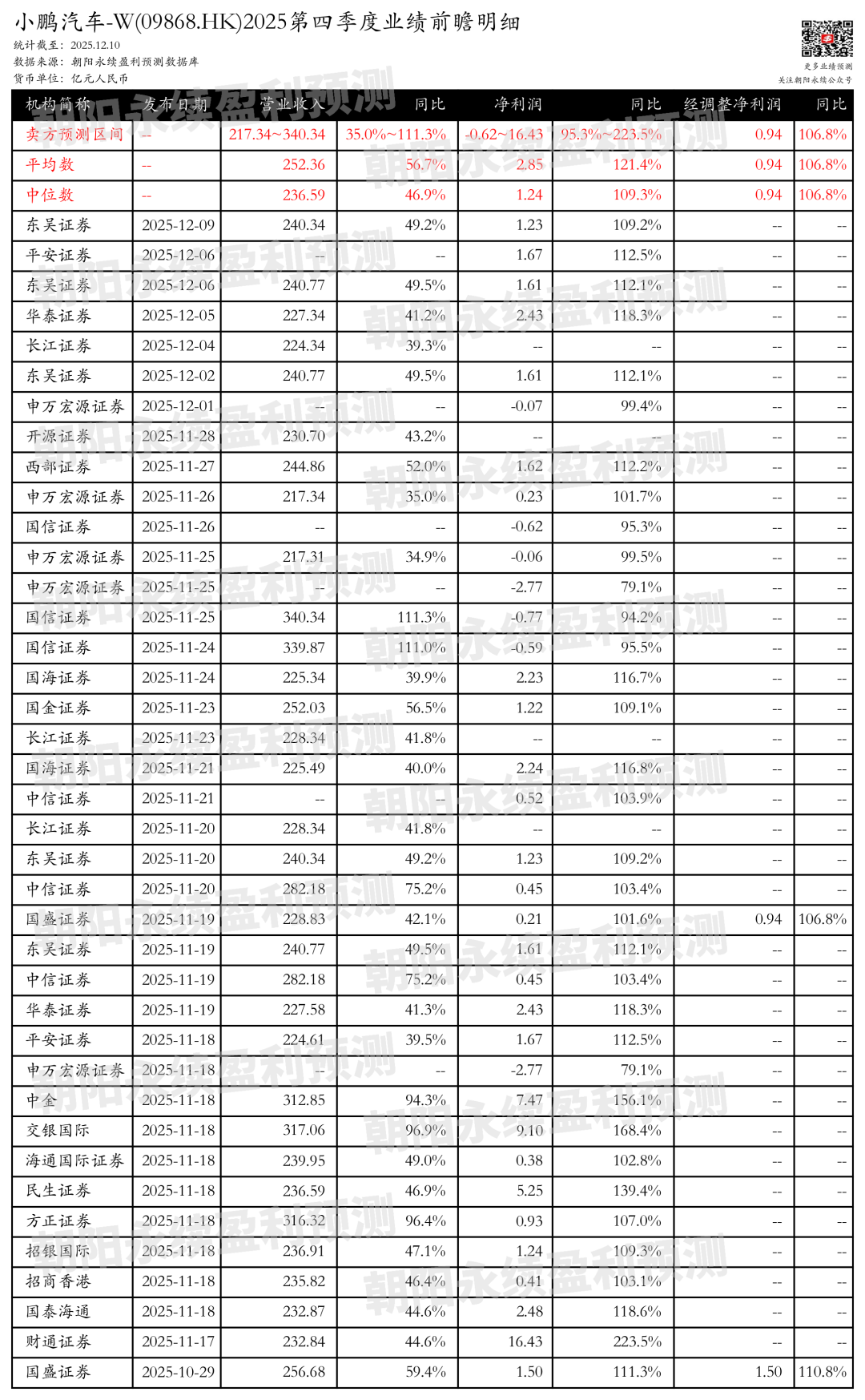
Core Viewpoint - Xiaopeng Motors is expected to report significant growth in Q4 2025, with revenue forecasts ranging from 21.734 to 34.034 billion RMB, representing a year-on-year increase of 35.0% to 111.3% [1][7]. Financial Performance Expectations - Q4 revenue is projected between 21.734 billion and 34.034 billion RMB, with a year-on-year growth of 35.0% to 111.3% [1][7]. - Net profit is anticipated to range from -0.62 billion to 1.643 billion RMB, showing a year-on-year increase of 95.3% to 223.5% [1][7]. - Adjusted net profit is expected to be 0.94 billion RMB, reflecting a year-on-year change of 106.8% [1][7]. Analyst Predictions - The average revenue forecast is 25.236 billion RMB, indicating a 56.7% year-on-year growth [3][8]. - The median revenue forecast stands at 23.659 billion RMB, with a year-on-year increase of 46.9% [3][8]. - Various securities firms have provided differing estimates, with Dongwu Securities predicting 24.034 billion RMB in revenue and a net profit of 1.23 billion RMB [3][8]. Business Strategy and Developments - Xiaopeng Motors plans to launch seven new models in 2026, covering both pure electric and extended-range vehicles, marking a new phase in the C-end smart vehicle sector [5][10]. - The Robotaxi project is expected to commence trial operations in late 2026, potentially transforming the trillion-yuan mobility market [12][10]. - A deepened collaboration with Volkswagen is anticipated, with plans to jointly launch two full-size electric models in 2026 [13][10]. - The IRON robot is set to enter mass production and will be piloted in commercial service scenarios, showcasing the company's capabilities in the smart robotics field [13][10]. - The A868 flying car has entered the testing phase, with global deliveries planned for the second half of 2026 [14][10]. Recent Performance Highlights - In Q3 2025, Xiaopeng Motors achieved a revenue of 20.38 billion RMB, a year-on-year increase of 101.8%, with a gross margin of 20.1% [6][14]. - The company expects to achieve profitability in Q4, with an adjusted net loss reduced to 1.5 billion RMB [6][14]. - The automotive segment reported a revenue of 18.05 billion RMB, with a record delivery of 116,000 units [6][14]. - Overseas deliveries increased by 125%, with local production capabilities established in Austria and Indonesia [6][14].
对理想所有非共识本质是四点非共识
理想TOP2· 2025-11-16 09:27
Core Viewpoints - The article discusses four main areas of non-consensus regarding Li Auto, including perceptions of Li Xiang's capabilities, reasons for the company's poor sales this year, the direction and ultimate goals of smart vehicles, and the prospects of physical AI [1][2]. Group 1: Non-Consensus Areas - The first area of non-consensus revolves around how to evaluate Li Xiang's abilities and the implications of leadership errors [1]. - The second area focuses on differing opinions regarding the reasons behind Li Auto's disappointing sales performance this year [1]. - The third area addresses the advanced directions and ultimate goals of smart vehicles, highlighting two main schools of thought: one prioritizing high sales models and the other focusing on end goals [3][4]. - The fourth area concerns the future of physical AI, including its exploration necessity and potential pathways for realization [1]. Group 2: Bayesian Reasoning - The article emphasizes that differing beliefs about the future stem from individuals' Bayesian reasoning, where the strength of prior beliefs and the likelihood of new evidence vary among people [1]. - Those who "believe it to see it" tend to have strong priors that may lead to a higher tolerance for errors, while those who "see it to believe it" have weaker priors, making them more responsive to new evidence [2]. Group 3: Smart Vehicle Directions - Two main factions exist regarding the direction of smart vehicles: one that focuses on high sales models and another that starts with the end goal in mind [3][4]. - The "high sales model" faction emphasizes current successful vehicle features, while the "end goal" faction believes in a future defined by AI and automated driving [5]. Group 4: Evaluation of Li Auto's Strategy - The article notes that perceptions of Li Auto's long-term strategy and capabilities vary significantly, with some believing in the company's potential for recovery through iterative improvements, while others doubt Li Xiang's abilities due to repeated errors [6]. - The evaluation of Li Auto's products and strategies is influenced by whether individuals focus on immediate performance or the foundational principles guiding the company's design [5][6].


资金抄底港股科技ETF天弘(159128)2100万份!机构看好港股四季度表现
Ge Long Hui· 2025-11-14 06:59
Group 1 - The core viewpoint of the news highlights the impact of the overnight decline in US tech stocks on Hong Kong tech stocks, with the Hong Kong tech ETF Tianhong (159128) dropping by 2.16% despite a net subscription of 21 million units during the day [1] - Alibaba has reportedly launched a secret project called "Qianwen," aiming to develop a personal AI assistant app based on the Qwen model, directly competing with ChatGPT [1] - Apple has introduced a mini-program partner plan, reducing its commission to 15% [1] Group 2 - Several constituent stocks reported strong Q3 earnings: Tencent's Q3 revenue increased by 15% year-on-year, with adjusted net profit up by 18%, both exceeding expectations; SMIC's Q3 revenue was 17.162 billion yuan, a 9.9% year-on-year increase, with net profit rising by 43.1% to 1.517 billion yuan; Bilibili's Q3 net profit reached 469 million yuan, with adjusted net profit soaring by 233% to 786 million yuan [1] - The Hong Kong tech ETF Tianhong (159128) tracks the Guozheng Hong Kong Stock Connect Technology Index, focusing on the top 30 core tech assets in Hong Kong, with the top ten constituents accounting for over 75% of the total [1] - The ETF offers a comprehensive investment tool for Hong Kong tech, covering sectors like AI, smart vehicles, innovative pharmaceuticals, and semiconductors, with no restrictions on QDII quotas and T+0 trading available [1] Group 3 - According to China Merchants Securities, the Hong Kong stock market is expected to experience a pattern of initial decline followed by recovery in Q4, with expectations of the Federal Reserve continuing to lower interest rates in December and ending balance sheet reduction, which would alleviate liquidity pressure [2] - The inflow of overseas funds into the Hong Kong stock market is anticipated to improve, with a positive trend in southbound capital net inflows [2] - Overall, the combination of fundamentals, policies, and liquidity is expected to support a rebound in the Hong Kong stock market, which is currently seen as undervalued [2]


【招商电子】比亚迪电子:Q3业绩短期承压,关注算力业务放量、A客户新品布局
招商电子· 2025-11-02 12:11
Core Viewpoint - The company reported a decline in Q3 performance primarily due to the delayed shipment of a new product from a major client, impacting revenue and profit margins [1][2]. Financial Performance Summary - Q3 revenue was 42.68 billion yuan, a year-on-year decrease of 2.0% and a quarter-on-quarter decrease of 2.4% [1]. - Gross profit for Q3 was 2.95 billion yuan, down 20.0% year-on-year and 8.5% quarter-on-quarter, with a gross margin of 6.9%, reflecting a decline of 1.6 percentage points year-on-year and 0.5 percentage points quarter-on-quarter [1]. - Net profit for Q3 was 1.41 billion yuan, a year-on-year decrease of 9.0% but a quarter-on-quarter increase of 27.0%, resulting in a net margin of 3.3%, down 0.3 percentage points year-on-year but up 0.8 percentage points quarter-on-quarter [1]. Business Outlook - For 2026, the company anticipates growth driven by three main areas: AI edge computing, smart vehicles, and computing power [2]. - In the consumer electronics sector, the company expects to increase its market share in A client's Pad and mobile glass business, while enhancing the quality and efficiency of mobile casing production [2]. - The automotive business is projected to maintain rapid growth despite a slowdown in the parent company's vehicle sales, driven by increased shipments of smart cockpit and thermal management products [2]. - The computing power segment is expected to expand significantly, with liquid cooling products anticipated to ramp up production in the first half of next year [2]. - The robotics sector will leverage the company's expertise in system integration and sensor fusion to enhance its offerings in key components and systems [2]. Investment Recommendation - The company is positioned as a leading precision manufacturing enterprise with strong material research, product design, and vertical integration capabilities [3]. - The long-term growth potential is supported by its strategic positioning in the innovation cycle of major clients, new product launches in smart vehicles, breakthroughs in computing power, and advancements in robotics [3].

奔驰13亿砸向重庆AI明星,身体还德国,灵魂得中国
3 6 Ke· 2025-09-28 07:37
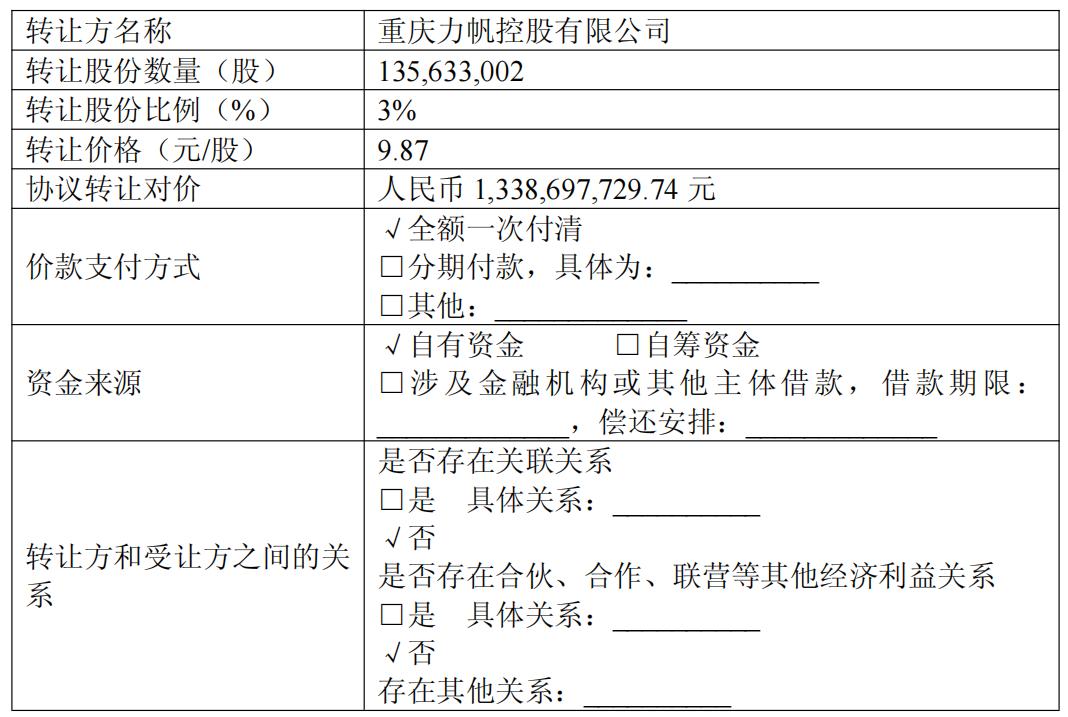
Core Viewpoint - Mercedes-Benz has invested 1.339 billion RMB in Qianli Technology, becoming its fifth-largest shareholder, marking a strategic move towards enhancing its presence in the Chinese smart driving sector [1][2][12]. Group 1: Investment Details - Qianli Technology announced that Chongqing Lifan Holdings transferred 135.63 million shares at a price of 9.87 RMB per share, which is a 25% discount from the previous closing price [2][3]. - After the transaction, Lifan's shareholding in Qianli will decrease from 13.68% to 10.68%, while Mercedes-Benz will hold a 3% stake [3][12]. - The investment is part of Mercedes-Benz's broader strategy to integrate Chinese technology into its operations, following a similar investment in Momenta [15][17]. Group 2: Company Background - Qianli Technology, previously known as Lifan Technology, has undergone significant transformation under the leadership of its new chairman, Yin Qi, who has a strong background in AI and technology [7][9]. - The company is planning to list H-shares on the Hong Kong Stock Exchange, with a board meeting held on September 12 to approve the proposal [11][12]. Group 3: Strategic Implications - The investment is seen as a further alignment between Mercedes-Benz and Geely, which has previously collaborated with Mercedes on various projects [12][14]. - Qianli Technology is expected to provide technical support for upcoming Mercedes models in China, particularly in the electric vehicle segment [13][14]. - The collaboration with Qianli and previous investments in Momenta indicate a shift towards utilizing Chinese technology for smart driving solutions in Mercedes-Benz vehicles [15][19].