小同桌

Search documents
如果存在理想第一代AI眼镜, 先降低预期可能是上策
理想TOP2· 2025-11-24 11:54
Core Insights - The exploration of physical AI terminals, such as glasses, involves necessary trial and error, and lowering expectations may be a prudent approach [1] - By April 2025, the characteristics of AI terminals identified by Li Xiang include: 1) 360-degree perception of the physical world 2) Cognitive decision-making ability 3) Action capability 4) Self-reflection and feedback [1] - The development of robots requires research and analysis based on industry progress, and certain capabilities must be addressed internally [1] Group 1 - The current state of glasses technology presents a "impossible triangle" regarding display capability, wearability, and battery life, with Vision Pro scoring 9 in display, 6-7 in battery life, and nearly 0 in wearability, while Rokid glasses score 7-8 in wearability and battery life but only 3 in display [2] - Achieving simultaneous scores of 7-8 in display, wearability, and battery life will require advancements across various technologies, including batteries, materials, semiconductors, optics, and communications [2] - The overall performance of the company in various departments, including sales management and supply chain, has been average, indicating challenges in meeting high-frequency user demands [2] Group 2 - Current AI glasses are unlikely to be particularly impressive in their first generation, as significant issues remain to be resolved [2] - The direction for AI glasses appears clear, but achieving the desired performance metrics will require overcoming numerous technical challenges [2]



大模型方向的座舱产品经理认为理想座舱是行业绝对的标杆
理想TOP2· 2025-09-16 15:04
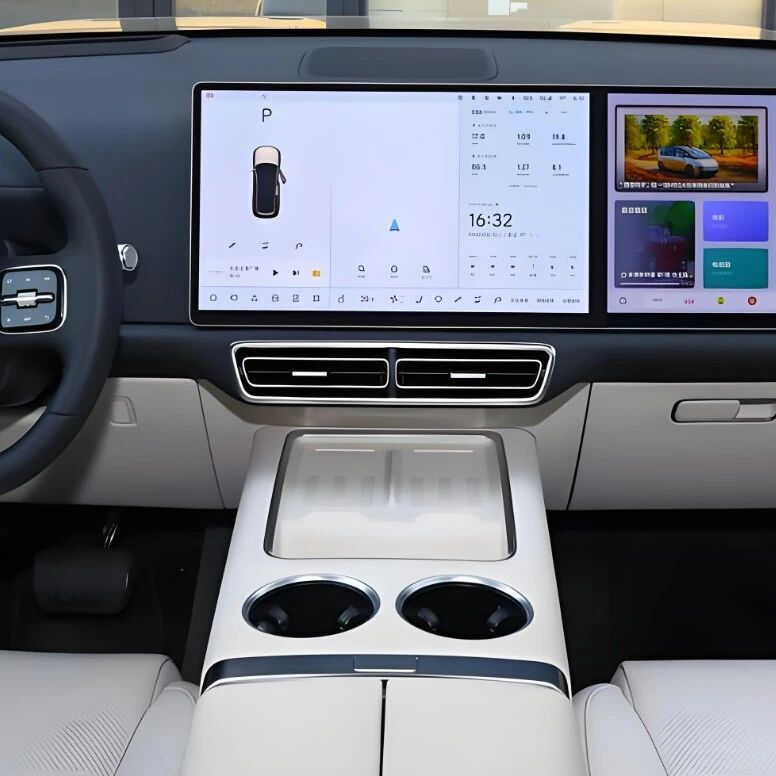
Core Viewpoint - The article emphasizes that Li Auto has set a benchmark in the automotive cockpit intelligence sector, showcasing advanced features and innovations that distinguish it from competitors [2][3]. Group 1: Li Auto's Innovations - Li Auto's OTA 8.0 update introduces significant advancements in cockpit intelligence, including the MindGPT-40 audio model and Duplex full-duplex technology, enhancing user interaction and experience [2][3]. - The "Little Classmate" feature is highlighted as more than just a simple chat tool, capable of sophisticated interactions and task management [2][3]. - The "Task Master" function allows users to create and execute tasks in a conversational manner, demonstrating a high level of integration with the vehicle's hardware and software [3]. Group 2: Competitive Landscape - The competitive analysis indicates that Li Auto is primarily compared with Xiaomi in the cockpit interaction space, while previously, comparisons were made with XPeng and NIO [4]. - Industry insiders express skepticism about other companies' commitment to surpassing Li Auto, often questioning whether they have the necessary resources and decision-making capabilities [4][5]. Group 3: Challenges and Future Outlook - The article notes that while Li Auto's AI investments are substantial, the immediate financial returns may be limited, as consumers often prioritize tangible features over invisible technological advancements [5][6]. - The complexity of integrating AI features into vehicles is acknowledged, with a specific example of the difficulty in executing simple voice commands compared to Li Auto's streamlined approach [6][7]. - The article concludes that maintaining profitability while expanding into both range-extended and pure electric vehicles presents a significant challenge for Li Auto [6][7].