瑞幸美式咖啡

Search documents
阿里千问加入“一句话点外卖”
第一财经· 2026-01-15 02:54
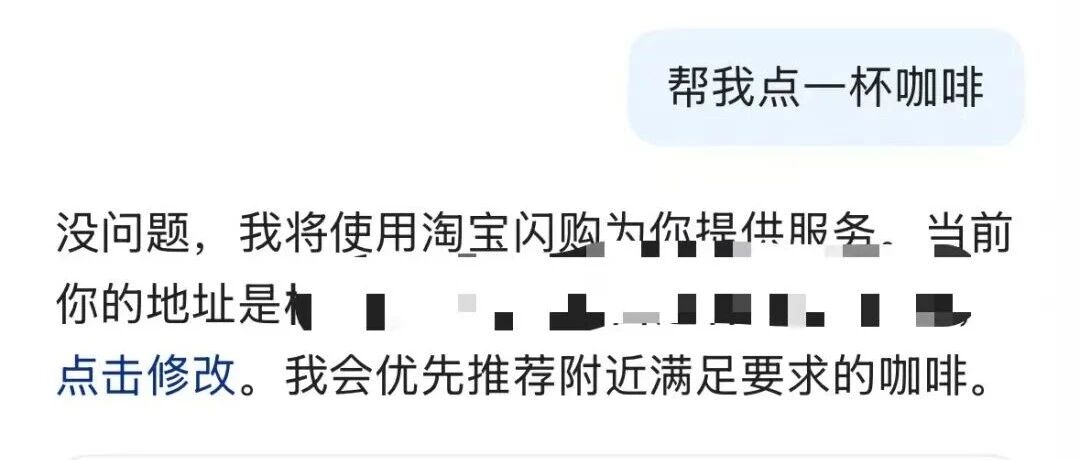
Core Viewpoint - The article discusses the launch of the Qianwen App's integration with Alibaba's ecosystem, enabling AI-driven shopping functionalities such as food delivery, purchasing items, and booking flights, marking a significant step in the AI era's competitive landscape [3][7]. Group 1: Qianwen App Features - On January 15, 2026, Qianwen App announced full integration with Alibaba's services, allowing users to perform tasks like ordering food and shopping through AI [3]. - Users can interact with Qianwen by simply typing requests, such as ordering a coffee, which the app processes by suggesting nearby options and facilitating payment through Alipay [3][5]. - The app has improved its response time significantly, reducing the time to generate delivery options from nearly 30 seconds to about 10 seconds, enhancing user experience [7]. Group 2: Strategic Importance - Qianwen is viewed by Alibaba's management as a critical component in the "future battle of the AI era," with plans to develop it into a "super app" that integrates various life scenarios like navigation, food delivery, and shopping [8]. - The establishment of the Qianwen C-end business group in December 2025, led by Alibaba's vice president, aims to consolidate various services into a single platform, addressing the need for a "super entry point" in the consumer market [8]. Group 3: Competitive Landscape - The competition in the AI conversational assistant space is intensifying, with Alibaba aiming to differentiate its offerings beyond traditional dialogue interfaces [10]. - The integration of services like Gaode and Taobao Flash Purchase into Qianwen represents a strategic move to create a comprehensive AI entry point within Alibaba's ecosystem, potentially increasing commercial opportunities [9].


咖啡因又让霸王茶姬遭遇“无妄之灾”?
3 6 Ke· 2025-12-29 23:17
Core Viewpoint - The article discusses the controversy surrounding the beverage brand "霸王茶姬" (Bawang Tea) being labeled as a "soft drug" or "quasi-drug" due to its high caffeine content, which has sparked public debate and affected the brand's stock price [2][12][23]. Group 1: Controversy and Public Reaction - The term "quasi-drug" was used by a content creator, leading to widespread discussion and concern about the caffeine levels in Bawang Tea's products [3][4]. - The association of the brand with "drugs" has resulted in significant public backlash, with many consumers sharing experiences of insomnia and anxiety after consuming the drinks [12][17]. - Despite the negative connotation, the overall public reaction was not as severe as anticipated, with some comments calling for the brand's legal team to respond [18][20][23]. Group 2: Stock Market Impact - Following the controversy, Bawang Tea's stock price dropped over 14% at one point, marking a new low since its listing, and the hashtag related to the drop trended on social media [23][25]. - The article notes that attributing the stock price decline solely to the "soft drug" label may be overly simplistic, as the broader market was also experiencing declines on that day [25]. Group 3: Caffeine Content Analysis - Bawang Tea's products, particularly the "万里木兰" (Wanli Mulan), contain high caffeine levels, with one variant showing 235 mg of caffeine per 580 ml [32][39]. - Comparatively, the caffeine content in Bawang Tea's drinks can exceed that of traditional coffee, with some products containing up to 406 mg per 500 ml [41][42]. - The article emphasizes that the caffeine content varies significantly across different tea products, with Bawang Tea's "伯牙绝弦" (Boyan Juexian) containing 105 mg per serving, aligning with their product labeling [44]. Group 4: Regulatory and Industry Response - The article highlights the need for brands to clarify caffeine content and educate consumers, suggesting that Bawang Tea should actively engage in public relations efforts to counter misinformation [67][70]. - It mentions that other brands, like 喜茶 (Heytea), have implemented a caffeine labeling system to inform consumers about caffeine levels in their products [72]. - The industry is encouraged to provide a variety of options to cater to different consumer preferences regarding caffeine intake [73].

当一座县城有了“胖东来”
虎嗅APP· 2025-07-21 11:03
Core Viewpoint - The article discusses the transformation of consumer behavior and retail dynamics in a small county town, highlighting the rise of local brands and the impact of changing consumption patterns on traditional retail models [3][4][9]. Group 1: Consumer Behavior - There is a shift from top-down consumption upgrades to bottom-up upgrades, with local brands gaining prominence over international luxury brands [3][4]. - The presence of local supermarkets like "胖东来" reflects a change in consumer preferences, where affordability and local flavor are prioritized over brand prestige [4][9]. - Consumers in the county town are increasingly drawn to affordable high-end fruits and local clothing brands, indicating a shift in spending habits [9][10]. Group 2: Retail Dynamics - The article notes the emergence of various local brands and supermarkets that cater to the unique tastes and preferences of county residents, contrasting with the offerings of larger cities [4][9]. - The county town has seen a proliferation of tea and coffee shops, indicating a growing demand for such products despite the absence of aggressive marketing strategies typical in larger cities [23][28]. - The local retail environment is characterized by a mix of traditional and modern consumption patterns, with residents often opting for in-person shopping over online delivery services [30][31]. Group 3: Education and Training - There is a strong emphasis on education in the county, with parents willing to invest significantly in their children's education, leading to a proliferation of training institutions [20][21]. - The article highlights the competitive nature of local education, with families increasingly choosing to keep their children in local schools rather than sending them to larger cities [21][22]. - The rising costs of education and extracurricular activities are noted, with families spending substantial amounts on training despite the relatively low average income in the area [19][20]. Group 4: Economic Context - The county's economy is transitioning, with traditional land-based revenue models facing challenges, leading to a need for diversification [39]. - Despite economic pressures, the stability of life in the county provides a sense of security for residents, who are less burdened by urban financial pressures such as mortgages [39][40]. - The article suggests that while opportunities may be fewer compared to larger cities, the quality of life in the county remains appealing to many residents [39][40].
疯狂星期六 外卖大战又升级!
Zhong Guo Ji Jin Bao· 2025-07-12 12:31
Core Viewpoint - The recent escalation in the food delivery battle in China has led to significant promotional activities, including "0 yuan milk tea/coffee" offers, which have attracted widespread consumer attention and participation [2][3][5]. Group 1: Market Dynamics - Major food delivery platforms, including Meituan and Alibaba's Taobao Shanguo, have initiated large-scale subsidies to attract users, with promotions such as free drinks and substantial discounts [2][5]. - The competition has intensified since late June, with investment banks like Goldman Sachs and HSBC lowering Alibaba's target stock price by an average of 8% due to the ongoing fierce market rivalry [12]. - The battle is costly, with Nomura estimating that Alibaba, Meituan, and JD.com spent approximately $4 billion on various discounts in the second quarter alone [12]. Group 2: Financial Implications - Analysts predict that Alibaba's aggressive investment in food delivery and instant retail will significantly weaken its near-term profit expectations, leading to a 15% reduction in its target stock price [13]. - Goldman Sachs forecasts that Alibaba may incur losses of 41 billion yuan (approximately $5.7 billion) in its food delivery business over the next 12 months, which could represent about one-third of its net profit for the fiscal year ending in March [12]. Group 3: Competitive Landscape - The competition is expected to persist longer than anticipated, with major players currently in a stronger financial position and possessing more cash reserves [12]. - All platforms aim to become the "daily essential app" for users, and the subsidy war is unlikely to cool down until a balance is reached among the main competitors [12].

疯狂星期六
中国基金报· 2025-07-12 12:23
Core Viewpoint - The recent escalation in the food delivery battle in China has led to significant promotional activities, including "0 yuan" offers for beverages, indicating a fierce competition among major platforms like Meituan and Alibaba [2][9]. Group 1: Promotional Activities - On July 12, major food delivery platforms initiated large-scale subsidies, particularly featuring "0 yuan milk tea/coffee" promotions that went viral online [2]. - Meituan launched a "0 yuan delivery" campaign, allowing users to redeem free drinks from popular brands, with only a minimal delivery fee if not picked up in-store [3]. - Alibaba's Taobao Shanguo introduced various discount coupons, including "18.8 yuan free order cards," covering multiple meal times, enabling users to achieve "0 yuan purchase" [5]. Group 2: Market Impact - The promotional activities led to a surge in orders at beverage stores, with some locations experiencing order numbers exceeding four digits and wait times surpassing one hour [7]. - Investment banks, including Goldman Sachs and HSBC, have lowered Alibaba's target stock price by an average of 8% due to the intensified competition in the food delivery sector [9]. - Analysts predict that Alibaba's aggressive investment in the food delivery and instant retail sectors will significantly weaken its near-term profit outlook, with potential losses in the food delivery business reaching approximately 41 billion yuan (around 5.7 billion USD) over the next year [10].