
生命探测仪

Search documents
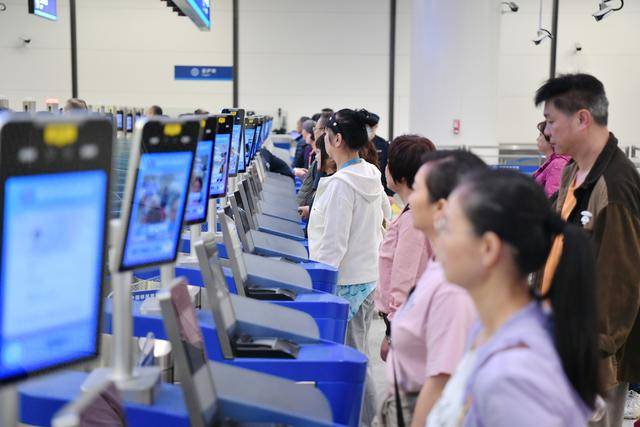
科技赋能“智”享便捷 “快通关”体验点燃跨境消费新热潮
Sou Hu Cai Jing· 2025-12-30 11:37
Core Insights - The article highlights the transformation of cross-border travel and consumption experiences in the Guangdong-Hong Kong-Macao Greater Bay Area driven by technological innovation, particularly through the implementation of smart customs clearance systems [1][4][10] Group 1: Technological Innovations - Shenzhen's border inspection station has embraced smart technologies, deploying advanced equipment such as facial recognition systems, drones, and robotic inspection devices to enhance border control efficiency and safety [1][4] - The use of new technologies has led to a significant increase in the detection of illegal activities, with the proportion of cases identified through these advanced tools rising to 56% [4] - The development of the "smart mobile command vehicle" and the establishment of the "Meisha Tide Laboratory" have showcased Shenzhen's commitment to innovation, resulting in a 96.4% year-on-year increase in case resolution rates [4][10] Group 2: Enhanced User Experience - The introduction of the facial recognition customs clearance system has streamlined the crossing process for commuters, allowing for a smoother experience akin to subway transfers [5][6] - The new customs model was first piloted at Shenzhen Bay Port and has since expanded to 12 ports across five cities, receiving positive feedback from travelers and being included in Shenzhen's 2025 government work report [6][10] Group 3: Economic Impact - The efficient customs processes have stimulated cross-border consumption, with significant increases in passenger traffic at various ports, including over 30 million people crossing at the Lian Tang border station, a year-on-year growth of over 15% [6][7] - The total number of border crossings at Huanggang station exceeded 75 million, with a 9% increase in passenger traffic and an 11% increase in vehicle crossings since the beginning of 2025 [7][9] - The introduction of policies such as 240-hour visa-free transit has contributed to a 2.4-fold increase in sales of tax-refunded goods for departing travelers, indicating a positive economic shift [9][10]

甘肃兰州榆中县发生山洪灾害 中国安能专业救援队紧急驰援
Jing Ji Guan Cha Wang· 2025-08-08 11:24
Core Points - Continuous heavy rainfall in Gansu's Yuzhong County has led to mountain flood disasters, resulting in 10 deaths and 33 missing persons as of August 8, 15:30 [1] - China Energy Construction Group has activated its emergency response mechanism, mobilizing over 170 technical experts and rescue personnel from various regions [1] - The rescue operation includes the deployment of 70 sets of specialized rescue equipment, such as multifunctional detection drones, 3D laser scanners, and life detection instruments [1]
我国应急救援水平大幅提升 无人机、卫星等成应急装备标配
Zhong Guo Jing Ying Bao· 2025-06-14 12:55
Core Insights - The Chinese government is increasingly prioritizing emergency technology and information infrastructure, leading to significant improvements in rescue efficiency through the adoption of advanced equipment such as big data platforms, drones, life detectors, and satellite communications [1] Group 1: Emergency Management Developments - The emergency management system has seen a substantial enhancement in overall rescue capabilities, supported by efficient rescue mechanisms, advanced technology, and professional teams [2] - A new disaster assessment technology system has been established, integrating remote sensing, ground sampling, simulation, and machine learning to improve the scientific and rational aspects of disaster assessments [1][2] - The emergency management work has achieved a "qualitative leap" by leveraging technology, moving away from traditional experience-based methods to more precise and efficient approaches in disaster response [1] Group 2: Future Expectations and Innovations - There is a strong expectation for future emergency management work, particularly in enhancing the capabilities of safety production rescue teams through increased research and development of high-tech equipment [2] - The integration of "air-ground" collaborative monitoring and the establishment of a "digital twin - second-level warning - intelligent decision-making" system is anticipated to further enhance disaster response efforts [2] - Firefighting efforts are being improved through the use of technologies such as thermal imaging, AI monitoring, and unmanned assistance, which contribute to a more effective integrated warning network [2][3]
坚持人民至上生命至上
Guang Xi Ri Bao· 2025-05-25 02:46
Core Points - A sudden mountain flood in Sanhe Village, Longsheng Autonomous County, led to 8 villagers being reported missing, prompting an immediate and organized rescue operation involving over 930 personnel from various departments and local communities [2][9] - The rescue efforts utilized advanced technology such as search dogs, life detectors, and drones, combined with human resources to conduct thorough searches for the missing individuals [2][8] Group 1: Rescue Operations - The local government activated an emergency response mechanism immediately after the disaster, forming a command center for rescue operations [6] - Firefighters and rescue teams arrived on-site early on May 23, with the first responders utilizing specialized equipment for searching [6][7] - By May 24, 5 out of the 8 missing individuals had been located, with ongoing efforts to find the remaining individuals [9] Group 2: Community Response - Villagers demonstrated remarkable self-help and mutual assistance during the disaster, which significantly mitigated losses [5] - Local leaders and community members quickly organized evacuations and provided support to those in need, showcasing a strong sense of solidarity [3][4] - Temporary shelters were established to accommodate displaced individuals, ensuring their basic needs were met with adequate supplies [8]
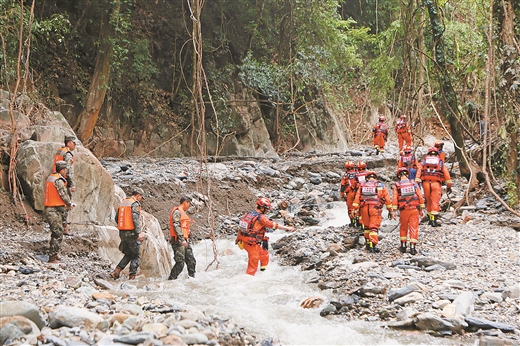
科普丨改写“生死时速”的地震救援科技
Xin Hua Wang· 2025-04-02 04:20
Core Viewpoint - The article discusses the advancements in earthquake rescue technology, emphasizing the importance of various technological tools that enhance rescue efficiency and the development trends towards portability, integration, and intelligence in rescue equipment [1]. Group 1: Life Detection Technologies - Life detection methods during rescue operations include video, audio, and radar technologies, which are essential for locating survivors in rubble [2]. - Video life detectors, known as "snake eyes," can penetrate tight spaces and often include features like illumination and infrared capabilities [2]. - Audio detectors capture sound waves to identify life signs, while radar detectors use electromagnetic waves to detect life signs through non-metallic obstacles, with advancements leading to the use of two-dimensional radar for better visualization [2]. Group 2: Demolition and Support Equipment - The primary danger during earthquakes is the collapse of buildings, necessitating the use of demolition equipment to create rescue pathways [3]. - Large demolition tools include bulldozers and excavators, while smaller tools like hydraulic cutters and impact hammers are used for precise tasks [3]. - The future of demolition tools is focused on being small, lightweight, and high-powered, with additional support tools like jacks and inflatable airbags being used to stabilize rescue pathways [3]. Group 3: Communication and Positioning Technologies - Earthquakes often disrupt communication infrastructure, creating "information islands" that hinder rescue efforts [4]. - Restoring communication is a priority for rescue teams, utilizing local radio systems and satellite phones for long-distance communication [5]. - Advanced technologies like portable base stations and drones are being employed to enhance signal coverage and improve rescue efficiency [5]. Group 4: Intelligent Equipment - The use of intelligent equipment, such as four-legged robots and drones, is becoming a key trend in earthquake rescue, allowing for efficient search and delivery of supplies [6]. - Robots are being developed to mimic human movement and perform tasks in hazardous environments, significantly reducing the physical burden on human rescuers [6]. - The rapid development of embodied intelligence technology is expected to expand the application scenarios for robots in earthquake rescue operations [6].