生意店长

Search documents
“AI数字员工”上岗,带来哪些变化?
Ren Min Ri Bao· 2025-11-13 21:15
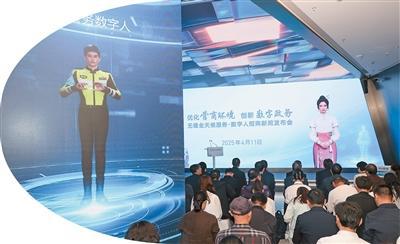
Core Insights - The emergence of "AI digital employees" signifies a shift from traditional automation to intelligent agents that actively participate in production, operations, and services, supporting digital and intelligent transformation across various industries [2][3] Group 1: Empowering Retail Operations - "AI digital employees" are helping small retail businesses enhance their online operations, reducing the complexity of managing online sales [3][4] - In a case study, a massage shop owner utilizes an "AI digital employee" for scheduling and order management, which has improved operational efficiency and reduced errors in booking [3][4] - The retail sector has seen the deployment of multiple "AI digital employees" that assist in various operational aspects, including business diagnostics and online management [4] Group 2: Optimizing Power Services - The integration of "AI digital employees" in the electricity sector has improved customer service and operational efficiency, addressing long-standing issues such as service standardization and long wait times [5][6] - An example from a power company shows that an "AI digital employee" can guide customers through complex processes, significantly enhancing user experience and reducing processing time [5][6] - The introduction of an "AI virtual dispatcher" has streamlined the scheduling process in power distribution, cutting down the time required for operational tasks by 50% [8] Group 3: Accelerating Human-Machine Collaboration - The impact of "AI digital employees" on job roles is characterized by a dual effect of replacement and enhancement, with a greater emphasis on the latter [9] - In the service retail sector, "AI digital employees" have been shown to assist individuals with disabilities, thereby lowering operational barriers for these groups [9] - Future workforce dynamics will likely involve collaboration between "AI digital employees" and human workers, necessitating the development of skills in AI tool usage and soft skills for effective human-machine interaction [9] Group 4: Challenges and Governance - Despite the potential of "AI digital employees," their widespread application faces challenges related to safety and ethical considerations, particularly in legal accountability [10] - The establishment of a collaborative governance framework involving various stakeholders is essential to address the challenges posed by "AI digital employees" [10]

1688全面AI化,商家生意彻底重构
Sou Hu Cai Jing· 2025-08-27 10:19
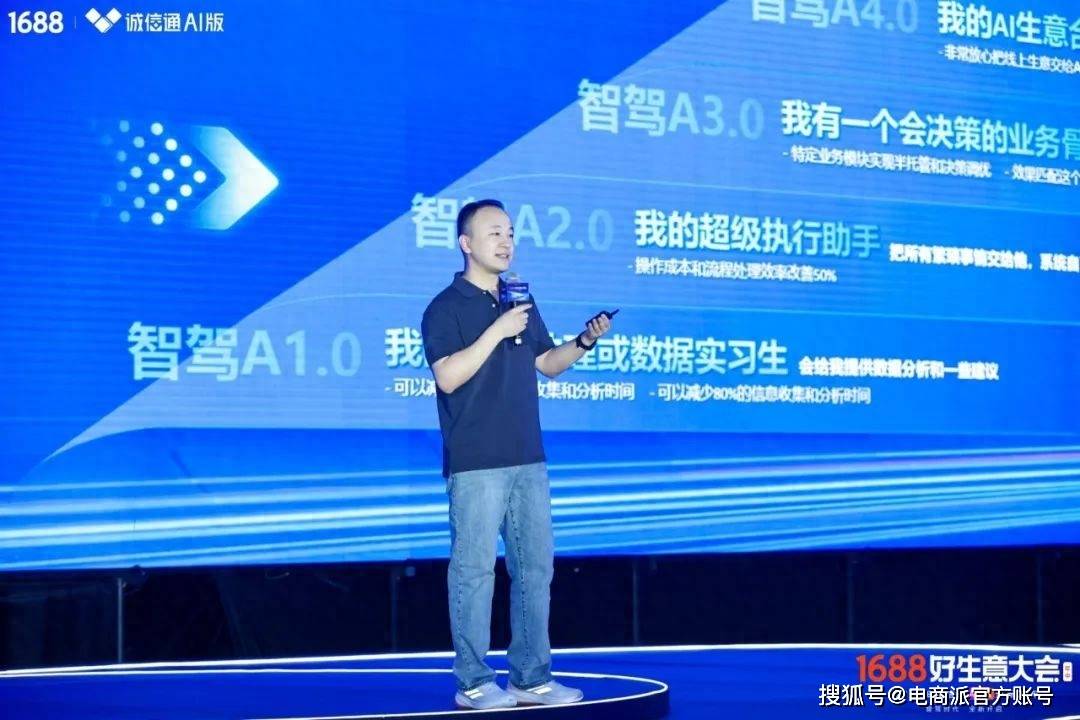
Group 1 - The core issue faced by source factories in B2B e-commerce is not the quality of products but the lack of operational expertise, leading to disadvantages against more adept competitors [1][4] - Alibaba's 1688 platform has introduced the "Integrity Pass AI Version," which aims to lower the digitalization threshold for source factories, allowing them to compete fairly even without professional operational capabilities [2][4] - The AI-driven "digital employee" team will operate 24/7 to manage all aspects of business transactions, providing significant support to merchants [4][9] Group 2 - The introduction of AI has enabled source factories to transition from relying on inventory to making data-driven decisions, enhancing their operational efficiency [9][14] - Case studies, such as that of a factory manager who improved monthly GMV from 50,000 to 500,000 yuan using AI tools, illustrate the transformative impact of AI on business operations [7][8] - The AI technology has led to a 20% to 30% increase in key performance indicators like conversion and repurchase rates over the past year, with expectations of a 50% to 100% increase by 2025 [9][10] Group 3 - The "Integrity Pass AI Version" represents a significant shift in the platform's ecosystem, moving from a traffic-driven model to one focused on supply capabilities, benefiting source factories while diminishing the competitive edge of intermediaries [15][17] - The platform's strategy emphasizes the importance of product value over operational tricks, aiming to create a more equitable competitive environment [15][17] - The rise of AI is prompting a transformation in the role of operational teams, shifting from execution to strategy, as AI takes over routine tasks [18][19]