
AI数字员工

Search documents
企业级靠谱龙虾升级,拒绝失控
量子位· 2026-03-17 04:13
Core Insights - The article discusses the rapid rise and subsequent decline of AI solutions like OpenClaw, highlighting the need for AI employees that can effectively assist in complex business environments rather than just lightweight tasks [2][3][48] - It emphasizes the importance of a comprehensive underlying infrastructure, specifically enterprise-level models, to support the effective deployment of AI digital employees [5][6][10] Group 1: Company Overview - Dipu Technology has recently upgraded its Deepexi enterprise model, which is distinct from general models due to its focus on business-specific applications and integration with platforms like FastAGI and FastData Foil [6][10][14] - The company has reported a narrowing of losses, attributed to significant revenue growth and improved gross margins, indicating a positive cycle of revenue growth leading to profitability [10][11] - Dipu Technology serves numerous leading enterprises across various sectors, including retail, manufacturing, healthcare, and transportation, showcasing its broad client base [12] Group 2: AI Model Capabilities - The upgraded Deepexi enterprise model is designed to accurately understand business processes and logic, enabling it to perform tasks such as coding, data querying, and process execution [24][25][39] - The model's training is supported by a proprietary Deepology dataset, which has been developed through extensive collaboration with over 300 industry-leading clients, ensuring high-quality data for AI training [26][28] - The integration of FastData Foil enhances the model's ability to process multimodal data, allowing for dynamic updates and improved data governance [33][35] Group 3: Market Position and Future Directions - Dipu Technology distinguishes itself in the enterprise AI market by focusing on practical applications and the seamless integration of AI into business processes, moving away from the hype surrounding general models [42][46] - The company is planning to develop next-generation models and explore the integration of AI with physical robotics, aiming to create embodied AI employees that can operate in real-world environments [50] - The ongoing evolution of the Deepexi model and its associated platforms positions Dipu Technology as a leader in the enterprise AI space, capable of delivering substantial value to businesses [42][49]

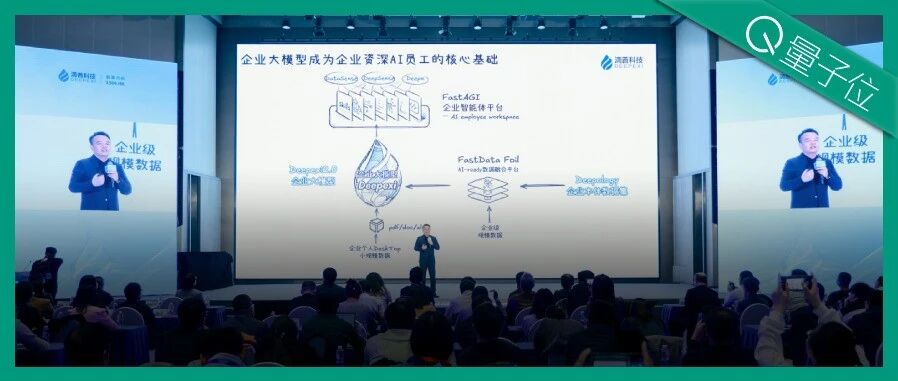
房产GEO之道:“不争可见,而争可信”——深度智联用认知优化重构地产AI营销
克而瑞地产研究· 2026-02-09 09:07
Core Insights - The core viewpoint of the article emphasizes the shift in real estate marketing from traditional traffic-driven methods to AI-driven decision-making, where users actively seek information through AI rather than passively receiving it [2][3] - The introduction of the GEO (Generative Engine Optimization) platform by Deep Intelligence aims to enhance the understanding and recommendation of real estate information by AI, thereby influencing user purchasing decisions [2][3] Group 1: GEO Concept and Misconceptions - The current understanding of GEO is often limited to being a mere "AI version of SEO," with many teams attempting to increase visibility through keyword stuffing and high-frequency postings, which can lead to misinformation and a lack of trust [3][4] - True GEO should focus on "cognitive co-construction" rather than treating it as a traffic game, as AI is not a simple keyword matcher but a sophisticated system that requires authoritative and well-structured content [3][4] Group 2: Six Dimensions of Cognitive Optimization - The essence of GEO in real estate marketing is to build the recognition of new housing projects, ensuring that AI can not only see but also understand and endorse these projects [4][5] - The six core dimensions for establishing project recognition include: - Visibility: Ensuring projects can be retrieved by AI during user inquiries [5] - Authority Penetration: Citing evaluations from third-party professional institutions to enhance credibility [6] - Information Correction: Correcting outdated or erroneous information that AI might reference [7] - Expression Richness: Providing multi-dimensional and detailed descriptions of projects [8] - Positive Conversion: Highlighting strengths while downplaying weaknesses to foster a positive perception [9] - Ranking Elevation: Prioritizing projects that better meet user needs in recommendations [10] Group 3: Core Competencies and Results - The competitive edge of the "Geek Inquiry" platform stems from three synergistic dimensions: large-scale user intent simulation, authoritative source construction, and AI semantic structured output [12][13] - A case study showed that after five days of optimization, a project in Chengdu saw a 400% increase in recommendation frequency, with authoritative source citation rates rising from 14.7% to 52.9%, and improved user confidence in purchasing decisions [12][14] Group 4: Dual-Driven Model - The successful implementation of GEO relies on a dual-driven model combining "Good House Review Network" and "Geek Inquiry," which provides a professional content foundation and a systematic cognitive optimization path [14][15] - The platform utilizes a comprehensive database and professional research system to deliver structured, verifiable real estate information that can be directly referenced by AI [14][15] Group 5: Long-term Strategy and Future Outlook - GEO optimization is viewed as a long-term project rather than a one-time marketing effort, requiring continuous iteration to build a sustainable competitive advantage [19][20] - As AI technology evolves, early adopters of GEO will accumulate data advantages and optimization experiences, creating barriers that are difficult for competitors to overcome [19][20] - The article concludes that the future of real estate marketing will be defined by cognitive competition, with GEO technology enabling precise targeting of high-value customer segments [20]
市值30亿,珠海冲出一家AI数字员工IPO,高瓴、温氏股份押注
3 6 Ke· 2025-12-18 10:16
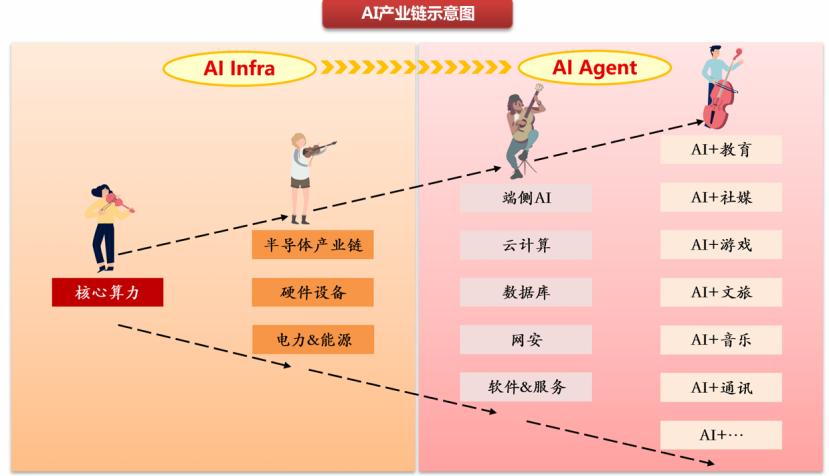
Core Viewpoint - The AI industry is transitioning from "technological breakthroughs" to "application implementation," with AI applications expected to permeate every industry, comparable in importance to the steam engine during the Industrial Revolution and computers during the Information Revolution [1]. Company Overview - Zhuhai Jinzhiwei Artificial Intelligence Co., Ltd. was established in March 2016 and is headquartered in Zhuhai, Guangdong Province. The company aims to provide AI digital employee solutions and enterprise-level intelligent agent solutions [3][5]. - The company has notable institutional investors, including Qiming Venture Partners, China Development Investment, Zhuhai Hillhouse, and others. The founder, Liao Wanli, holds 40.65% of the voting rights [3][5]. Financial Performance - The company reported total revenues of RMB 2.03 billion, RMB 2.17 billion, RMB 2.43 billion, and RMB 460 million for the years 2022, 2023, 2024, and the first half of 2025, respectively. The gross profit margins were 42.1%, 41.5%, 53.4%, and 51.9% [10][11]. - The company has incurred cumulative losses of RMB 809 million over three and a half years, with significant operating losses attributed to high R&D and sales expenses [10][16]. Market Position - The company holds a market share of approximately 3.7% in the Chinese AI digital employee solutions market, ranking first among competitors from 2022 to 2024 [20][28][29]. - The Chinese AI digital employee solutions market is expected to grow from RMB 18 billion in 2020 to RMB 65 billion by 2024, indicating a rapidly expanding market with a fragmented competitive landscape [24][27]. Product Offerings - Zhuhai Jinzhiwei's AI solutions include the K-APA solution for automating business processes and the Ki-Agent solution for enhancing strategic impact through multi-agent collaboration [6][8]. - The company has served over 1,300 clients across various sectors, with a significant focus on the financial industry, where it has provided services to over 240 banks and 130 securities companies [9][14]. Challenges - The company faces challenges with customer retention, as its retention rate dropped from 74% in 2023 to 68% in 2024 [9]. - The company has experienced cash flow pressures, with cash and cash equivalents decreasing from RMB 504 million at the end of 2022 to approximately RMB 90 million by mid-2025 [18][19].

珠海金智维冲击IPO,专注于AI数字员工领域,三年半亏损超8亿
Ge Long Hui· 2025-12-18 09:56
Core Viewpoint - The AI industry is transitioning from "technological breakthroughs" to "application implementation," with significant potential for growth across various sectors, comparable to the impact of the steam engine during the Industrial Revolution and computers during the Information Revolution [1]. Company Overview - Zhuhai Jinzhiwei Artificial Intelligence Co., Ltd. was established in March 2016 and is headquartered in Zhuhai, Guangdong Province. The company aims to provide AI digital employee solutions and enterprise-level intelligent agent solutions [3][6]. - The company is co-founded by Liao Wanli and Jin Zhuo, both alumni of Hangzhou University of Electronic Science and Technology, with Liao serving as the CEO and Chairman [6]. Financial Performance - The company has experienced fluctuating revenues, with total revenues of RMB 203 million, RMB 217 million, RMB 243 million, and RMB 46 million for the years 2022, 2023, 2024, and the first half of 2025, respectively. The net losses for the same periods were RMB 507 million, RMB 62.6 million, RMB 122 million, and RMB 116 million, totaling a cumulative loss of RMB 809 million over three and a half years [12][13]. - The company’s gross profit margins were 42.1%, 41.5%, 53.4%, and 51.9% for the respective years, indicating a trend of improving profitability despite ongoing losses [13]. Market Position - Zhuhai Jinzhiwei holds a market share of approximately 3.7% in the Chinese AI digital employee solutions market, ranking first among competitors from 2022 to 2024 [23][31]. - The AI digital employee solutions market in China is expected to grow from RMB 18 billion in 2020 to RMB 65 billion by 2024, with projections reaching RMB 510 billion by 2029 [28]. Customer Base and Industry Focus - As of June 2025, the company has served over 1,300 clients across various sectors, including finance, government, and manufacturing, with a significant focus on the financial industry, serving over 240 banks and 130 securities companies [9][10]. - The company’s revenue is primarily derived from project-based fees (69.7%) and subscription fees (24.1%), with the financial sector contributing 78.1% of total revenue in 2024 [15]. Research and Development - The company has a dedicated R&D team comprising 334 members, accounting for 37.4% of its total workforce. R&D expenses have been significant, with rates of 33.1%, 25.6%, 22.9%, and 68.7% of total revenue over the reporting periods [18][17]. Cash Flow and Financial Health - The company faces cash flow challenges, with a net cash outflow from operating activities and a significant decrease in cash and cash equivalents from RMB 504 million at the end of 2022 to approximately RMB 90 million by mid-2025 [20][21]. - Trade receivables have increased, indicating potential collection issues, with the average collection period extending, which may heighten the risk of bad debts [20]. Competitive Landscape - The AI digital employee market in China is characterized by a fragmented competitive landscape, with the top five companies holding less than 20% market share collectively, indicating no dominant players [29].
“AI数字员工”上岗,带来哪些变化?
Ren Min Ri Bao· 2025-11-13 21:15
Core Insights - The emergence of "AI digital employees" signifies a shift from traditional automation to intelligent agents that actively participate in production, operations, and services, supporting digital and intelligent transformation across various industries [2][3] Group 1: Empowering Retail Operations - "AI digital employees" are helping small retail businesses enhance their online operations, reducing the complexity of managing online sales [3][4] - In a case study, a massage shop owner utilizes an "AI digital employee" for scheduling and order management, which has improved operational efficiency and reduced errors in booking [3][4] - The retail sector has seen the deployment of multiple "AI digital employees" that assist in various operational aspects, including business diagnostics and online management [4] Group 2: Optimizing Power Services - The integration of "AI digital employees" in the electricity sector has improved customer service and operational efficiency, addressing long-standing issues such as service standardization and long wait times [5][6] - An example from a power company shows that an "AI digital employee" can guide customers through complex processes, significantly enhancing user experience and reducing processing time [5][6] - The introduction of an "AI virtual dispatcher" has streamlined the scheduling process in power distribution, cutting down the time required for operational tasks by 50% [8] Group 3: Accelerating Human-Machine Collaboration - The impact of "AI digital employees" on job roles is characterized by a dual effect of replacement and enhancement, with a greater emphasis on the latter [9] - In the service retail sector, "AI digital employees" have been shown to assist individuals with disabilities, thereby lowering operational barriers for these groups [9] - Future workforce dynamics will likely involve collaboration between "AI digital employees" and human workers, necessitating the development of skills in AI tool usage and soft skills for effective human-machine interaction [9] Group 4: Challenges and Governance - Despite the potential of "AI digital employees," their widespread application faces challenges related to safety and ethical considerations, particularly in legal accountability [10] - The establishment of a collaborative governance framework involving various stakeholders is essential to address the challenges posed by "AI digital employees" [10]
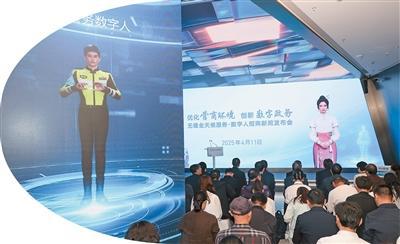
量产数字员工,探迹正用AI重塑企业组织
2 1 Shi Ji Jing Ji Bao Dao· 2025-11-11 11:39
Core Insights - The article discusses the challenges faced by companies in improving productivity and profitability despite clear strategies and significant resource investments, highlighting the issue of "human efficiency black holes" that silently erode profits [2] - It introduces the concept of AI digital employees as a solution to enhance productivity in the AI era, emphasizing the need for collaboration between carbon-based and silicon-based entities [3][4] - The article outlines the transition from human efficiency to intelligent efficiency, suggesting that companies should focus on maximizing the value of every human resource investment rather than merely counting tasks completed [4][6] Group 1 - The emergence of AI digital employees represents a significant shift in operational models, moving from traditional automation tools to intelligent agents capable of independent decision-making and execution [7][11] - These AI digital employees possess three key characteristics: they think and execute like humans, are industry experts from the outset, and can adapt and optimize dynamically within existing business processes [9][10][11] - The integration of AI digital employees is expected to redefine organizational efficiency metrics, with a focus on their contribution to business outcomes rather than just task completion [11][12] Group 2 - The article highlights the importance of creating business value through AI digital employees, which can complete the business loop by transforming functional execution into business decision-making and outcome delivery [13][14] - Companies like探迹科技 have developed AI digital employees tailored to specific industry needs, leveraging extensive experience from serving over 50,000 enterprises, including major corporations [14][15] - The implementation of AI digital employees has led to significant improvements in operational efficiency, such as a 200% increase in new customer development for a manufacturing company and a 90% reduction in customer service costs for a home appliance brand [17][18] Group 3 -探迹科技's AI digital employees are built on two foundational technologies: the "太擎" platform for intelligent agent development and the "旷湖" data cloud, which ensures high-quality data for effective decision-making [19][24] - The success of these AI digital employees relies heavily on a robust data infrastructure that supports real-time updates and automatic cleansing, ensuring the accuracy of their actions and decisions [25] -探迹科技 is also exploring global expansion and partnerships with leading hardware manufacturers to enhance the deployment of AI digital employees across various business scenarios [26]

智能体上演“底特律变人”,能更好的打入企业市场吗?
Hu Xiu· 2025-10-21 00:49
Core Insights - The article discusses the rapid evolution of AI agents into "AI digital employees," with major companies competing to launch AI digital personnel that can cover various roles such as sales, customer service, and recruitment [1] - It is projected that the future cost of these AI digital employees could drop to a level as low as "ten thousand yuan" [1] Industry Trends - Major companies are actively developing AI digital employees to enhance operational efficiency across multiple sectors [1] - The introduction of AI digital personnel is expected to transform traditional job roles and create new dynamics in the workforce [1] Market Implications - The potential reduction in costs for AI digital employees may lead to widespread adoption across industries, impacting labor markets and employment structures [1] - Companies are encouraged to prepare for collaboration with AI digital colleagues as this trend gains momentum [1]
百度智能云,AI“打工人”上线
Shang Hai Zheng Quan Bao· 2025-08-05 23:00
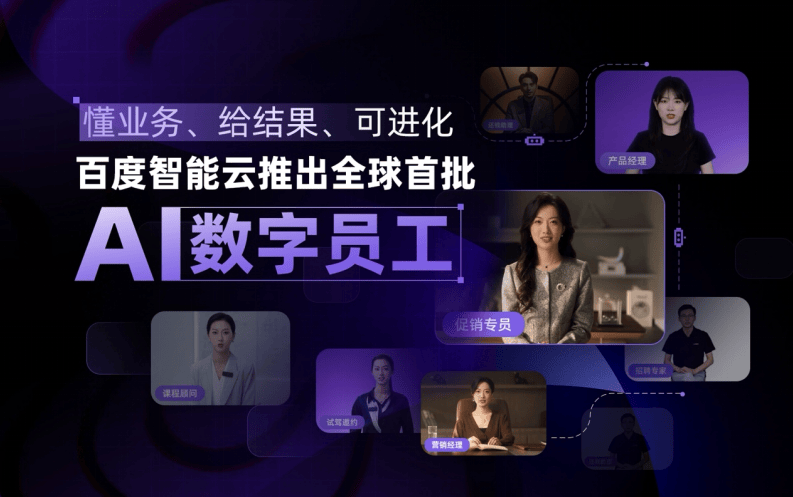
Core Insights - Baidu AI Day showcased the launch of the first batch of AI digital employees, covering key business functions such as marketing managers, repayment assistants, and product managers [1] - The rapid evolution of large models is transitioning AI from a collaborative Copilot role to an autonomous Agent role, and further into an Agentic form of AI [1][5] - The demand for AI in marketing has surged, with the Chinese AI Agent marketing and sales market projected to reach approximately 44.2 billion yuan in 2024, aiming for a trillion-level market space in the next five years [5] Group 1 - The emergence of AI digital employees is revolutionizing organizational productivity by participating in various operational aspects [5] - Traditional Agent tools face limitations such as mechanical responses and data fragmentation, while digital employees can meet specialized and personalized needs across industries [7] - In the recruitment sector, AI digital employees have improved interview participation rates by 40% and enhanced HR focus on core talent evaluation [7] Group 2 - The future of the industry may see multiple digital employees collaborating to solve complex tasks, marking the arrival of a "human-machine collaboration" era [8] - The core value of AI digital employees lies in enhancing human creativity, optimizing resource allocation, and improving service efficiency [8] - To adapt to this transformation, individuals should master AI tool usage and continuously improve soft skills such as innovative thinking and cross-cultural communication [8]


百度智能云首推AI数字员工,重塑企业营销服务新生态
Sou Hu Cai Jing· 2025-08-05 20:44
Core Viewpoint - Baidu Smart Cloud has launched the world's first AI digital employees, marking a significant breakthrough in enterprise-level services through the integration of AI technology [1][3]. Group 1: AI Digital Employees - The AI digital employees cover various core business roles such as marketing managers, repayment assistants, automotive sales, promotional specialists, product managers, course consultants, and recruitment specialists [1]. - These digital employees leverage Baidu Smart Cloud's comprehensive AI capabilities, combining large models, digital human technology, and industry expertise to achieve an efficient work state right out of the box [3]. Group 2: Market Potential - The demand for AI marketing in enterprises has seen explosive growth, with the Chinese AI Agent marketing and sales market expected to reach approximately 44.2 billion yuan in 2024, aiming for a trillion-level market space in the next five years [4]. - The marketing sector is identified as the optimal scenario for the implementation of AI Agents due to its high-frequency user interactions and complex business environments [4]. Group 3: Advantages of Digital Employees - Traditional Agent tools often face limitations such as mechanical responses and fragmented data across platforms, while digital employees can meet specialized and personalized needs across various industries [6]. - In the recruitment sector, digital employees can efficiently handle the entire process from outreach to interview scheduling, resulting in a 40% increase in interview attendance rates [6]. - In the education sector, digital employees manage the entire process from enrollment inquiries to renewal conversions, also improving employee efficiency by 40% [6]. Group 4: Technological Innovations - Baidu Smart Cloud has developed a cross-modal voice language model based on Cross-attention technology for real human-like interaction and utilized 4D scanning technology for high-precision imaging [7]. - The digital employees are trained on over 100 vertical industry standard operating procedures (SOPs) using more than 100,000 hours of industry practical data [7]. - The company is focused on expanding digital employee applications in the education, automotive, finance, and fast-moving consumer goods sectors, with low entry costs for businesses [7].
百度智能云发布全球首批AI数字员工 打造企业级Agent最佳实践
Zheng Quan Ri Bao Wang· 2025-08-05 11:12
Group 1 - Baidu Smart Cloud launched the world's first AI digital employees, covering key business functions such as marketing manager, repayment assistant, and product manager, leveraging AI capabilities for immediate deployment and effectiveness [1][2] - The digital employees are designed to redefine enterprise-level intelligent service capabilities with three characteristics: understanding business, delivering results, and being evolvable [1][2] - The integration of Baidu's decade-long experience in intelligent customer service and advanced digital human technology has led to a transformation from functional execution to business decision-making and outcome delivery [2] Group 2 - The digital employees have already been applied in Baidu's customer service center, achieving a 60% increase in user claim success rates and an 18-hour improvement in service efficiency [2] - Baidu Smart Cloud aims to expand the application of digital employees in four key industries: education, automotive, finance, and fast-moving consumer goods, with low entry barriers for businesses [3] - The core technological advantages of digital employees include an intelligent brain, human-like appearance, industry-specific knowledge, and an evolutionary capability, facilitating the transition of AI from a tool to a business partner [2]