甲醇电动动力

Search documents
广汽与吉利“抱团”新能源商用车
经济观察报· 2026-02-07 05:53
Core Viewpoint - The collaboration between GAC and Geely in the new energy commercial vehicle sector aims to break the historical trend of unsuccessful partnerships among domestic automakers, with both companies seeking to leverage each other's strengths to enhance market presence and technological capabilities [2][10]. Group 1: GAC's Transformation - GAC's transformation from GAC Hino to GAC Lingcheng marks a strategic shift towards new energy commercial vehicles, with a goal of achieving 30 billion yuan in revenue by 2030 [3]. - The company has launched several new energy products, including the GACPICKUP01 and T9 electric heavy truck, but still lacks a strong foundation in the bus and VAN segments [3][4]. - GAC Lingcheng's "light asset" strategy emphasizes cost efficiency in product development, aiming to reduce R&D costs significantly compared to competitors [4][5]. Group 2: Geely's Expansion - Geely's commercial vehicle division, established in 2016, has seen rapid growth, with a compound annual growth rate exceeding 120% over the past five years, reaching nearly 25,000 units sold monthly by 2025 [7]. - The company aims to achieve an annual sales target of 1 million units by 2030, positioning itself as a leader in both domestic and global new energy commercial vehicle markets [7][8]. - Geely's focus on methanol technology and its partnership with GAC could facilitate entry into the competitive Guangdong market, leveraging local resources to reduce operational costs [8]. Group 3: Industry Context - The commercial vehicle industry is undergoing structural adjustments, with a shift towards low-speed growth and increased competition in the new energy sector [11]. - The market has seen fluctuations, with sales peaking at 5.13 million units in 2020 and dropping to 3.873 million units in 2024, while exports have become a significant growth driver [11]. - Collaborations among commercial vehicle manufacturers to share the costs and risks of new energy transitions have become a common strategy, as seen in recent partnerships across the industry [12].


广汽与吉利“抱团”新能源商用车
Jing Ji Guan Cha Bao· 2026-02-07 05:23
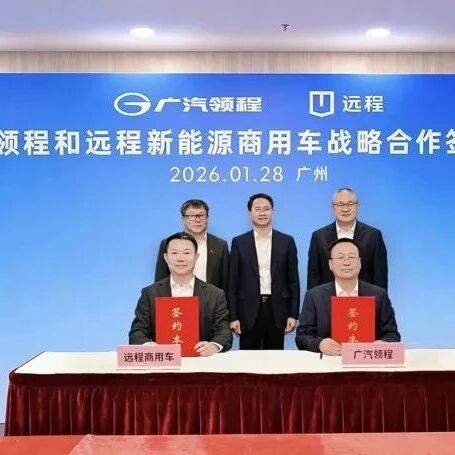
Core Viewpoint - GAC Lingcheng and Geely Remote have signed a strategic cooperation agreement to collaborate on electric commercial vehicles, methanol electric power applications, and energy refueling infrastructure, marking a significant step for both companies in the competitive new energy commercial vehicle market [2][6]. Company Overview - GAC Lingcheng, formerly GAC Hino, has undergone a brand transformation to accelerate its shift towards new energy commercial vehicles, following a restructuring that increased GAC Group's stake to nearly 90% [2][3]. - Geely Remote, established in 2016, has achieved a compound annual growth rate of over 120% in sales over the past five years, with monthly sales reaching nearly 25,000 units as of 2025 [5]. Market Context - The collaboration between GAC Lingcheng and Geely Remote is seen as a strategic move to break regional market barriers and seek new growth opportunities in the competitive landscape dominated by players like BYD and Yutong in the Guangdong market [2][3][5]. - The commercial vehicle market in China is experiencing structural adjustments, with a shift towards low-speed growth and increasing competition in the new energy sector [8][9]. Strategic Implications - GAC Lingcheng's "light asset" strategy aims to minimize research and development costs by leveraging partnerships rather than solely relying on internal development, which is crucial given its limited R&D budget [4][6]. - The partnership is expected to enhance GAC Lingcheng's product offerings in the VAN and bus segments, where it currently lacks a strong foundation [3][4]. Technological Collaboration - The cooperation includes the development of methanol electric power applications, with Geely Remote being one of the few companies in China to focus on this technology, which has the potential to address energy infrastructure challenges in the region [6][8]. - The collaboration is positioned to utilize GAC's local resources to reduce market entry costs for Geely Remote in key cities like Guangzhou, enhancing their competitive edge [6][8]. Industry Trends - The trend of collaboration among commercial vehicle manufacturers to share the costs and risks associated with new energy transitions is becoming more common, as seen in recent partnerships across the industry [9].



远程与广汽领程达成战略合作 要干啥?
第一商用车网· 2026-01-29 02:05
Core Viewpoint - The strategic cooperation agreement between Zhejiang Yuancheng New Energy Commercial Vehicle Group and GAC Lingcheng New Energy Commercial Vehicle aims to accelerate the transformation of China's commercial vehicle industry towards green and intelligent development [1][5]. Group 1: Strategic Cooperation - The two companies will integrate their resources in channels, brands, and services to jointly promote market activities in Guangzhou and surrounding cities [5]. - The collaboration focuses on the promotion of buses, VAN products, methanol electric power applications, and energy refueling, contributing to ecological construction [1][5]. Group 2: Company Performance and Goals - Yuancheng New Energy Commercial Vehicle has achieved an annual compound growth rate of over 120% in the past five years, aiming to become the leading brand in the new energy commercial vehicle sector [5]. - GAC Lingcheng, as a core enterprise under GAC Group, has nearly 20 years of experience in vehicle manufacturing, excelling in vehicle design, technology integration, and intelligent manufacturing [5]. Group 3: Industry Impact - The partnership aims to create a "Guangzhou model" for new energy commercial vehicles, applicable in urban public transport, logistics, and cold chain transportation, thereby enhancing local manufacturing and industrial output [6]. - This strategic agreement aligns with the automotive industry's trend towards green and intelligent development, showcasing the foresight and openness of both companies during the industry transformation [6].