电动汽车及零部件

Search documents
谁将成为绿色贸易“新主力”
Jin Rong Shi Bao· 2025-10-28 00:34
Core Viewpoint - The Chinese government is prioritizing the development of green trade as a strategic initiative to enhance trade optimization, achieve carbon neutrality goals, and accelerate the construction of a strong trade nation in response to climate change and international competition [1][2]. Group 1: Green Trade Development in China - The State Council, led by Premier Li Qiang, has outlined measures to expand green trade, positioning it as essential for economic transformation and international competitiveness [1]. - China's green trade exports have seen significant growth, with high-end equipment related to new production capabilities increasing by 22.4% year-on-year in the first three quarters of the year [1]. - In 2022, China's green trade import and export total reached $1,079.28 billion, accounting for 12.2% of global green trade, an increase of 2.3 percentage points since 2013 [2]. Group 2: Global Green Trade Trends - Global green trade has shown stable growth, with an average annual growth rate of 0.85% from 2013 to 2022, reaching $6.5 trillion in the first three quarters of 2023 [2]. - Green trade accounted for approximately 18.17% of total global trade in 2022, reflecting a slight decrease despite overall trade growth [2]. Group 3: Challenges in Green Trade Mechanisms - Existing green trade mechanisms face challenges, including limited effectiveness and slow progress, with non-tariff barriers becoming significant obstacles to green trade liberalization [3][4]. - Non-tariff barriers, such as inconsistent technical standards and complex certification processes, are major hindrances to the free trade of green products, particularly in the electric vehicle sector [4][7]. Group 4: RCEP as a Platform for Green Trade - The Regional Comprehensive Economic Partnership (RCEP) is seen as a potential optimal platform for promoting regional green trade due to its members' consensus on trade liberalization and diverse economic structures [5][6]. - Experts suggest that RCEP can facilitate the establishment of green product standards and streamline customs processes for electric vehicles and related components [6][7]. Group 5: Recommendations for Enhancing Green Trade - Recommendations include eliminating tariffs on green and low-carbon products, as current tariffs can be as high as 20% in the RCEP region [7]. - Reducing non-tariff barriers is crucial, with suggestions for measures such as simplifying import/export quotas, coordinating standards, and utilizing digital tools for data sharing [7].
墨西哥要对华加税50%,关税政策还没生效,中方警告就来了
Sou Hu Cai Jing· 2025-09-11 14:21
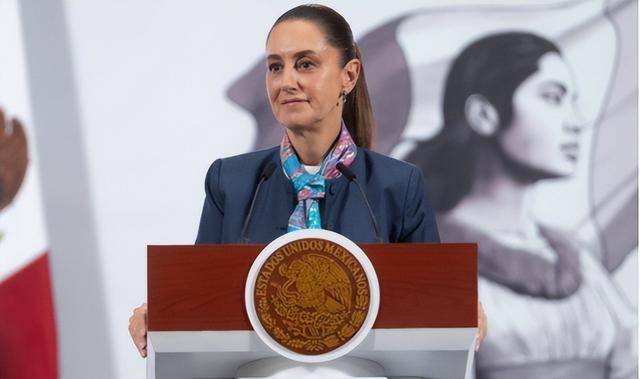
文/三玄 9月10日,墨西哥总统克劳迪娅・辛鲍姆公布了关税改革提案,其中备受关注的一点是,墨西哥计划对 中国和一些亚洲国家生产的汽车和其他产品征收50%关税,该改革针对没有与墨西哥签订自由贸易协定 的国家,新关税将适用于1371个关税代码下的进口商品,占墨西哥所有关税代码的 16.8%,预计于2026 年12月31日前实施。 外交部发言人林剑 而从现实来看,我们可以采取的措施有很多。从贸易层面看,中国是墨西哥的第二大贸易伙伴,去年两 国的双边贸易额接近 1100 亿美元,中国是墨西哥原油、牛油果、蓝莓等农产品、机电产品和金属矿及 矿砂等商品的主要买家,一旦我们对这些商品加征关税,毫无疑问将导致他们的竞争力下降,出口量锐 减,尤其是原油收入的减少,将直接影响墨西哥的相关产业链及政府财政收入。 在投资领域,中国企业在墨西哥投资众多,涉及民生、基建、教育、汽车制造等多领域,协议金额超 100 亿美元。墨西哥如果贸然对中国加征关税,实际上是在损害自己的信誉与形象,也会让中国企业对 其产生怀疑,从而重新评估投资环境与风险,减少或暂停在墨投资项目。 辛鲍姆声称,此举是为了 "保护墨西哥的就业"、"防止不公平竞争",捍卫其 ...