
电控气压制动系统(EBS)

Search documents
聊“氢”心 话转型 ——访博世智能出行集团中国区董事会总裁王伟良
Zhong Guo Qi Che Bao Wang· 2025-12-17 01:24
Core Viewpoint - Bosch is focusing on hydrogen fuel cell technology as a key component in the electrification of commercial vehicles, emphasizing its potential for rapid advancement and cost reduction in the coming years [3][4][5]. Group 1: Hydrogen Fuel Cell Development - Bosch established a joint venture with Qingling in December 2020 to create Bosch Hydrogen Power Systems (Chongqing) Co., which is now the largest Class A hydrogen fuel cell R&D center globally [2]. - The cost of hydrogen fuel cell systems has significantly decreased from approximately 16,000 yuan per kilowatt in 2021 to about 2,000 yuan per kilowatt currently, indicating a strong trend towards commercial viability [3]. - The reliability of hydrogen fuel cell systems has reached critical benchmarks of 30,000 hours and 1.5 million kilometers, showcasing their potential for widespread application [3]. Group 2: Infrastructure and Policy Support - The development of hydrogen production, storage, and transportation infrastructure remains slow, with a notable lack of hydrogen refueling stations and low-cost green hydrogen supply [4]. - The Chinese government recognizes these challenges, as highlighted in the "Energy Saving and New Energy Vehicle Technology Roadmap 3.0," which aims for fuel cell vehicles to grow from thousands to over 4 million units by 2040 [4]. - The collaboration with Qingling in Chongqing is Bosch's largest investment in Western China, supported by the local government, with 1,368 hydrogen fuel cell vehicles and 28 refueling stations already established [4][5]. Group 3: Strategic Positioning and Market Adaptation - Bosch Commercial Vehicles Group aims to transition from a core component supplier to a strategic partner and innovation center for the transformation of China's commercial vehicle sector [6]. - The company is focusing on cross-domain integration to provide comprehensive, intelligent solutions for commercial vehicle enterprises, emphasizing customer-centric innovation and quality [6][7]. - Bosch is adapting to the rapid pace of product iteration brought by electrification, evolving its evaluation criteria to include a time variable alongside quality, cost, and delivery [8]. Group 4: Global Expansion and Support for Chinese Brands - Bosch is positioned as a key partner for Chinese commercial vehicle manufacturers in their export strategies, leveraging its extensive product line and global network [9]. - The company aims to help Chinese brands establish a strong presence in international markets by applying reliable technologies and enhancing product quality [9].


交卷!博世商用车集团的术、道、势
Zhong Guo Qi Che Bao Wang· 2025-12-11 06:21
Core Insights - Bosch Commercial Vehicle Group is transitioning from a core component supplier to a full-stack solution provider, integrating traditional diesel systems, electric drive, motion control, and intelligent driving assistance into a comprehensive strategy for commercial vehicle transformation in China [2][20]. Group 1: Technological Advancements - The event showcased Bosch's electric drive axle and electronic brake control system (EBS), highlighting the significant increase in the penetration rate of new energy commercial vehicles in China, which reached 30% [4][6]. - The electric drive axle integrates key components like motors and gearboxes, reducing energy loss and saving space for battery systems, with Bosch having initiated its development in 2021 [8][10]. - The EBS system enhances safety, reliability, and economic efficiency, achieving up to a 5% reduction in energy consumption for electric heavy trucks, translating to annual savings of at least 2000 yuan per vehicle [12][10]. Group 2: Market Trends and Projections - The penetration rate of new energy commercial vehicles is expected to exceed 50% by 2030, driven by market forces rather than just policy [6][20]. - The shift from a "segmented market" to an "application scenario" driven approach indicates a need for comprehensive vehicle design to meet diverse operational demands [15][20]. Group 3: Product Offerings - The "Super Heavy Truck" and "Super Light Truck" platforms are designed to meet specific logistical and urban delivery needs, focusing on efficiency, safety, and low energy consumption [17][18]. - Bosch's approach emphasizes modular and integrated solutions, moving away from merely stacking technologies to creating cohesive systems that enhance overall vehicle performance [18][20]. Group 4: Strategic Vision - Bosch is committed to long-term collaboration with partners, focusing on cross-domain integration to create intelligent solutions for commercial vehicles [20][21]. - The establishment of Bosch Hydrogen Systems in Chongqing exemplifies the company's commitment to hydrogen fuel technology and its potential for future growth in the commercial vehicle sector [23][24].

“关键先生”的二次本土化:博世以全栈解决方案应对商用车变革
经济观察报· 2025-12-08 07:19
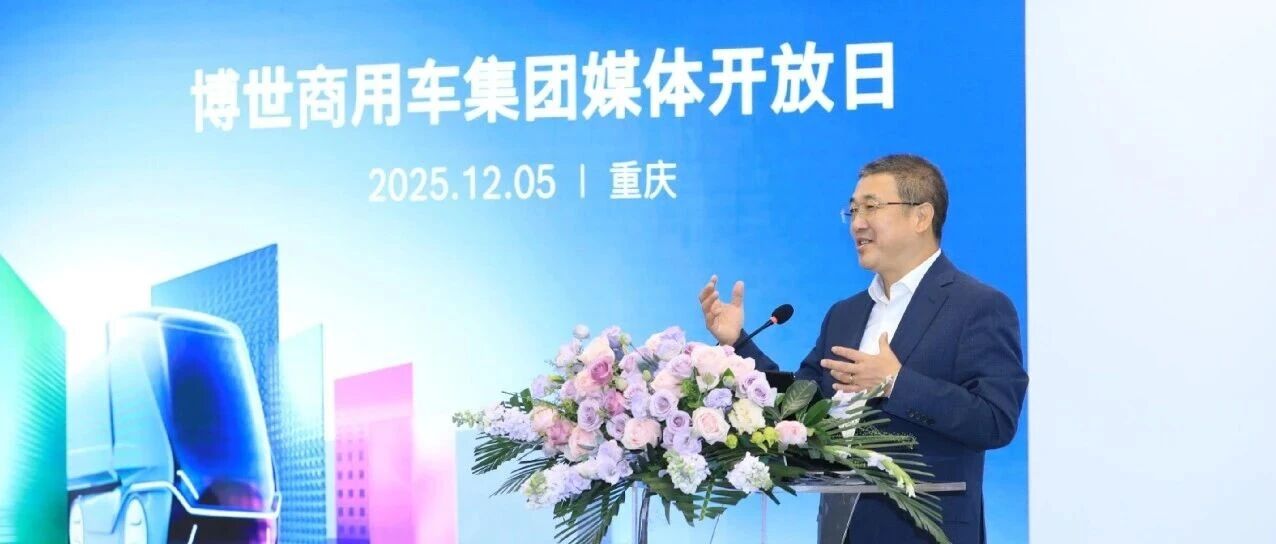
Core Viewpoint - Bosch Commercial Vehicle Group emphasizes three core principles: "Rooted in China, Adapt to Trends, and Co-create Value" to navigate the evolving automotive landscape [2][3]. Strategic Developments - On December 5, Bosch Commercial Vehicle Group held a media open day at Bosch Hydrogen (Chongqing) Co., Ltd., unveiling an upgraded strategy and comprehensive technology solutions, highlighting the shift towards diverse powertrains, including hydrogen [2]. - The penetration rate of new energy in commercial vehicles has surged from single digits to 30% in recent years, presenting both challenges and opportunities for manufacturers and suppliers [2]. Technological Innovations - Bosch is focusing on Total Cost of Ownership (TCO) as a key decision-making factor for commercial vehicle users, emphasizing the need for tailored solutions based on specific application scenarios [5][7]. - The company is integrating various technologies, including power systems, electric drive, thermal management, steering, and driver assistance systems, to provide customized solutions for different operational contexts [7][9]. - Bosch has developed a new Electric Brake System (EBS) to enhance safety in new energy commercial vehicles, aligning with China's evolving safety standards [13]. Market Positioning - Bosch aims to transition from a traditional supplier role to a strategic partner in the industry, collaborating closely with manufacturers for synchronized development and innovation [7][18]. - The company is committed to a multi-technology approach, supporting diesel, natural gas, methanol, pure electric, and hydrogen fuel technologies to meet diverse market demands [21]. Organizational Changes - Bosch has restructured its automotive business, forming the Bosch Intelligent Mobility Group and subsequently the Commercial Vehicle Group, to enhance efficiency and collaboration across various business segments [2][15]. - The company is deepening local partnerships in China to foster innovation and adapt to market needs, leveraging its extensive experience in the region [15][18]. Future Outlook - Bosch anticipates significant growth in hydrogen fuel cell commercial vehicles, projecting an increase from under 10,000 units to around 100,000 units by 2027, contributing to national targets [23]. - The company is embracing the concept of "software-defined vehicles," integrating software capabilities across various domains to enhance vehicle intelligence and performance [24].
“关键先生”的二次本土化:博世以全栈解决方案应对商用车变革
Jing Ji Guan Cha Wang· 2025-12-08 07:00
Core Insights - Bosch Commercial Vehicle Group is adapting to the significant transformation in the automotive industry by integrating hydrogen energy into its comprehensive technology solutions, emphasizing a future with diverse powertrains [1][2] - The penetration rate of new energy in commercial vehicles has surged from single digits to 30% in recent years, presenting both challenges and opportunities for manufacturers and suppliers [1] - Bosch is restructuring its technology system to meet the urgent transformation needs of customers, focusing on localized innovation and collaboration with Chinese partners [1][2] Group 1: Strategic Developments - Bosch is establishing the Bosch Intelligent Mobility Group, which will include the Commercial Vehicle Group, marking a significant organizational change to enhance its focus on automotive business [1][2] - The company has shifted its core philosophy from being a "concept enabler" to "rooted in China, adapting to trends, and co-creating value" [2] - Bosch is integrating various technologies such as power systems, electric drive, thermal management, steering, and driving assistance systems to provide customized solutions for different application scenarios [4][6] Group 2: Market Trends and User Needs - The commercial vehicle industry is evolving towards a focus on Total Cost of Ownership (TCO), with users increasingly prioritizing operational efficiency and investment returns [3][4] - The shift from "market segmentation" to "application scenario" driven development is reshaping the R&D and product planning processes in the commercial vehicle sector [5] - Bosch's research indicates that commercial vehicle manufacturers are transitioning their business strategies from "manufacturing and sales" to "full lifecycle solution providers" [8] Group 3: Technological Innovations - Bosch has developed an electric drive axle that integrates key components for direct control of wheel power, optimizing energy efficiency and space for battery systems [7] - The Electric Brake System (EBS) has been introduced to enhance safety standards in new energy commercial vehicles, aligning with China's evolving safety regulations [8] - Bosch is focusing on three main technology stacks: driver assistance, motion domain, and energy domain, combining hardware and software capabilities [6] Group 4: Collaborative Efforts and Local Innovation - Bosch is deepening its strategy of local innovation and collaboration in China, having established partnerships with local companies to enhance its technological offerings [9][11] - The company is leveraging local resources and channel advantages to accelerate the commercialization of new energy technologies [11][12] - Bosch's approach emphasizes the importance of collaboration with commercial vehicle manufacturers and academic institutions to drive innovation and scale [11][12] Group 5: Future Outlook - Bosch is committed to a multi-technology approach, supporting various powertrain technologies including diesel, natural gas, methanol, pure electric, and hydrogen fuel cells [13][14] - The company anticipates significant growth in hydrogen fuel cell vehicles, projecting an increase from under 10,000 units to around 100,000 units by 2027 [14] - Bosch is adapting its software architecture to align with future hardware developments, ensuring continuous upgrades and enhanced safety features [15]