重型电驱桥

Search documents
聊“氢”心 话转型 ——访博世智能出行集团中国区董事会总裁王伟良
Zhong Guo Qi Che Bao Wang· 2025-12-17 01:24
Core Viewpoint - Bosch is focusing on hydrogen fuel cell technology as a key component in the electrification of commercial vehicles, emphasizing its potential for rapid advancement and cost reduction in the coming years [3][4][5]. Group 1: Hydrogen Fuel Cell Development - Bosch established a joint venture with Qingling in December 2020 to create Bosch Hydrogen Power Systems (Chongqing) Co., which is now the largest Class A hydrogen fuel cell R&D center globally [2]. - The cost of hydrogen fuel cell systems has significantly decreased from approximately 16,000 yuan per kilowatt in 2021 to about 2,000 yuan per kilowatt currently, indicating a strong trend towards commercial viability [3]. - The reliability of hydrogen fuel cell systems has reached critical benchmarks of 30,000 hours and 1.5 million kilometers, showcasing their potential for widespread application [3]. Group 2: Infrastructure and Policy Support - The development of hydrogen production, storage, and transportation infrastructure remains slow, with a notable lack of hydrogen refueling stations and low-cost green hydrogen supply [4]. - The Chinese government recognizes these challenges, as highlighted in the "Energy Saving and New Energy Vehicle Technology Roadmap 3.0," which aims for fuel cell vehicles to grow from thousands to over 4 million units by 2040 [4]. - The collaboration with Qingling in Chongqing is Bosch's largest investment in Western China, supported by the local government, with 1,368 hydrogen fuel cell vehicles and 28 refueling stations already established [4][5]. Group 3: Strategic Positioning and Market Adaptation - Bosch Commercial Vehicles Group aims to transition from a core component supplier to a strategic partner and innovation center for the transformation of China's commercial vehicle sector [6]. - The company is focusing on cross-domain integration to provide comprehensive, intelligent solutions for commercial vehicle enterprises, emphasizing customer-centric innovation and quality [6][7]. - Bosch is adapting to the rapid pace of product iteration brought by electrification, evolving its evaluation criteria to include a time variable alongside quality, cost, and delivery [8]. Group 4: Global Expansion and Support for Chinese Brands - Bosch is positioned as a key partner for Chinese commercial vehicle manufacturers in their export strategies, leveraging its extensive product line and global network [9]. - The company aims to help Chinese brands establish a strong presence in international markets by applying reliable technologies and enhancing product quality [9].


整零协同、软硬结合、共建生态 重庆加速迈向智能网联新能源汽车之都
Ren Min Ri Bao· 2025-09-04 22:15
Group 1 - Chongqing is developing a world-class intelligent connected new energy vehicle industry cluster through "collaboration between manufacturers and suppliers, integration of software and hardware, and ecosystem co-construction" [1][3] - Topu Automotive's integrated die-casting technology reduces the weight of aluminum rear subframes by over 30%, lowering energy consumption and extending battery life [1] - The Seer Smart Factory showcases 100% automation in key processes, with a zero-carbon demonstration project generating 15.84 million kWh of electricity annually, reducing CO2 emissions by 13,284 tons [1] Group 2 - Bosch's hydrogen power system in Chongqing features a 300 kW hydrogen power module that can power a 49-ton heavy truck for over 600 kilometers with just over 10 minutes of charging [2] - Chongqing's automotive ecosystem includes leading companies like Changan Automobile and Seer Automobile, with over 10 vehicle manufacturers collaborating [2] - The city aims to produce 2.54 million vehicles and 950,000 new energy vehicles by 2024, with significant growth in production observed from January to July this year [2] Group 3 - Chongqing is building a "convenient supercharging city" to ensure fast charging facilities cover all towns and streets, enhancing logistics, finance, and inspection services [3] - The city has established 349 digital workshops and 52 smart factories in the automotive sector, promoting innovation and collaborative development [3] - Chongqing is striving to become a "city of intelligent connected new energy vehicles" through innovation-driven initiatives [3]


(活力中国调研行)氢能车辆显身手 重庆九龙坡打造“西部氢谷”
Zhong Guo Xin Wen Wang· 2025-08-14 04:30
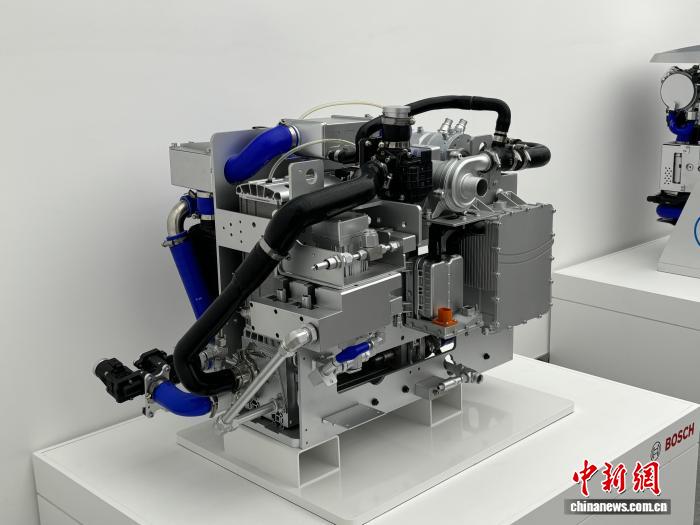
Group 1: Core Insights - Hydrogen energy vehicles are being integrated into various logistics and urban sanitation applications across multiple provinces in China, showcasing their versatility and reliability in transportation [1][2] - Bosch Hydrogen Power has launched a 49-ton hydrogen fuel cell tractor specifically designed for coal transportation in Xinjiang, with plans for large-scale operations in the Tianshan region [1][2] - The company has produced four types of hydrogen power modules that cover a range of commercial vehicles from 4.5 tons to 49 tons, with demonstration operations already taking place in 18 provinces [2] Group 2: Industry Development - Chongqing is positioned as a key city in Western China for hydrogen energy development, supported by government policies and initiatives aimed at fostering a hydrogen energy industry ecosystem [4][5] - The Jiulongpo District in Chongqing has established itself as a hub for hydrogen energy, hosting leading companies like Bosch Hydrogen Power and demonstrating strong industrial growth [5] - The environmental benefits of hydrogen energy vehicles are significant, as they effectively reduce pollutants like PM2.5, contributing to improved air quality in the region [5] Group 3: Future Prospects - The hydrogen energy sector is expanding its application scenarios beyond heavy commercial vehicles to include hydrogen-powered two-wheelers, sightseeing vehicles, and agricultural drones, indicating a broadening market potential [7]