皮冻

Search documents
华侨华人的年夜饭:一桌家乡菜 四海团圆味
Xin Lang Cai Jing· 2026-02-17 04:55
Group 1 - The article highlights the significance of the Chinese New Year's Eve dinner, emphasizing it as a time for family reunion and cultural traditions [1][2][3] - Various Chinese communities around the world prepare traditional dishes that reflect their regional heritage, such as Lanzhou's marinated pork and Shandong's spicy chicken [1][2] - The preparation for the New Year's Eve dinner involves a blend of traditional and local flavors, showcasing the integration of cultural practices in different countries [2][3] Group 2 - The article mentions specific dishes prepared by families, such as the use of lobster and steak in Australia, and the combination of Cantonese and Western cuisine in Los Angeles [2][3] - The act of gathering for the New Year's Eve dinner is portrayed as a cherished tradition that strengthens family bonds and connects individuals to their roots [3]
(寻味中华|节令)小寒启年味 食俗聚温情
Zhong Guo Xin Wen Wang· 2026-01-05 03:16
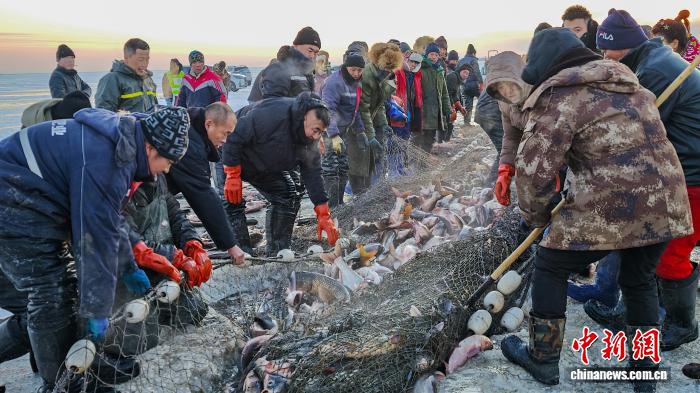
Group 1 - The article highlights the significance of the "Minor Cold" (小寒) solar term in Chinese culture, marking the onset of the coldest period in winter and the approach of the Lunar New Year [1][5] - Various regional food customs are emphasized, with northern China focusing on warming dishes like lamb hot pot and southern China featuring glutinous rice dishes, showcasing the diversity of culinary traditions during this season [1][5] - The tradition of "killing the New Year pig" in northeastern China is described as a central event during Minor Cold, where families prepare a feast to celebrate and share with relatives and neighbors [1][2] Group 2 - The article mentions the winter fishing season in regions like Songhua Lake and Chagan Lake, where fishermen engage in ice fishing, highlighting the cultural and economic importance of this activity [2][3] - The quality of fish caught during Minor Cold is noted, with specific local varieties being favored for their tender meat, indicating a connection between seasonal changes and food quality [3] - The practice of making and storing frozen fruits and vegetables during this period is described as a traditional method of preserving food, reflecting the resourcefulness of northeastern Chinese cuisine [3][5]

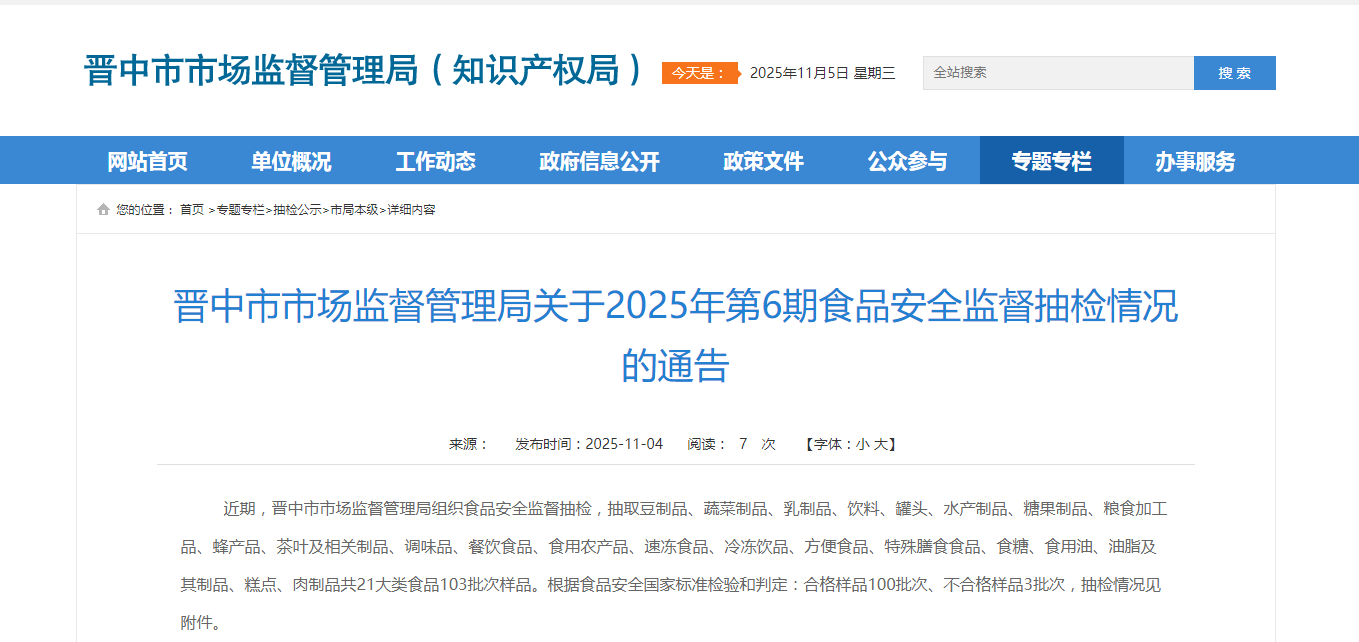
山西省晋中市市场监督管理局关于2025年第6期食品安全监督抽检情况的通告
Zhong Guo Zhi Liang Xin Wen Wang· 2025-11-05 06:37
Core Points - The Jinzhong Market Supervision Administration conducted a food safety inspection, sampling 103 batches of various food products, with 100 passing and 3 failing the safety standards [3] - The inspection covered 21 categories of food, including dairy products, beverages, canned goods, and frozen foods [3] - The local market supervision departments were urged to handle the non-compliant products according to relevant laws and regulations [3] Summary by Category Food Safety Inspection - A total of 103 samples were collected from 21 categories of food products [3] - 100 samples were found to be compliant, while 3 samples were deemed non-compliant [3] Non-compliant Products - The local authorities are responsible for addressing the non-compliant products identified during the inspection [3] - Consumers are encouraged to report any non-compliant food products they encounter in the market by calling 12315 [3]