
饮用纯净水

Search documents
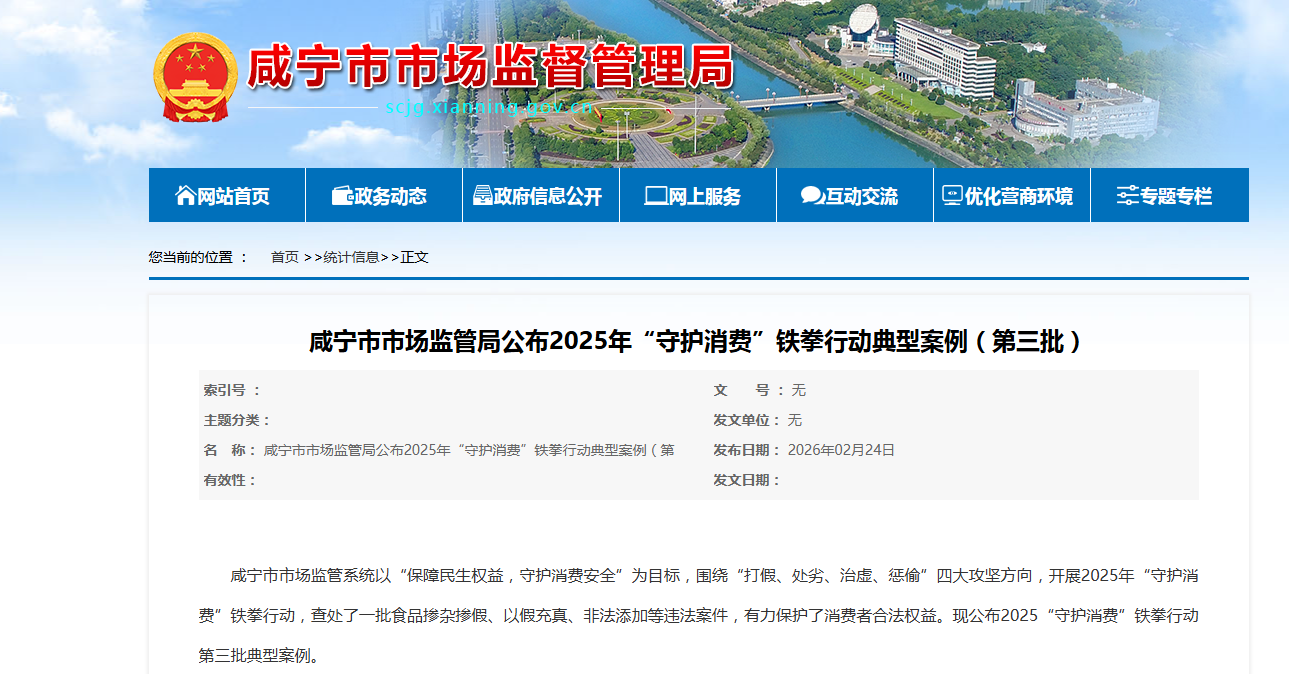
湖北省咸宁市市场监管局公布2025年“守护消费”铁拳行动典型案例(第三批)
Zhong Guo Zhi Liang Xin Wen Wang· 2026-02-27 07:57
Core Viewpoint - The Xianning market supervision system aims to protect consumer rights and ensure safety through the "Iron Fist Action" for 2025, focusing on combating counterfeiting, substandard products, fraud, and theft [2] Group 1: Enforcement Actions - The Xianning market supervision bureau investigated a food company for labeling products with false production dates, resulting in the confiscation of 640 boxes of cakes and fines totaling 43,000 yuan [3] - The Chibi market supervision bureau penalized a food store for selling products with forged barcodes, imposing a fine of 2,000 yuan [4] - The Chongyang market supervision bureau found a seller using excessive food additives in agricultural products, leading to fines and confiscation of illegal gains totaling 5,240 yuan [5] - The Tongcheng market supervision bureau penalized a water factory for selling non-compliant bottled water, resulting in fines of 10,600 yuan [6] - The Tongshan market supervision bureau referred a case of suspected production and sale of inferior products to the police, involving illegal practices in beef processing [7]

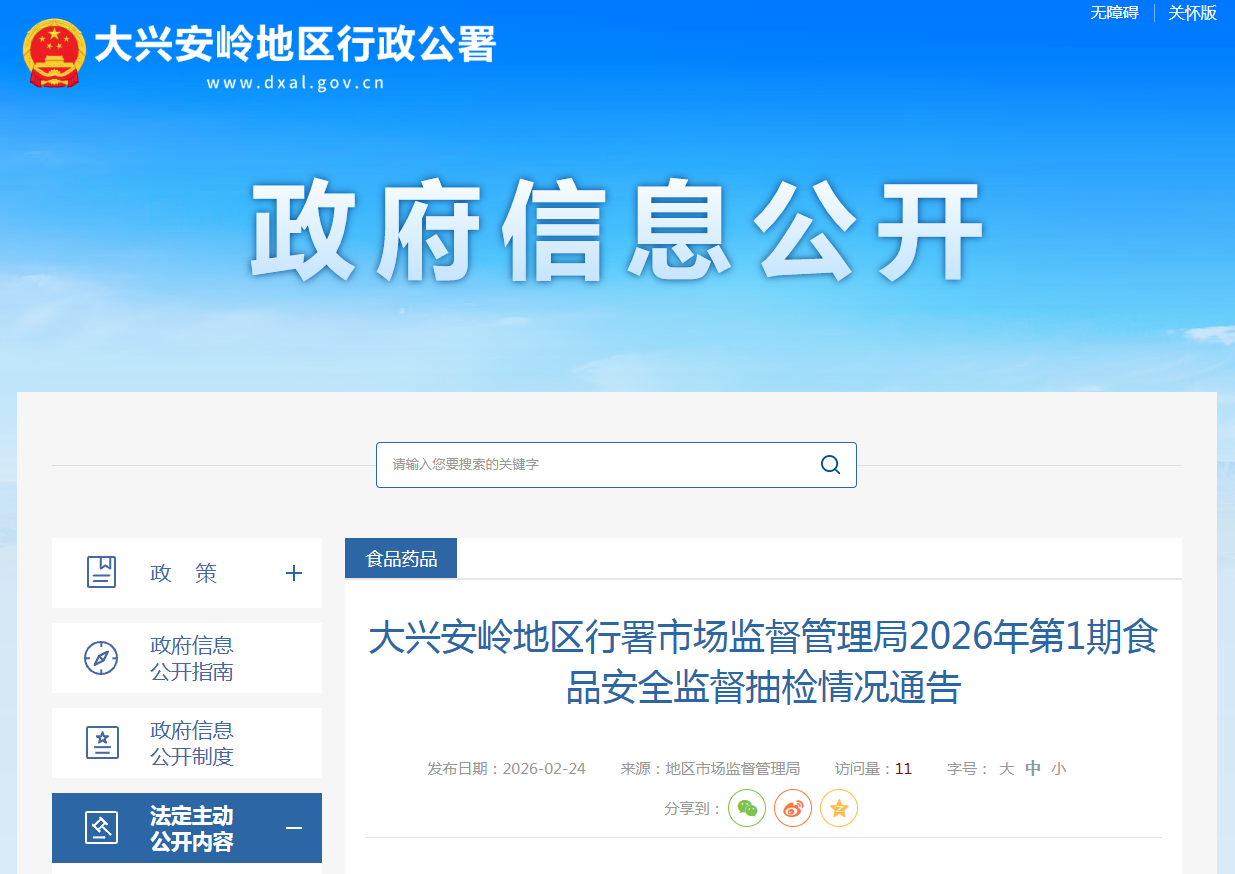
黑龙江省大兴安岭地区行署市场监督管理局2026年第1期食品安全监督抽检情况通告
Zhong Guo Zhi Liang Xin Wen Wang· 2026-02-25 06:45
Core Viewpoint - The Daxing'anling region's market supervision administration conducted a food safety inspection during the winter tourism season, ensuring that all sampled food products met safety standards [1][2]. Group 1: Inspection Overview - A total of 35 batches of food products were inspected, covering 16 categories including agricultural products, beverages, frozen foods, and more [2]. - All samples tested were found to be compliant with safety standards, indicating a successful inspection initiative [2]. Group 2: Sample Details - The inspection included various food items such as: - Red bean bread from Hebei Lema Food Co., Ltd. [3] - Thick egg Shaqima from Yibaili (Linyi) Food Co., Ltd. [3] - Fresh rice cakes from Liaoning Little Prince Food Co., Ltd. [3] - Various other products including dairy, meat, and beverages from multiple manufacturers [4].
瓶装水该如何选
Xin Lang Cai Jing· 2026-01-30 00:01
Group 1 - The article discusses the various types of bottled water available in the market, categorizing them into three main types: natural mineral water, purified water, and other types of drinking water [3][4] - Natural mineral water is sourced from deep underground and is protected from pollution, containing certain minerals and trace elements [3] - Purified water is derived from public water systems and undergoes processes like distillation and reverse osmosis, resulting in minimal mineral content [3] Group 2 - Other types of drinking water can be further divided into natural spring water, natural water, and other drinking water, with each having specific characteristics regarding mineral content and processing [3][4] - The article emphasizes the importance of checking labels for "mineral water" and the source location to ensure authenticity, as well as verifying the execution standards (GB 8537) for nutritional content [4]
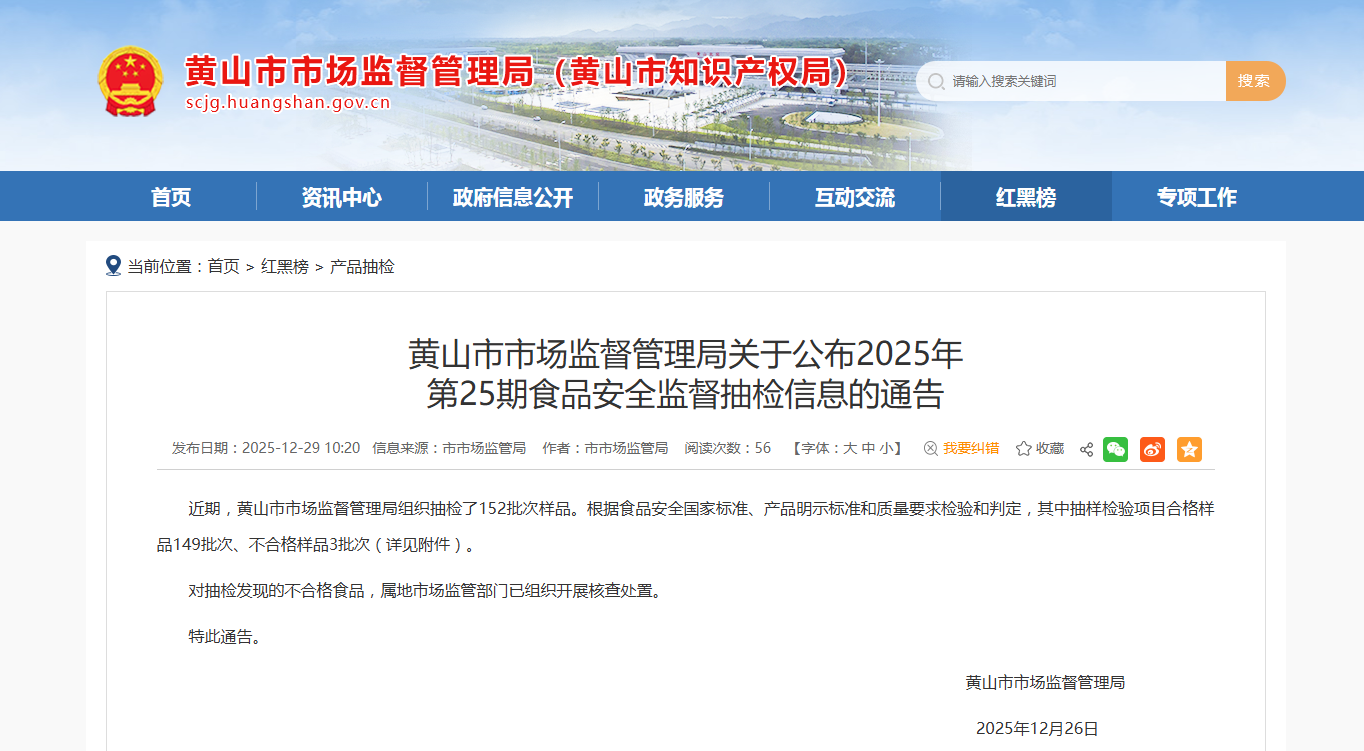
安徽省黄山市市场监督管理局关于公布2025年第25期食品安全监督抽检信息的通告
Zhong Guo Zhi Liang Xin Wen Wang· 2026-01-13 07:59
Summary of Key Points Core Viewpoint - The Huangshan Market Supervision Administration conducted a food safety inspection of 152 samples, with 149 passing and 3 failing the quality standards, leading to local regulatory actions against the non-compliant products [2]. Group 1: Inspection Results - A total of 152 samples were inspected, with 149 samples deemed compliant and 3 samples found to be non-compliant [2]. - The local market supervision department has initiated investigations and actions regarding the non-compliant food products [2]. Group 2: Product Details - The inspection covered various food categories, including condiments, oils, alcoholic beverages, and snacks, with specific brands and products listed [3][4][5]. - Notable non-compliant products included items from companies such as Guangdong Meiwai Xian Food Co., Ltd. and Sichuan Manjianghong Wine Industry Co., Ltd. [3][4]. - The inspection results highlight the importance of maintaining food safety standards across different food categories in the Huangshan region [2][3].
苏州市协同联动开展饮用纯净水质量安全专项整治行动
Su Zhou Ri Bao· 2025-11-07 09:46
Core Points - The article discusses a three-month special rectification action in Suzhou aimed at ensuring the safety of drinking purified water, involving cross-departmental collaboration to strengthen regulation from source to consumption [1][2] Group 1: Regulatory Actions - The special rectification covers the entire chain of drinking purified water, focusing on packaging material sources, production behavior, and market order [2] - A total of 866 drinking purified water production and operation units have been inspected, with 136 issues rectified and 90 batches of bottled water sampled for quality checks [2][3] Group 2: Targeted Measures - The working group has implemented precise governance measures to address issues in the drinking purified water industry, including undercover inspections in key areas like old neighborhoods and urban-rural junctions [3] - The initiative includes expanding social supervision and reporting channels to uncover illegal activities such as unauthorized filling and labeling [3] Group 3: Future Plans - After the completion of the rectification work, the city plans to deepen inspections and establish dynamic regulatory archives using grid management and big data comparison [4] - The goal is to institutionalize effective measures and explore a differentiated regulatory model based on credit risk classification, promoting a collaborative governance framework for drinking purified water safety [4]
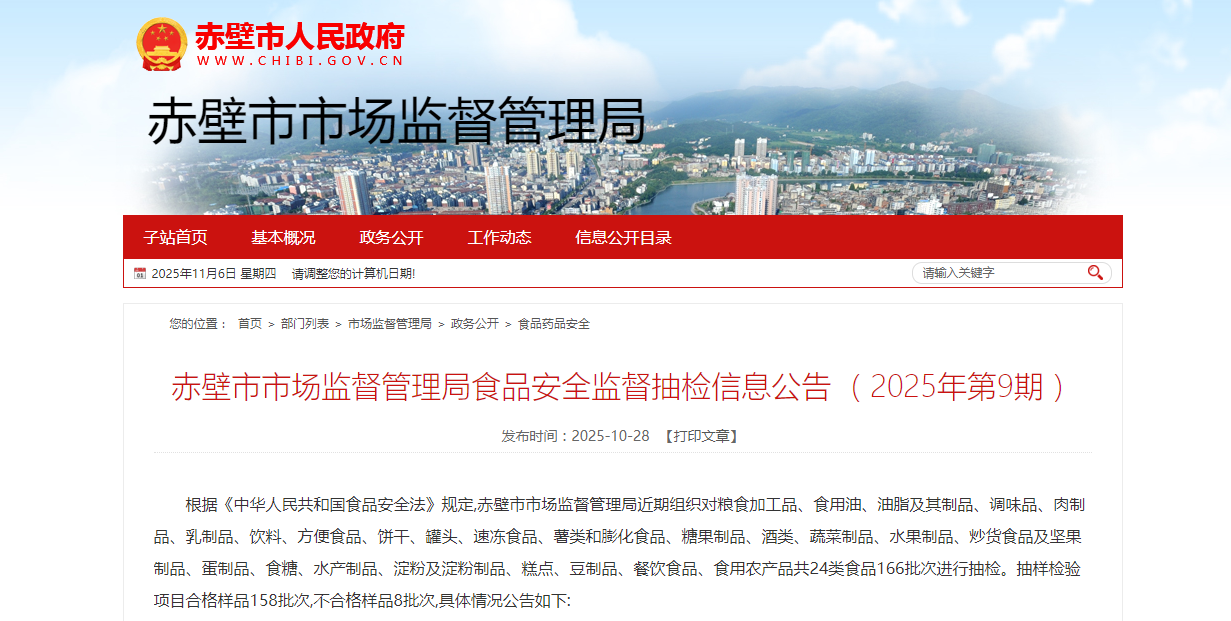
湖北省赤壁市市场监督管理局食品安全监督抽检信息公告 (2025年第9期)
Zhong Guo Zhi Liang Xin Wen Wang· 2025-11-06 09:06
Core Viewpoint - The article reports on the recent food safety inspection conducted by the Market Supervision Administration of Chibi City, revealing that out of 166 food samples tested, 158 were compliant while 8 were found to be non-compliant, highlighting ongoing food safety concerns in the region [4]. Summary by Category Food Categories Inspected - A total of 24 food categories were inspected, including grain products, edible oils, seasonings, meat products, dairy products, beverages, convenience foods, snacks, canned foods, frozen foods, and more [4]. Inspection Results - Out of 166 samples tested: - 158 samples were compliant - 8 samples were non-compliant - Breakdown of non-compliant samples: - Catering food: 29 samples tested, 7 non-compliant - Edible agricultural products: 29 samples tested, 1 non-compliant - Grain products: 11 samples tested, all compliant - Edible oils and fats: 3 samples tested, all compliant - Seasonings: 3 samples tested, all compliant - Meat products: 8 samples tested, all compliant - Dairy products: 4 samples tested, all compliant - Beverages: 7 samples tested, all compliant - Convenience foods: 6 samples tested, all compliant - Snacks: 2 samples tested, all compliant - Canned foods: 2 samples tested, all compliant - Frozen foods: 4 samples tested, all compliant - Potato and puffed foods: 8 samples tested, all compliant - Candy products: 2 samples tested, all compliant - Alcohol: 6 samples tested, all compliant - Vegetable products: 8 samples tested, all compliant - Fruit products: 2 samples tested, all compliant - Nuts and seeds: 3 samples tested, all compliant - Egg products: 1 sample tested, all compliant - Sugar: 1 sample tested, all compliant - Aquatic products: 2 samples tested, all compliant - Starch and starch products: 3 samples tested, all compliant - Pastries: 19 samples tested, all compliant - Bean products: 3 samples tested, all compliant [4].
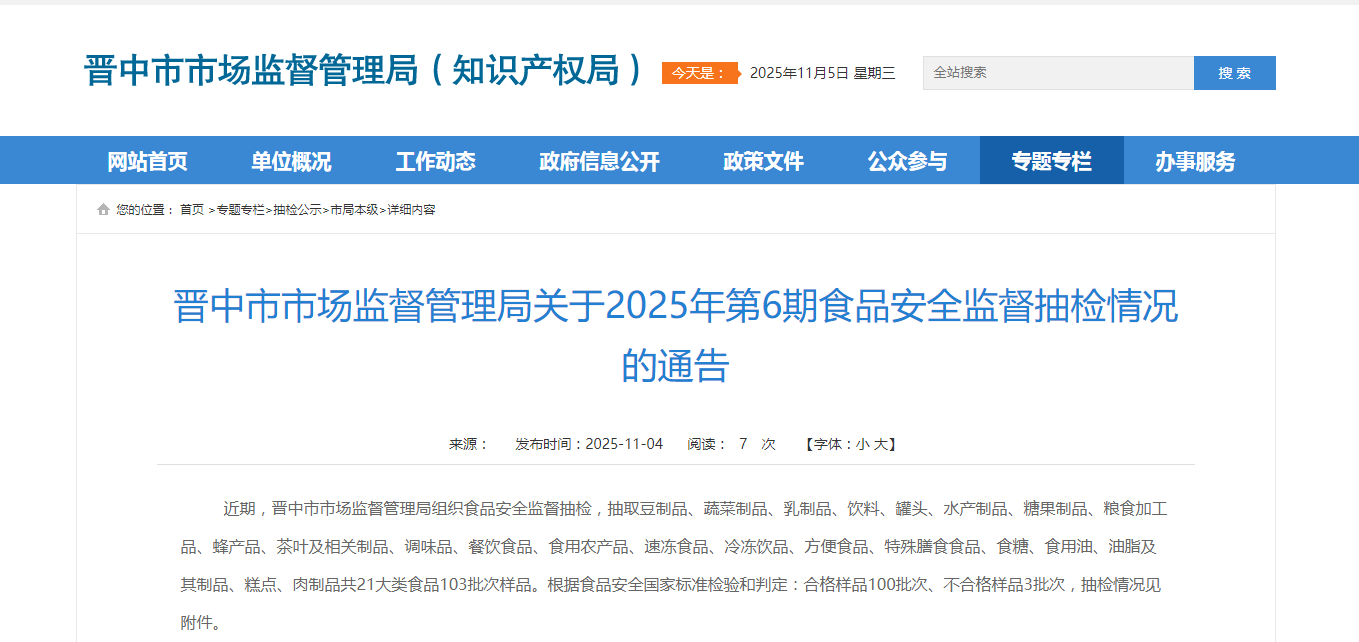
山西省晋中市市场监督管理局关于2025年第6期食品安全监督抽检情况的通告
Zhong Guo Zhi Liang Xin Wen Wang· 2025-11-05 06:37
Core Points - The Jinzhong Market Supervision Administration conducted a food safety inspection, sampling 103 batches of various food products, with 100 passing and 3 failing the safety standards [3] - The inspection covered 21 categories of food, including dairy products, beverages, canned goods, and frozen foods [3] - The local market supervision departments were urged to handle the non-compliant products according to relevant laws and regulations [3] Summary by Category Food Safety Inspection - A total of 103 samples were collected from 21 categories of food products [3] - 100 samples were found to be compliant, while 3 samples were deemed non-compliant [3] Non-compliant Products - The local authorities are responsible for addressing the non-compliant products identified during the inspection [3] - Consumers are encouraged to report any non-compliant food products they encounter in the market by calling 12315 [3]
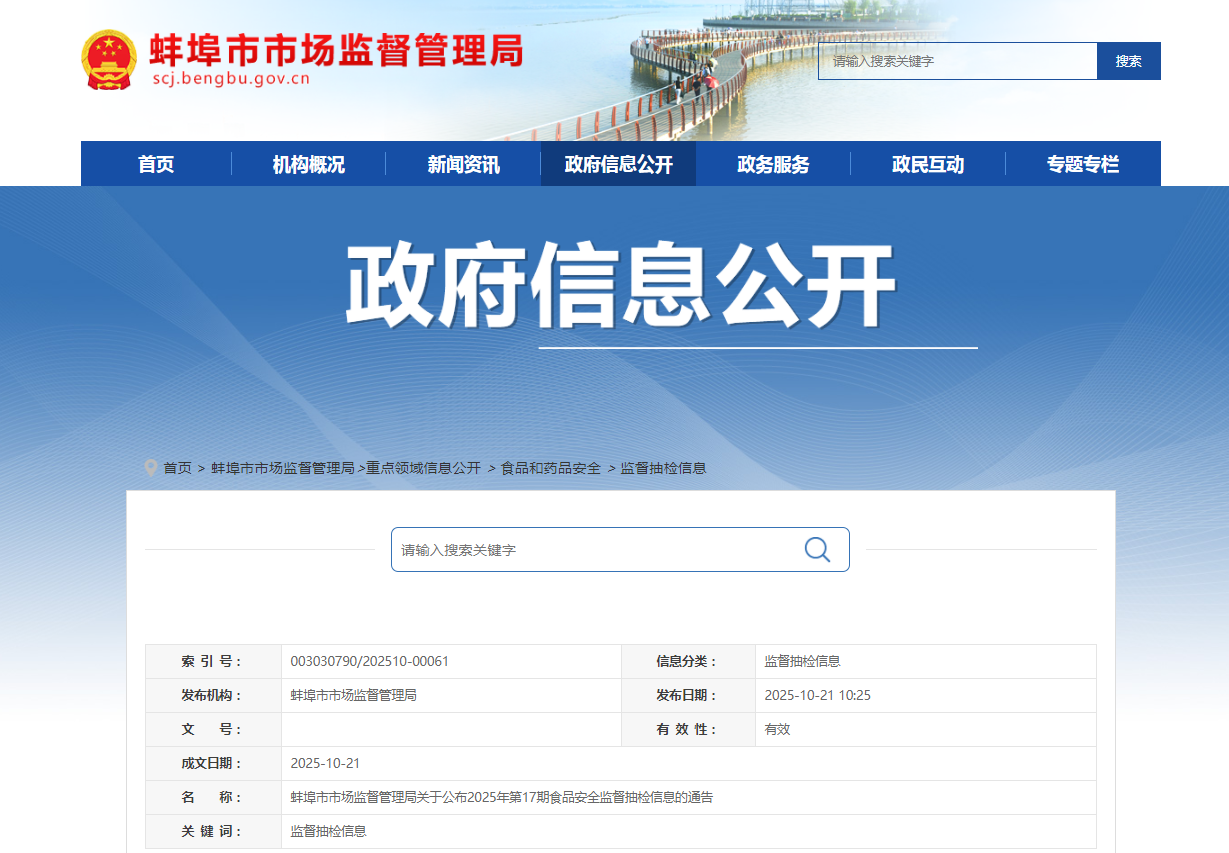
安徽省蚌埠市市场监督管理局关于公布2025年第17期食品安全监督抽检信息的通告
Zhong Guo Zhi Liang Xin Wen Wang· 2025-10-22 07:30
Core Points - The article reports on a recent food safety inspection conducted by the Market Supervision Administration of Bengbu City, which tested 108 batches of various food products across 19 categories, revealing 104 compliant samples and 4 non-compliant samples [2][3]. Non-compliant Products - The non-compliant products identified include: - Lemon Passion Fruit (substitute tea) from Anhui Huayun Supermarket, produced by Hebei Hongjing Tang Biotechnology Co., which failed the mold test [2]. - Sichuan Sorghum Wine from Yujian Linle Supermarket, produced by Sichuan Guyan Liquor Group, which did not meet the alcohol content standard [2]. - Drinking water from Wuhou County Meiyuan Purified Water Plant, which failed the test for Pseudomonas aeruginosa [3]. - Drinking water from Guzhen County Renqiao Ganlin Purified Water Plant, which also failed the test for Pseudomonas aeruginosa [3]. Inspection Details - The inspection covered a wide range of food categories, including meat products, snacks, oils, dairy, and beverages, among others [2]. - The testing was conducted according to national food safety standards, with the results indicating a high compliance rate overall [2].
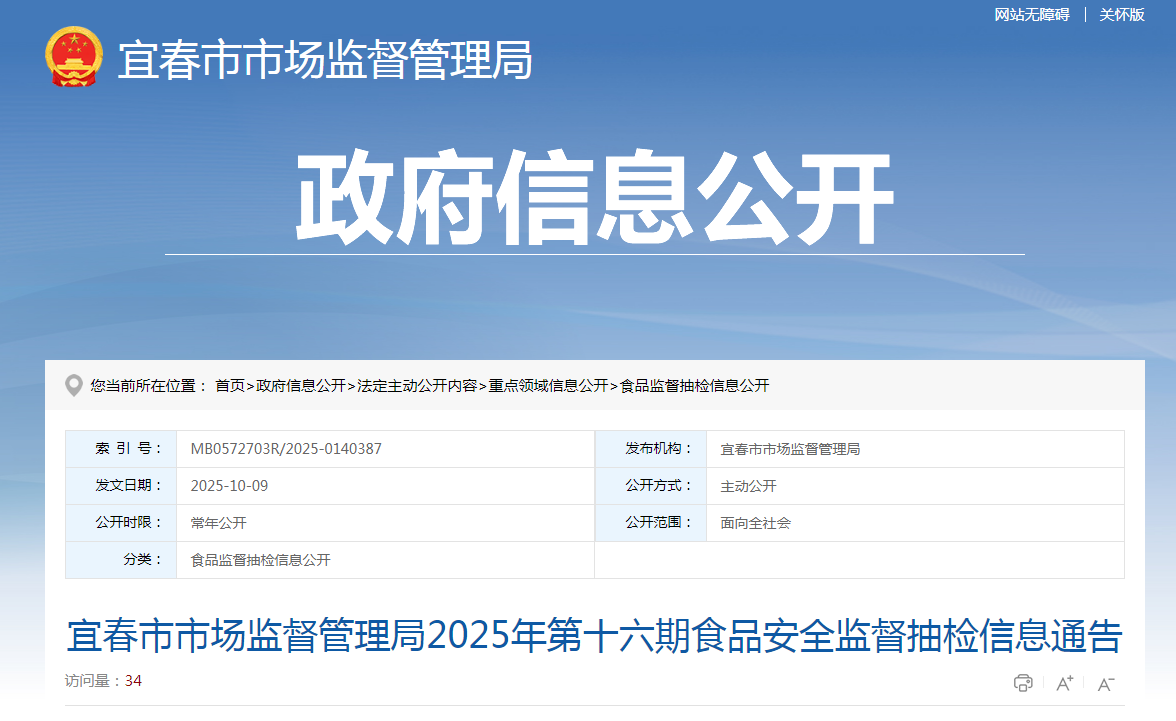
江西省宜春市市场监督管理局2025年第十六期食品安全监督抽检信息通告
Zhong Guo Zhi Liang Xin Wen Wang· 2025-10-13 07:37
Core Viewpoint - The report from Yichun Market Supervision Administration highlights the results of food safety inspections, revealing that out of 118 samples tested across 14 categories, 100 were found to be compliant, while 18 were deemed non-compliant, indicating a compliance rate of approximately 84.7% [4]. Summary by Category - **Overall Inspection Results** - Total samples tested: 118 - Compliant samples: 100 - Non-compliant samples: 18 - Compliance rate: 84.7% [4] - **Food Categories and Compliance** - **Catering Foods**: 9 samples tested, 8 compliant, 1 non-compliant - **Condiments**: 3 samples tested, 2 compliant, 1 non-compliant - **Convenience Foods**: 3 samples tested, all compliant - **Pastries**: 5 samples tested, all compliant - **Alcoholic Beverages**: 8 samples tested, all compliant - **Dairy Products**: 1 sample tested, compliant - **Edible Agricultural Products**: 57 samples tested, 47 compliant, 10 non-compliant - **Edible Oils and Fats**: 12 samples tested, all compliant - **Vegetable Products**: 1 sample tested, compliant - **Fruit Products**: 2 samples tested, all compliant - **Frozen Foods**: 1 sample tested, compliant - **Special Dietary Foods**: 1 sample tested, compliant - **Beverages**: 12 samples tested, 10 compliant, 2 non-compliant - **Health Foods**: 3 samples tested, all compliant [4]. - **Details of Non-Compliant Products** - Non-compliant products included items with excessive residues of harmful substances such as: - Restaurant utensils with a detected level of anionic synthetic detergent at 0.0218 mg/100 cm², which should not be detectable - Chili powder with a sulfur dioxide residue of 1.01 g/kg, exceeding permissible limits - Agricultural products with pesticide residues above acceptable levels, such as 0.81 mg/kg of pyraclostrobin in chili peppers [4].
江苏省市场监管局8月和9月食品安全监督抽检结果显示 微生物污染是饮料产品不合格主要原因
Zhong Guo Zhi Liang Xin Wen Wang· 2025-09-23 06:44
Core Insights - Jiangsu Province's market regulatory authority has prioritized beverage safety inspections in 2023, focusing on ensuring compliance with food safety standards [1][2][3][4] Summary by Sections Inspection Results - In August and September, the Jiangsu market regulatory authority conducted multiple rounds of food safety inspections, specifically targeting beverages [1][2][3][4] - The inspections revealed that non-compliance issues primarily stemmed from microbial contamination, particularly the presence of Pseudomonas aeruginosa [1][2][3][4] - A total of 1006 food samples were tested in one round, with 15 samples failing, including one beverage [1] - In another round, 1356 samples were tested, resulting in 21 failures, including one beverage [2] - Subsequent inspections showed varying results, with some rounds reporting all beverages as compliant, while others identified multiple non-compliant beverage samples [3][4] Specific Non-compliance Cases - Specific instances of non-compliance included: - Drinking water from a factory in Jiangsu failing to meet standards for nitrite and Pseudomonas aeruginosa [1] - A natural spring water product failing due to Pseudomonas aeruginosa [2] - Multiple instances of bottled water failing due to Pseudomonas aeruginosa and other contaminants in various inspections [3][4] Regulatory Actions - The Jiangsu market regulatory authority has mandated local regulatory bodies to investigate non-compliant products and their manufacturers, ensuring legal actions are taken against violations [1] - Non-compliance cases are recorded in the food safety credit archives of the respective food producers [1]