
研学基地

Search documents
秦岭深处的“熊猫管家”:我陪“国宝”过春节
Zhong Guo Xin Wen Wang· 2026-02-16 03:47
Core Viewpoint - The article highlights the dedication of young caretakers at the Qinling Giant Panda Foping Rescue and Breeding Research Base, showcasing their commitment to the well-being of giant pandas and the positive impact of pandas on local tourism and community engagement [2][5]. Group 1: Caretaker Responsibilities - Yang Li, a caretaker at the base, emphasizes the importance of observing panda behavior and health, including checking their feces for health indicators [2][4]. - The base employs modern technology such as GPS and drones for monitoring panda activities, enhancing the efficiency of wildlife protection efforts [4]. Group 2: Community and Economic Impact - Foping County is home to over 130 wild giant pandas, with the highest density of wild pandas in China, leading to significant ecological benefits for local residents [5]. - The presence of pandas has transformed local tourism, with a reported 26.06% increase in tourist numbers and a 32.04% rise in comprehensive income in 2025 [5]. Group 3: Personal Commitment and Cultural Significance - Caretakers express a deep personal connection to the pandas, viewing them as family and finding peace in their care routines [2][5]. - The article portrays the unique cultural significance of pandas in China, describing the caretakers' work as a form of "national treasure romance" [5].

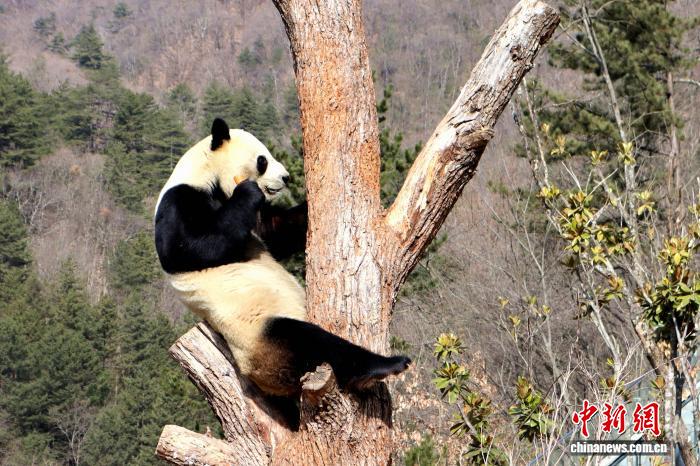
(新春见闻)秦岭深处的“熊猫管家”:我陪“国宝”过春节
Zhong Guo Xin Wen Wang· 2026-02-12 07:54
Core Viewpoint - The article highlights the dedication of young caretakers at the Qinling Giant Panda Rescue and Breeding Research Base, showcasing their commitment to the care of giant pandas during the Spring Festival, emphasizing the blend of traditional care and modern technology in panda conservation efforts [1][2][3]. Group 1: Caretakers and Their Responsibilities - Yang Li, a "post-95" panda caretaker, has been with the base since its establishment in 2022 and considers the pandas as family [2]. - The caretakers perform meticulous daily routines, including disinfection and health checks, to ensure the well-being of the pandas [2][3]. - The pandas have distinct personalities, with caretakers familiar with their preferences and behaviors, enhancing the quality of care provided [2][3]. Group 2: Technological Advancements in Conservation - The base employs modern technology such as GPS tracking and drones for monitoring panda activities and health, improving the efficiency of conservation efforts [3]. - Data centers have been established to scientifically monitor panda health and behavior, utilizing fecal analysis to detect potential health issues [3]. Group 3: Economic Impact of Panda Conservation - The presence of over 130 wild giant pandas in the region has led to significant economic benefits, with local tourism seeing a 26.06% increase in visitors and a 32.04% rise in revenue in 2025 [6]. - Local residents have become proactive in reporting panda sightings, contributing to conservation efforts and benefiting from the "ecological dividends" brought by the pandas [6]. Group 4: Cultural Significance and Personal Commitment - The caretakers express a deep sense of fulfillment in their work, finding peace and joy in caring for the pandas, which they view as a unique aspect of Chinese culture [6].
迈向“十五五”的发展图景丨城乡融合,山坳里闯出一片天
Ren Min Ri Bao· 2025-10-27 03:57
Core Insights - The article emphasizes the importance of enhancing agricultural production capacity and quality, promoting rural development, and improving the effectiveness of policies aimed at benefiting farmers [1] Group 1: Rural Development and Integration - The completion of the upgraded Port Nine Road has improved accessibility to rural areas, facilitating tourism and local economic development [1] - The village of Lunan has transformed from a remote area with limited infrastructure to a vibrant community with new businesses such as coffee shops, agritourism, and homestays, driven by the return of young entrepreneurs [2] - The integration model of "Party branch + cooperative + enterprise" has been established to coordinate resources and enhance local development, allowing villagers to invest land and receive dividends [1][2] Group 2: Economic Growth and Income - In the first half of the year, rural residents' per capita disposable income grew by 6.2%, surpassing urban income growth, which has stimulated consumption in rural areas [3] - The retail sales of consumer goods in rural areas reached 49,039 billion yuan in the first three quarters, marking a year-on-year increase of 4.6% [3] Group 3: Urban-Rural Integration and Public Services - The article highlights the ongoing efforts to promote urban-rural integration through new urbanization initiatives, focusing on county-level development as a key connector between cities and rural areas [4] - Improvements in public services, such as education and healthcare, are narrowing the gap between urban and rural areas, contributing to a more equitable distribution of resources [4] - The goal is to achieve equal basic rights for urban and rural residents, enhance public service accessibility, and promote balanced income distribution [4]
城乡融合,山坳里闯出一片天(迈向“十五五”的发展图景)
Ren Min Ri Bao· 2025-10-26 22:19
Core Insights - The article emphasizes the importance of enhancing agricultural production capacity and quality, promoting livable and workable rural areas, and improving the effectiveness of policies that benefit farmers [1] Group 1: Rural Development and Integration - The completion of the upgraded Port Nine Road has improved accessibility to rural areas, facilitating tourism and local economic development [2] - The case of Lunan Village illustrates successful rural revitalization through a model of "party branch + cooperative + enterprise," which integrates resources and encourages local entrepreneurship [2][3] - The influx of young people returning to their hometowns has led to increased community engagement and the establishment of various local businesses, such as farms and guesthouses [3] Group 2: Economic Growth and Income - In the first half of the year, rural residents' per capita disposable income grew by 6.2%, surpassing urban income growth, indicating a positive trend in rural economic conditions [4] - The retail sales of consumer goods in rural areas reached 49,039 billion yuan, with a year-on-year growth of 4.6%, reflecting a vibrant rural consumption market [4] - The integration of urban and rural areas is being driven by new urbanization efforts, focusing on county-level development as a key connector between cities and rural areas [5] Group 3: Public Services and Quality of Life - There has been a significant reduction in the gap of public services between urban and rural areas, with improvements in education, healthcare, and elderly care services [5] - The goal is to achieve equal basic rights for urban and rural residents, enhance public service levels, and promote balanced income distribution, ultimately improving the quality of life for rural inhabitants [5]
广西河池局通报4起土地违法典型案例
Zhong Guo Zi Ran Zi Yuan Bao· 2025-05-23 01:52
Group 1 - The Guangxi Zhuang Autonomous Region's Hechi City Natural Resources Bureau has publicly reported four typical cases of illegal land use to enhance awareness of lawful land use and to serve as a warning through typical cases [1][2][3] - Guangxi Xingqihang Study Travel Co., Ltd. illegally occupied 12.58 acres of land for a study base, including 10.58 acres of permanent basic farmland, and was ordered to rectify the situation by restoring the land [1] - Bama Urban Construction Investment Development Co., Ltd. illegally occupied 29.619 acres of land for a project, including 13.49 acres of farmland, and was fined 1.9746 million yuan, with the land returned [2] - Nandan Urban Water Co., Ltd. illegally occupied 3.46 acres of land for a sewage treatment plant, including 3.19 acres of farmland, and was fined 1.295497 million yuan, with ongoing efforts to recover the fine [2] - Tianjin Hezhong Electric Power Equipment Co., Ltd. illegally occupied 4.29 acres of land for a photovoltaic booster station, and was fined 285,999 yuan, with the land returned and facilities confiscated [3]