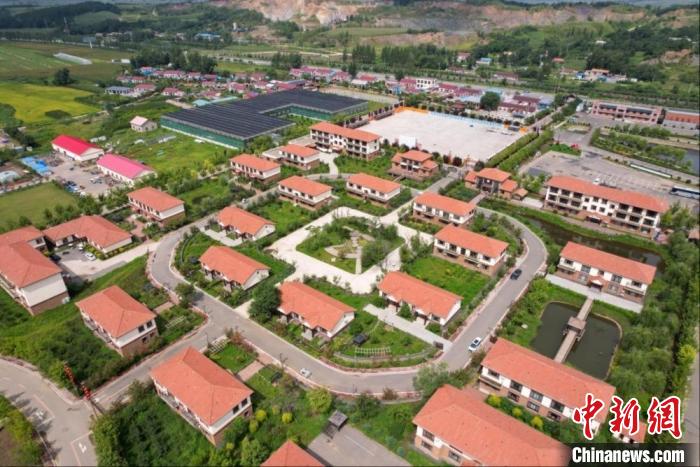
主题民宿

Search documents
秦岭深处的“熊猫管家”:我陪“国宝”过春节
Zhong Guo Xin Wen Wang· 2026-02-16 03:47
Core Viewpoint - The article highlights the dedication of young caretakers at the Qinling Giant Panda Foping Rescue and Breeding Research Base, showcasing their commitment to the well-being of giant pandas and the positive impact of pandas on local tourism and community engagement [2][5]. Group 1: Caretaker Responsibilities - Yang Li, a caretaker at the base, emphasizes the importance of observing panda behavior and health, including checking their feces for health indicators [2][4]. - The base employs modern technology such as GPS and drones for monitoring panda activities, enhancing the efficiency of wildlife protection efforts [4]. Group 2: Community and Economic Impact - Foping County is home to over 130 wild giant pandas, with the highest density of wild pandas in China, leading to significant ecological benefits for local residents [5]. - The presence of pandas has transformed local tourism, with a reported 26.06% increase in tourist numbers and a 32.04% rise in comprehensive income in 2025 [5]. Group 3: Personal Commitment and Cultural Significance - Caretakers express a deep personal connection to the pandas, viewing them as family and finding peace in their care routines [2][5]. - The article portrays the unique cultural significance of pandas in China, describing the caretakers' work as a form of "national treasure romance" [5].


(新春见闻)秦岭深处的“熊猫管家”:我陪“国宝”过春节
Zhong Guo Xin Wen Wang· 2026-02-12 07:54
Core Viewpoint - The article highlights the dedication of young caretakers at the Qinling Giant Panda Rescue and Breeding Research Base, showcasing their commitment to the care of giant pandas during the Spring Festival, emphasizing the blend of traditional care and modern technology in panda conservation efforts [1][2][3]. Group 1: Caretakers and Their Responsibilities - Yang Li, a "post-95" panda caretaker, has been with the base since its establishment in 2022 and considers the pandas as family [2]. - The caretakers perform meticulous daily routines, including disinfection and health checks, to ensure the well-being of the pandas [2][3]. - The pandas have distinct personalities, with caretakers familiar with their preferences and behaviors, enhancing the quality of care provided [2][3]. Group 2: Technological Advancements in Conservation - The base employs modern technology such as GPS tracking and drones for monitoring panda activities and health, improving the efficiency of conservation efforts [3]. - Data centers have been established to scientifically monitor panda health and behavior, utilizing fecal analysis to detect potential health issues [3]. Group 3: Economic Impact of Panda Conservation - The presence of over 130 wild giant pandas in the region has led to significant economic benefits, with local tourism seeing a 26.06% increase in visitors and a 32.04% rise in revenue in 2025 [6]. - Local residents have become proactive in reporting panda sightings, contributing to conservation efforts and benefiting from the "ecological dividends" brought by the pandas [6]. Group 4: Cultural Significance and Personal Commitment - The caretakers express a deep sense of fulfillment in their work, finding peace and joy in caring for the pandas, which they view as a unique aspect of Chinese culture [6].
守住古城文化根脉
Xin Lang Cai Jing· 2026-01-31 23:42
Core Insights - The "Ancient City Lecture Hall" in Quanzhou aims to deepen the understanding of the city's historical and cultural significance as a key node on the Maritime Silk Road, enhancing its academic vitality [1][2] - The initiative reflects a growing trend in domestic cultural tourism, where ancient cities are seen as museums of civilization, offering not just tourism but also a sense of cultural belonging and spiritual home [1][2] Summary by Sections Cultural Significance - Quanzhou's "Ancient City Lecture Hall" provides a platform for in-depth interpretation of its history, moving beyond superficial tourism to a more profound cultural experience [2] - The initiative emphasizes the importance of local community engagement, ensuring that residents have a deep understanding and pride in their cultural heritage [2] Tourism Development - Current trends show that many ancient cities focus on sightseeing, leading to a superficial representation of culture, where historical narratives are simplified and traditional crafts are reduced to mere souvenirs [1] - The risk of cultural dilution and tourism homogenization is highlighted, as visitors often lack a deep emotional connection to the local heritage [1] Future Directions - The "Ancient City Lecture Hall" is positioned as a public learning platform for local workers, citizens, and cultural researchers, promoting a sustainable cultural community rather than a purely tourist-driven economy [2] - Quanzhou plans to transform academic resources into sustainable cultural tourism products, such as immersive dramas based on maritime stories and creative cultural products that reflect local aesthetics [2][3]
“世界市长对话·哈尔滨”活动举办:共享冰雪机遇 共促城市发展
Ren Min Ri Bao· 2026-01-11 05:19
Group 1 - The "World Mayors Dialogue in Harbin" event focused on sustainable development of the ice and snow economy, global cooperation, and innovation in urban governance [1][2] - The event resulted in the release of the "Harbin Initiative," promoting diverse paths for high-quality urban development and collaboration among cities [2] - Harbin's ice and snow economy is becoming a new driving force for high-quality development and international openness, with the city transforming its natural resources into tourism products [2][5] Group 2 - The 2026 Harbin International Ice and Snow Economy Expo showcased over 20,000 square meters of exhibits, with around 300 companies from countries like Finland, Switzerland, and Austria participating [3] - The event highlighted Harbin's role as a global platform for business and innovation in the ice and snow sector, with a focus on cultural exchange and economic cooperation [3][4] - Various cities expressed interest in collaborating with Harbin, indicating a strong desire for cultural and economic partnerships [5] Group 3 - Ice sports activities, such as skating and curling, were featured during the event, showcasing the vibrant ice sports culture in Harbin [6] - Harbin's ice and snow economy is projected to receive 90.36 million visitors during the 2024-2025 season, with an estimated economic scale exceeding 160 billion RMB [6]

政企协同的破局之力:“永州模式” 如何激活四线城市的文旅新动能
Sou Hu Cai Jing· 2025-10-01 14:37
Core Insights - The article discusses the emergence of local sports events in China, particularly focusing on the "Xiangchao" league in Yongzhou, which has become a model for integrating sports, tourism, and local economy through community engagement and cultural branding [1][8]. Group 1: Sports IP Development - The "Yongzhou model" exemplifies how a four-tier city can leverage sports events to create a lasting economic impact by transforming fleeting attention into sustainable growth through cultural and emotional connections [3][8]. - Yongzhou's sports infrastructure, particularly the renovation of its aging sports stadium, has been pivotal in reviving local sports culture and enhancing community participation [4][6]. - The successful launch of the "Yongchongfeng" IP, which embodies local cultural elements, has resonated with the community, fostering a sense of pride and identity among residents [6][7]. Group 2: Government and Enterprise Collaboration - The collaboration between government and enterprises in Yongzhou has established a clear division of responsibilities and shared value, addressing the challenges of sustaining public interest and commercial viability in cultural tourism [10][12]. - The government has played a crucial role in upgrading infrastructure and providing public services, while enterprises have focused on market-driven strategies to monetize the IP [11][12]. - This partnership has led to innovative solutions, such as the introduction of "hanging tickets" for sold-out events and policies that encourage tourism linked to sports events [10][11]. Group 3: Social and Cultural Impact - The "Yongzhou model" has significantly reshaped the city's identity, creating a new urban recognition system that connects historical cultural resources with modern symbols appealing to younger demographics [13][14]. - The cultural activation of local heritage through the "Yongchongfeng" IP has made traditional elements more accessible and engaging for both residents and visitors [15][25]. - The integration of cultural experiences into everyday life has enhanced the community's connection to its heritage, transforming cultural tourism into a vital part of the local economy [25][26]. Group 4: Economic and Market Value - The economic impact of the "Xiangchao" league has been substantial, with ticket sales and related tourism activities generating significant revenue for local businesses [18][19]. - The model has demonstrated a multiplier effect, where sports events drive consumption across various sectors, including hospitality and retail, significantly boosting local economic activity [18][19]. - The strategic integration of sports, culture, and tourism has positioned Yongzhou as a case study for other small cities aiming to revitalize their economies through similar initiatives [17][26].
(活力中国调研行)长春马鞍山村的致富密码:从“卖石头”到“兴文旅”
Zhong Guo Xin Wen Wang· 2025-07-16 06:14
Core Insights - The article highlights the transformation of Ma'anshan Village from a resource-dependent economy to a thriving tourism destination, significantly increasing the average income of residents from 8,000 yuan in 2016 to 23,000 yuan in 2024 [1][3]. Group 1: Economic Transformation - The village previously relied on stone mining, which was a necessity due to the challenging resource landscape characterized by "eight mountains, one water, and one field" [3]. - With government support, the village has shifted focus to developing a fitness and leisure base, leveraging its 53.6% forest coverage [3]. - The village has created 147 themed homestays and a 1,500 square meter restaurant, capable of accommodating 300 guests and serving 500 diners [7]. Group 2: Tourism Development - Ma'anshan Village has become a popular destination for rural tourism, attracting over 600,000 visitors annually [7]. - The village has integrated its red tourism resources, including historical sites and memorials, into its tourism offerings, enhancing visitor engagement [5]. - Local residents have found employment opportunities in various roles such as chefs, service staff, and agricultural workers, contributing to improved living standards [5][7]. Group 3: Future Prospects - The village's transformation is part of a broader trend in Jilin province, which aims to shift rural economies from resource selling to cultural and tourism development [7]. - The local government plans to continue implementing the "three blocks of land" reform to activate idle resources and attract investment [7].