碳远期合约

Search documents
制度创新护航“双碳”目标落地
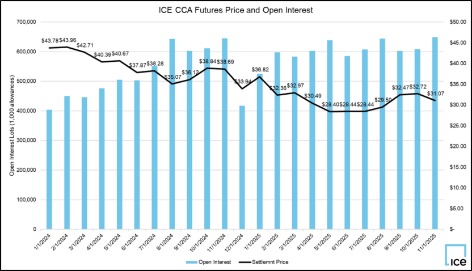
Jin Rong Shi Bao· 2026-01-21 02:06
Core Insights - The national carbon market in China has shown significant growth in 2025, with key indicators achieving remarkable results, including the inclusion of 3,378 major emission units and a total transaction volume of 8.65 billion tons, reflecting a 24% year-on-year increase in trading volume [2][3] - The market has effectively supported the green transition in key industries such as electricity and steel, establishing a solid foundation for achieving carbon neutrality goals [1][4] Group 1: Market Performance - In 2025, the carbon market included 3,378 major emission units across high-emission sectors, with the electricity sector having 2,087 units, steel 232, cement 962, and aluminum 97 [2] - The total transaction volume reached 8.65 billion tons, with a cumulative transaction value of 576.63 billion yuan, and the average trading price was 62.36 yuan per ton [2][3] - The market maintained rational price fluctuations, closing at 74.63 yuan per ton at year-end, indicating effective reflection of carbon emission scarcity [2] Group 2: Compliance and Regulation - The compliance rate for carbon quota clearance was approximately 99.99%, demonstrating the increasing awareness of carbon reduction among major emission units [3] - Regulatory frameworks are in place to ensure compliance, with penalties for companies failing to meet their obligations under the carbon trading management regulations [3] Group 3: Industry Transition - The electricity sector has been a leader in the green transition, utilizing its experience in quota management and data quality to drive low-carbon development [4][5] - The steel industry, as a new participant, faces challenges in adapting to the carbon market, necessitating a proactive approach to compliance and internal carbon management [6][7] Group 4: Carbon Finance Development - Experts suggest enhancing the financial attributes of the carbon market to better utilize market mechanisms, including the development of carbon financial products [8][9] - Carbon finance can facilitate liquidity, price discovery, and risk management, supporting the transition to a low-carbon economy [8][10] - Local carbon markets have begun experimenting with carbon forward contracts, which could enhance pricing mechanisms and risk management for enterprises [9]
专访黄杰夫:试水碳衍生品 让绿色金融“走出去”
2 1 Shi Ji Jing Ji Bao Dao· 2025-12-09 16:35
Group 1 - The core viewpoint emphasizes the necessity of financial support for the green low-carbon transition, highlighting the accelerating financialization of electricity and carbon markets globally, with China's green finance moving towards internationalization [1] - The establishment of the "Carbon Emission Trading Market Open Alliance" by China, the EU, and Brazil aims to create a unified global carbon market, focusing on improving compliance carbon markets and carbon pricing policies [1] - Hong Kong is taking initial steps towards international recognition of CCER, carbon quotas, and green certificates, indicating its role as a financial hub in facilitating carbon market transactions [1][6] Group 2 - Carbon futures and options play a crucial role in market pricing and risk management, as evidenced by the experiences of the Chicago Climate Exchange and the EU Emissions Trading System [2] - The holding scale of carbon futures, such as the over 600,000 contracts (600 million tons) in California's carbon quota futures market, serves as a key indicator of effective carbon pricing and market resilience [3] - The continuous expansion of China's national carbon emission trading market since its launch in 2021, with 16 brokerages approved for spot trading, reflects the growing involvement of financial institutions in managing carbon price risks [6] Group 3 - The development of China's green certificate market is rapid, with 4.7 billion certificates issued last year, surpassing the total of developed economies [9] - The demand for green certificates is driven by policy requirements, supply chain demands from multinational companies, and increasing corporate social responsibility awareness [9] - The effective pricing and liquidity of green certificates are essential for market activation, with a focus on achieving hour-level traceability to enhance international credibility [9][11] Group 4 - To promote the international recognition of China's green certificates, it is crucial to strengthen communication with foreign counterparts and understand the roles of various stakeholders in the certification process [10] - The "hour-level" matching of green energy attributes is a significant trend, allowing for more precise reflection of carbon emissions, with successful pilot projects already conducted in Hong Kong [11][12] - China's green certificate system is aligning with global best practices, signaling its capability to meet international standards and enhance cooperation among various stakeholders [12]