
福特F150皮卡

Search documents
【环时深度】当“日本重回巅峰”遇上“让美国再次伟大”,新首相上台,日美同盟是共振还是错位
Huan Qiu Shi Bao· 2025-10-23 22:59
Group 1 - The election of Sanna Takashi as Japan's new Prime Minister marks a significant shift towards conservatism in Japanese politics, echoing the policies of former Prime Minister Shinzo Abe, particularly in terms of national security and economic strategies [2][3] - Takashi's administration aims to achieve strong economic growth, develop local industries, and enhance diplomatic and defense capabilities, continuing the trajectory set by Abe's government [3][6] - The upcoming meetings with U.S. President Trump are expected to focus on defense spending, trade negotiations, and the Indo-Pacific strategy, with Japan planning to increase defense expenditures and procure American goods [5][6] Group 2 - Takashi's government plans to accelerate the revision of key security documents and aims to meet the target of defense spending constituting 2% of GDP by 2025, up from the current 1.8% [6][7] - The relationship between Japan and the U.S. is characterized by mutual signals of alignment, with Takashi positioning herself as a reliable partner for the U.S. [5][9] - There are potential conflicts between Japan's "Japan is Back" initiative and the U.S. "America First" policy, particularly regarding trade agreements and defense responsibilities [10][12] Group 3 - The new administration faces challenges in balancing strong ties with the U.S. while maintaining Japan's strategic autonomy, especially in light of regional tensions with countries like China and South Korea [8][11] - Takashi's approach to foreign policy may lead to a more assertive Japan in the Indo-Pacific region, but it also risks marginalizing relationships with neighboring countries [11][12] - The internal political landscape in Japan, including the need for quick achievements to stabilize her government, will significantly influence Takashi's policy decisions and international relations [11][12]

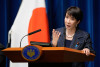
特朗普下周访日“催投资”,高市早苗拟定一篮子采购计划讨好
Jin Shi Shu Ju· 2025-10-22 09:28
Group 1: Core Insights - Japan's new Prime Minister, Sanae Takaichi, is finalizing a procurement plan that includes American pickup trucks, soybeans, and natural gas, to be presented during the upcoming trade and security talks with President Trump [1] - Takaichi emphasized that the alliance with the U.S. is fundamental to Japan's foreign and security policy, despite not committing to new defense spending targets during the meeting [1][3] - The procurement plan may involve reducing soybean imports from Brazil to increase purchases from the U.S., which already accounts for 70% of Japan's soybean consumption [1] Group 2: Defense Spending and Investments - Japan plans to purchase more U.S. liquefied natural gas (LNG) but will not engage in the Alaskan pipeline project promoted by Trump [3] - A list of candidate investment projects under a $550 billion agreement will be submitted for review before final selection by Trump [3] - Takaichi aims to accelerate defense spending beyond the 2% GDP target set for 2027, indicating a commitment to enhancing Japan's military capabilities [4]
高市早苗政府拟购美大豆、皮卡和天然气,筹备下周与特朗普会谈
Hua Er Jie Jian Wen· 2025-10-22 08:24
Core Points - Japan's new Prime Minister, Sanna Takichi, faces a significant diplomatic challenge with an upcoming meeting with U.S. President Trump, focusing on a procurement package that includes American pickup trucks, soybeans, and natural gas to foster goodwill in trade and security negotiations [1] - Takichi won the election with 237 votes in the first round of the House of Representatives, securing her position as Japan's 104th Prime Minister [1] - The meeting will not include commitments to new defense spending targets, despite U.S. pressure for Japan to increase defense expenditures [1][3] Procurement Focus - The planned procurement package includes the purchase of Ford F150 pickup trucks, a suggestion made by Trump, and an increase in U.S. soybean purchases, which currently account for 70% of Japan's soybean consumption [1][2] - To accommodate U.S. soybeans, Japan may reduce its imports from Brazil [2] - Japan also plans to buy more U.S. liquefied natural gas, but will not include the Alaskan pipeline project promoted by Trump [3] Investment and Defense Cooperation - Japan will submit a list of candidate projects under a $550 billion investment agreement for review, with final selections made by Trump [3] - Takichi previously indicated that the investment agreement was unfair, but has committed to fulfilling it, emphasizing that even a low profit share can be commercially viable if risks are low [3] - Takichi aims to deepen security ties with Washington and plans to accelerate defense spending towards a 2% GDP target by 2027, reviewing strategic documents that underpin Japan's largest military expansion since World War II [3]