
科技板块ETF

Search documents
美银报告:特朗普支持率与美元走势罕见 “同频”,“懂王” 支持率回升前市场难获支撑
Sou Hu Cai Jing· 2026-02-10 05:37
Core Viewpoint - The current performance of the US dollar and the pressure in the US financial markets are significantly correlated with President Trump's approval ratings, which have both declined by approximately 10% since he took office [1][3]. Group 1: Market Dynamics - Theoretically, a weaker dollar should boost manufacturing in key swing states like Pennsylvania, Michigan, and Wisconsin, enhancing economic vitality. However, Trump's approval ratings and the dollar index have shown a "highly positive correlation" during his presidency [3]. - The recent market logic indicates a reassessment of the "Trump policy premium," with expectations of aggressive tax cuts and fiscal expansion post-2024 elections driving a strong dollar and elevated stock values [4]. - The market is currently experiencing a painful adjustment phase characterized by "peak positions and peak policies," with political support being a direct measure of market confidence [5][6]. Group 2: Investor Sentiment and Capital Flows - Investors are closely monitoring how the Trump administration balances strong dollar policies with tariffs and industrial revitalization plans, making political approval ratings a key indicator of market sentiment [5]. - A shift in market sentiment is occurring, with a transition towards "longing the real economy and shorting Wall Street assets," indicating that financial market confidence in the "American exceptionalism" narrative may rebound only when policy directions effectively enhance public support [5]. - Recent fund flows show significant movements, with $87.2 billion flowing into one-year market funds, $34.6 billion into equity funds, and $23 billion into bond funds, while gold and cryptocurrency funds experienced outflows [7][8]. Group 3: Sector Analysis - In terms of sector performance, technology funds saw inflows of $6 billion, while energy funds attracted $4.2 billion, contrasting with significant outflows from utility funds [8]. - The report highlights key technical support levels for "bubble assets," including technology ETFs at $133, Bitcoin at $58,000, and gold at $4,550 per ounce, suggesting potential stabilization points for these assets [6].

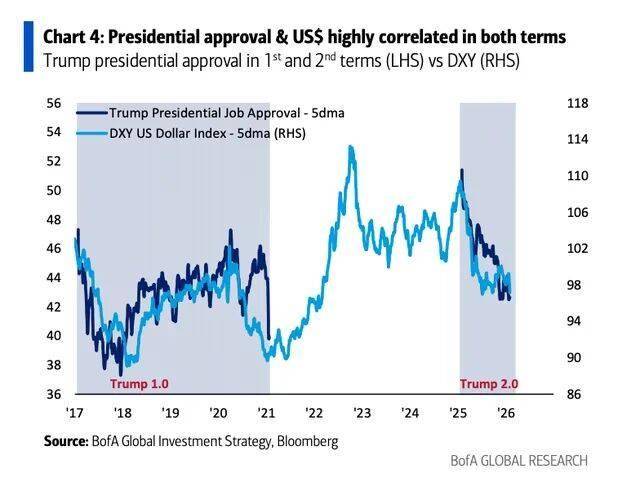
兴业证券:ETF已成为资金流入港股市场的重要载体
Zhi Tong Cai Jing· 2025-10-30 23:55
Core Insights - The report highlights that since September 2024, the Hong Kong Stock Connect has been continuously injecting incremental funds into the Hong Kong stock market, with ETFs becoming a significant vehicle for this capital inflow [1][2]. Group 1: ETF as a Key Investment Vehicle - ETFs have emerged as a crucial channel for capital inflow into the Hong Kong market, with a cumulative net inflow of 11,438.8 billion yuan since the beginning of 2025, of which 2,763.7 billion yuan flowed through ETFs, accounting for over 20% of the total [2]. - By the end of Q3 2025, the market value of public funds investing in Hong Kong stocks reached 13,117 billion yuan, with passive public funds holding 6,862 billion yuan, representing 52.3% of the total [2]. Group 2: Fund Flow Trends in ETFs - In 2025, there is a noticeable preference for industry and thematic ETFs, while broad-based ETFs are experiencing outflows. The technology sector has become the focal point for capital allocation, with significant interest in innovative pharmaceuticals, large financials, and dividend sectors [3]. - Since the beginning of 2025, nearly 65% of the cumulative net inflow into Hong Kong stock ETFs has been concentrated in the technology sector [3]. - From June 2025 onwards, there has been an accelerated net inflow into Hong Kong stock ETFs, with a widening gap between the total net inflow into all ETFs and that of technology sector ETFs, as innovative pharmaceuticals and large financials have diverted some of the incremental funds [3]. Group 3: Recent Fund Flow Dynamics - In recent months, there has been a significant inflow into technology ETFs, with a net inflow of 20.1 billion yuan since early October 2025, despite adjustments in the Hang Seng Technology Index [5]. - The dividend sector has also seen a marked increase in inflow, with 4.6 billion yuan net inflow since early October, reaching a high level since September 2024 [5]. - Conversely, the inflow into innovative pharmaceutical ETFs has slowed, with a net inflow of 3.5 billion yuan since early October [6].
