盐

Search documents
如果最近突然爱上吃这2样东西,说明你的身体确实老了
Xin Lang Cai Jing· 2026-02-16 16:08
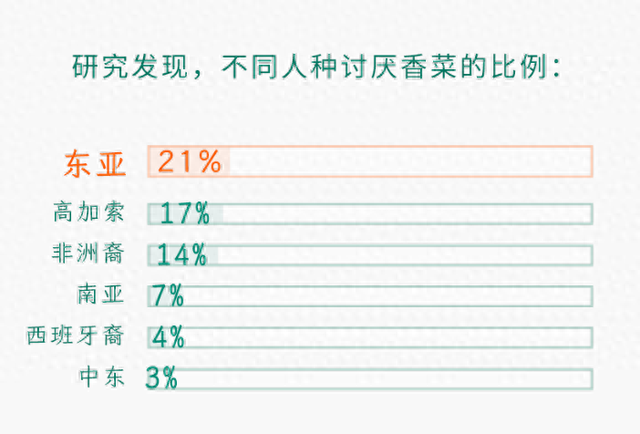
Group 1 - The article discusses how aging affects taste and smell, particularly the perception of cilantro and salt [1][3][5] - It highlights that one in five people in East Asia dislikes cilantro due to a genetic variation affecting their ability to perceive certain aldehyde compounds [1] - As people age, their olfactory function declines, leading to a reduced sensitivity to unpleasant smells, which may result in a newfound appreciation for cilantro [3][5] Group 2 - The article explains that aging also impacts taste perception, with a decrease in the ability to renew taste buds and a reduction in saliva production, which is essential for taste [7] - This phenomenon is referred to as "taste compensation," where older individuals may prefer saltier foods to compensate for diminished taste sensitivity [7][10]

罗盘矿物股价显著波动,财报显示业绩扭亏为盈
Jing Ji Guan Cha Wang· 2026-02-13 20:23
Group 1 - The stock price of Compass Minerals (CMP.N) has shown significant volatility over the past week, with a closing price of $24.23 on February 11, marking a single-day increase of 7.18%, followed by a decline to $23.54 on February 12, a drop of 2.85%, and a rebound to $24.05 on February 13, an increase of 2.17%. The cumulative fluctuation over five days reached 10.57%, with a total amplitude of 16.00%, outperforming the industrial metals and mining sector as well as the broader U.S. stock market. This volatility is primarily driven by capital rotation, technical breakthroughs, and industry sentiment [1] - The company reported its Q1 2026 financial results on February 4, 2026, showing a significant improvement in performance. Revenue reached $39.61 million, a year-over-year increase of 28.94%, while net profit was $18.30 million, marking a return to profitability with a net profit margin of 4.62%. The gross profit margin improved to 16.21%. However, the company reported a free cash flow of -$5.98 million, indicating ongoing operational pressures [2] - China has initiated a new round of mineral exploration and breakthrough strategic actions in 2026, which will strengthen the exploration and development of strategic mineral resources, indirectly affecting the global mining competition landscape. As a producer of salt and specialty potash fertilizers, Compass Minerals, while focused on North America and the UK, may see increased industry consolidation activities due to heightened global resource competition [3] Group 2 - Institutional views on Compass Minerals are mixed. As of December 10, 2025, two institutions set a target average price of $19.00. Recently, a portion of institutions has raised their "buy or hold" ratings, reflecting optimism regarding the improvement in Q1 2026 earnings. However, they also noted that the company needs to address debt pressures and the sustainability of its profitability [4]
罗盘矿物股价异动,财务亏损扩大引关注
Jing Ji Guan Cha Wang· 2026-02-12 16:24
Stock Performance - The stock price of Compass Minerals experienced significant fluctuations, with a rapid increase of 5.17% to $20.89 per share on January 5, 2026, followed by a further rise of 5.04% to $21.90 per share on January 6, 2026, with trading volumes of 24,900 shares and 25,600 shares respectively [2] - Over the past two months, the stock has shown multiple single-day increases exceeding 5%, indicating high short-term capital activity [2] Financial Performance - For the fiscal year ending December 10, 2025, the company reported total revenue of $1.244 billion, reflecting a year-on-year growth of 11.37%, but net losses expanded to $79.8 million, resulting in a loss per share of $1.91 [3] - The asset-to-liability ratio stands at 1.19, and the current ratio is 2.16, indicating a relatively stable financial structure [3] - Although net losses for the first three quarters of the fiscal year decreased by 53.99% year-on-year, the overall annual loss widened due to increased cost pressures and operational expenditures [3] Institutional Ratings - As of December 10, 2025, institutional target prices range from $18 to $20, with 50% of the four rating agencies recommending a buy, 25% suggesting hold, and 25% advising sell [4] Industry Analysis - The industrial metals and mining sector experienced an overall increase of 0.43% to 0.90% during the same period, but Compass Minerals' volatility was significantly higher than the sector, likely influenced by seasonal demand and commodity price expectations [5] - In February 2026, Goldman Sachs and Macquarie raised nickel price forecasts, which may indirectly boost sentiment in the mining sector; however, the company's primary business focuses on salt and potash, which are less directly affected [5]
古人吃饭的那些事
Xin Lang Cai Jing· 2026-02-06 16:48
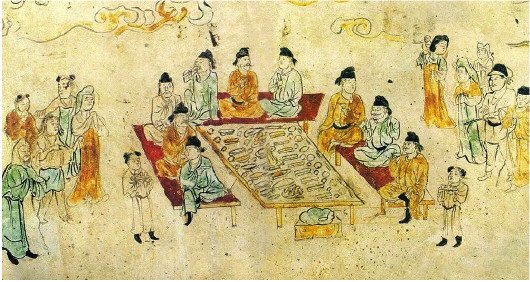
Core Perspective - The book "The Way of the Ancients: Common Knowledge of Ancient Chinese Life" by author Shi Jiepeng provides a detailed depiction of the everyday life of ordinary people in ancient China, focusing on aspects such as geography, food, clothing, housing, travel, health, values, survival, marriage, communication, and more, rather than grand historical narratives [3]. Group 1: Food and Diet - Ordinary people could rarely afford to eat pork, lamb, or beef, typically consuming offal instead. The staple food was millet, with rice also being consumed in the north, and glutinous millet being a luxury often paired with chicken [4]. - The common diet included porridge-like dishes called "geng," made from rice, flour, vegetables, and sometimes meat, which were convenient for serving with rice [6]. - Historical records indicate that the average daily food intake for adult males was around 1.5 kg for breakfast and 1 kg for dinner, while women consumed about 900 grams daily [10]. Group 2: Water and Salt - Water was primarily drawn from wells using clay pots, which were often broken, leading to disputes among users. By the Tang Dynasty, wooden buckets began to replace clay pots for drawing water [12][14]. - Salt was a crucial part of daily life, with historical accounts highlighting its importance in food preparation and the economy. The state managed salt production, indicating its significance in ancient society [15][16]. Group 3: Sweeteners - Ancient China did not have modern granulated sugar; instead, honey and a type of sweetener called "yi" made from rice and malt were used. These sweeteners were considered luxury items [17][18]. - The production of sugar from sugarcane began in the Six Dynasties period, but the method of making granulated sugar was introduced later during the Tang Dynasty [18].
五千年前就有烧盐生产线?越国都城在哪?多个考古重磅发现公布
Yang Shi Wang· 2026-02-02 15:38
Group 1: Archaeological Discoveries - The discovery of a complete salt production line from the Liangzhu culture, dating back 4,800 to 4,600 years, showcases advanced organization and management of handcraft production in ancient times [1] - The excavation of the capital city of the Yue Kingdom in Shaoxing, along with the discovery of official documents from the Han and Six Dynasties, provides critical evidence for understanding the administrative structure of the region [2] - The identification of a high-level sacrificial site, likely the national altar of the Yue Kingdom, reveals significant insights into the religious practices and societal structure of the time [3] Group 2: Ceramic Technology Advancements - The discovery of a large "super dragon kiln" from the Eastern Han period in Ningbo, which is the largest and steepest of its kind in Zhejiang, offers key samples for studying the transition of Chinese ceramics from primitive to mature stages [4] - The revival of the secret color porcelain during the Northern Song period at the Phoenix Mountain site indicates a significant technological resurgence and its role in maritime trade [5] Group 3: Architectural Insights - The excavation of the Shennita and the Song Six Tombs reveals ancient construction philosophies, emphasizing the integration of architecture with natural landscapes and practical site selection for royal tombs [6]
健康|为什么说盐不是越贵越好、吃得越少越好?
Xin Lang Cai Jing· 2026-01-31 10:15
Core Viewpoint - The article discusses the various types of salt available in supermarkets, highlighting their health implications and nutritional value, while questioning whether high-end salts are worth the price [1]. Group 1: Types of Salt - Supermarket shelves are filled with a variety of salts, including low-sodium salt, selenium-rich salt, rose salt, and bamboo salt, with prices ranging from a few yuan to several tens of yuan [1]. Group 2: Health Considerations - The article emphasizes the importance of salt in maintaining normal physiological functions and its role as a fundamental flavoring agent in cooking [1]. Group 3: Expert Insights - Dr. Ji Jing from the Northwest Women's and Children's Hospital discusses how to choose salt wisely and use it healthily, aiming to guide consumers in making informed decisions [1].
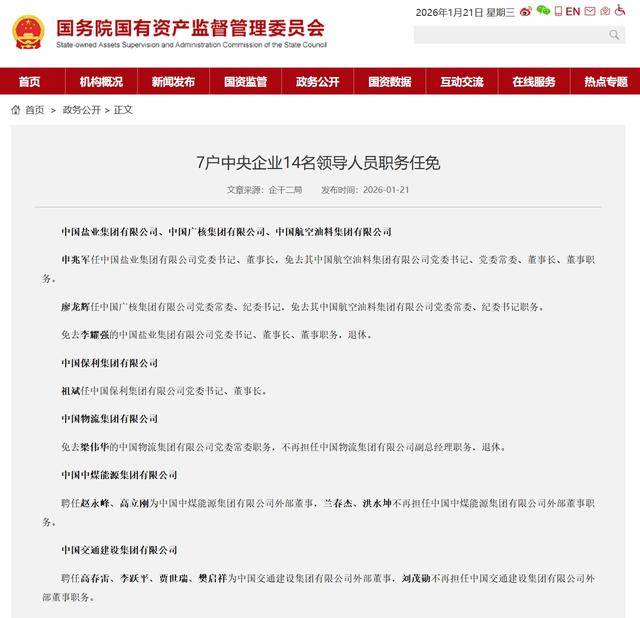
申兆军任中国盐业集团党委书记、董事长
Sou Hu Cai Jing· 2026-01-21 12:02
Group 1 - The core point of the article is the appointment of Shen Zhaojun as the new Party Secretary and Chairman of China Salt Industry Group Co., Ltd., while Li Yaoqiang has retired from the same positions [1] - China Salt Industry Group, founded in 1950, is a state-owned enterprise under the supervision of the State-owned Assets Supervision and Administration Commission (SASAC) and is the leading company in China's salt industry [1] - The company employs 25,000 people and integrates salt resource exploration, engineering design, research and development, production, and marketing, extending into downstream salt chemical and agricultural fertilizer sectors [1] Group 2 - The company has a "1+3" industrial layout, focusing on salt, salt chemicals, and agricultural fertilizers, as well as comprehensive utilization of salt caverns [1] - China Salt Industry Group ranks second in the world and is the largest in Asia in terms of salt production and sales, with its table salt production and sales being the highest globally [1] - The company leads in several chemical products, including being the world's largest producer of metallic sodium, the top producer of soda ash in China and second globally, and ranking third in insurance powder [1]
茶马古道:千年热闹成回响
Xin Lang Cai Jing· 2026-01-19 18:11
Core Viewpoint - The article highlights the historical significance and current transformation of the Tea Horse Road in Qingxi Town, Hanyuan County, Sichuan Province, emphasizing its evolution from a bustling trade route to a quiet tourist attraction [10][13]. Historical Significance - The Tea Horse Road has been a vital trade route since the Han and Tang dynasties, facilitating the transport of silk and tea from Sichuan to regions like Yunnan and Myanmar, known as the "Southern Silk Road" [10]. - The road was heavily trafficked, with over 1,000 "back bearers" (背二哥) transporting goods daily, contributing to a vibrant market scene in the area [10]. Current Transformation - The once-busy Tea Horse Road has become quieter, with modern transportation methods replacing the need for "back bearers" [13]. - The ancient city near the road, known for its well-preserved architecture from the Ming and Qing dynasties, is now attracting tourists, shifting the focus from trade to tourism [13]. - Local residents have adapted to these changes, with many former trade-related establishments transforming into leisure and entertainment venues, such as farmhouses offering local cuisine [13]. Local Community Impact - The article features stories from local residents, such as Li Guangming, who recount their family's long history of working on the Tea Horse Road, illustrating the deep-rooted connection between the community and the trade route [11][12]. - Many elderly residents have seen their traditional lifestyles change, with younger generations moving to cities, while the older population continues to cultivate local crops [13].
芽菜炒饭做法
Zhong Guo Shi Pin Wang· 2026-01-19 07:04
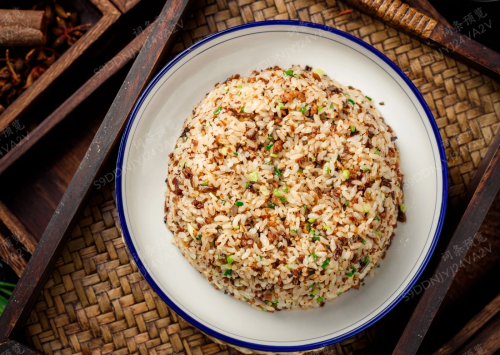
Group 1 - Key Point 1: Ingredients preparation includes 1 bowl of rice (preferably leftover rice for better texture), 30 grams of chopped Yibin bean sprouts, 1-2 beaten eggs, chopped green onions, 2-3 tablespoons of cooking oil, and a pinch of salt adjusted according to the saltiness of the bean sprouts [1] - Key Point 2: The first step involves frying the eggs in a hot pan with cold oil, quickly scrambling them into small pieces, and setting them aside [2] - Key Point 3: The next step is to add a little oil to the pan and stir-fry the bean sprouts for 1-2 minutes until fragrant [3] Group 2 - Key Point 1: For the fried rice, the leftover rice is added to the pan, and it is broken apart with a spatula, mixing thoroughly with the ingredients while stir-frying over medium heat until the rice grains are distinct [4] - Key Point 2: Seasoning includes adding the scrambled eggs back into the mixture, adjusting with a little salt (considering the inherent saltiness of the bean sprouts) and MSG, followed by adding chopped green onions and stir-frying briefly before serving [4]
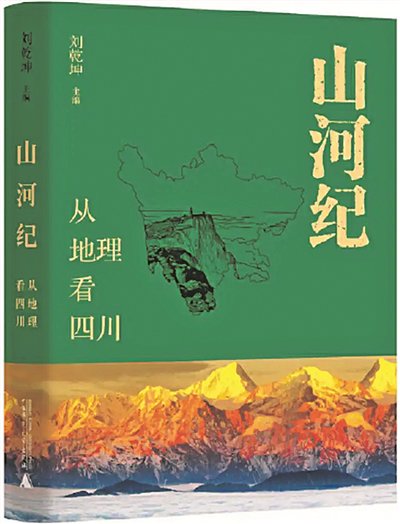
别让灵魂“背井离乡”
Xin Lang Cai Jing· 2026-01-08 22:05
Group 1 - The article emphasizes the deep connection between geography and culture in Sichuan, highlighting how the natural landscape shapes human civilization and cultural identity [2][4] - It discusses the significance of Sichuan's geographical features, such as mountains and rivers, in fostering a unique cultural environment that has persisted through history [2][4] - The narrative illustrates the historical importance of salt in Sichuan, particularly in the city of Zigong, where salt production has influenced local culture and traditions [3][4] Group 2 - The text reflects on the emotional and spiritual ties that the people of Sichuan have with their natural surroundings, suggesting that modern urban life has led to a disconnection from these roots [4][5] - It highlights the wisdom of historical figures like Li Bing, who harmonized human activity with natural forces, showcasing a legacy of ecological understanding in the region [4] - The article concludes with a call to reconnect with nature as a means of finding spiritual home and identity, emphasizing the importance of the natural environment in personal and cultural well-being [5]