
稀散金属

Search documents
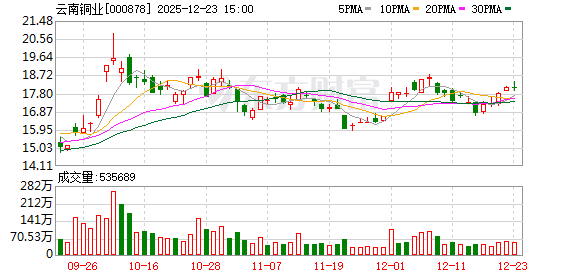
云南铜业:公司推行“铁血降本”,实施全流程成本精细化管理
Zheng Quan Ri Bao· 2025-12-23 13:47
Core Viewpoint - Yunnan Copper is focusing on internal management and strategic optimization to enhance competitiveness amid external market challenges [2] Financial Management - The company is implementing a rigorous cost reduction strategy known as "Iron Blood Cost Reduction," which involves detailed cost management across all processes [2] - The "Four Four Cost Reduction Method" is being utilized to enhance efficiency in production operations, marketing, financial management, and organizational management [2] Operational Improvement - Yunnan Copper is optimizing its profit structure and actively cultivating new growth points by increasing the production and value contribution of by-products such as gold, silver, sulfuric acid, and other rare metals [2] - The company is also focusing on the recycling of resources related to regenerated copper [2] Resource Foundation - The company is strengthening its resource base to support long-term value through internal exploration and reserve increase, as well as integrating high-quality mining resources with the support of its controlling shareholder [2] - Yunnan Copper aims to steadily improve its resource self-sufficiency rate [2] Future Strategy - The company plans to continuously benchmark against industry leaders and learn from excellent management practices to dynamically optimize its financial management and operational systems [2]


恒邦股份:在冶炼过程中,稀散金属是复杂金精矿的伴生产品,毛利率较高,增加了公司的利润弹性
Mei Ri Jing Ji Xin Wen· 2025-11-20 15:32
Core Viewpoint - The company is focused on enhancing its profitability through continuous optimization of its business structure, particularly in its core smelting operations which yield higher profit margins from by-products like rare metals [1] Group 1 - The smelting business is identified as the company's core profit-generating segment [1] - Rare metals, as by-products of complex gold concentrates, contribute to higher profit margins, increasing the company's profit elasticity [1] - The company is actively implementing measures to improve its gross profit margin [1]

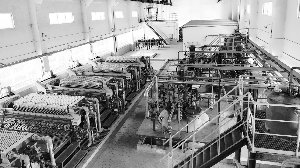
中金岭南的稀散金属综合回收与高纯制备项目浸出及沉锗厂房 公司供图
Zhong Guo Zheng Quan Bao - Zhong Zheng Wang· 2025-10-23 00:51
Core Insights - The article discusses significant financial metrics and performance indicators of a company, highlighting its revenue and profit margins [1] Financial Performance - The company reported a revenue of 70.00 billion, indicating a substantial growth compared to previous periods [1] - The profit margin stands at 44.85%, showcasing the company's efficiency in converting revenue into profit [1] Market Position - The company maintains a strong market presence, which is reflected in its financial results and operational strategies [1] - The competitive landscape is addressed, emphasizing the company's ability to outperform its peers [1]

【财经分析】新材料中试平台呈紧缺性 服务生态待培育
Xin Hua Cai Jing· 2025-08-12 09:06
Core Insights - The rapid evolution of industrial transformation necessitates the development of new materials as a foundational element, with a pressing need for higher success rates and shorter conversion cycles from laboratory to industrialization [1] - The demand for pilot testing platforms in new materials is increasing, yet the current supply is insufficient, primarily relying on government support without a robust service ecosystem [1][3] - The ultimate value of pilot testing platforms lies in reshaping the industrial innovation ecosystem rather than short-term profitability, emphasizing the need for self-sustaining models [3] Group 1: Pilot Testing Platforms - The pilot testing platform in Dongguan for new materials and intelligent manufacturing significantly enhances the efficiency of new material R&D verification through a comprehensive range of specialized equipment [2] - The platform serves as an accelerator and shield for innovative technologies, ensuring successful transition from small-scale trials to production lines [2] - As of May 2025, the Guangdong micro-nano processing and device preparation pilot platform has serviced nearly 370 units across 20 provinces, with a total service amount exceeding 240 million yuan and indirectly driving an output value of 6 billion yuan [3] Group 2: Self-Sustaining Development - The construction of pilot testing platforms often relies on government funding, but there is a push for these platforms to develop self-sustaining capabilities to better support industrial upgrades [3][4] - The collaborative model of pilot platforms, such as the one in Foshan, combines theoretical research with practical application, enhancing the commercialization of technologies [4][5] - The "New Materials Pilot Testing Platform Construction Guide (2024-2027)" aims to establish around 300 local pilot platforms and cultivate about 20 high-level platforms to support technology commercialization [6] Group 3: Challenges and Recommendations - There is a significant shortage of professionals skilled in both technology development and market operations, which hampers the market-oriented operation of pilot platforms [6] - To alleviate concerns about technology leakage, pilot platforms need to implement measures for technical and personnel isolation between different clients [6] - Recommendations include providing subsidies for companies purchasing pilot testing services to encourage low-cost trials and enhance awareness of pilot services [6]