
空客A320系列

Search documents
“这一调整,将助力C919同台PK波音、空客”
Guan Cha Zhe Wang· 2026-02-04 00:44
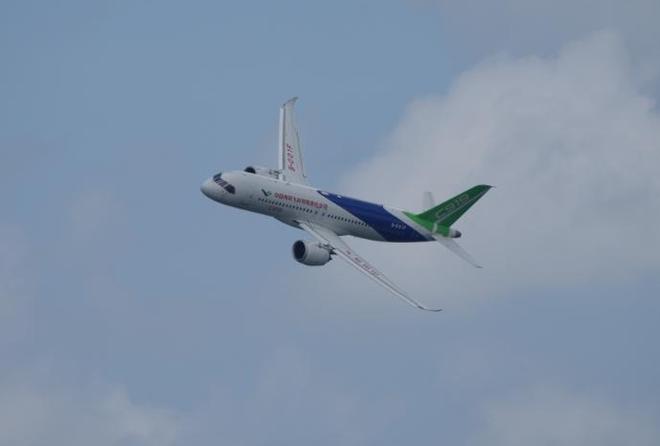
Core Viewpoint - The Civil Aviation Administration of China (CAAC) has proposed a draft regulation allowing the domestically produced C919 aircraft to operate on narrow runways, which could enhance its competitiveness against Airbus and Boeing, and expand its market presence in China and Southeast Asia [1][2]. Group 1: Regulatory Changes - The CAAC has issued a draft regulation for the C919 aircraft, allowing it to operate on runways narrower than the standard 45 meters, with a proposed minimum width of 30 meters [1]. - This regulatory adjustment aims to facilitate the C919's entry into markets previously dominated by Boeing 737 and Airbus A320, which are already approved for narrow runway operations [2]. Group 2: Market Opportunities - The C919 has commenced commercial operations in 2023, with at least 18 aircraft flying on 24 domestic routes connecting 16 cities [5]. - There is interest from multiple international airlines in purchasing the C919, although no formal orders have been placed yet [5]. - The aircraft is particularly suited for routes involving smaller airports in Southeast Asia, such as those in the Philippines and East Timor, where larger aircraft face operational challenges [5]. Group 3: Production and Certification - COMAC is ramping up production of the C919, with major Chinese airlines each ordering 100 aircraft, expecting to deliver at least 28 by 2026 [5]. - The company is also actively pursuing international certification for the C919 to compete with Boeing and Airbus [5]. - The European Union Aviation Safety Agency (EASA) has begun flight evaluations of the C919 in Shanghai, indicating that the aircraft is performing well and is considered safe [6].

超越波音737,空客A320成为史上交付量最多的喷气客机
Guan Cha Zhe Wang· 2025-10-09 09:13
Core Insights - Airbus A320 series has surpassed Boeing 737 series in total deliveries, becoming the most delivered jetliner in history [1][3] - The cumulative delivery of A320 aircraft reached 12,260 units, exceeding Boeing's record of 12,214 units [3] - The competition between Airbus and Boeing in the narrow-body aircraft market has been intense, with over 25,000 narrow-body jets delivered collectively [3] Summary by Sections Market Position - Airbus has established a leading position in annual deliveries by targeting the low-cost airline market and expanding global production capacity [3][5] - Airbus's market share in the global narrow-body aircraft segment has increased to approximately 62% [5] Historical Context - The A320 project faced initial challenges, with Airbus lacking a foothold in the narrow-body market dominated by Boeing 737 [4] - The project was saved through negotiations between French and German leaders, ensuring continued development despite differing national interests [4] Technological Advancements - The A320 was notable for introducing "fly-by-wire" electronic control technology in mainstream commercial aircraft [3][4] - Despite initial resistance from unions and some airlines, the A320 gained widespread industry acceptance [4] Boeing's Challenges - Boeing's 737 series has faced significant challenges, including two fatal crashes of the 737 MAX between 2019 and 2025, leading to production halts and quality issues [4] - The FAA imposed production limits on Boeing, restricting output to 38 units per month [4] Future Developments - Both Airbus and Boeing are assessing future aircraft development directions amid rising competition and stricter technological standards [5] - There are no immediate plans to launch new aircraft development projects, with both companies waiting for significant breakthroughs in core technologies [5]



北交所科技成长产业跟踪第二十五期:印巴冲突背景下国防建设地位凸显,关注北交所军工&航空产业企业
Hua Yuan Zheng Quan· 2025-05-12 14:44
Group 1: Defense Spending and Market Context - China's defense spending for 2025 is projected to be 1,784.7 billion yuan, reflecting a year-on-year increase of 7.2%[2] - The defense budget has shown a consistent single-digit growth for ten consecutive years from 2016 to 2025[13] - The recent military conflict between India and Pakistan has heightened the focus on defense construction and military-related industries[2] Group 2: Aircraft Industry Insights - The C919 aircraft has over 1,400 orders, with an estimated order value exceeding 1 trillion yuan, scheduled for delivery between 2024 and 2031[42] - The value distribution in aircraft manufacturing shows that the airframe accounts for approximately 30%-35%, engines for 20%-25%, and onboard equipment for 25%-30%[29] - Global passenger turnover is expected to grow at an annual rate of 3.75%, with the global fleet projected to reach 48,931 aircraft by 2043, doubling from 24,077 in 2023[45] Group 3: Market Performance and Valuation - The median price-to-earnings (P/E) ratio for the new energy sector has increased by 7.72% to 37.6X[54] - The median P/E ratio for the electronic equipment sector rose from 55.1X to 56.0X, with the total market value increasing from 131.42 billion yuan to 139.8 billion yuan[57] - The median P/E ratio for the machinery sector increased from 55.8X to 58.7X, with total market value rising from 95.8 billion yuan to 102.28 billion yuan[63] Group 4: Notable Companies and Stock Performance - Among the top performers, Qifeng Precision saw a stock increase of 79.25%, followed by Huiwei Intelligent at 41.00% and Laisai Laser at 26.30%[49] - A total of 133 out of 146 companies in the North Exchange technology growth sector experienced stock price increases, with a median increase of 5.69%[49]