竹纸

Search documents
字载匠心|这项古代发明,让璀璨的文明传承数千年
Ren Min Ri Bao Hai Wai Ban· 2026-01-31 01:19
Core Viewpoint - The invention and evolution of papermaking technology have significantly contributed to the preservation and dissemination of Chinese and world civilization, with various materials and techniques being developed over time to enhance paper quality and accessibility [1][4][10]. Group 1: Historical Development of Papermaking - The traditional narrative attributes the invention of papermaking to Cai Lun during the Eastern Han Dynasty, but archaeological findings suggest that the origins of papermaking may date back to the Western Han Dynasty [4][6]. - Archaeological discoveries, such as the "Baqiao paper" and other ancient paper remnants, indicate that papermaking technology was evolving earlier than previously thought, with evidence of paper dating back to the mid to late Western Han period [6][8]. - The continuous improvement of papermaking techniques and materials, including the use of hemp, mulberry bark, and bamboo, reflects a long history of innovation in the industry [9][10]. Group 2: Material Innovations in Papermaking - The transition from hemp paper to other materials like mulberry bark and bamboo paper illustrates the ongoing search for more sustainable and cost-effective raw materials in papermaking [9][10]. - The introduction of various types of paper, such as bamboo paper, which became popular during the Tang Dynasty, showcases the adaptability of the industry to meet the demands of different users [9][10]. - The evolution of papermaking materials has been marked by three significant breakthroughs, enhancing the availability and affordability of paper products [9]. Group 3: Cultural and Economic Impact - Papermaking has played a crucial role in the development of Chinese literature, art, and commerce, facilitating the creation of books, calligraphy, and even early forms of currency [16][17]. - The spread of papermaking technology beyond China to regions such as Vietnam, Korea, Japan, and later to Europe, highlights its global significance and influence on cultural exchanges [17][18]. - The introduction of paper as a medium for printing and documentation has been pivotal in the advancement of knowledge and education, contributing to significant historical movements such as the Renaissance in Europe [17][18]. Group 4: Modern Papermaking Techniques - The traditional craftsmanship involved in making Xuan paper, a high-quality paper used for Chinese painting and calligraphy, exemplifies the enduring legacy of ancient papermaking techniques [10][14]. - Modern advancements in papermaking have led to innovations that prioritize environmental sustainability, such as the use of recycled materials and the development of multifunctional paper products [18]. - Despite the rise of digital media, the fundamental principles of papermaking continue to influence contemporary practices, ensuring that paper remains a vital part of human communication and culture [18].

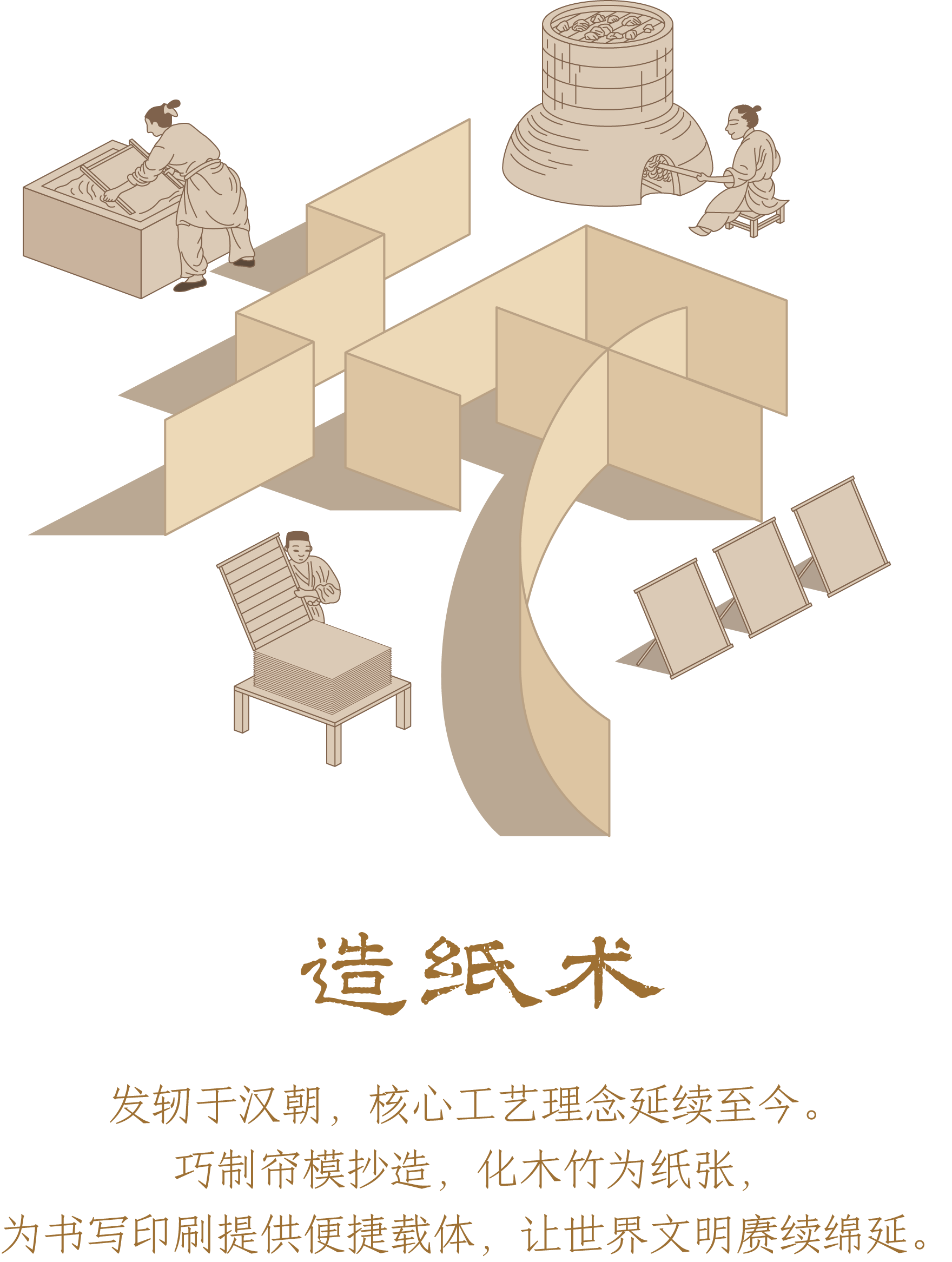
重塑纤维,造就文明传承载体(字载匠心·惊艳时光的中国智慧)
Ren Min Ri Bao Hai Wai Ban· 2026-01-29 22:51
Core Viewpoint - The article discusses the historical significance and evolution of papermaking in China, highlighting its impact on culture, technology, and civilization, as well as the ongoing relevance of traditional techniques in modern times [10][20][22]. Group 1: Historical Development of Papermaking - Papermaking is attributed to the innovations of Cai Lun during the Eastern Han Dynasty, although archaeological findings suggest earlier forms of paper existed [13][14]. - The development of papermaking techniques involved the use of various plant fibers, with significant advancements occurring during the Wei, Jin, and Northern and Southern Dynasties [15][16]. - The introduction of new materials such as bamboo and straw further diversified the types of paper produced, leading to more affordable and accessible options [17][18]. Group 2: Traditional Techniques and Craftsmanship - The production of Xuan paper, a traditional Chinese paper, involves meticulous processes that preserve ancient papermaking techniques, emphasizing the importance of natural materials and craftsmanship [19][22]. - The process includes selecting specific raw materials, extensive treatment, and careful handling during the paper-making stages, which require skilled labor and experience [18][19]. - Modern adaptations of traditional methods have improved efficiency while maintaining the quality and integrity of the paper [19]. Group 3: Cultural and Global Impact - Papermaking has played a crucial role in the dissemination of knowledge and culture, facilitating the development of literature, art, and education in China and beyond [20][21]. - The technology of papermaking spread to other regions, influencing global practices and contributing to significant historical developments, such as the Renaissance in Europe [21][22]. - The ongoing evolution of the paper industry reflects a balance between traditional craftsmanship and modern technological advancements, ensuring the continued relevance of paper in contemporary society [22].
Grove Collaborative (GROV) Conference Transcript
2025-08-21 15:50
Summary of Grove Collaborative Holdings Inc. Conference Call Company Overview - **Company Name**: Grove Collaborative Holdings Inc. (Ticker: GROV) - **Industry**: E-commerce for sustainable and healthy home products - **Business Model**: Online destination for everyday essentials focused on health, sustainability, and reducing plastic usage [1][3][5] Key Points and Arguments Business Strategy and Market Position - Grove aims to build a durable business in the direct-to-consumer (DTC) space by creating a strong value proposition centered on curation and high standards for health and sustainability [5][9] - The company has transitioned from a subscription-only model to an open marketplace, allowing all customers to shop without a subscription, which has expanded the total addressable market (TAM) to 57 million people [12][54] - Grove is positioned as a trusted retailer, with 89% of surveyed customers expressing trust in the company for health and wellness products [24][56] Financial Performance - Revenue decreased by 16% year-over-year but showed a 1% increase quarter-over-quarter [29] - The company has improved gross margins by over 800 basis points and has focused on profitability, achieving breakeven EBITDA over the last eight quarters [31][33] - Grove has reduced SG&A headcount by 70% and prioritized cleaning up its balance sheet, which has removed existential risks associated with its previous debt [36][37] Growth and Future Outlook - The company anticipates sequential growth in Q2, Q3, and Q4, with a goal of achieving year-over-year growth by Q4 [39][45] - Grove is exploring mergers and acquisitions (M&A) to enhance its product offerings and accelerate growth, with a focus on acquiring subscale brands that align with its mission [65][69] - The CEO expressed confidence in the company's ability to grow into a $300 million business with double-digit growth rates while remaining profitable [45][75] Market Trends and Consumer Behavior - There are secular tailwinds in sustainability and wellness, with increasing consumer awareness about the impact of plastics and a demand for healthier products [13][14] - Grove's strategy includes expanding into new categories such as vitamins, minerals, and supplements, which are seen as significant growth opportunities [56] Additional Important Insights - Grove was the first retailer to claim plastic neutrality and has a strong commitment to sustainability, which differentiates it from competitors like Amazon and Walmart [10][54] - The company has a unique box economics model that allows for efficient shipping and fulfillment, which is crucial for competing with larger marketplaces [20][21] - The leadership team, including the CEO's experience at Amazon, is focused on building a customer-centric business that prioritizes trust and education [3][18] This summary encapsulates the key points discussed during the conference call, highlighting Grove Collaborative's strategic direction, financial performance, growth potential, and market positioning within the sustainable product industry.

非遗“新”传人们,动力从何而来
Zhong Guo Qing Nian Bao· 2025-06-20 03:07
Core Viewpoint - The article highlights the revival and modernization of intangible cultural heritage (ICH) through the efforts of young creators and the integration of traditional skills with contemporary media, particularly short videos, to engage a broader audience and enhance the livelihoods of artisans [1][3][5]. Group 1: Young Creators and ICH - Young self-media creator Jiang Xunqian has become the seventh-generation inheritor of the "Datiehua" (Iron Flower) technique, emphasizing the importance of ICH in preserving cultural heritage [1]. - Jiang's short videos have significantly increased public interest in the "Datiehua" technique, with over 800 million views in a short period, showcasing the potential of digital platforms to revitalize traditional crafts [4][5]. - The interaction rate for short video accounts of ICH artisans is reported to be between 20% and 25%, indicating strong audience engagement [5][6]. Group 2: Innovative Approaches to ICH - Young creators are utilizing various innovative methods, such as cross-disciplinary collaborations and creative storytelling, to promote ICH, resulting in a surge of interest and participation [7]. - The "Running Parkour Noodles" project combines parkour with traditional ICH, achieving over 12 million likes on a single video, demonstrating the effectiveness of creative fusion in attracting attention [7]. - The "2025 Douyin ICH Data Report" indicates a 31% year-on-year increase in ICH-related videos, with 749.9 billion views, highlighting the growing popularity of ICH content among younger audiences [8]. Group 3: ICH and Tourism - The integration of ICH into the tourism sector is reshaping cultural experiences for young people, making travel more appealing and enriching [10][11]. - Chengdu's theater performances incorporate ICH elements, attracting a younger audience and fostering interest in traditional culture [10]. - The "Dujiangyan Water Festival," recognized as a national ICH, has been successfully marketed as a global tourism brand, showcasing the potential of ICH in enhancing local tourism [11][12].