纸张

Search documents
地产政策优化调整,家居板块有望修复
Huaan Securities· 2026-03-16 13:30
Investment Rating - The industry investment rating is "Buy" [3] Core Views - The real estate market is showing signs of recovery, which is expected to benefit the home furnishing sector, leading to valuation and profit recovery [11][39] - The government has shifted its focus to stabilizing the real estate market, with policies aimed at enhancing supply and demand, as well as risk prevention [7][39] - The home furnishing sector is currently undervalued, with leading companies' valuations at historical lows, indicating potential for growth as the real estate market stabilizes [9][11] Summary by Sections Real Estate Market Overview - New home prices in January 2026 showed a narrowing decline, with first-tier cities like Shanghai maintaining stable prices and a year-on-year increase of 4.2% [6][22] - The second-hand housing market is also showing signs of improvement, with price declines reducing and transaction volumes increasing in core cities [30][39] Government Policies - The 2026 government work report emphasizes stabilizing the real estate market, with three main strategies: supply-side management, demand-side support, and risk prevention [7][39] - Recent policies include reducing housing purchase restrictions and optimizing housing fund loan policies to stimulate market activity [8][39] Home Furnishing Sector Insights - As of March 13, 2026, the price-to-earnings (PE) ratios for leading home furnishing companies are as follows: 欧派家居 (13.58), 索菲亚 (11.18), 志邦家居 (14.10), 金牌家居 (21.50), 慕思股份 (16.13), 喜临门 (20.38), 梦百合 (31.92), indicating they are at historical low valuations [9][42] - The home furnishing sector is expected to benefit from the recovery in the real estate market, leading to improved valuations and profitability [11][39] Key Data Tracking - From March 1 to March 8, 2026, the total transaction area of commercial housing in 30 major cities was 112.99 million square meters, with a month-on-month decrease of 6.91% [12] - The average price of new residential buildings in February 2026 showed a year-on-year increase of 2.37%, indicating a potential stabilization in the market [6][22]


理文造纸发布年度业绩 普通股股东应占盈利19.41亿港元 同比增长47.87%
Zhi Tong Cai Jing· 2026-03-10 04:55
Core Viewpoint - Lee & Man Paper Manufacturing achieved a revenue of HKD 26.642 billion for the year ending December 31, 2025, representing a year-on-year growth of 2.49% [1] - The net profit attributable to ordinary shareholders was HKD 1.941 billion, reflecting a significant increase of 47.87% year-on-year, with basic earnings per share at HKD 0.452 [1] - The company proposed a final dividend of HKD 0.093 per share [1] Group 1 - The company adopted proactive strategies to address challenges and seize opportunities in a complex and changing industry environment [1] - The company leveraged its vertical integration advantage in pulp and paper production, effectively mitigating cost pressures from significant fluctuations in raw material prices through flexible allocation of internal pulp capacity and external procurement [1] - The company continued to optimize the capacity layout and energy structure of its domestic production bases, further reducing overall production costs [1] Group 2 - During the year, the company actively promoted multiple production line technology upgrades and efficiency adjustment projects, enhancing overall efficiency [1] - These initiatives laid a solid foundation for the comprehensive release of capacity and efficiency improvements [1]
花旗:降玖龙纸业评级至“中性” 目标价下调至8.8港元
Zhi Tong Cai Jing· 2026-03-02 08:36
Core Viewpoint - Citigroup has downgraded the earnings forecasts for Nine Dragons Paper (02689) for the fiscal years 2026, 2027, and 2028 by 9%, 12%, and 7% respectively, due to unexpected price adjustments in waste paper costs and pulp prices since the beginning of the year, reflecting a high base from Q4 2025 caused by anti-involution measures and recent price adjustments due to the Lunar New Year off-season and weak consumption [1] Group 1 - Citigroup has lowered the target price for Nine Dragons Paper from HKD 9.5 to HKD 8.8 [1] - The stock price of Nine Dragons Paper has increased by approximately 50% year-to-date, which is believed to fully reflect the strong performance in the first half of fiscal year 2026 [1] - The rating for Nine Dragons Paper has been downgraded from "Buy" to "Neutral," indicating limited upside potential [1] Group 2 - Citigroup has initiated a 30-day negative catalyst observation, anticipating a decline in the cost of old corrugated containers (OCC) in China during the second quarter off-season [1] - It is expected that the net profit for the second half of fiscal year 2026 will decrease by 7% year-on-year, with net profit per ton narrowing from RMB 129 in the same period last year to RMB 101 [1]
马年春节假日盘点·生产篇|赶订单、保供应、抓安全——春节假期企业持续生产扫描
Xin Hua Wang· 2026-02-24 02:14
Core Viewpoint - The article highlights the ongoing production activities across various industries in China during the Spring Festival, emphasizing the commitment of companies to maintain supply and meet market demands despite the holiday season [1][2][3][4][5]. Group 1: Production Continuity - Over 260 companies in Ningbo and more than 280 industrial enterprises in Luoyang continued production during the Spring Festival, with Luoyang seeing an increase of approximately 30 companies compared to 2025 [1]. - In Tianjin, around 90 key industrial enterprises maintained continuous production, with an expected overall resumption rate of 86.3% by February 24 [1]. - Sichuan Zhou Hei Ya Food Co., Ltd. implemented a shift system to ensure uninterrupted production of over 50,000 boxes of "modified atmosphere packaging" products daily [2]. Group 2: Market Opportunities - Zhejiang Hengcheng Hard Alloy Co., Ltd. reported a 230% year-on-year increase in production value in January, with over 100 employees working during the holiday to meet tight delivery schedules [3]. - Nanjing Huaxin Fiber Optic Co., Ltd. experienced a surge in demand for high-performance optical fibers, with orders extending into the second half of the year [3]. Group 3: Safety Measures - Companies like Guangxi Sun Paper Industry Co., Ltd. implemented rigorous safety protocols during the holiday, including frequent inspections and strict approval processes for hazardous operations [4]. - The State Council's Work Safety Committee emphasized the importance of safety production during the holiday, focusing on risk prevention in industries such as fireworks and hazardous chemicals [4]. Group 4: Service Support - In Gansu, the Lanzhou New Area Project Construction Center coordinated with various departments to ensure 24-hour service support for production needs, addressing issues related to raw material transportation and workforce during the holiday [5]. - Local governments established comprehensive support networks to facilitate continuous production, including special hotlines and logistical assistance [5].
美国纸业和包装股盘前大跌,受关税和定价压力影响
Xin Lang Cai Jing· 2026-02-23 11:52
Core Viewpoint - The stock prices of U.S. paper and packaging companies have significantly declined due to weak pricing and the U.S. Supreme Court's decision to reject most tariffs imposed by President Trump [1] Group 1: Company Impact - Packaging Corp. of America saw a decline of 5.6% in its stock price [1] - International Paper Company experienced a drop of 4.8% [1] - Smurfit WestRock's stock fell by 5.9% [1] - European competitor Mondi's stock decreased by 3.5% [1] Group 2: Industry Analysis - Analysts from Jefferies noted that prices for paper and cardboard are under pressure due to weak demand [1]
柬埔寨审批9个新投资项目,投资额达4.23 亿美元
Sou Hu Cai Jing· 2026-02-11 07:55
Group 1 - The core point of the article is the approval of 9 investment projects by the Cambodia Development Council (CDC), which are expected to create approximately 5,000 jobs and involve a total investment of around $423 million [1][3] - The approved projects span multiple key sectors, including 7 in the industrial sector (electronic assembly, electrical and lighting equipment, hanger production, festive decorations, dye processing, motorcycle assembly, and plywood and paper production), 1 in the tourism sector (a large five-star hotel with 1,341 rooms), and 1 in the agriculture and agro-industry sector (mushroom cultivation and product packaging) [1][3] - The investment projects will be located in various provinces, including Phnom Penh, Takaev, Siem Reap, Prey Veng, and Chhaeb [3]


力行致远:践行脱碳:制浆造纸业通往净零排放之旅
ABB· 2026-02-06 13:42
Investment Rating - The report does not explicitly provide an investment rating for the pulp and paper industry Core Insights - The pulp and paper industry plays a crucial role in the global decarbonization process due to its unique advantages in sustainable raw materials and carbon cycling [3][4] - The industry is energy-intensive and requires significant water resources, necessitating a focus on emission reduction and resource management for sustainable development [3] - The report emphasizes the importance of digitalization, automation, and electrification in achieving net-zero emissions [3][4] Summary by Sections Introduction - The pulp and paper industry is positioned to significantly contribute to global decarbonization efforts, leveraging sustainable materials and recycling capabilities [3] - The industry faces challenges related to energy consumption and water usage, requiring urgent measures for emission reduction and resource management [3] Key Drivers of Decarbonization - Regulatory policies, market expectations, stakeholder pressure, business necessities, and technological innovation are driving the industry's decarbonization efforts [10][13][14][15] - The industry must adapt to stricter environmental regulations and respond to consumer demand for sustainable practices [13][14] Industry Overview - The pulp and paper industry accounts for approximately 6% of global industrial energy use and 0.6% of global greenhouse gas emissions [18] - Global paper and board production was about 414 million tons in 2022, projected to exceed 460 million tons by 2030 due to population growth and increased demand for sustainable products [21] Decarbonization Pathways and Solutions - The industry is adopting high-efficiency technologies and renewable energy sources to achieve net-zero emissions [64] - Digitalization is identified as a key enabler for modern operations, enhancing connectivity, visibility, and process optimization [67] - Companies are implementing energy-efficient technologies, such as high-efficiency motors and LED lighting, to reduce energy consumption [78][85] Expert Insights - Industry leaders emphasize the importance of collaboration and transparency in achieving sustainability goals, with a focus on balancing economic, environmental, and social dimensions [40][41][44] - The report highlights successful case studies from companies like Metsä Group and UPM, showcasing their commitment to sustainable practices and decarbonization targets [45][56]
理文造纸再涨超3% 年初至今累涨超30% 预计去年盈利最高同比增长47%
Zhi Tong Cai Jing· 2026-02-06 03:21
Group 1 - The core viewpoint of the article highlights that Lee & Man Paper Manufacturing (02314) has seen its stock price increase by over 30% year-to-date, with a current rise of 3.51% to HKD 3.83 [1] - The company expects to achieve a profit of approximately HKD 1.88 billion to HKD 2.00 billion by 2025, representing a year-on-year growth of 38% to 47% [1] - The profit growth is primarily attributed to an increase in the company's marginal profit [1] Group 2 - Citibank has upgraded Lee & Man Paper's investment rating from "Sell" to "Buy," significantly raising the target price by 75% from HKD 2.40 to HKD 4.20 [1] - This adjustment is based on the assessment that the profitability cycle of the paper industry has bottomed out and is gradually improving [1]
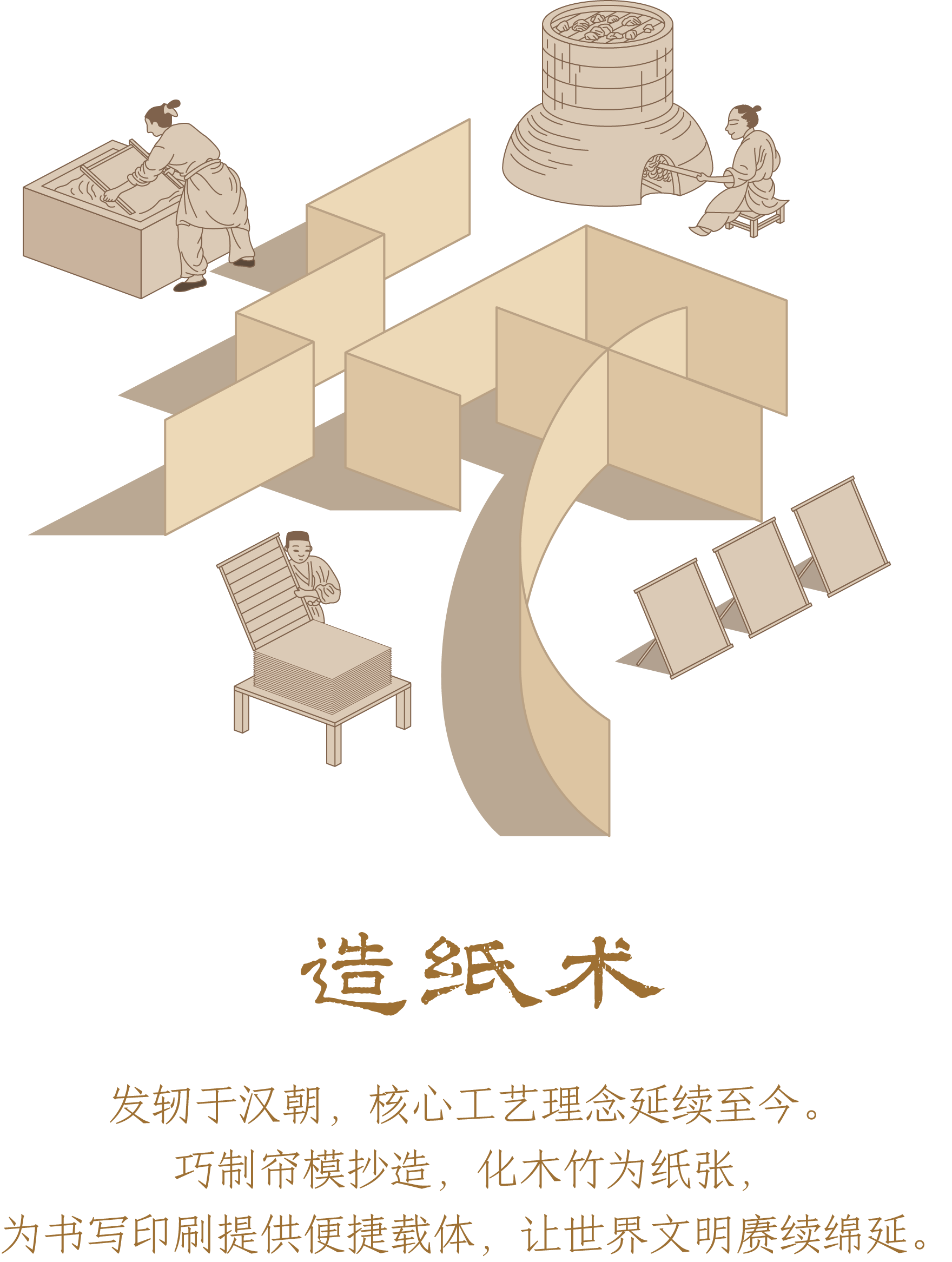
字载匠心|这项古代发明,让璀璨的文明传承数千年
Ren Min Ri Bao Hai Wai Ban· 2026-01-31 01:19
Core Viewpoint - The invention and evolution of papermaking technology have significantly contributed to the preservation and dissemination of Chinese and world civilization, with various materials and techniques being developed over time to enhance paper quality and accessibility [1][4][10]. Group 1: Historical Development of Papermaking - The traditional narrative attributes the invention of papermaking to Cai Lun during the Eastern Han Dynasty, but archaeological findings suggest that the origins of papermaking may date back to the Western Han Dynasty [4][6]. - Archaeological discoveries, such as the "Baqiao paper" and other ancient paper remnants, indicate that papermaking technology was evolving earlier than previously thought, with evidence of paper dating back to the mid to late Western Han period [6][8]. - The continuous improvement of papermaking techniques and materials, including the use of hemp, mulberry bark, and bamboo, reflects a long history of innovation in the industry [9][10]. Group 2: Material Innovations in Papermaking - The transition from hemp paper to other materials like mulberry bark and bamboo paper illustrates the ongoing search for more sustainable and cost-effective raw materials in papermaking [9][10]. - The introduction of various types of paper, such as bamboo paper, which became popular during the Tang Dynasty, showcases the adaptability of the industry to meet the demands of different users [9][10]. - The evolution of papermaking materials has been marked by three significant breakthroughs, enhancing the availability and affordability of paper products [9]. Group 3: Cultural and Economic Impact - Papermaking has played a crucial role in the development of Chinese literature, art, and commerce, facilitating the creation of books, calligraphy, and even early forms of currency [16][17]. - The spread of papermaking technology beyond China to regions such as Vietnam, Korea, Japan, and later to Europe, highlights its global significance and influence on cultural exchanges [17][18]. - The introduction of paper as a medium for printing and documentation has been pivotal in the advancement of knowledge and education, contributing to significant historical movements such as the Renaissance in Europe [17][18]. Group 4: Modern Papermaking Techniques - The traditional craftsmanship involved in making Xuan paper, a high-quality paper used for Chinese painting and calligraphy, exemplifies the enduring legacy of ancient papermaking techniques [10][14]. - Modern advancements in papermaking have led to innovations that prioritize environmental sustainability, such as the use of recycled materials and the development of multifunctional paper products [18]. - Despite the rise of digital media, the fundamental principles of papermaking continue to influence contemporary practices, ensuring that paper remains a vital part of human communication and culture [18].
解释城市|纽约市城市服务型制造对上海发展制造业有哪些参考
Xin Lang Cai Jing· 2026-01-30 10:23
Core Insights - The article discusses the economic structure and industrial layout of New York City, highlighting the distribution of major industry sectors and their impact on the regional economy [2][7]. - It emphasizes the concentration of economic activity in a few key sectors while many others contribute relatively less, illustrating a dual characteristic of concentration and dispersion in New York's economy [7][8]. Economic Structure - In 2023, New York City's total economic output was $1,285.74 billion, with a clear distinction between "core pillar industries" (over 10% contribution), "mid-tier supporting industries" (3%-10%), and "specialty supplementary industries" (below 3%) [7][8]. - The "core pillar industries" include finance and insurance, real estate, information, and professional and technical services, collectively contributing $785.84 billion, or 61.1% of the city's GDP [8]. Key Industries - The finance and insurance sector alone accounts for approximately 25% of New York City's GDP, underscoring its status as a global financial center [8]. - Real estate and rental services are significant contributors, primarily driven by transactions, property management, and related services concentrated in Manhattan [8]. - The information sector has seen rapid growth, increasing from 10% to 12.4% of GDP over the past 20 years, while professional and technical services contribute around 10% [8]. Supporting Industries - "Mid-tier supporting industries" encompass public administration, wholesale and retail trade, healthcare, and accommodation and food services, collectively making up 23.3% of the economy [9][10]. - These industries are essential for maintaining the city's operational stability and resilience against economic fluctuations, as they are less affected by short-term economic changes [10]. Specialty Industries - "Specialty supplementary industries" include agriculture, mining, utilities, construction, manufacturing, transportation, management services, education, and arts and entertainment [11]. - Although these industries have a lower economic contribution, they play a vital role in supporting core industries and enhancing the city's cultural vibrancy [11]. Manufacturing Sector - Manufacturing's share of New York City's GDP has drastically declined to only 0.8% in 2023, reflecting a broader trend of urban centers moving away from manufacturing towards service-oriented economies [14][19]. - The historical context shows that manufacturing was once a significant part of New York's economy, particularly post-World War II, but has since diminished due to the rise of the service sector [15][18]. Current Manufacturing Landscape - The remaining manufacturing in New York is characterized by "urban service-oriented manufacturing," focusing on light industries such as food and apparel, which cater directly to local consumer needs [22][23]. - The manufacturing sector is primarily composed of food manufacturing (26.9%), apparel manufacturing (15.0%), and printing (13.4%), indicating a strong alignment with urban consumption patterns [25][22].