笋竹食品

Search documents
福建推进特色现代农业高质量发展
Zhong Guo Xin Wen Wang· 2025-09-18 07:52
Core Insights - Fujian Province is making significant progress in the development of modern agriculture, with key indicators expected to be met by 2024, contributing to the overall development of the province [1] Economic Performance - Since 2021, the primary industry value added in Fujian has maintained an annual growth rate of over 3.4%, projected to reach 328.8 billion yuan by 2024, an increase of 55.6 billion yuan compared to the end of the 13th Five-Year Plan [1] - The per capita disposable income of rural residents has grown at an annual rate of 8.1% since 2021, expected to reach 28,525 yuan by 2024, exceeding the national average by 5,406 yuan [1] - The income growth of farmers has outpaced that of urban residents for 14 consecutive years, with the urban-rural income ratio decreasing from 2.26:1 in 2020 to 2.06:1 by 2024 [1] Agricultural Production - The production of fruits, tea, vegetables, edible fungi, meat, eggs, milk, and aquatic products has been increasing annually since the 14th Five-Year Plan [1] - By 2024, vegetable production in Fujian is expected to exceed 17 million tons, with 40% supplied to other provinces, establishing Fujian as a key "south-to-north vegetable transport" base [1] - Edible fungi production is projected to reach 1.63 million tons by 2024, an increase of 250,000 tons from the end of the 13th Five-Year Plan, maintaining the second position nationally [1] Specialty Industries - The "Three Tea" coordinated development has shown significant results, with leading national levels in tea yield, coverage of quality tea tree varieties, and the number of national-level agricultural industrialization leading enterprises [2] - By 2024, total production of meat, eggs, and milk is expected to reach 4.16 million tons, an increase of 850,000 tons from the end of the 13th Five-Year Plan, with fresh meat, eggs, and milk supply levels continuously improving [2] - The bamboo forest area is projected to reach 18.73 million acres with a bamboo shoot production of 2.14 million tons by 2024, both ranking first in the country [2] Marine Resources - The total aquatic product output in Fujian is expected to reach 9.25 million tons by 2024, ranking third nationally, with per capita aquatic product availability at 221 kg and export value at 6.8 billion USD, both leading the country [2] Future Directions - Fujian aims to promote high-quality development of its characteristic modern agriculture and establish a rural revitalization path unique to the province [2]
废弃矿山变“聚宝盆”,重庆“生态修复+”破题价值转换 | 活力中国调研行
Di Yi Cai Jing· 2025-08-18 06:33
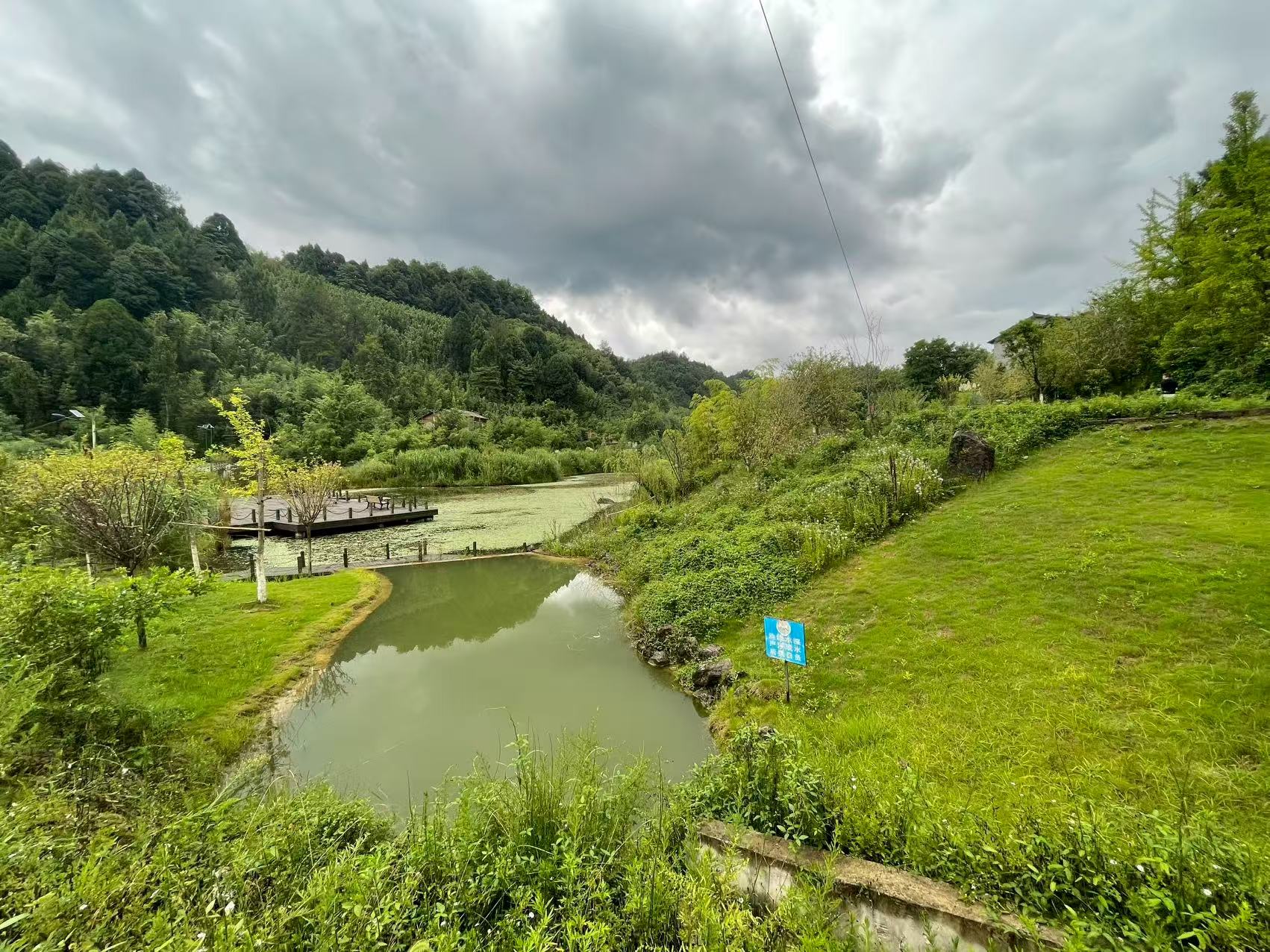
Core Viewpoint - Chongqing is actively promoting the integration of ecological restoration with agriculture, leisure tourism, art creation, and rural cultural tourism, guiding enterprises, village collectives, and villagers to co-build and share ecological benefits [1] Group 1: Ecological Restoration and Economic Transformation - The transformation of the former mining area in Liangping District, particularly in Jieshen Village, showcases a successful shift from a heavily polluted mining economy to a thriving tourism and ecological restoration model [1][4] - The village previously relied on mining and paper-making, leading to severe environmental degradation, but has since closed various mines and established ecological protection zones [1][4] - The implementation of ecological restoration projects has turned the area into a significant tourist destination, highlighting the effectiveness of the "ecological restoration +" model [1][5] Group 2: Innovative Restoration Practices - The Dream Creek Wetland, covering approximately 50 acres, exemplifies innovative ecological restoration by reconstructing the functionality of former mining sites and creating a unique wetland ecosystem [5] - This restoration approach combines wastewater treatment with wetland construction, resulting in a network of small wetlands that serve protective, purifying, and recreational functions [5][11] - The ecological improvements have led to increased tourism and the development of local hospitality businesses, demonstrating the economic potential of restored environments [5][12] Group 3: Economic Impact and Community Involvement - The shift to ecological industries has revitalized local economies, with bamboo cultivation and processing becoming significant sources of income, increasing average earnings per mu to 2000 yuan [12] - The integration of private capital into ecological restoration projects has been crucial for sustainable development, as seen in the EOD model in Beibei District, which links environmental governance with rural tourism [11][12] - The establishment of nearly 100 rural homestays and agritourism businesses has created new income streams for local residents, with projected tourist numbers reaching nearly 1 million and tourism revenue exceeding 200 million yuan in 2024 [12]

多地推进森林“四库”建设,带动产业发展和乡村振兴
第一财经· 2025-08-12 05:23
Core Viewpoint - The article emphasizes the importance of sustainable forest management, highlighting its role in ecological protection, industrial development, and rural revitalization through the implementation of the "Four Reservoirs" strategy in various provinces [3][4]. Group 1: Fujian Province Initiatives - Fujian Province has introduced a plan to enhance forest functions, including water retention, carbon sequestration, timber production, and food production through various measures such as forest restoration and cultivation of diverse forest products [3][4]. - By 2030, Fujian aims to achieve a forest water retention capacity of 35 billion cubic meters, a forest stock of 850 million cubic meters, a forest food output of 3.9 million tons, a vegetation carbon storage of 512 million tons, and a total forestry output value of 1 trillion yuan [4]. Group 2: Guangxi Province Developments - Guangxi, a significant collective forest region, is implementing comprehensive reform trials in various cities to enhance forest rights, management, and financial innovation, aiming for a total forestry output value exceeding 1 trillion yuan by 2024 [4][5]. - The province has introduced a "forest ticket system" for national reserve forests, benefiting 15,900 households and achieving a cooperative operating total of 117 million yuan [5]. Group 3: Heilongjiang Province Strategies - Heilongjiang Province is focusing on sustainable forest management to combat issues from overharvesting, exploring innovative management models and promoting valuable forest products [6]. - The province has identified 27 representative forest products, with 129 enterprises participating in a branding initiative since its launch in 2023 [6]. Group 4: National Trends in Forestry - Nationwide, the area of economic forests has reached 70 million acres, with over 60 million acres utilized for under-forest economies, producing over 20 million tons of various forest foods annually [7]. - The development of forest food is seen as a crucial strategy for enhancing both the "grain reservoir" and "money reservoir," contributing to rural revitalization [7].