木本粮油

Search documents
林上增绿林下生金 激活森林“四库”——专访中国林业科学研究院研究员、国务院特殊津贴专家陈幸良
Zhong Guo Jing Ji Wang· 2026-02-06 06:11
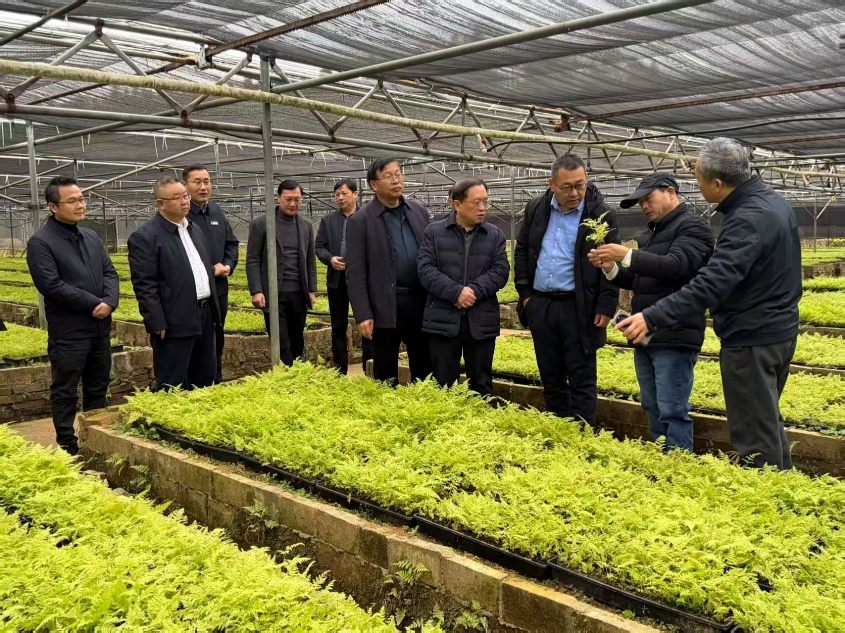
Core Viewpoint - The "under-forest economy" is being elevated to a national strategic level in China, aiming to transform ecological resources into economic benefits, aligning with the concept that "green mountains and clear waters are as valuable as mountains of gold and silver" [1][2]. Group 1: National Strategy and Economic Impact - The under-forest economy has been included in the government's work report and the 14th Five-Year Plan, highlighting its importance for national ecological security, rural revitalization, and common prosperity [1][2]. - The FAO's 2024 report indicates that nearly 6 billion people rely on non-timber forest products for their livelihoods, with 70% of the impoverished population directly depending on forest resources [2]. - The under-forest economy aims to efficiently convert the ecological value of "green mountains and clear waters" into economic wealth, addressing both international concepts and China's unique conditions [2][4]. Group 2: Ecological and Economic Synergy - The under-forest economy successfully integrates ecological protection with economic development, utilizing forest space without deforestation or land occupation [5][6]. - This model enhances forest management efficiency and sustainability, contributing to carbon sequestration and biodiversity [6][7]. - The economic advantages include high land utilization rates and the emergence of new industries, particularly in non-timber forest products, which have significant market potential [7][9]. Group 3: Employment and Rural Development - The under-forest economy is expected to create numerous job opportunities and support small farmers, providing a pathway for rural income generation [9][10]. - In Guangxi, the under-forest economy's annual output value is projected to reach 138.8 billion yuan by 2024, benefiting over 12 million farmers with an average annual income increase of over 4,000 yuan [10]. - However, challenges such as higher initial investments and the need for new skills in ecological management and processing remain [10][11]. Group 4: Technological and Policy Support - To overcome barriers, collaboration among government, research institutions, and social capital is essential, including establishing dedicated funding and technical support for the under-forest economy [11][12]. - Various operational models have emerged, including under-forest planting, breeding, and eco-tourism, but balancing ecological protection with economic returns is crucial [12][13]. - Emphasizing ecological protection as a priority, policies should ensure sustainable practices while allowing for economic development [13][14]. Group 5: Future Directions and Innovations - The under-forest economy is expanding into new areas such as carbon trading and functional forest food development, indicating significant growth potential [15][16]. - The establishment of a dedicated research office for the under-forest economy aims to focus on resource conservation, efficient management, and advanced processing technologies [16]. - Overall, the under-forest economy represents a pathway for ecological industrialization and rural integration, enhancing the well-being of the population through innovative practices [16].

中国林草产业总产值近11万亿元
Ren Min Ri Bao Hai Wai Ban· 2026-01-21 07:14
Core Insights - By 2025, China aims to advance collective forest rights reform and promote high-quality development of the forestry and grassland industry, targeting a total industry output value of nearly 11 trillion yuan and an import-export trade volume exceeding 180 billion USD [1][2] - The forestry sector will focus on revitalizing and effectively utilizing forest and grassland resources, with initiatives to support the healthy development of the industry, including financial support and measures to promote the under-forest economy [1] Industry Development Goals - The annual production of forest products is projected to reach over 240 million tons, with timber production expected to be 140 million cubic meters and the output value of timber processing and bamboo products estimated at 3.4 trillion yuan [1] - The central government has allocated 4.8 billion yuan for the development of the oil tea industry, with plans to plant an additional 2.82 million acres and improve 2.56 million acres of low-yield forests, bringing the total oil tea planting area to 7.5 million acres and an expected output of 1.1 million tons of tea oil [1] Employment and Economic Impact - The forestry and grassland industry is projected to directly create employment for over 60 million people, highlighting its role in income generation and job stability [1] - The industry will also support ecological tourism, with an expected annual visitor count of nearly 3 billion, further enhancing its economic contribution [1] Collective Forest Rights Reform - Multiple measures will be implemented to deepen collective forest rights reform, including ten new measures to enhance the quality and efficiency of collective forestry development and optimize management policies [2] - As of now, there are nearly 300,000 new forestry operating entities, with about 100,000 managing over 500 acres, indicating a shift towards larger-scale and intensive management practices [2] Future Directions - The forestry sector will explore new pathways for ecological product value transformation, accelerate the upgrading of the bamboo and wood industry, and promote the development of specialty industries such as woody oil and under-forest economy [2] - Continued efforts will be made to deepen collective forest rights reform, enhance financial and tax support, and establish diversified investment mechanisms to stimulate the development of the forestry and grassland industry [2]
学习规划建议每日问答 | 如何理解把农业建成现代化大产业
Xin Hua She· 2025-12-29 07:23
Core Viewpoint - The Chinese government emphasizes the modernization of agriculture as a strategic industry, aiming to transform it into a large-scale modern industry during the 14th Five-Year Plan period, reflecting an accurate understanding of the current agricultural development situation [1] Group 1: Agricultural Development Trends - The agricultural sector is experiencing significant changes and opportunities, with a shift from merely ensuring food security to enhancing food quality and health [1] - From 2013 to 2023, per capita consumption of grains decreased by 13.2%, while consumption of eggs, fresh fruits, meat, aquatic products, and vegetables increased by 82%, 60.9%, 55.7%, 45.9%, and 16.5% respectively, indicating a trend towards diversified and healthier diets [1] Group 2: Key Focus Areas for Agricultural Modernization - The primary task is to ensure national food security by enhancing comprehensive grain production capacity and expanding food resource development from traditional agricultural products to a broader range of biological resources [2] - The development of modern facilities for planting, livestock, and aquaculture is emphasized, along with the establishment of modern processing and logistics facilities to improve production efficiency and diversity [2] Group 3: Agricultural Product Processing and Integration - The optimization of agricultural product processing and circulation is crucial, focusing on enhancing initial processing, deep processing, and comprehensive utilization to promote multi-level value addition [3] - The integration of agriculture with secondary and tertiary industries is encouraged, leveraging local resources to develop diverse agricultural functions and foster deep integration with tourism, education, culture, and health industries [3] Group 4: Technological Empowerment in Agriculture - The promotion of technological advancements in agriculture is essential, including the integration of AI breeding, IoT, big data, and advanced agricultural machinery to enhance productivity [4] - The development of smart farms, plant factories, and intelligent agricultural machinery is prioritized to drive innovation and efficiency in agricultural practices [4]
学习规划建议每日问答丨如何理解把农业建成现代化大产业
Xin Hua She· 2025-12-29 06:06
Core Viewpoint - The article emphasizes the importance of modernizing agriculture as a strategic industry for national stability and economic development, highlighting the favorable conditions and opportunities for agricultural growth during the "14th Five-Year Plan" period [1]. Group 1: Agricultural Development Trends - The shift in consumer preferences towards diversified food consumption is evident, with per capita consumption of grains decreasing by 13.2% from 2013 to 2023, while consumption of eggs, fresh fruits, meat, aquatic products, and vegetables increased by 82%, 60.9%, 55.7%, 45.9%, and 16.5% respectively [1]. - The integration of urban and rural areas is deepening, leading to a broader definition of agricultural development and the emergence of industry convergence as a trend [1]. Group 2: Key Focus Areas for Agricultural Modernization - The primary task is to ensure national food security by enhancing comprehensive grain production capacity and expanding food resource development from traditional agricultural products to a wider range of biological resources [2]. - The optimization and upgrading of agricultural product processing and circulation are crucial, promoting multi-level utilization and value addition through coordinated development of initial, deep processing, and comprehensive utilization [3]. - The integration of primary, secondary, and tertiary industries is essential, driven by market demand and innovative business models, to create a modern industrial system that combines agriculture with tourism, education, culture, and health [3]. Group 3: Technological Empowerment in Agriculture - The promotion of technological advancements in agriculture is vital, focusing on the large-scale integration and dissemination of scientific achievements, as well as the development of new breeding models [4]. - The application of smart technologies, such as IoT, big data, and advanced agricultural machinery, is being accelerated to enhance agricultural productivity and efficiency [4].
全国林草已形成四个超万亿元产业 直接从业人员逾六千万
Jing Ji Ri Bao· 2025-10-26 22:05
Core Insights - The report presented by the National People's Congress Standing Committee highlights the significant growth and potential of the national forestry and grassland industry, projecting a total output value of 10.496 trillion yuan by 2024, with four key sectors exceeding one trillion yuan each [1][2] - The forestry and grassland industry directly employs over 60 million people, with more than 60% of income for farmers in key forestry counties derived from this sector, positioning it as a "green engine" for rural revitalization and common prosperity [1] Industry Development - The report suggests that enhancing the quality and efficiency of the forestry and grassland industry should be a national strategic task, advocating for a modern industrial system that encompasses the entire value chain from resource cultivation to product sales and ecological tourism [1] - Recommendations include fostering green new productive forces in the forestry and grassland sector, supporting technological innovation, and establishing key national laboratories to improve research capabilities [1] Policy Support - The report calls for increased central budget investments to support infrastructure and industrial base construction in forest areas, as well as the improvement of policies for various sectors such as forest food, quality feed, and other profitable industries [2] - It emphasizes the role of green financial tools to encourage financial institutions to provide credit support in compliance with regulations [2]
南农晨读 | 绿美岭南 翰墨千春
Nan Fang Nong Cun Bao· 2025-10-16 04:03
Group 1 - The "Ink and Paint of a Thousand Springs: Green Beauty of Lingnan - Ancient Tree Calligraphy and Painting Exhibition" opened in Guangzhou on October 15, showcasing the artistic representation of ancient trees in Lingnan to promote ecological civilization and cultural integration [4][5][6] Group 2 - On October 15, China National Offshore Oil Corporation announced that the first self-operated deep-water oil field group in China, the Liuhua Oil Field Group, has surpassed a cumulative crude oil production of 38 million tons [8][9] - The Liuhua Oil Field Group, with a maximum water depth of approximately 437 meters, currently has five oil fields in production and features the largest underwater production system in China's offshore oil and gas fields [9][10] Group 3 - The third Economic Forest Autumn Consumption Season in Guangdong Province will commence on October 16 in Qingyuan City, promoting the forestry industry as a vital sector for rural revitalization and consumption enhancement [12][13][15] - The event aims to showcase the achievements in developing economic forests and forest food products, aligning with the provincial government's initiatives to boost the economy and improve farmers' incomes [16][18] Group 4 - The rankings for the 2025 China Farmers' Harvest Festival Village Song Competition were announced, with six original village songs from Guangzhou entering the top fifteen of the southern regional competition [20][22][24]


福建推进特色现代农业高质量发展
Zhong Guo Xin Wen Wang· 2025-09-18 07:52
Core Insights - Fujian Province is making significant progress in the development of modern agriculture, with key indicators expected to be met by 2024, contributing to the overall development of the province [1] Economic Performance - Since 2021, the primary industry value added in Fujian has maintained an annual growth rate of over 3.4%, projected to reach 328.8 billion yuan by 2024, an increase of 55.6 billion yuan compared to the end of the 13th Five-Year Plan [1] - The per capita disposable income of rural residents has grown at an annual rate of 8.1% since 2021, expected to reach 28,525 yuan by 2024, exceeding the national average by 5,406 yuan [1] - The income growth of farmers has outpaced that of urban residents for 14 consecutive years, with the urban-rural income ratio decreasing from 2.26:1 in 2020 to 2.06:1 by 2024 [1] Agricultural Production - The production of fruits, tea, vegetables, edible fungi, meat, eggs, milk, and aquatic products has been increasing annually since the 14th Five-Year Plan [1] - By 2024, vegetable production in Fujian is expected to exceed 17 million tons, with 40% supplied to other provinces, establishing Fujian as a key "south-to-north vegetable transport" base [1] - Edible fungi production is projected to reach 1.63 million tons by 2024, an increase of 250,000 tons from the end of the 13th Five-Year Plan, maintaining the second position nationally [1] Specialty Industries - The "Three Tea" coordinated development has shown significant results, with leading national levels in tea yield, coverage of quality tea tree varieties, and the number of national-level agricultural industrialization leading enterprises [2] - By 2024, total production of meat, eggs, and milk is expected to reach 4.16 million tons, an increase of 850,000 tons from the end of the 13th Five-Year Plan, with fresh meat, eggs, and milk supply levels continuously improving [2] - The bamboo forest area is projected to reach 18.73 million acres with a bamboo shoot production of 2.14 million tons by 2024, both ranking first in the country [2] Marine Resources - The total aquatic product output in Fujian is expected to reach 9.25 million tons by 2024, ranking third nationally, with per capita aquatic product availability at 221 kg and export value at 6.8 billion USD, both leading the country [2] Future Directions - Fujian aims to promote high-quality development of its characteristic modern agriculture and establish a rural revitalization path unique to the province [2]
多地推进森林“四库”建设,带动产业发展和乡村振兴
第一财经· 2025-08-12 05:23
Core Viewpoint - The article emphasizes the importance of sustainable forest management, highlighting its role in ecological protection, industrial development, and rural revitalization through the implementation of the "Four Reservoirs" strategy in various provinces [3][4]. Group 1: Fujian Province Initiatives - Fujian Province has introduced a plan to enhance forest functions, including water retention, carbon sequestration, timber production, and food production through various measures such as forest restoration and cultivation of diverse forest products [3][4]. - By 2030, Fujian aims to achieve a forest water retention capacity of 35 billion cubic meters, a forest stock of 850 million cubic meters, a forest food output of 3.9 million tons, a vegetation carbon storage of 512 million tons, and a total forestry output value of 1 trillion yuan [4]. Group 2: Guangxi Province Developments - Guangxi, a significant collective forest region, is implementing comprehensive reform trials in various cities to enhance forest rights, management, and financial innovation, aiming for a total forestry output value exceeding 1 trillion yuan by 2024 [4][5]. - The province has introduced a "forest ticket system" for national reserve forests, benefiting 15,900 households and achieving a cooperative operating total of 117 million yuan [5]. Group 3: Heilongjiang Province Strategies - Heilongjiang Province is focusing on sustainable forest management to combat issues from overharvesting, exploring innovative management models and promoting valuable forest products [6]. - The province has identified 27 representative forest products, with 129 enterprises participating in a branding initiative since its launch in 2023 [6]. Group 4: National Trends in Forestry - Nationwide, the area of economic forests has reached 70 million acres, with over 60 million acres utilized for under-forest economies, producing over 20 million tons of various forest foods annually [7]. - The development of forest food is seen as a crucial strategy for enhancing both the "grain reservoir" and "money reservoir," contributing to rural revitalization [7].