米其林竞驰5E轮胎

Search documents
总投资30亿元人民币,米其林“未来工厂”正式启航
Sou Hu Cai Jing· 2026-01-27 03:39
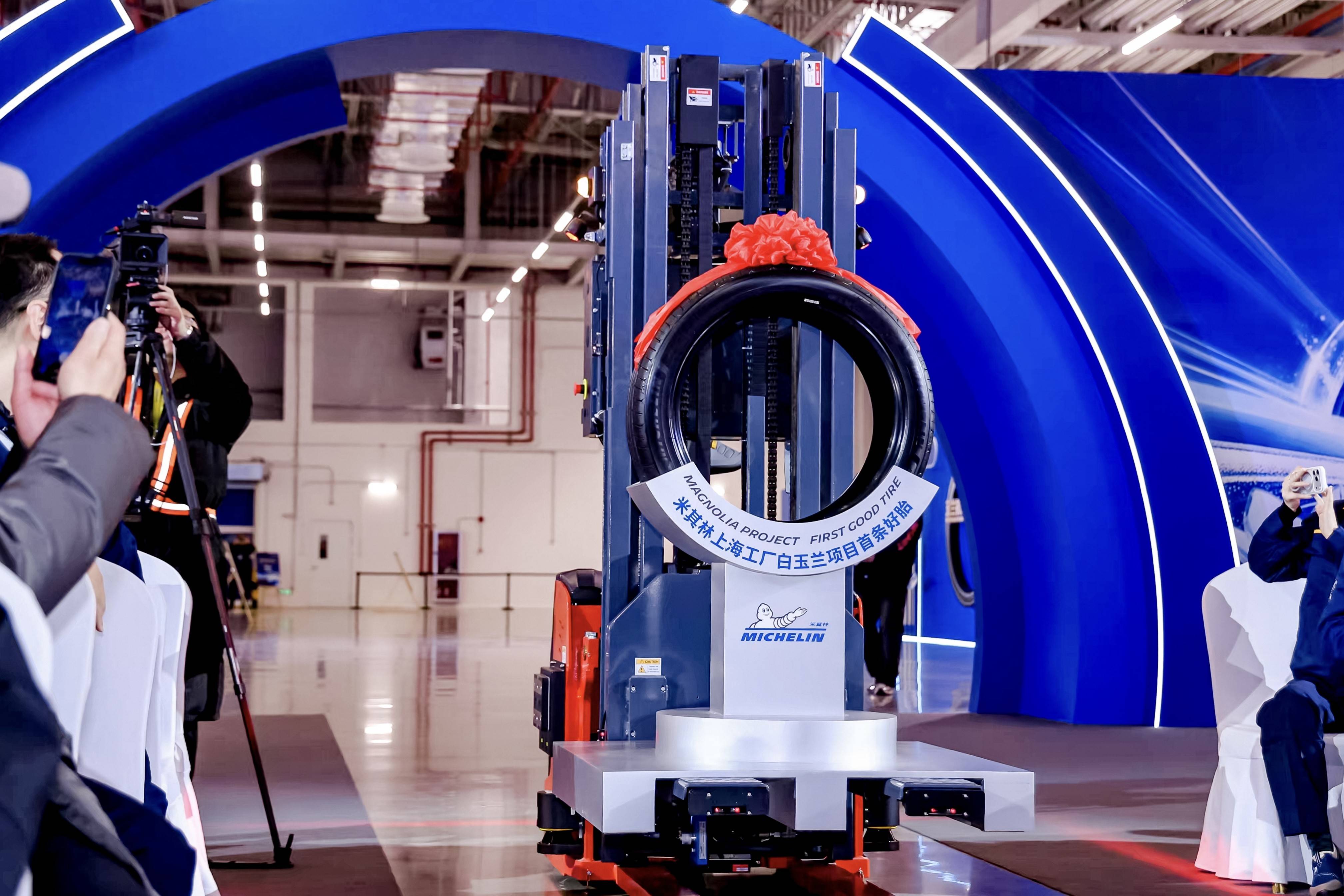
Core Insights - Michelin's Shanghai factory expansion project, known as the Bai Yulan project, has officially commenced production with a total investment of 3 billion RMB, marking a significant milestone in the company's "Future Factory" strategy in China [1][5][2]. Investment and Strategic Focus - The Bai Yulan project is a major foreign investment initiative at both the Shanghai municipal and Minhang district levels, focusing on the growing demand for new energy and high-end mobility solutions in the Chinese market [5]. - This project is Michelin's first strategic investment designed and operated under the "Future Factory" concept, emphasizing advanced manufacturing capabilities and sustainable development [5]. Production Capacity and Product Range - The project targets high-performance, large-size passenger car tires ranging from 18 to 24 inches, with approximately 70% of its production capacity dedicated to new energy vehicles [8]. - With the first phase of production, the Shanghai factory has added an annual capacity of 1 million tires, increasing total capacity from 8.5 million to 9.5 million tires, and expanding the product catalog to over 360 specifications [8]. Flexibility and Efficiency - The Bai Yulan project introduces a new ultra-flexible production model, allowing for tire production every 36 seconds and supporting flexible orders with a minimum of 100 tires, reducing delivery time from 10 days to 5 days [12]. - This flexibility meets the evolving demands of the Chinese automotive market for small batch sizes, low inventory, quick response, and high matching capabilities [12]. Sustainability Initiatives - The project incorporates a vision of "everything is sustainable," achieving 100% electrification in production and improving energy efficiency by over 400% compared to traditional steam vulcanization methods [13]. - It has invested over 30 million RMB in wastewater, waste gas treatment, and solid waste recycling, achieving 100% water recycling and enhancing emission reduction and resource recycling capabilities [17]. Intelligent Manufacturing - The Bai Yulan project fully integrates AI technologies for design, manufacturing management, and quality inspection, significantly improving construction and production efficiency while reducing trial and error costs [18]. - The factory's operational model shifts from reactive to proactive management, ensuring more stable and higher-quality production [18]. Future Outlook - Michelin's Shanghai factory aims to continuously create sustainable value by fully unleashing the new production capabilities of the Bai Yulan "Future Factory," focusing on the integration of people, profit, and environment [20]. - The goal is to provide safer, more comfortable, and enjoyable travel experiences for Chinese consumers through high-quality products [20].

跨国公司加大在华投资
Xin Lang Cai Jing· 2026-01-24 07:16
Group 1: Foreign Investment in China - The opening of the Chinese market has led to increased foreign investment, with companies like Michelin expanding their operations in Shanghai, reflecting a commitment to the Chinese market [4][5] - Recent policy measures in Shanghai, such as encouraging foreign reinvestment and enhancing foreign R&D centers, have created a favorable business environment for foreign enterprises [4][5] - Michelin's new factory, named "Baiyulan," represents a significant investment of 3 billion RMB and is the first demonstration factory for its "Future Factory" strategy, focusing on high-performance tires for electric vehicles [5][6] Group 2: Michelin's Production Capacity and Strategy - The Baiyulan project aims to increase Michelin's annual production capacity from 8.5 million to 9.5 million tires, with 70% of the output dedicated to new energy vehicles [5][6] - The factory features advanced technology, allowing for a tire to be produced every 36 seconds and reducing order delivery times from 10 days to 5 days, catering to the evolving demands of the Chinese automotive market [6] - Michelin's CEO for Greater China emphasized the importance of collaboration with local governments and industry partners to enhance manufacturing capabilities and support high-quality development in China [6] Group 3: Other Foreign Investments - Solstice, a company spun off from Honeywell, has established its Asia-Pacific headquarters in Shanghai, indicating confidence in the local innovation ecosystem and the green low-carbon industry environment [7][8] - The company focuses on sectors such as refrigerants and semiconductor manufacturing, aligning with China's dual carbon goals and the 14th Five-Year Plan [8] - The growth of AI infrastructure in China is reshaping the cooling industry, creating significant opportunities for material innovation companies [8] Group 4: Trends in the Food and Beverage Sector - DQ plans to achieve double-digit growth in revenue and profit by 2025, with over 1,800 stores in China, reflecting the vitality of the Chinese consumer market [9][10] - The company is focusing on local consumer preferences by introducing over 150 new products, which are expected to account for 60% of total sales [9][10] - McDonald's has opened its 600th restaurant in Shanghai and aims to expand its presence in lower-tier cities, with plans to reach 10,000 locations in China by 2028 [10]
米其林“未来工厂”正式启航
Hua Er Jie Jian Wen· 2026-01-23 09:34
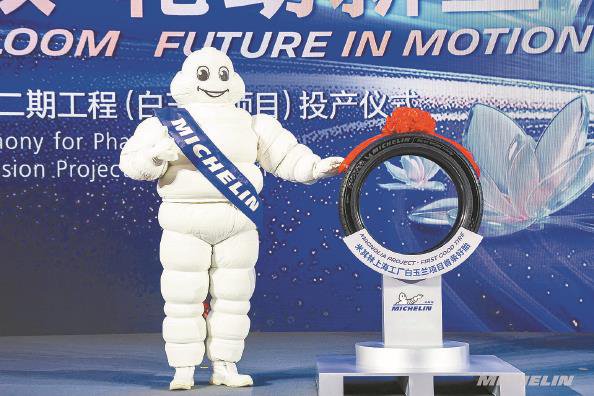
Core Insights - Michelin's Shanghai factory expansion, known as the "White Magnolia" project, marks the company's first strategic investment project designed entirely according to the "future factory" concept, responding to the explosive growth of China's electric vehicle industry [1][10] - The project represents a significant investment of 3 billion RMB and aims to transform the Shanghai factory into a benchmark for high-end, flexible, green, and intelligent manufacturing [1][8] Investment and Production Capacity - The "White Magnolia" project focuses on producing high-performance, large-diameter passenger car tires, specifically in the 18 to 24-inch range [3] - Approximately 70% of the new production capacity will directly serve electric vehicle models, increasing the annual production capacity of high-performance tires from 8.5 million to 9.5 million, adding 1 million tires [4] Product Innovation - The first product launched from this project, the Michelin Pilot Sport 5E, embodies the company's high-end strategy, featuring innovations that reduce energy consumption and enhance the range of electric vehicles [5] Manufacturing Efficiency - The project introduces a super-flexible production model, allowing for a minimum order of 100 tires and reducing delivery times from 10 days to 5 days, enhancing responsiveness to market demands [6] - Advanced AI technologies and automation have been integrated into the factory, enabling real-time monitoring and reducing production costs [7] Sustainability Initiatives - The "White Magnolia" project is designed to be a model for green manufacturing, achieving 100% electrification in production and utilizing renewable energy sources, significantly reducing carbon emissions [8][11] - The project has invested over 30 million RMB in wastewater, waste gas treatment, and solid waste recycling, achieving 100% water recycling [8] Strategic Commitment - The launch of the "White Magnolia" project is a testament to Michelin's long-term commitment to the Chinese market and its collaboration with local governments and industry partners [14] - The factory aims to achieve carbon neutrality by 2050, reflecting Michelin's dedication to balancing people, profit, and the environment [11][14]