未来工厂

Search documents
总投资30亿 米其林上海工厂改扩建二期项目正式投产
Yang Shi Wang· 2026-01-28 04:59
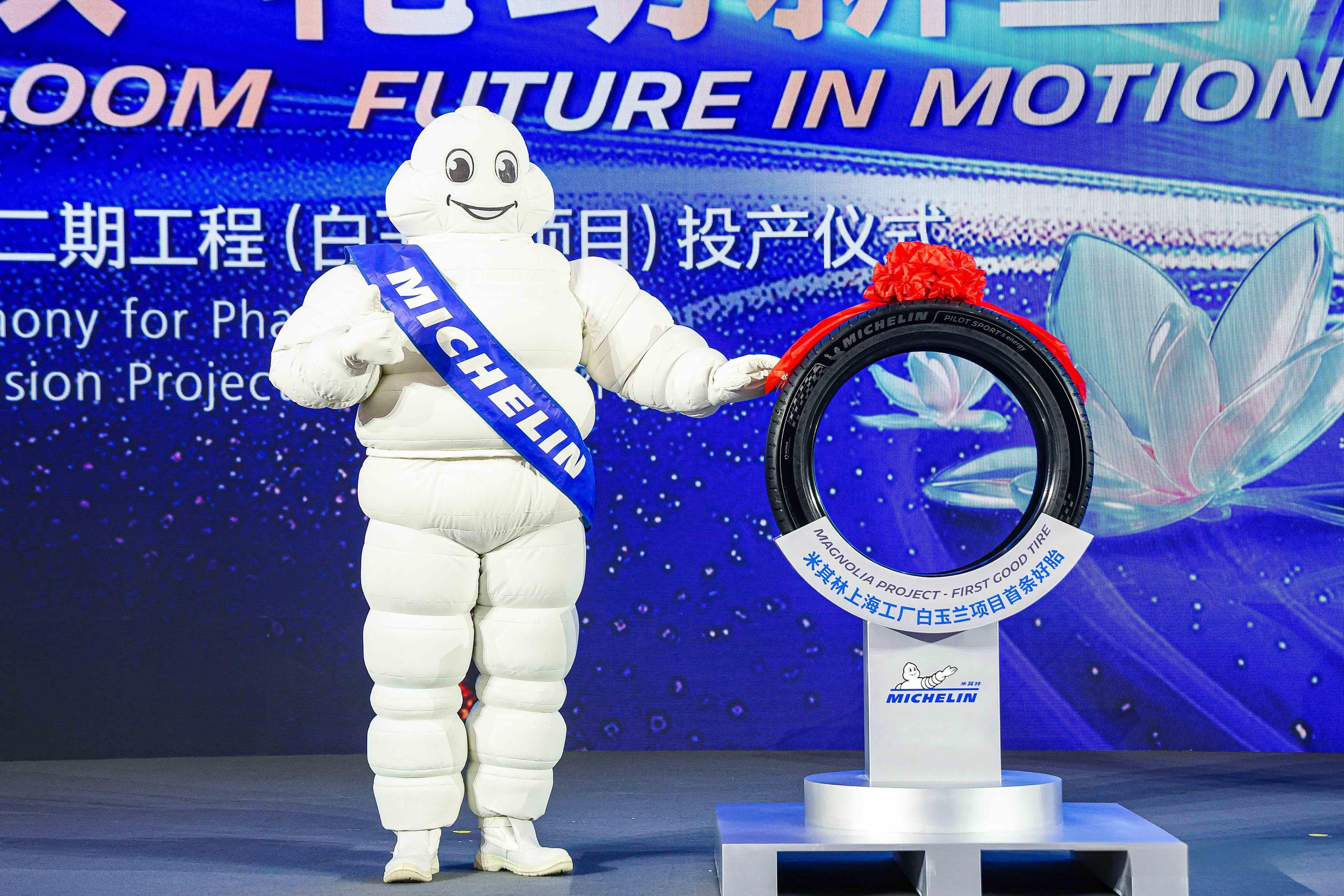
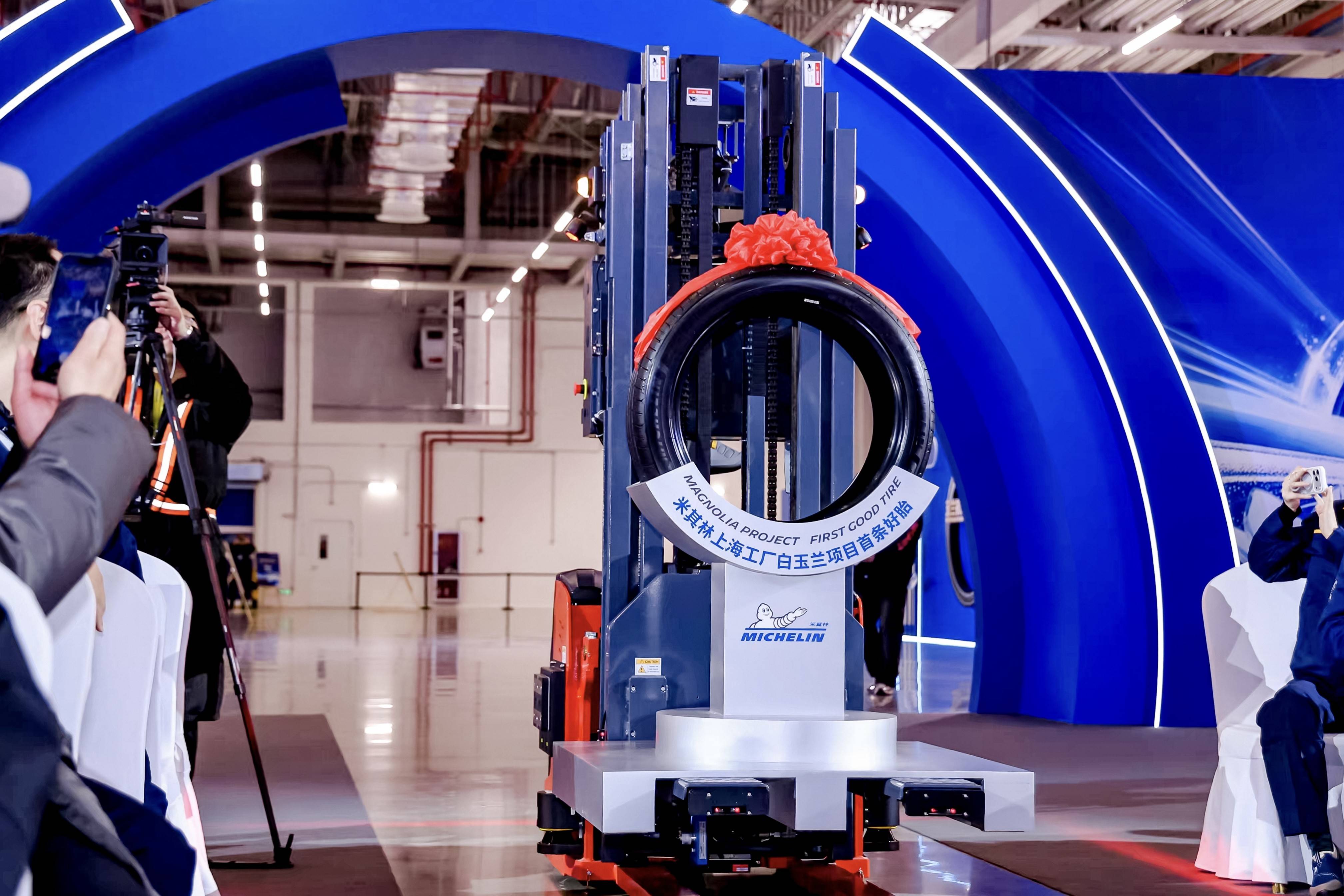
Core Insights - Michelin's Shanghai factory has officially launched the second phase of its expansion project, known as the Baiyulan Project, with the production of the high-performance green tire, Michelin Pilot Sport 5E, marking a significant milestone in the company's commitment to high-quality development and green transformation in China [1][4]. Group 1: Project Overview - The Baiyulan Project focuses on producing high-performance, large-sized passenger car tires ranging from 18 to 24 inches, with approximately 70% of its capacity dedicated to serving new energy vehicles [4]. - The project will increase the annual production capacity by 1 million tires, raising the total capacity from 8.5 million to 9.5 million tires, and expanding the product catalog to over 360 items [4]. Group 2: Manufacturing Innovations - The project introduces a new ultra-flexible production model, utilizing advanced tire manufacturing processes that allow for a tire to be produced every 36 seconds, with a minimum order of 100 tires [4]. - The order delivery cycle has been reduced from 10 days to 5 days, enhancing responsiveness to the demands of the Chinese automotive market for small batches and quick turnaround [4]. Group 3: Sustainability Initiatives - The Baiyulan Project embodies a vision of "everything is sustainable," integrating green manufacturing principles into the factory's infrastructure and energy systems, achieving 100% electrification in production [5]. - The project has invested over 30 million yuan in wastewater, waste gas treatment, and solid waste recycling, achieving 100% water recycling and significantly reducing carbon emissions during production [5]. Group 4: Smart Manufacturing - The project employs AI design, smart manufacturing management, and AI-assisted quality inspection technologies, significantly improving construction and production efficiency while reducing trial and error costs [5]. - The manufacturing management system has shifted from "reactive" to "predictive," resulting in more stable and higher-quality production management [5].

总投资30亿元人民币,米其林“未来工厂”正式启航
Sou Hu Cai Jing· 2026-01-27 03:39
Core Insights - Michelin's Shanghai factory expansion project, known as the Bai Yulan project, has officially commenced production with a total investment of 3 billion RMB, marking a significant milestone in the company's "Future Factory" strategy in China [1][5][2]. Investment and Strategic Focus - The Bai Yulan project is a major foreign investment initiative at both the Shanghai municipal and Minhang district levels, focusing on the growing demand for new energy and high-end mobility solutions in the Chinese market [5]. - This project is Michelin's first strategic investment designed and operated under the "Future Factory" concept, emphasizing advanced manufacturing capabilities and sustainable development [5]. Production Capacity and Product Range - The project targets high-performance, large-size passenger car tires ranging from 18 to 24 inches, with approximately 70% of its production capacity dedicated to new energy vehicles [8]. - With the first phase of production, the Shanghai factory has added an annual capacity of 1 million tires, increasing total capacity from 8.5 million to 9.5 million tires, and expanding the product catalog to over 360 specifications [8]. Flexibility and Efficiency - The Bai Yulan project introduces a new ultra-flexible production model, allowing for tire production every 36 seconds and supporting flexible orders with a minimum of 100 tires, reducing delivery time from 10 days to 5 days [12]. - This flexibility meets the evolving demands of the Chinese automotive market for small batch sizes, low inventory, quick response, and high matching capabilities [12]. Sustainability Initiatives - The project incorporates a vision of "everything is sustainable," achieving 100% electrification in production and improving energy efficiency by over 400% compared to traditional steam vulcanization methods [13]. - It has invested over 30 million RMB in wastewater, waste gas treatment, and solid waste recycling, achieving 100% water recycling and enhancing emission reduction and resource recycling capabilities [17]. Intelligent Manufacturing - The Bai Yulan project fully integrates AI technologies for design, manufacturing management, and quality inspection, significantly improving construction and production efficiency while reducing trial and error costs [18]. - The factory's operational model shifts from reactive to proactive management, ensuring more stable and higher-quality production [18]. Future Outlook - Michelin's Shanghai factory aims to continuously create sustainable value by fully unleashing the new production capabilities of the Bai Yulan "Future Factory," focusing on the integration of people, profit, and environment [20]. - The goal is to provide safer, more comfortable, and enjoyable travel experiences for Chinese consumers through high-quality products [20].
米其林“未来工厂”在闵行投产 计划今年年底达产100万条高性能绿色轮胎 70%产能供给新能源车
Jie Fang Ri Bao· 2026-01-24 01:36
Core Insights - The world's largest tire manufacturer, Michelin, has officially launched its "Future Factory" in Shanghai, marking the completion of the second phase of its expansion project [1] - The new facility is set to produce 1 million high-performance green tires annually by the end of 2026, increasing the overall production capacity of the Shanghai plant from 8.5 million to 9.5 million tires [1] - The total investment for this project is nearly 3 billion yuan, and it is the first strategic investment project globally designed and operated under the "Future Factory" concept [1] Group 1: High-End Production - The second phase focuses on producing high-performance, large-sized passenger car tires ranging from 18 to 24 inches, with approximately 70% of the capacity dedicated to new energy vehicles [1] - By the end of the year, the Shanghai plant will introduce over 100 new high-end product specifications, expanding its product catalog to more than 360 [1] Group 2: Flexible Production - The new facility enhances flexible production design, allowing a tire to be produced every 36 seconds and supporting minimum orders of 100 tires [2] - The order delivery cycle has been reduced from 10 days to 5 days, catering to the demand for small batches, low inventory, and quick response in the Chinese tire market [2] Group 3: Green Production - The new factory achieves 100% electrification in production, with energy efficiency improved by over 400% compared to traditional steam vulcanization methods [2] - The project utilizes 100% clean energy and renewable electricity, significantly reducing carbon emissions during the production process [2] - Advanced technologies such as AI design, AI smart manufacturing management, and AI-assisted quality inspection are employed, resulting in increased capacity with reduced labor and achieving "zero heavy manual labor" on the production line [2] Group 4: Market Positioning - Established in 2001, the Michelin Shanghai plant is one of the two major tire production bases in China, serving the East and South China automotive markets [2] - The plant's designed annual capacity is 5 million tires, with plans to gradually increase production in response to market demand [2] - Michelin aims to enhance the export capabilities of its Chinese base while meeting domestic market needs over the next 20 years [2]
(投资中国)总投资30亿元人民币 米其林“未来工厂”在沪启航
Zhong Guo Xin Wen Wang· 2026-01-23 17:41
Core Insights - The Michelin Shanghai factory's Baiyulan project has officially commenced production, marking a significant milestone in the company's investment strategy in China [1][2] - The project represents a total investment of 3 billion RMB and is designed as a "future factory," focusing on high-performance, large-size passenger car tires, with approximately 70% of its capacity dedicated to electric vehicles [1] Group 1: Project Details - The Baiyulan project adds an annual production capacity of 1 million tires, increasing the overall capacity from 8.5 million to 9.5 million tires, and expands the product catalog to over 360 specifications [1] - The project introduces a new ultra-flexible production model, utilizing advanced tire manufacturing technology that allows for a tire to be produced every 36 seconds and supports flexible production for minimum orders of 100 tires [1] Group 2: Market Impact - The project aims to meet the evolving demands of the Chinese automotive market, particularly in terms of small batch production, low inventory, quick response, and high compatibility [1] - Michelin's commitment to high-quality development, green transformation, and industrial collaboration in China is emphasized as a long-term strategy [2]
米其林“未来工厂”正式启航
Hua Er Jie Jian Wen· 2026-01-23 09:34
Core Insights - Michelin's Shanghai factory expansion, known as the "White Magnolia" project, marks the company's first strategic investment project designed entirely according to the "future factory" concept, responding to the explosive growth of China's electric vehicle industry [1][10] - The project represents a significant investment of 3 billion RMB and aims to transform the Shanghai factory into a benchmark for high-end, flexible, green, and intelligent manufacturing [1][8] Investment and Production Capacity - The "White Magnolia" project focuses on producing high-performance, large-diameter passenger car tires, specifically in the 18 to 24-inch range [3] - Approximately 70% of the new production capacity will directly serve electric vehicle models, increasing the annual production capacity of high-performance tires from 8.5 million to 9.5 million, adding 1 million tires [4] Product Innovation - The first product launched from this project, the Michelin Pilot Sport 5E, embodies the company's high-end strategy, featuring innovations that reduce energy consumption and enhance the range of electric vehicles [5] Manufacturing Efficiency - The project introduces a super-flexible production model, allowing for a minimum order of 100 tires and reducing delivery times from 10 days to 5 days, enhancing responsiveness to market demands [6] - Advanced AI technologies and automation have been integrated into the factory, enabling real-time monitoring and reducing production costs [7] Sustainability Initiatives - The "White Magnolia" project is designed to be a model for green manufacturing, achieving 100% electrification in production and utilizing renewable energy sources, significantly reducing carbon emissions [8][11] - The project has invested over 30 million RMB in wastewater, waste gas treatment, and solid waste recycling, achieving 100% water recycling [8] Strategic Commitment - The launch of the "White Magnolia" project is a testament to Michelin's long-term commitment to the Chinese market and its collaboration with local governments and industry partners [14] - The factory aims to achieve carbon neutrality by 2050, reflecting Michelin's dedication to balancing people, profit, and the environment [11][14]
家纺+全球化+外销占比高+未来工厂,2天2板!2天上涨21%!还有机会吗?
Sou Hu Cai Jing· 2026-01-01 06:41
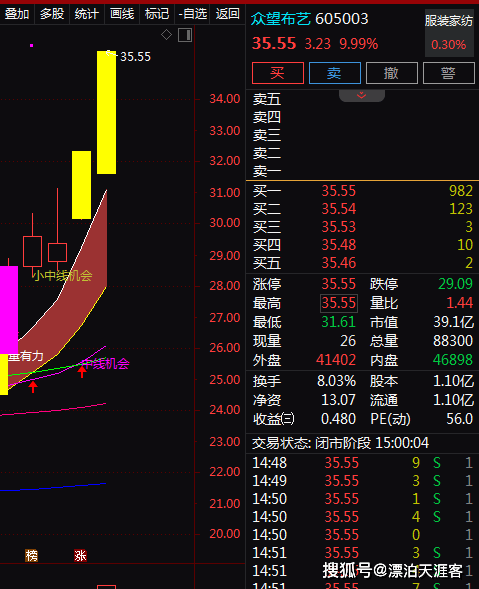
Core Viewpoint - The stock of Zhongwang Fabric (605003) has recently experienced a significant increase due to its strong performance in the home textile sector, global expansion, and innovative manufacturing capabilities. Group 1: Company Overview - Zhongwang Fabric specializes in the research, design, production, and sales of mid-to-high-end decorative fabrics and products [1] - The company is recognized as one of the most competitive enterprises in China's fabric industry [2] Group 2: Recent Stock Performance - The stock has seen a 21% increase over two trading days, with a strong upward trend indicated by moving averages and MACD showing potential for further gains [5] - The stock's trading volume indicates a net inflow of 11.066 million yuan from main funds [5] Group 3: Market Dynamics - The home textile sector is currently active, with Zhongwang Fabric's products used in sofas, outdoor furniture, RV furniture, and pet supplies, supported by a complete industrial chain [3] - The company has a significant international presence, with approximately 78.64% of its revenue coming from overseas markets, including the U.S., Australia, the Middle East, South Africa, and Europe [3] - The company has been recognized as a "Future Factory" in Zhejiang Province, highlighting its advanced design and research capabilities, which contribute to its competitive edge [4]

欧洲先进制造企业重庆行产业合作会推动28个先进制造项目签约
Shang Wu Bu Wang Zhan· 2025-11-21 14:51
Core Insights - The European Advanced Manufacturing Industry Cooperation Conference was held in Chongqing, attracting over 800 participants from government, financial institutions, and notable entrepreneurs, resulting in 28 signed projects totaling 97.55 billion yuan [1] Group 1: Investment and Projects - A total of 28 projects were signed during the event, with a total investment amount of 97.55 billion yuan, covering areas such as financial empowerment, overseas expansion for Chongqing enterprises, industrial investment, and industrial cooperation [1] - The "Chongqing Industrial High-Quality Development Opportunity List" was released, focusing on key sectors like intelligent connected new energy vehicles, next-generation electronic information manufacturing, and advanced materials, with 523 key projects planned and a total investment scale of 1 trillion yuan [1] - The "Chongqing 'Four Chains Integration' Application Scenarios List" unveiled 161 opportunities in fields such as "AI+" innovation applications, low-altitude economy, future factories, and smart healthcare, providing a broad platform for technological implementation and industrial upgrading [1] Group 2: Supportive Platforms - Several supportive platforms were launched to enhance cooperation, including the Chongqing Advanced Manufacturing Enterprises Empowerment Center and the CITIC Chongqing Comprehensive Financial Service Intelligence Hub, which will provide full-chain financial support for building a "smart industry brain + future factory" ecosystem in Chongqing [1] - The establishment of the CITIC Chongqing Vehicle Overseas Service Center marks a significant step in promoting the globalization of the manufacturing industry and assisting "Chongqing-made" products in expanding into global markets [1]

浙江电信:从“工厂升级”到“生态进化”
Zhong Guo Jin Rong Xin Xi Wang· 2025-11-03 10:49
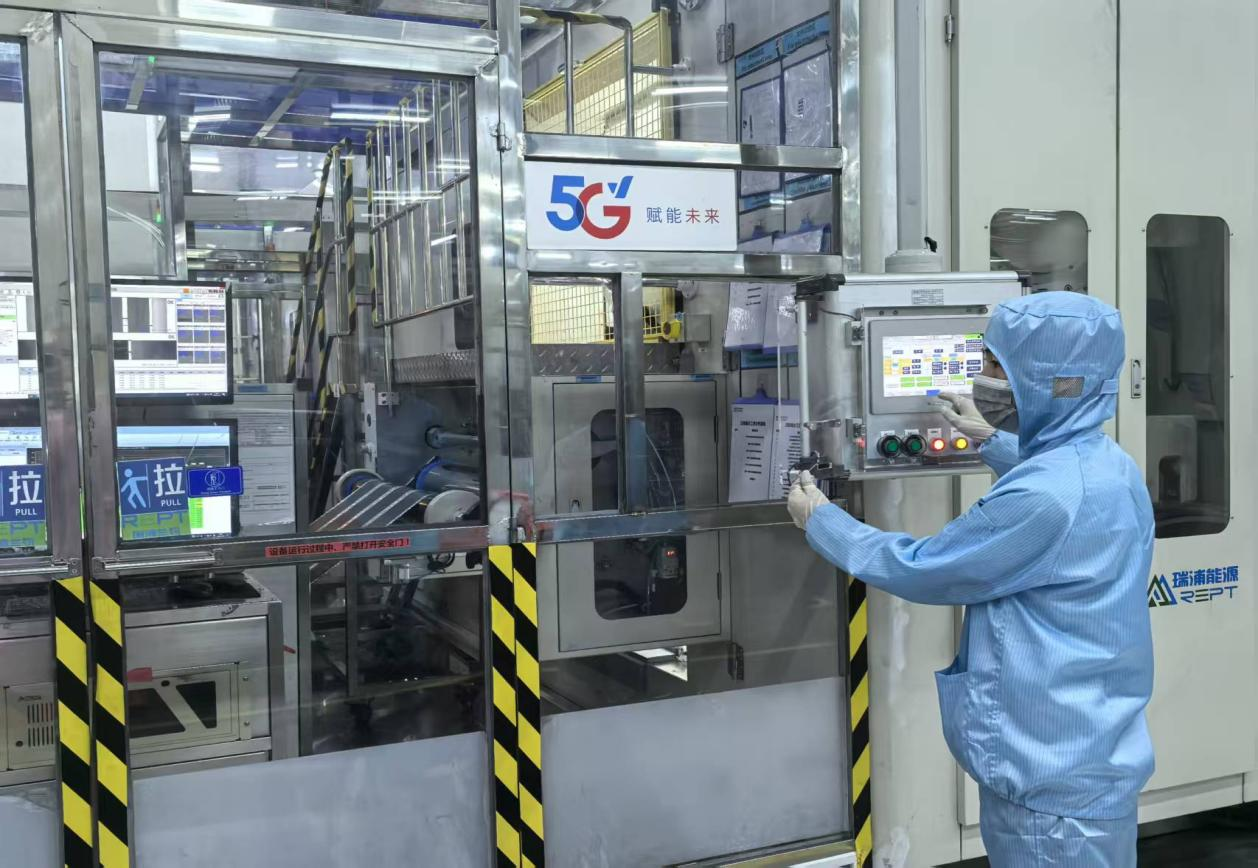
Core Insights - The establishment of the "Future Factory Promotion Center" in Zhejiang aims to address common challenges in the manufacturing sector's transformation, focusing on digital infrastructure and production organization [1] - The transformation is evolving from factory upgrades to ecosystem evolution, enhancing collaboration across the supply chain and innovating business models [1] Group 1: Digital Transformation and Efficiency - Ruipu Lanjun, a leader in the energy storage sector, has reduced raw material shortage rates from 32% to 7% through a supply chain collaboration platform, resulting in a 19.5% increase in production efficiency and a 42.3% reduction in operational costs [1] - Zhejiang Qianjiang Motorcycle Co., Ltd. has utilized digital, automated, and intelligent technologies to enhance its entire business chain, achieving a 20% reduction in R&D cycles and a 30% decrease in delivery times through PLM systems and APS intelligent scheduling [2] Group 2: Broader Collaboration and Social Impact - Jin Card Intelligent Group and Yubang Electric Intelligent Equipment have extended their collaboration from manufacturing to urban governance, creating a "Gas Industry Brain" for real-time monitoring and intelligent scheduling of urban gas networks [3] - Yubang Electric's smart equipment and drone inspection systems have improved inspection efficiency by over 70%, marking a strategic upgrade from producing smart products to providing digital inspection services [3] Group 3: Support for SMEs and Future Goals - Zhejiang Telecom is focusing on empowering small and medium-sized enterprises (SMEs) by creating an integrated AI platform for the electric motor industry, reducing annual access costs for individual companies to under 20,000 yuan [5] - The goal is to build 120 future factories in the province by the end of 2027, with Zhejiang Telecom having diagnosed nearly 30,000 enterprises and conducted 125 standard training sessions in the past year [5]


江苏高质量发展的三重突破与范式重构
Xin Hua Ri Bao· 2025-09-26 20:27
Core Viewpoint - Jiangsu Province is leveraging an "innovation ecosystem community" as a strategic pivot, utilizing "digital twin cities" for governance, and focusing on "future factories" for industrial restructuring, thereby establishing a three-dimensional interconnected system for technological self-reliance, comprehensive digital transformation, and intelligent manufacturing upgrades [1] Group 1: Innovation and Technology - The province is promoting institutional innovation to unleash the vitality of basic research [1] - Digital technologies are being employed to reconstruct urban operational logic [1] - The integration of innovation chains, digital chains, and industrial chains is being practiced, providing a vibrant model for regional development across the country [1] Group 2: Economic Development and Global Positioning - Jiangsu's approach highlights China's modernization mission in the context of global technological competition and digital transformation [1] - The province is forming a high-quality development path with Chinese characteristics [1]
增收不增利,丰田汽车第一财季净利润同比下降37%
Sou Hu Cai Jing· 2025-08-07 06:58
Group 1: Toyota's Financial Performance - Toyota's sales revenue for Q1 of FY2026 increased by 3.5% year-on-year to 12.25 trillion yen, but operating profit decreased by 11% to 1.17 trillion yen, and net profit fell by 37% to 841.4 billion yen [1] - The company has revised its full-year operating profit forecast down to 3.20 trillion yen from the previous estimate of 3.80 trillion yen, while maintaining its global vehicle sales forecast at 11.2 million units [1] - The anticipated impact of U.S. tariffs is expected to reduce operating profit by 1.4 trillion yen for the fiscal year [1] Group 2: Production and Future Plans - Toyota announced plans to acquire land in the Teihoucho area of Toyota City, Aichi Prefecture, to establish a new automotive manufacturing plant, which is expected to start operations in the early 2030s [1] - The new factory aims to maintain a production capacity of 3 million vehicles in Japan and will focus on creating a "future factory" utilizing advanced technologies [1] Group 3: Industry Context - In the first half of 2025, Toyota's global sales reached 5.5449 million units, marking the highest sales record for the first half in three years, with a year-on-year increase of 7.4% [2] - Other major Japanese automakers reported mixed results, with Nissan experiencing its first quarterly loss in five years and Honda's net profit halving in the same quarter [2][5]