红菇

Search documents
从“一村独行”到“片区共兴”
Xin Lang Cai Jing· 2026-02-11 00:11
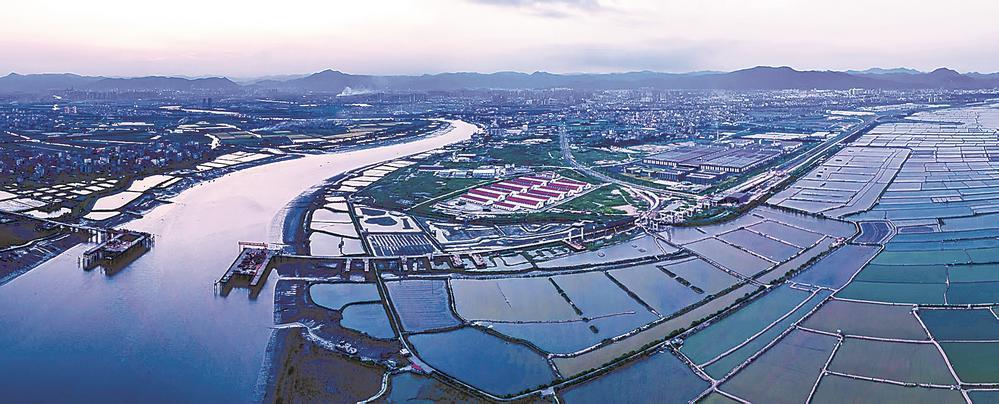
Core Viewpoint - The article discusses the innovative development model of "regional co-construction" in Huanjiang District, which integrates resources across villages to promote rural revitalization and economic growth through shared advantages and collaborative efforts [5][6][11]. Group 1: Regional Co-construction Model - Huanjiang District is implementing a new development model that breaks administrative boundaries and promotes cross-town cooperation, leading to resource sharing and complementary advantages among villages [5][6]. - The establishment of area-specific party committees has facilitated the integration of resources and improved connectivity, resulting in a coordinated development of cultural tourism and agriculture [6][7]. - The district has identified five major rural revitalization areas and 11 specialty industry areas, covering 120 administrative villages, ensuring structured collaboration and effective governance [6][7]. Group 2: Economic Impact and Resource Integration - The integration of resources has led to significant economic benefits, such as a 135% increase in annual rental income from tidal flats, demonstrating the effectiveness of the new management mechanisms [8][10]. - The establishment of a comprehensive rural revitalization center has enhanced product branding and market reach, with expectations of increasing e-commerce output by 20 million yuan [10]. - The development of a bamboo industry chain has created job opportunities for over 50 villagers, with collective annual income increases exceeding 200,000 yuan [10][11]. Group 3: Community Engagement and Support - The article highlights the role of community engagement in revitalization efforts, with local leaders facilitating partnerships between villages and external organizations, including educational institutions and businesses [12][13]. - The integration of various resources, including talent, funding, and technology, has created a new development pattern that supports sustainable rural growth [12][13]. - Collaborative projects between urban and rural areas have improved market access for agricultural products, enhancing the overall economic landscape of the region [13].

(乡村行·看振兴)福建大田:青山变“银行” 红菇成“金元”
Zhong Guo Xin Wen Wang· 2025-09-16 03:39
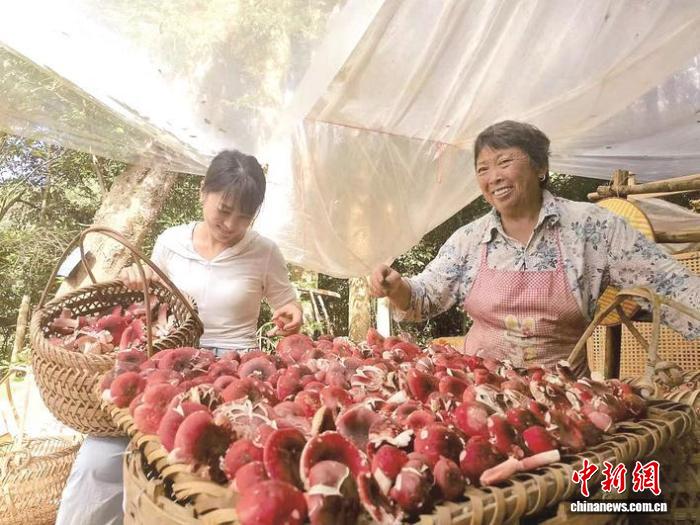
(乡村行·看振兴)福建大田:青山变"银行" 红菇成"金元" 中新网三明9月16日电 (吴贵戊 姜光伟)初秋时节,在福建省大田县东风农场盂坂自然村阔叶林下,村民 们正忙着采摘红菇。盂坂村阔叶林覆盖率达92%,今年红菇干品产量预计可达1500余公斤,户均分红近 12万元,是2006年分散经营时的23倍。 "以前红菇林没人管,村民、外人都来抢,一年少收上千公斤,树也快砍完了,真是'山秃了,菇也没 了'。"对此,村民刘晓燕记忆犹新。那时,红菇林因产权不清、管理无序陷入"生态与发展双赤字",成 为制约村民增收的拦路虎。 转机源于集体林权制度改革的稳步推进。2008年推行"分林到户、确权颁证",2023年聚焦"活权、用 权、增效",经过两轮林改,盂坂村确立"分股不分山、分利不分林"核心方针,将集体山林资产折股量 化到户,由村集体统一经营或引入合作社规模经营,凝聚起"护山方能富山"的全村共识。 "现在谁也舍不得砍树,烤菇用的木炭都从外地买,这林子可是我们的'绿色宝藏'。"盂坂村护林队队员 苏顺灶说。 野生红菇对生长环境要求极为严苛,仅能自然繁衍于阔叶林中湿润高温的腐殖层,无法进行人工栽培。 为守护红菇生长的"根基",村里组 ...
媒体视点 | 感知生态之变 绿水青山就是金山银山
证监会发布· 2025-08-10 07:10
Core Viewpoint - The article emphasizes the transformative impact of the "Two Mountains" theory on ecological civilization and economic development in China, highlighting significant advancements in environmental protection and green economic growth since its inception in 2005 [2][10]. Group 1: Ecological Transformation in Anji - Anji has seen a remarkable increase in carbon sequestration, with bamboo forests now absorbing 6.6 tons of carbon per hectare, generating over 28 million yuan annually for local bamboo farmers [6]. - Water quality in local streams has improved significantly, with pollution levels dropping from class IV to class II, leading to over 200 million yuan in summer tourism revenue [8]. - The shift from a "stone economy" to a "green economy" has resulted in a dramatic increase in GDP from 8.896 billion yuan to 67.557 billion yuan [12]. Group 2: Broader Impacts of Ecological Initiatives - The restoration of degraded areas, such as the Helan Mountain region, has transformed them into major agricultural zones, significantly increasing income for local farmers [16]. - In Hunan, rice farmers have adapted their practices to support local wildlife, resulting in higher market prices for their products, with some earning an additional 200,000 to 300,000 yuan annually [18]. - The development of forest economies in Fujian has led to over 100 million yuan in annual revenue from wild medicinal herbs and tourism [20]. Group 3: National Ecological Product Value Mechanism - The implementation of the national ecological product value realization mechanism in 12 regions has created over 1 trillion yuan in market vitality through eco-tourism [22]. - The article concludes that the practice of "green water and green mountains are invaluable assets" is continuously evolving, contributing to the well-being of the population and the economy [22].