
纯电动无人驾驶矿用卡车

Search documents
AI向实,迈向产业深水区
凤凰网财经· 2025-12-24 12:42
Core Viewpoint - The essence of AI lies in its application rather than its invention, emphasizing the importance of integrating AI into real-world scenarios to drive national strength [1][3]. Group 1: Value of Technology in Application - The value of disruptive technology is ultimately defined by its application scenarios, as demonstrated by historical examples like the graphical user interface and mouse [4]. - Current AI development is at a crossroads where the focus should shift from creating powerful models to effectively integrating them into specific industrial contexts [4][5]. - A complex "adaptation network" is necessary to connect general AI models with industry-specific knowledge and real-time data to address unique challenges in various sectors [5][7]. Group 2: Challenges in Industrial AI Implementation - AI faces three core challenges in industrial applications: extreme and fragmented scenarios, complex and high-risk processes, and the hidden and specialized nature of industry knowledge [7]. - The effectiveness of AI in the real economy will determine whether it becomes a valuable productivity tool or merely an expensive toy [7]. Group 3: Case Study of AI in Mining - The Yimin open-pit coal mine, a significant coal production area, has faced challenges such as safety risks and high operational costs, which are common in the mining industry [8]. - The introduction of 100 electric unmanned mining trucks at Yimin represents a pioneering effort in integrating advanced technologies like 5G-A and cloud systems in harsh environments [10]. Group 4: Layered AI Model Architecture - A layered architecture consisting of L0 (general models), L1 (industry-specific models), and L2 (application models) is proposed to foster collaboration between AI experts and industry practitioners [11]. - This approach allows for the rapid development of customized solutions based on industry models, promoting innovation across various sectors [14]. Group 5: Transformation of Industrial Knowledge - The platform and ecosystem model changes how industry knowledge is transmitted and innovated, turning individual expertise into a digital asset that can be utilized across the industry [12]. - The shift from project-based to platform-based innovation enables scalable and cost-effective solutions, allowing broader participation in the innovation process [14]. Group 6: New Human-Machine Collaboration - AI is positioned to enhance human roles by relieving them from repetitive and dangerous tasks, allowing them to focus on decision-making and innovation [15]. - This new collaboration model aims to preserve valuable industry knowledge and lower the barriers to innovation, ultimately enhancing human value in the workforce [15]. Group 7: Future of AI in Industry - The future of AI will likely focus on practical applications in manufacturing and supply chains rather than on the competition of model parameters [17]. - The goal is to embed intelligence into physical industries, ensuring that AI delivers tangible value in real-world user experiences [17].

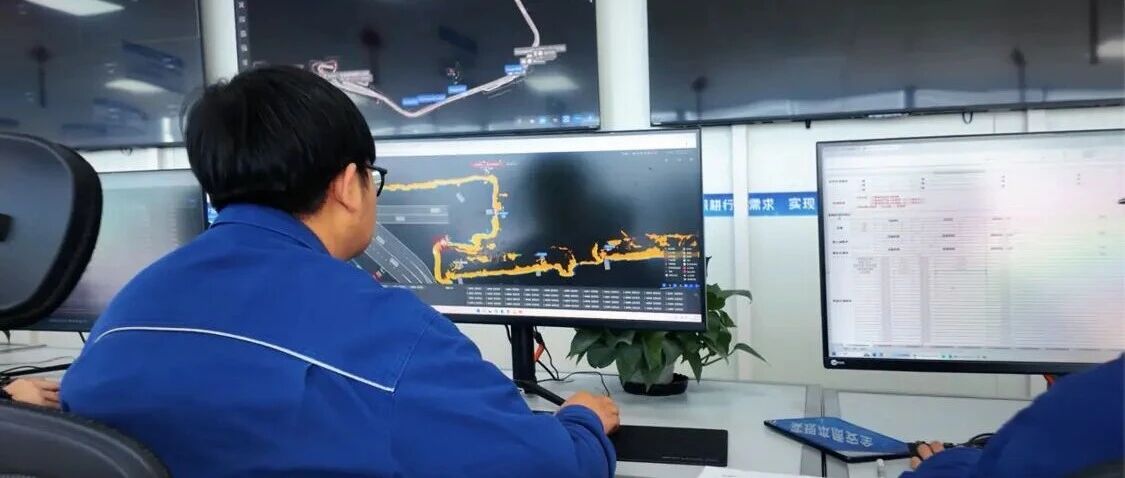
AI向实,迈向产业深水区
Feng Huang Wang Cai Jing· 2025-12-22 02:51
Core Insights - The core idea emphasizes that the true value of AI lies in its application rather than its invention, suggesting that integrating AI into real-world scenarios is crucial for its effectiveness [1][2] Group 1: Importance of Application - The value of disruptive technology is defined by its application scenarios, as seen in historical examples like Xerox and Apple [2] - Current AI development is at a crossroads where the focus should shift from creating powerful models to integrating them into specific industrial contexts [2][3] Group 2: Challenges in AI Integration - AI faces three core challenges in industrial applications: extreme and fragmented scenarios, complex and high-risk processes, and the hidden, specialized knowledge of industry experts [3][4] - The need for a new role that understands both AI and industry is essential to bridge the gap between AI capabilities and real-world applications [3][4] Group 3: Building an Intelligent "Nervous System" - A successful AI integration requires a layered architecture: L0 for general AI capabilities, L1 for industry-specific models, and L2 for tailored applications [5][6] - The collaboration between technology providers and industry leaders is crucial for developing effective AI solutions that meet specific operational needs [6][7] Group 4: Transformative Impact on Industry Knowledge - AI can transform the way industry knowledge is preserved and utilized, turning individual expertise into a digital asset that can be accessed across the organization [7][8] - The shift from project-based to platform-based innovation allows for scalable and cost-effective solutions that can adapt to changing environments [8][9] Group 5: New Human-Machine Collaboration - AI is positioned to enhance human roles by freeing individuals from repetitive tasks, allowing them to focus on decision-making and innovation [9][10] - The ultimate goal is to create a sustainable mechanism for knowledge production and reuse, ensuring that valuable industry expertise is maintained and leveraged [10]

矿山司机平均年龄超40岁,年轻人不愿来!近200台纯电无人矿卡开进新疆煤矿:换电只需6分钟,比加油快
Mei Ri Jing Ji Xin Wen· 2025-12-09 13:45
Core Insights - The article discusses the implementation of nearly 200 electric unmanned mining trucks and an intelligent battery swapping system at a large open-pit coal mine in Xinjiang, marking the largest commercial project of its kind in the country [1] Group 1: Industry Challenges - Traditional mining operations incur losses exceeding 25 billion yuan annually due to accidents and occupational diseases, with an average miner age over 40, leading to difficulties in recruiting younger labor and rising labor costs [3] - The industry faces three major bottlenecks: safety assurance, production efficiency, and environmental pressure, necessitating technological innovation to meet the dual demands of carbon neutrality and intelligent transformation [3] Group 2: Technological Innovations - The unmanned mining truck company has proposed a "driverless + automatic battery swapping" operational model, utilizing self-developed electric unmanned trucks equipped with multi-sensor perception systems and redundant control chassis for precise sensing and stable control in complex conditions [3] - The intelligent battery swapping stations automate the entire process from vehicle scheduling to battery replacement, with a single battery swap taking only 6 minutes without human intervention [3] Group 3: Efficiency and Environmental Impact - For the mining industry, the efficiency of battery swapping surpasses that of charging and even traditional refueling methods, alleviating concerns about energy replenishment during continuous operations and enabling all-weather, uninterrupted operation [5] - Compared to traditional human-driven trucks, unmanned mining trucks achieve a fuel savings rate of 20%-30%, with each unit reducing carbon emissions by over 100 tons annually, significantly enhancing both economic and environmental benefits [8] Group 4: Future Projections and Government Support - By 2024, the number of unmanned mining trucks in open-pit coal mines is expected to reach approximately 2,500 units, representing a growth of over 120% from 2023, with over 5,000 units projected to be operational this year [7] - The National Development and Reform Commission and the National Energy Administration have emphasized the importance of intelligent transformation in the mining sector, aiming for at least 60% of coal mine production capacity to be automated by 2026 [7]
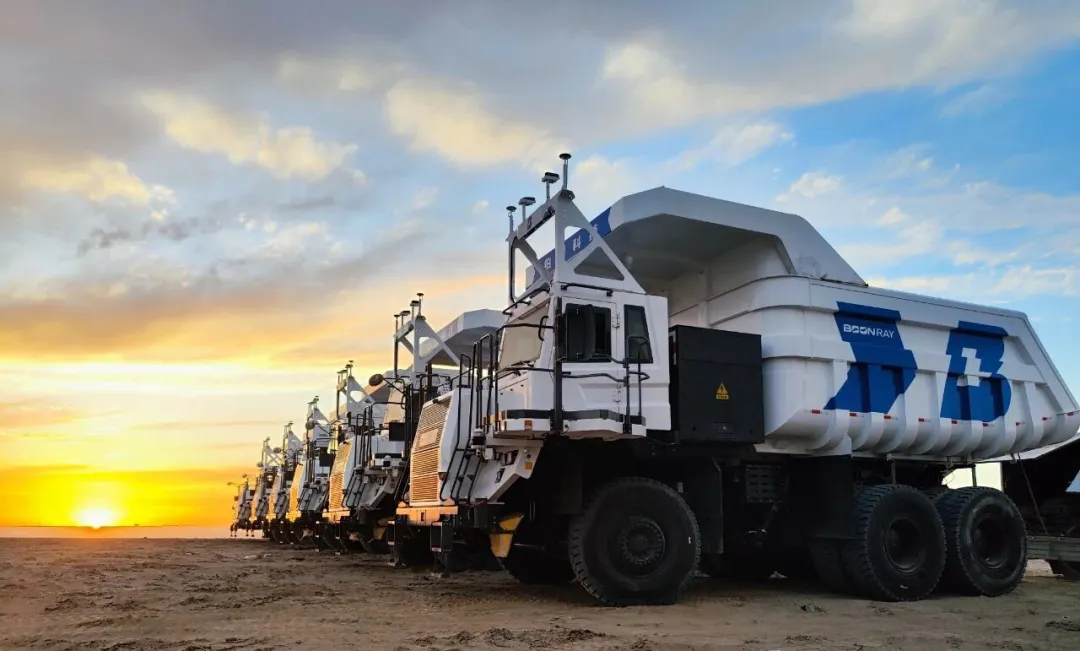
我国首个百台级纯电动无人矿卡集群投运
news flash· 2025-05-15 07:21
Core Viewpoint - The successful operation of China's first fleet of over 100 pure electric unmanned mining trucks marks a significant advancement in the country's autonomous mining technology, transitioning from experimental phases to large-scale application, thereby accelerating the development of smart mining in China [1] Industry Summary - The deployment of the unmanned mining truck fleet signifies a milestone in the application of autonomous technology within the mining sector, indicating a shift towards more efficient and innovative mining operations [1] - This development is expected to enhance the overall productivity and safety of mining activities, aligning with global trends towards automation and sustainability in resource extraction [1]