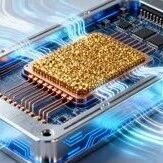
纳米铜膏

Search documents
中国攻克半导体材料世界难题!全球产业链格局或将改写
Sou Hu Cai Jing· 2026-01-17 07:05
Core Insights - The semiconductor industry is experiencing significant advancements, particularly in materials and technologies that enhance performance and reduce costs [1][2][3]. Group 1: Technological Breakthroughs - The team led by Academician Hao Yue from Xi'an University of Electronic Science and Technology has developed a novel "ion implantation-induced nucleation" technique, which has reduced the interface thermal resistance of aluminum nitride to one-third of its original value, addressing a long-standing issue in the industry [1]. - The new technology has increased the output power density of gallium nitride microwave power devices by 300%, leading to a 50% increase in detection range for chips of the same size and a 25% reduction in energy consumption for communication base stations [1]. Group 2: Industry Upgrades - Chongqing's semiconductor research has developed a nano-copper paste that replaces silver, resulting in a 70% reduction in packaging material costs, with applications in BYD and NIO's 800V high-voltage platforms, extending chip lifespan by 30% [2]. - Shanghai has established the first national demonstration line for two-dimensional semiconductors, with molybdenum disulfide-based processors matching the performance of silicon-based 90nm processes, laying the groundwork for key technologies below 1nm [2]. - Henan is building a complete industrial chain for "materials-equipment-process," with diamond semiconductor material production accounting for 60% of the national output, and a humidity sensor developed by Zhengzhou University showing a hundredfold increase in sensitivity [2]. Group 3: Application Explosions - New cooling technologies have reduced the power consumption of 5G base stations by 40%, increasing coverage in remote areas to 98% [3]. - Silicon carbide power modules have enabled electric vehicles to achieve over 1000 km of range with a charging time of just 15 minutes [3]. - Two-dimensional semiconductor chips have improved AI server energy efficiency by five times, with training costs for large models dropping by 60% [3]. - Diamond sensors have achieved single-molecule-level disease marker detection, with a 99.7% accuracy rate for early cancer diagnosis [3]. Group 4: Challenges Ahead - The defect density of two-dimensional semiconductor wafers remains three orders of magnitude higher than silicon-based materials, necessitating the development of atomic-level repair technologies [4]. - 75% of high-end etching machines and electron beam lithography machines are still reliant on imports, hindering the speed of process iteration [4]. - 90% of global EDA tools are controlled by foreign companies, posing challenges for domestic alternatives to overcome algorithmic barriers [4]. Group 5: Future Roadmap - According to Academician Wang Xi from the Chinese Academy of Sciences, the development of semiconductor materials in China requires a three-pronged approach: achieving full autonomy in 14nm processes by 2027 to support automotive electronics and industrial control needs, focusing on breakthroughs in third-generation semiconductor materials for 5G base stations and fast charging markets, and accelerating research on wide bandgap materials like diamond and gallium oxide for next-generation optoelectronic devices [5].

股市必读:10月31日光华科技现1笔折价10.02%的大宗交易 合计成交204.54万元
Sou Hu Cai Jing· 2025-11-02 21:37
Core Points - Guanghua Technology (002741) closed at 21.65 yuan on October 31, 2025, with a 2.07% increase and a turnover rate of 7.69% [1] - The total trading volume was 327,700 hands, with a transaction amount of 722 million yuan [1] Trading Information - On October 31, the net outflow of funds from major investors was 7.98 million yuan, while retail investors saw a net inflow of 28.40 million yuan [2][4] - A significant block trade occurred on the same day, with a discount of 10.02%, totaling 2.0454 million yuan [3][4] Company Responses - The company has received inquiries regarding its lithium sulfide purity and has stated that it customizes specialized chemicals based on client requirements [3] - The company has not confirmed any ongoing investigations by the regulatory authority and advised investors to check official announcements for updates [3]

纳米铜膏上车,全球首家
半导体行业观察· 2025-10-20 01:47
Core Viewpoint - Pingchuang Semiconductor has achieved a significant milestone by independently developing pressure-sintered nano copper paste, marking it as the first company in China to break through international barriers in third-generation semiconductor packaging materials and the first globally to apply nano copper paste in automotive projects [1][19]. Group 1: Product Development and Features - The company has developed chip-level and system-level copper pastes, with the first production line capable of producing 500 kg/month and a second line planned for 1000 kg/month [3]. - The chip-level copper paste (seCure-BC1113) features low-temperature pressure sintering, excellent thermal and electrical conductivity, and high bonding strength, suitable for various chip surface coatings [4]. - The system-level copper paste (seCure-BC0323) allows for low-temperature sintering at 200°C and can sinter areas up to 3500 mm², eliminating the need for additional silver plating [5]. Group 2: Technical Innovations - The developed copper paste materials have an ultra-wide operational window, allowing for over 48 hours of handling time before drying, which enhances production efficiency and reduces material waste [7]. - The sintering process is characterized by low temperature (40-90°C lower than traditional methods), low pressure (over 30% reduction), and short duration (5 minutes), improving energy efficiency and equipment compatibility [9]. - The technology effectively addresses oxidation issues in DBC and AMB substrates, enhancing the reliability and strength of sintered connections without the need for additional reduction steps [11][19]. Group 3: Market Impact and Future Prospects - The nano copper paste technology represents a dual breakthrough in performance and cost, with copper prices being only 1/10 of silver, and the cost of the paste being 1/3 of sintered silver [19]. - The thermal conductivity of the developed materials exceeds 200 W/(m·K), significantly outperforming traditional solder pastes, and the shear strength exceeds 60 MPa, with no risks of silver paste sulfidation or electromigration [19]. - The recognition from leading automotive companies for the application of this technology in electric vehicles and power electronics indicates strong market potential and future growth opportunities [19].