细胞肉

Search documents
谭天伟院士揭秘生物制造:30万亿美元未来产业的三大挑战和趋势
合成生物学与绿色生物制造· 2025-12-17 07:49
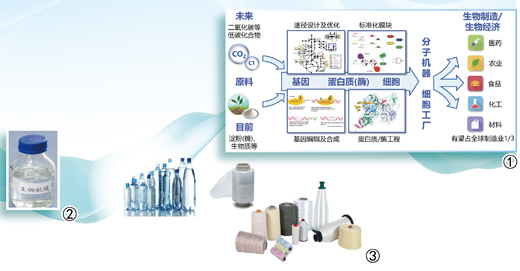
Core Viewpoint - The article emphasizes that China is poised to play a significant role in the future of biomanufacturing, which is expected to create an economic value exceeding $30 trillion by 2050, marking it as a core driver of the next industrial revolution [2][7]. Summary by Sections What is Biomanufacturing? - Biomanufacturing transforms living organisms, such as microorganisms and cells, into "smart factories" that produce various substances needed by humans. This process marks a fundamental shift from traditional manufacturing, which relies on fossil resources, to using renewable resources like sugar, straw, and carbon dioxide [2][3]. Importance of Biomanufacturing - Biomanufacturing is crucial for achieving carbon neutrality as it significantly reduces carbon emissions by utilizing renewable resources instead of fossil fuels. It allows for a broader range of raw materials and a greener manufacturing process, making factories resemble ecosystems [3]. - The potential for programmable manufacturing is immense, as scientists can design microorganisms to produce specific molecules, akin to writing code, thus unlocking vast possibilities [3]. Impact on Daily Life - In the food sector, cell-cultured meat and new food ingredients like microbial proteins are becoming mainstream. - The fashion industry is seeing innovations such as bio-silk from bacteria and biodegradable textiles from algae and fungi. - In construction, "bio-bricks" made from fungal mycelium can self-repair and absorb carbon dioxide, potentially transforming buildings into "green life forms." - Transportation is advancing with the production of aviation fuel from carbon dioxide, and biomanufacturing is also contributing to greener lubricants and tire rubbers. - In healthcare, biomanufacturing can streamline drug synthesis, enabling personalized medicine and potentially allowing hospitals to "print" drugs and organs [4]. Challenges and Future Trends - Biomanufacturing faces challenges such as the need for improved foundational capabilities in gene editing and enzyme engineering, difficulties in scaling from lab to industrial production, and the lack of a comprehensive policy and standards framework [5]. - Future trends include the integration of artificial intelligence in biomanufacturing, enabling rapid strain improvement, carbon cycling in manufacturing processes, and cross-industry collaborations that will create new industrial ecosystems [6]. Opportunities for China - China has advantages in fermentation capacity, industrial scale, and engineering experience. The government is actively promoting biomanufacturing as a new growth engine, positioning the country to take a leading role in this transformative industry [7].


生物制造:以生命为动力的未来工厂(院士讲科普)
Ren Min Ri Bao· 2025-12-12 22:00
Core Viewpoint - Biomanufacturing is emerging as a transformative industry that utilizes living organisms to produce essential materials, marking a shift from traditional manufacturing methods reliant on fossil fuels to more sustainable practices using renewable resources [5][6]. Group 1: Definition and Importance of Biomanufacturing - Biomanufacturing involves using microorganisms, animal, or plant cells to produce desired substances by designing and controlling their metabolic pathways [5]. - This industry combines traditional fermentation techniques with synthetic biology, allowing for the production of pharmaceuticals, flavors, plastics, and fuels from renewable resources like sugar and carbon dioxide [5][6]. - It is considered a future industry because it represents a new manufacturing path driven by life, rather than an extension of traditional industries [5]. Group 2: Environmental and Economic Impact - Biomanufacturing is crucial for achieving carbon neutrality goals, as it utilizes renewable resources instead of fossil fuels, enabling a "carbon cycle" approach [6]. - Predictions suggest that by 2050, approximately 60% of industrial products could be produced through biomanufacturing, potentially generating an economic value exceeding $30 trillion [6]. Group 3: Current Developments in China - China is accelerating its biomanufacturing industry, with government reports emphasizing the need to cultivate new growth engines, including biomanufacturing [7]. - The country has established leading advantages in fermentation capacity, industrial scale, and engineering experience, positioning itself favorably in the future development of this industry [7]. Group 4: Innovations and Applications - Biomanufacturing is reshaping traditional production logic, enabling the cultivation of lab-grown meat and the production of microbial proteins and synthetic dairy products without livestock [8]. - In the fashion industry, biomanufacturing offers sustainable alternatives, such as bio-silk and mycelium leather, which can replace petroleum-based textiles [8]. - In construction, "bio-bricks" made from fungal mycelium and mineral particles can self-repair and absorb carbon dioxide, contributing to eco-friendly building practices [8]. Group 5: Challenges and Future Trends - Key challenges include the need for foundational capabilities in gene editing, strain design algorithms, and metabolic pathway databases, which are currently weak in China [10]. - The transition from laboratory success to industrial application faces hurdles, including process complexity and cost control [11]. - Future trends indicate a convergence of artificial intelligence with biomanufacturing, enhancing the design of living organisms, and a shift towards carbon circular manufacturing, where factories can utilize carbon dioxide as a raw material [12].
从爆火到哑火,又一巨头退出中国:被捧上神坛的“人造肉”,快凉透了
创业邦· 2025-03-11 03:18
Core Viewpoint - The article discusses the decline of the plant-based meat industry, particularly focusing on Beyond Meat, which has faced significant revenue drops and operational challenges, leading to a halt in its operations in China and substantial layoffs [2][3][4]. Industry Overview - The plant-based meat sector initially gained momentum following Beyond Meat's successful IPO in 2019, which saw a 163% stock price increase on its first day, marking a significant moment in the industry [3][4]. - The rise of plant-based meat in China was fueled by collaborations with major food chains like KFC and Starbucks, which introduced various plant-based products to the market [8][12]. Market Dynamics - A surge in investment occurred in the plant-based meat sector in China from December 2019 to December 2020, with a reported 500% increase in investment events, accounting for 10% of the food and health product sector [11]. - Despite initial enthusiasm, the market has seen a decline in consumer interest, with many viewing plant-based meat as a novelty rather than a staple, leading to poor sales performance across retail and restaurant channels [4][16]. Consumer Sentiment - Consumer acceptance remains low, with only 32% of consumers in developed cities having tried plant-based meat, indicating a significant gap between awareness and actual consumption [16]. - A survey revealed that 74% of consumers are unwilling to repurchase plant-based meat products after initial trials, reflecting a negative perception of the product's health benefits and taste [17][18]. Challenges Faced - The high production costs and technical challenges in replicating the texture and flavor of real meat have hindered the growth of the plant-based meat industry, with many products failing to meet consumer expectations [17][19]. - Beyond Meat's financial struggles are exacerbated by the complexity and cost of its manufacturing processes, leading to increased losses and a challenging business model [19].