织锦

Search documents
从观光打卡迈向沉浸体验
Xin Lang Cai Jing· 2025-12-25 22:29
Core Insights - The development of the "Sanman" rural tourism complex in Menghan Town, Xishuangbanna, showcases the integration of traditional Dai culture with modern artistic forms, transforming tourism from mere sightseeing to immersive experiences [1][2] - Xishuangbanna aims to become a world-renowned tourist city, with a projected 280 million domestic and international visitors and a total tourism expenditure of 417.3 billion yuan during the 14th Five-Year Plan period [2] - Financial support is crucial for the growth of the cultural tourism industry in Xishuangbanna, with local banks providing targeted financing to enhance scenic areas and promote rural tourism [3] Group 1 - The "Sanman" complex combines cultural experiences, wellness living, and tourism services, leading to job creation and increased income for local farmers [1] - The region has introduced various innovative tourism activities, such as rainforest hiking and cultural festivals, to attract younger visitors and enhance the tourism landscape [2] - Local government initiatives focus on transforming idle resources into wellness centers and improving transportation and community facilities to create a 15-minute living circle for tourists [2] Group 2 - The agricultural bank in Xishuangbanna is actively engaging with the cultural tourism sector to meet financing needs, supporting upgrades and renovations of tourist attractions [3] - The integration of finance with cultural tourism aims to build a comprehensive consumption ecosystem, enhancing the overall quality and appeal of the tourism experience [3]
“手术”高水准 文物再青春
Ren Min Ri Bao Hai Wai Ban· 2025-05-29 23:04
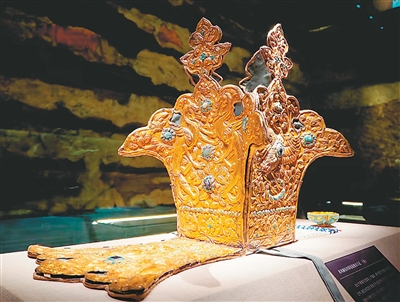
Core Insights - The article discusses significant advancements in scientific archaeology and cultural heritage preservation, highlighting the collaboration between various institutions in China to restore ancient artifacts and improve archaeological methodologies [5][17]. Group 1: Restoration of Artifacts - A crown from the Tubo period, discovered in Qinghai Province, was found in a severely deteriorated state, with a metal body thickness of only 200 micrometers, equivalent to three sheets of A4 paper [8][9]. - The restoration team utilized non-destructive techniques such as X-ray imaging and CT scans to analyze and accurately reposition 2,582 decorative beads on the crown, marking it as the most complex ancient ceremonial bead arrangement restored to date [9]. - The restoration involved over 10,000 precision welds, successfully reviving the crown's intricate design and showcasing the cultural exchange characteristics of the "Highland Silk Road" [9]. Group 2: Archaeological Discoveries - Two Tang Dynasty ceramic dragon heads were unearthed from the Hebei Xiong'an ancient city site, with their restoration presenting a significant challenge due to their fragmented state upon discovery [10][11]. - The restoration process included advanced techniques such as 3D imaging, ultrasonic cleaning, and virtual assembly, ultimately restoring the dragon heads to their original architectural form [11][12]. - The findings contribute to the understanding of dragon imagery in ancient Chinese culture and provide new materials for studying the evolution of dragon motifs [12]. Group 3: Collaborative Archaeological Efforts - The article highlights the establishment of a mobile protection laboratory for archaeological work in Uzbekistan, demonstrating a collaborative approach to archaeological preservation [13][14]. - The team successfully identified and preserved various artifacts, including a coin with clear inscriptions, which serves as evidence of ancient East-West cultural exchanges [14]. - The preservation of textiles and other materials from the site provides valuable insights into the development of textile technology along the Silk Road [14]. Group 4: Early Glass Bead Research - Research on early glass beads in China indicates that they originated from the Levant region and were likely transmitted through Xinjiang into Central China, supporting the existence of pre-Silk Road cultural exchanges [15][16]. - The study utilized compositional analysis and micro-CT technology to trace the source and transmission routes of these glass beads, reinforcing the narrative of early Eurasian civilization interactions [16].

去贵州当三天寨民,要花一个月戒断
3 6 Ke· 2025-04-28 08:37
Group 1 - The article highlights the appeal of spring as a season that encourages people to take a break from work and explore nature, particularly in places like Guizhou [1][3] - Young travelers are seeking unique experiences in Guizhou's villages, engaging in local traditions and activities rather than typical tourist attractions [3][4] - The transformation of previously isolated villages, such as Huawu Village, into popular travel destinations showcases the region's natural beauty and cultural richness [4][6] Group 2 - Huawu Village, once cut off from modern amenities, has become a camping hotspot due to its stunning landscapes and local hospitality [6][9] - Visitors can participate in hands-on cultural experiences, such as wax dyeing and traditional embroidery, which enhance their understanding of the local heritage [9][11] - The article emphasizes the unique cultural identity of the Tuntou people in Anshun, who maintain distinct traditions and languages, contributing to the region's diverse cultural tapestry [13][16] Group 3 - The Tuntou culture is characterized by a blend of military history and agricultural practices, with a focus on trade and community [16][19] - The article describes the architectural features of Tuntou villages, which include defensive structures and intricate designs that reflect their historical significance [19][21] - Cultural performances, such as local theater, play a vital role in preserving the history and values of the Tuntou people, providing entertainment and a sense of community [21][23] Group 4 - The article suggests that visitors can experience authentic Tuntou culture in places like Benzhai, which retains traditional architectural styles and community values [21][25] - The region's hospitality is highlighted through local accommodations that offer immersive experiences, allowing guests to engage with the culture and environment [25][28] - The vibrant cultural scene in places like Zhaoxing Dong Village showcases the integration of traditional music and dance, creating a lively atmosphere for both locals and tourists [28][31] Group 5 - The article concludes by emphasizing the unique charm of Guizhou, where diverse cultures and natural beauty coexist, offering endless opportunities for exploration and discovery [31][34] - The region's culinary diversity and local ingredients reflect the rich cultural heritage, making it a destination for food enthusiasts [34]