绳驱机器人

Search documents
扒了一下今年各家具身公司的量产情况和订单金额......
具身智能之心· 2025-12-09 03:44
Core Insights - The article discusses the current state of mass production of embodied robots, highlighting the commitments and developments from various companies in the industry [1][5]. Group 1: Company Developments - Hyundai Motor has committed to deploying tens of thousands of Atlas robots in its manufacturing and logistics operations, addressing production capacity challenges by integrating automotive manufacturing expertise to support Boston Dynamics in scaling robot production [2][4]. - UTree Technology has not disclosed specific order volumes for the year but anticipates annual revenue exceeding 1.2 billion [7]. - ZhiYuan Robotics announced the cumulative production of 5,000 robots, with applications across entertainment, manufacturing, logistics, and scientific research [8]. - UBTECH Robotics secured a significant order worth 264 million yuan for its Walker S2 robot, which can autonomously change batteries, and has established contracts for various industrial applications [10][11]. - Tesla's Optimus robot is positioned as a core future asset, with a target of producing 5,000 units by the end of December 2025 and scaling up to 100,000 units by the end of 2026 [14]. Group 2: Order and Production Capacity - UBTECH's Walker series has achieved a cumulative order volume of 1.3 billion yuan, with a production capacity of 300 units per month, expecting to exceed 500 units in deliveries by 2025 [12]. - The partnership between Shenzhen Huizhi and ZhiPing aims to deploy over 1,000 embodied intelligent robots in logistics and manufacturing processes over three years [15]. - Star Dust Intelligent announced a strategic cooperation for a thousand-unit order of humanoid robots, focusing on industrial applications and leveraging AI technology for enhanced operational capabilities [17][19]. - Songyan Power expects to surpass 2,500 units in orders for bio-inspired and educational robots, with total order value exceeding 100 million yuan [20]. - Original Force Unlimited signed a strategic cooperation agreement worth 260 million yuan with a cultural tourism group [22]. Group 3: Market Trends and Future Outlook - The article indicates a growing trend in the deployment of humanoid robots across various sectors, including industrial, manufacturing, and logistics, with expectations for expansion into more niche markets such as 3C and automotive [19]. - The capital market performance of companies like Zhongqing Robotics shows significant investment interest, with plans to deliver 2,000 units over three years and collaborations with major firms like JD and NVIDIA [24]. - Leju Robotics has ramped up its delivery pace from hundreds to nearly a thousand units, with a target of 2,000 units for the year [25].


星尘智能CEO来杰:当AI开始操作世界,具身智能的“Windows时刻”何时到来?|「锦秋会」分享
锦秋集· 2025-11-04 12:51
Core Viewpoint - The article discusses the evolution of embodied intelligence in robotics, emphasizing the need for an interactive layer to facilitate user engagement and application, akin to the role of operating systems in personal computers [6][10][15]. Group 1: Industry Insights - The embodied intelligence industry is currently hindered by a lack of an interactive layer, which prevents widespread application despite advancements in algorithms and computing power [5][6]. - The industry is experiencing continuous influx of capital and talent, with ongoing debates about the correct path for embodied intelligence, whether it should focus on full automation or human-robot collaboration [6][10]. Group 2: Company Overview - Stardust Intelligence, founded in 2022, has focused on the development and application of humanoid robots, achieving mass production and deployment in various scenarios [13][14]. - The company has successfully created a humanoid robot capable of playing the piano, showcasing its ability to perform complex tasks through coordinated movement [13][41]. Group 3: Technological Framework - The CEO of Stardust Intelligence, Lai Jie, proposes a three-layer structure for embodied intelligence: the terminal (hardware), the interactive layer (remote operation system), and the driving layer (AI models) [6][15][21]. - Lai Jie draws parallels between the current state of robotics and the early days of personal computers, suggesting that a user-friendly interface is essential for broader adoption [19][20]. Group 4: Future Directions - The company aims to enhance the understanding of robotics through real-world applications, iterating products based on practical experiences rather than theoretical assumptions [24]. - The focus is on developing a unified platform and providing tools and resources to support the industry, particularly in areas like physical intelligence and safety systems [63][64].

机器人行业千台级订单敲定,侧重工业制造等场景
Di Yi Cai Jing· 2025-09-02 07:57
Group 1 - The core point of the article is the strategic cooperation between Stardust Intelligent (Shenzhen) Co., Ltd. and Shanghai Xiangong Intelligent Technology Co., Ltd. to fulfill a large-scale order of 1,000 humanoid robots over the next two years, focusing on industrial, manufacturing, warehousing, and logistics applications [3][4] - The order represents a significant milestone in the robotics industry, as achieving a scale of 1,000 units is rare and indicates a growing trend towards commercial orders in the sector [3] - The collaboration aims to leverage the strengths of both companies, with Stardust focusing on AI robot platform development and Xiangong specializing in controller systems, thus creating a comprehensive AI robot platform [3][4] Group 2 - The initial deployment scenarios for the order will primarily target industrial, manufacturing, warehousing, and logistics, with potential future expansion into sectors like 3C, automotive, and automation equipment [4] - The robotics industry is experiencing a peak in development, with active financing in the primary market and diverse technological breakthroughs, indicating a shift from demo scenarios to actual customer trials for humanoid robots in logistics [5] - Stardust's rope-driven technology, while not new, faces engineering challenges such as friction loss and control algorithm complexity, which the company aims to address through advanced modeling techniques and optimization of manufacturing processes [4]

绳驱机器人亮相世界机器人大会 上市公司积极迭代关键腱绳材料
Zheng Quan Ri Bao· 2025-08-10 16:55
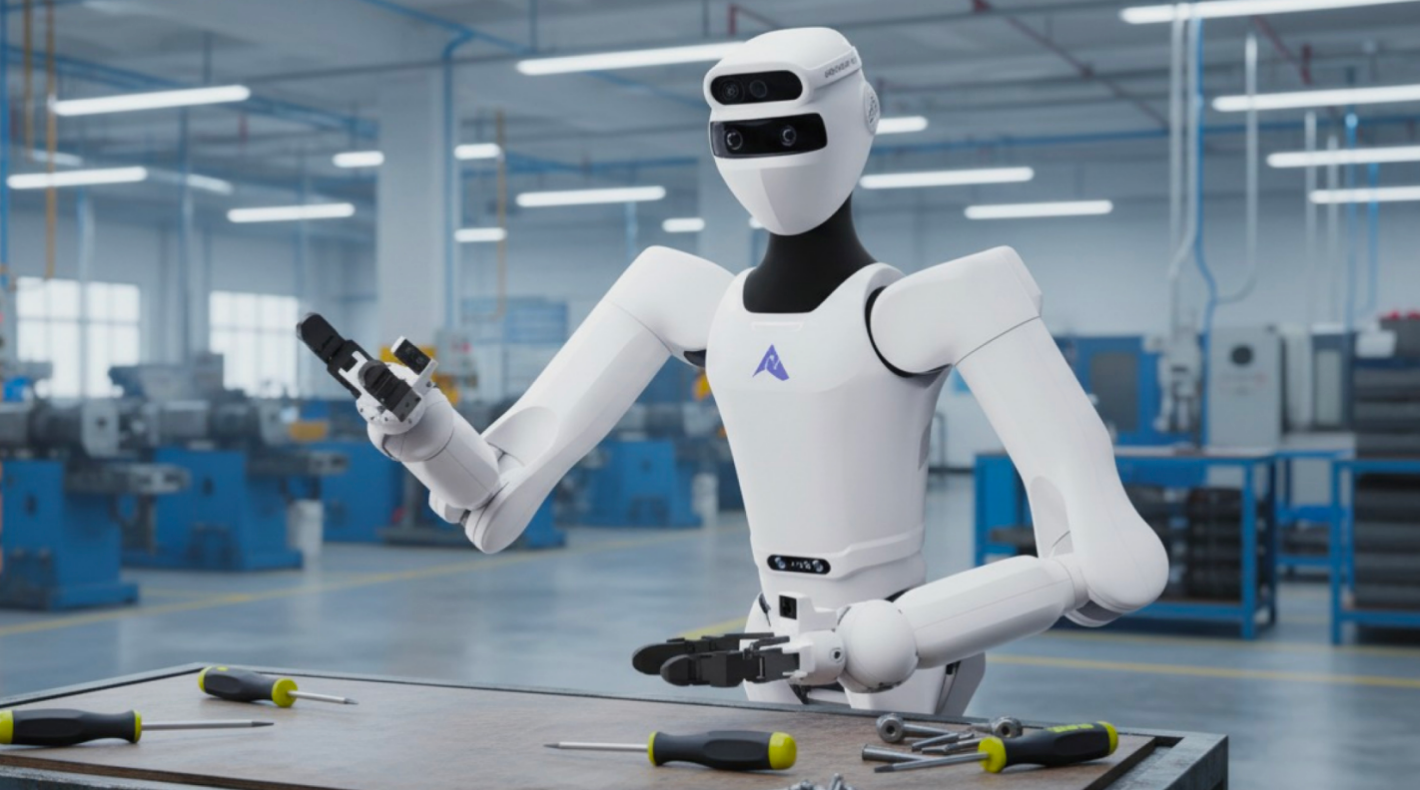
Core Insights - The development of tendon ropes, a key component of cable-driven robots, is accelerating among listed companies and startups to meet future demands in robotics [1][2] Group 1: Industry Overview - Cable-driven robots are characterized by their lightweight, flexibility, high safety performance, energy efficiency, and strong biomimetic capabilities [1] - Current prototypes of cable-driven robots have been developed by various companies, including a university's octopus-like robotic arm capable of handling fragile and irregular objects [1] Group 2: Company Developments - Jiangsu Henghui Security Co., Ltd. is actively developing ultra-high molecular weight polyethylene fibers for use in robotic tendons, having completed multiple rounds of sample testing with leading robotics firms [2] - Shandong Daye Co., Ltd. is focusing on the development of metal tendons for cable-driven robots, having received small batch orders based on their research in high-performance steel wire [2] - Shandong Nanshan Zhishang Technology Co., Ltd. is producing ultra-high molecular weight polyethylene fibers with properties suitable for robotics, and is in the process of sending samples to various downstream robotics companies [2] Group 3: Material Innovations - Some companies are exploring carbon fiber materials for tendon development due to their superior tensile strength, corrosion resistance, and fatigue performance compared to metals and polymers [3]