Spot四足机器人

Search documents
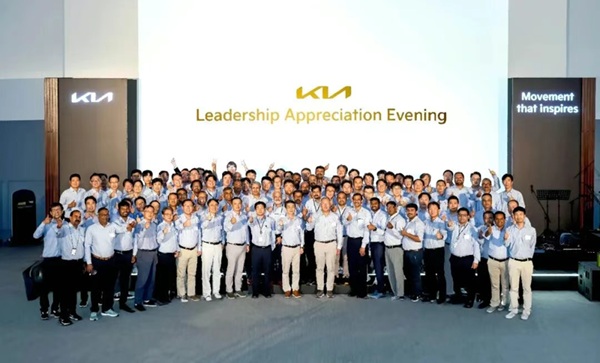
郑义宣10天连访三国 现代汽车集团以闪电式布局抢占全球产业高地
Zhong Guo Qi Che Bao Wang· 2026-01-22 01:29
Core Insights - Hyundai Motor Group's Chairman Chung Eui-sun initiated the new year with a "global lightning management action," emphasizing a customer-centric, technology-driven, and localization-based strategy to achieve sustainable global leadership [1] Group 1: China - Focusing on Hydrogen and Battery Collaboration - During a visit to China, Chung Eui-sun attended the Korea-China Business Forum and engaged in discussions with leaders from major Chinese companies, reinforcing collaboration foundations [3] - Meetings with CATL focused on joint research and stable supply of power batteries, essential for electric vehicle operations [3] - Discussions with Sinopec centered on hydrogen energy collaboration, with Hyundai's HTWO Guangzhou factory already in mass production of fuel cell systems [3] - Hyundai plans to expand its electric vehicle lineup in China to six models by 2030, while Kia aims to launch at least one new electric vehicle annually [3] Group 2: United States - Embracing AI and Robotics - At CES 2026, Chung Eui-sun highlighted the importance of technology partnerships, meeting with Nvidia's CEO to discuss AI chips and data centers [4] - Hyundai signed a contract to procure 50,000 Blackwell GPUs and plans to co-establish an Nvidia AI Technology Center [4] - Boston Dynamics showcased its humanoid robot Atlas and received recognition for its MobED mobile robot platform, indicating a strong focus on robotics innovation [5] Group 3: India - Strengthening Local Manufacturing and Brand Identity - Chung Eui-sun visited three key production bases in India, emphasizing the importance of local manufacturing capabilities [6] - Hyundai's total production capacity in India exceeds 1.5 million units, securing a 20% market share [7] - The company aims to position India as a global manufacturing and export hub, focusing on localizing the supply chain for critical components [7] - Chung expressed a commitment to building a "national brand" in India, highlighting the importance of community engagement and employee support [7][8] Group 4: Social Responsibility and Community Engagement - Hyundai has invested significantly in social responsibility initiatives in India, including support for disabled athletes and mobile clinics for underserved communities [8] - The company collaborates with local educational institutions to develop high-end technical talent, demonstrating a commitment to community integration [8] - Chung's visit was not merely ceremonial but a comprehensive strategy encompassing technology, production, and community engagement [8]

扒了一下今年各家具身公司的量产情况和订单金额......
自动驾驶之心· 2025-12-14 02:03
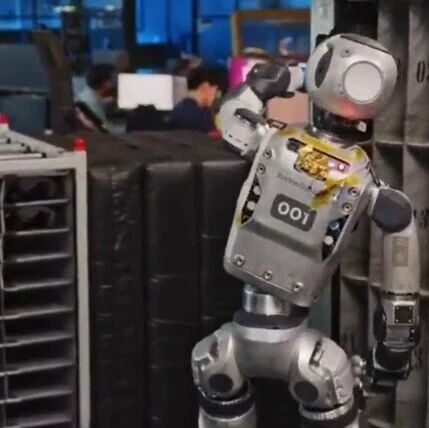
Core Insights - The article discusses the current state and future prospects of humanoid robot mass production, highlighting significant orders and developments from various companies in the industry [3][8]. Group 1: Company Developments - Hyundai Motor has committed to deploying thousands of Atlas robots in its manufacturing and logistics operations, aiming to enhance production capabilities in collaboration with Boston Dynamics [4][6]. - Yushu Technology expects annual revenue to exceed 1.2 billion, although specific order volumes for the year have not been disclosed [9]. - ZhiYuan Robotics announced a cumulative production of 5,000 robots, with applications across entertainment, manufacturing, and logistics sectors [10]. - UBTECH Robotics secured a significant order worth 264 million for its Walker S2 robot, which is designed for inspection and maintenance tasks [12]. - By November, UBTECH's Walker series had accumulated orders totaling 1.3 billion, with a monthly production capacity of 300 units and a projected delivery of over 500 units in 2025 [14]. Group 2: Strategic Partnerships and Collaborations - Shenzhen Huizhi and ZhiPing Technology announced a strategic partnership to deploy over 1,000 humanoid robots in logistics and manufacturing processes over the next three years [17]. - Stardust Intelligence formed a strategic cooperation with Shanghai Xiangong Intelligent Technology, focusing on a thousand-unit order for humanoid robots, leveraging complementary strengths in core components and applications [20][22]. - Original Force Unlimited signed a strategic cooperation agreement worth 260 million with a cultural tourism group [25]. Group 3: Market Trends and Projections - Tesla's Optimus robot is positioned as a core future asset, with a target of producing 5,000 units by the end of December 2025 and scaling up to 100,000 units by the end of 2026 [16]. - The article indicates a growing trend in the humanoid robot market, with various companies reporting significant order volumes and expanding production capabilities [8][28].
扒了一下今年各家具身公司的量产情况和订单金额......
具身智能之心· 2025-12-09 03:44
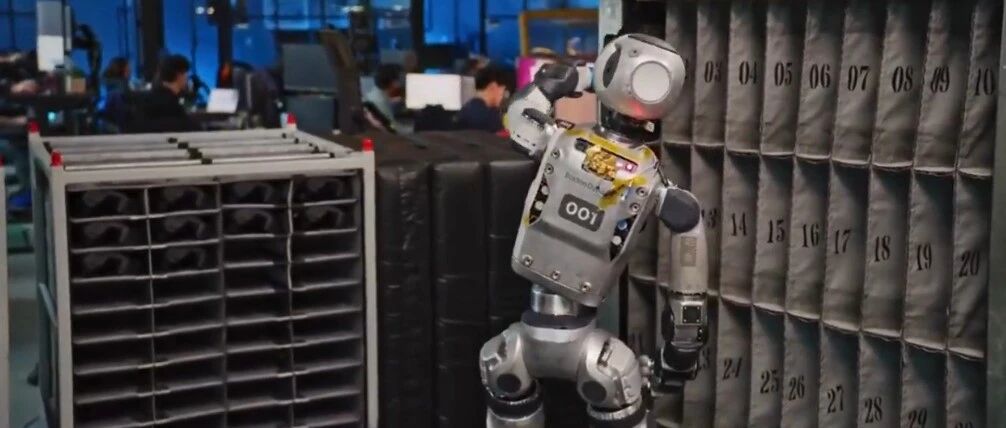
Core Insights - The article discusses the current state of mass production of embodied robots, highlighting the commitments and developments from various companies in the industry [1][5]. Group 1: Company Developments - Hyundai Motor has committed to deploying tens of thousands of Atlas robots in its manufacturing and logistics operations, addressing production capacity challenges by integrating automotive manufacturing expertise to support Boston Dynamics in scaling robot production [2][4]. - UTree Technology has not disclosed specific order volumes for the year but anticipates annual revenue exceeding 1.2 billion [7]. - ZhiYuan Robotics announced the cumulative production of 5,000 robots, with applications across entertainment, manufacturing, logistics, and scientific research [8]. - UBTECH Robotics secured a significant order worth 264 million yuan for its Walker S2 robot, which can autonomously change batteries, and has established contracts for various industrial applications [10][11]. - Tesla's Optimus robot is positioned as a core future asset, with a target of producing 5,000 units by the end of December 2025 and scaling up to 100,000 units by the end of 2026 [14]. Group 2: Order and Production Capacity - UBTECH's Walker series has achieved a cumulative order volume of 1.3 billion yuan, with a production capacity of 300 units per month, expecting to exceed 500 units in deliveries by 2025 [12]. - The partnership between Shenzhen Huizhi and ZhiPing aims to deploy over 1,000 embodied intelligent robots in logistics and manufacturing processes over three years [15]. - Star Dust Intelligent announced a strategic cooperation for a thousand-unit order of humanoid robots, focusing on industrial applications and leveraging AI technology for enhanced operational capabilities [17][19]. - Songyan Power expects to surpass 2,500 units in orders for bio-inspired and educational robots, with total order value exceeding 100 million yuan [20]. - Original Force Unlimited signed a strategic cooperation agreement worth 260 million yuan with a cultural tourism group [22]. Group 3: Market Trends and Future Outlook - The article indicates a growing trend in the deployment of humanoid robots across various sectors, including industrial, manufacturing, and logistics, with expectations for expansion into more niche markets such as 3C and automotive [19]. - The capital market performance of companies like Zhongqing Robotics shows significant investment interest, with plans to deliver 2,000 units over three years and collaborations with major firms like JD and NVIDIA [24]. - Leju Robotics has ramped up its delivery pace from hundreds to nearly a thousand units, with a target of 2,000 units for the year [25].

“友邦惊诧”遭遇中国速度
Guan Cha Zhe Wang· 2025-12-02 06:44
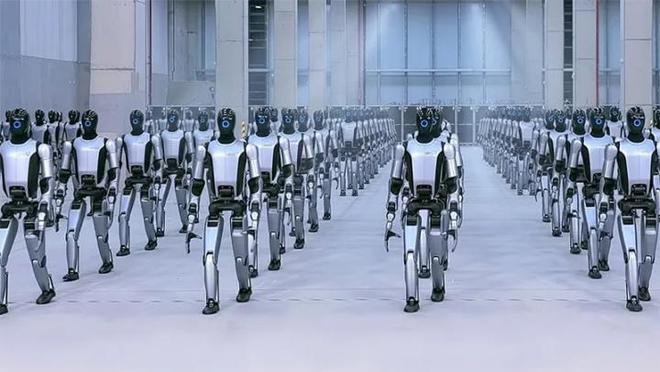
Core Viewpoint - The video released by Chinese robotics company UBTECH showcasing hundreds of Walker S2 humanoid robots has sparked controversy, primarily questioning its authenticity rather than the technology itself, highlighting a gap in technological perception and a potential shift in industry power dynamics [1][3][12] Industry Characteristics - The humanoid robotics industry is a complex system engineering field that integrates multiple technologies, including mechanical structures, motor drives, sensors, AI algorithms, and battery energy, reflecting the comprehensive capabilities of a country's manufacturing base [3][4] - Shenzhen's "Robot Valley" exemplifies a dense industrial ecosystem where hundreds of robotics companies and component suppliers are located within walking distance, significantly reducing design-to-prototype cycles and enabling rapid iteration [4][5] Cost Control and Market Position - Chinese humanoid robotics companies benefit from long-term accumulation in core components like motors, batteries, and sensors, leading to significant cost advantages. For instance, a humanoid robot priced under 10,000 RMB was recently launched, demonstrating high performance despite its low cost [4][5] - The Chinese government supports the robotics industry by providing real-world application scenarios, which helps companies identify viable business models and accelerates technology iteration [5][10] Comparison with Western Counterparts - In contrast to the rapid development of Chinese humanoid robotics, Western companies like Boston Dynamics face challenges in commercialization despite having advanced technologies. The company has changed ownership multiple times due to difficulties in achieving profitability [6][10] - Western robotics firms often struggle with the paradox of being technologically advanced but commercially lagging, as they find it hard to scale their innovations into practical applications [6][7] Market Dynamics and Future Outlook - The humanoid robotics sector is at a pivotal moment, similar to the early smartphone industry, where the ability to mass-produce at low costs will determine success. China holds a favorable position due to its complete supply chain, large domestic market, and supportive policies [10][12] - The diversity of the Chinese humanoid robotics market, with around 200 startups focusing on various applications, contrasts sharply with the Western market dominated by a few giants, fostering faster technological iteration and richer application exploration [8][10] Marketing and Perception - The controversy surrounding the authenticity of UBTECH's video may have been a strategic marketing move to generate global attention, similar to previous instances in the Chinese tech industry [9][12] - The skepticism from Western observers reflects a deeper anxiety about the changing competitive landscape in the robotics industry, as they struggle to reconcile their perceptions with the rapid advancements made by Chinese companies [11][12]
中国机器人在韩国需求量渐起,一中国机器人企业:每天都要接待韩国参观团体
Huan Qiu Shi Bao· 2025-10-09 23:06
Core Insights - The APEC informal meeting in South Korea at the end of October will focus on the competitive and cooperative landscape in the robotics sector between China and South Korea [1] - Chinese robotics companies are preparing to mass-produce robots tailored to the South Korean market by the end of this year [1] Group 1: Market Demand and Opportunities - There is a strong demand for robotics in South Korea, with numerous inquiries from Korean enterprises and educational institutions to Chinese companies [2] - The South Korean government is investing 1 trillion KRW (approximately 0.84 billion USD) by 2030 to enhance humanoid robot technology and support related R&D projects [1][3] - Chinese companies, such as Hangzhou Yundongchu Technology, are experiencing significant interest from South Korean clients, indicating a growing market for Chinese robotics products [2][3] Group 2: Competitive Landscape - South Korean companies like Hyundai and Samsung are actively investing in robotics, with Hyundai acquiring 80% of Boston Dynamics for 800 million USD and Samsung purchasing a stake in Rainbow Robotics [3] - Despite the advancements in South Korea, challenges remain in developing competitive bipedal humanoid robots, with most local products still in research and educational phases [4] Group 3: Product Development and Innovation - Hangzhou Yundongchu has developed industrial-grade robots for various applications, including power inspection and emergency response, with plans to export their products to Singapore and South Korea [3] - The company has introduced the X30 quadruped robot and the M20 wheeled robot, which are gaining traction in the South Korean market due to their competitive pricing and operational experience [4] Group 4: Collaboration and Integration - There is a need for strong partnerships between Chinese and South Korean companies to integrate technologies, such as connecting robots to control platforms for real-time monitoring [7] - Chinese robotics firms are generally more open to collaboration and customization, allowing for "second development" opportunities that cater to local market needs [8] Group 5: Production Capacity and Supply Chain - The rapid increase in demand for robotics has led to challenges in production capacity, with some partners expressing concerns over long delivery times [8] - Chinese companies are expanding their manufacturing capabilities, with plans to establish new factories to meet the growing demand in South Korea [8][9]

波士顿动力机器狗参加《美国达人秀》,大秀劲歌热舞获全票晋级;腾讯开源混元3D 2.1大模型丨AIGC日报
创业邦· 2025-06-15 00:48
Group 1 - Tencent announced the open-source release of the Mixyuan 3D 2.1 model at CVPR 2025, with over 1.8 million downloads on Hugging Face [1] - The German government discussed with NVIDIA CEO Jensen Huang the establishment of an autonomous AI infrastructure to enhance Germany's AI ecosystem, with plans for joint investments with industrial partners [1] - Boston Dynamics' Spot robots performed a choreographed dance on "America's Got Talent," impressing judges and advancing to the next round, showcasing the capabilities of their proprietary Choreographer software [1] - China successfully conducted its first invasive brain-computer interface clinical trial, marking it as the second country globally to enter this stage of clinical trials in this technology [1]