美团无忧保洁

Search documents
刘强东和滴滴程维杀入家政市场,不拼司机拼上阿姨了?
Sou Hu Cai Jing· 2025-12-28 23:10
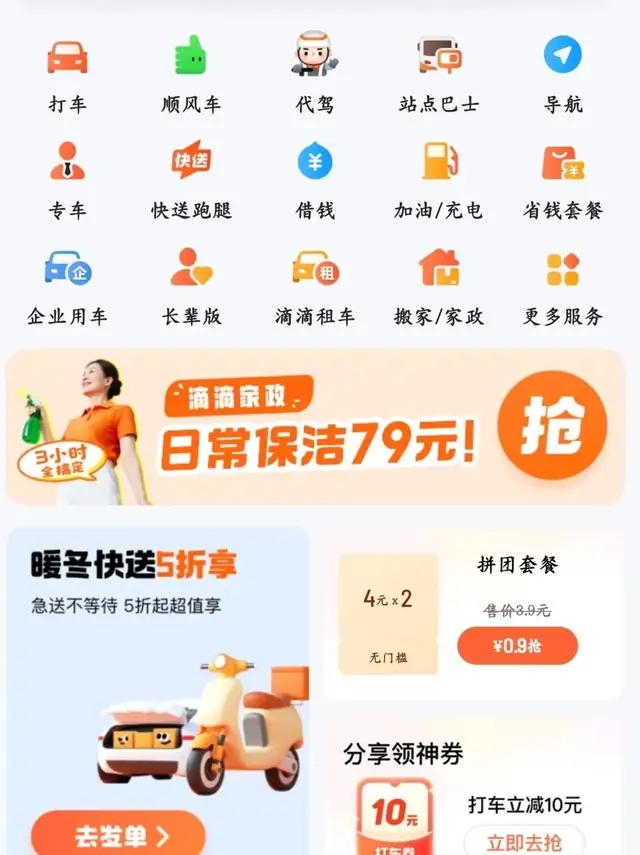
Core Insights - Didi has quietly launched a home service channel, offering services at competitive prices, indicating a strategic shift towards the home service market [2][4] - Major internet companies like Meituan and JD.com are also entering the home service sector, driven by slowing user growth and the potential for new revenue streams [4][5] - The home service market is projected to reach 1.23 trillion yuan in revenue by 2024, with a compound annual growth rate (CAGR) exceeding 18% [5][6] Market Overview - The home service industry is characterized by low concentration, with major players like Didi, Meituan, and JD.com leveraging their user bases and technology to gain market share [6][7] - The market is expected to grow significantly, with a forecasted size of 2.5 trillion yuan by 2030, driven by demographic changes and rising consumer demand [7][8] - High-end home services, such as elderly care and premium cleaning, are leading market growth, contributing to 65% of the market increment from 2020 to 2025 [6][7] Competitive Landscape - Didi, Meituan, and JD.com are utilizing their existing logistics and user engagement strategies to enhance their home service offerings, creating a synergy between their core businesses and new services [9][10] - These companies are adopting aggressive pricing strategies to capture market share, similar to their initial approaches in their primary business areas [11][13] - The integration of technology, such as AI and smart scheduling, is expected to improve service efficiency and customer satisfaction [10][14] Consumer Perspective - Consumers are benefiting from lower prices and improved service quality, with many reporting better experiences compared to traditional service providers [5][6] - The home service market is seen as a significant opportunity for consumers, with the potential for substantial savings and convenience [5][6] Future Outlook - The entry of major internet companies into the home service sector is viewed as a transformative move, potentially leading to the standardization of services and improved operational efficiencies [15][16] - The competition in the home service market is just beginning, with significant potential for growth and innovation in service delivery [15][16]




当滴滴的算法,撞上家政阿姨的“非标”人性
3 6 Ke· 2025-12-11 09:55
Core Insights - Didi is expanding into the home services sector, offering cleaning services across 41 cities in China, reflecting a shift from high-tech ambitions to practical, everyday services [1][4][14] - The home services market in China is highly fragmented, with a market size of 1.16 trillion yuan in 2023, expected to exceed 1.3 trillion yuan by 2026, indicating significant potential for platform consolidation [5][11] - Didi's entry into home services is driven by a need for defensive strategies and user retention, focusing on high-frequency services to complement its existing offerings [6][10] Market Dynamics - The home services industry is characterized by low profit margins, with traditional companies averaging a net profit margin of only 5%, contrasting sharply with the high margins typically seen in tech [10][11] - Didi's approach involves a "light asset" model, partnering with third-party service providers rather than directly employing service personnel, which presents challenges in service quality control [8][9][14] - The industry suffers from high employee turnover and a lack of quality service providers, complicating Didi's efforts to ensure reliable service delivery [8][10] Competitive Landscape - Didi's competitors, such as Meituan and JD, are also entering the home services market, employing different strategies that emphasize service control and quality assurance [14][15] - The home services market is described as a "lemon market," where information asymmetry is prevalent, making it crucial for Didi to establish a transparent and trustworthy evaluation system to gain consumer trust [14][15] Strategic Implications - Didi's move into home services is seen as a necessary step to diversify its business model and enhance cash flow through prepayment models common in the industry [13][14] - The company aims to leverage user data from home services to create more detailed consumer profiles, potentially increasing its competitive edge [13][14] - The success of Didi's home services will depend on its ability to understand and address the unique challenges of the industry, including the emotional and subjective nature of service quality [7][15]