聚合物固态电池

Search documents
中石化,聚合物固态电池微电网示范项目
DT新材料· 2026-03-20 16:05
Core Viewpoint - China Petroleum & Chemical Corporation (Sinopec) has successfully launched a polymer solid-state battery microgrid demonstration project in Suzhou, Jiangsu, marking the commercial application of solid-state battery technology [1] Group 1: Project Overview - The project was developed collaboratively by Sinopec's sales company, the Research Institute of Petroleum, and Jiangsu Petroleum, utilizing Sinopec's self-developed polymer solid-state battery technology and an intelligent microgrid system [1] - The project features the first application of TOPCon flexible photovoltaic components and perovskite photovoltaic components within the system [1] Group 2: Technology and Safety - The solid-state battery technology replaces liquid electrolytes with solid electrolytes, enhancing safety by significantly reducing the risk of flammability and explosion [1] - The polymer solid electrolyte developed by the Research Institute has been tested and passed stringent safety tests, including puncture and thermal runaway tests, ensuring reliability for energy storage applications at gas stations [1] Group 3: Performance and Results - The project has improved the energy storage cabinet capacity and implemented an intelligent microgrid control system tailored to the operational needs of the Baiyun comprehensive energy station [1] - After the upgrade, the peak daily charging capacity increased by 47% compared to before the renovation, demonstrating significant effectiveness in green electricity application and stable operation of the energy storage system [1]


青岛:锚定“双碳”目标,推动绿色低碳高质量发展
Zhong Guo Fa Zhan Wang· 2026-02-02 09:38
Core Viewpoint - Qingdao City is committed to achieving its "dual carbon" goals by promoting green transformation across key sectors such as energy, industry, construction, transportation, and technology, leading to significant progress in green, low-carbon, and high-quality development by 2025 [1] Group 1: Policy and Mechanism Optimization - The municipal government emphasizes high-level planning for "dual carbon" initiatives, formulating major policies and addressing significant issues to promote green and low-carbon development [2] - A comprehensive implementation plan for accelerating green transformation has been issued, aiming to create a resource-saving and environmentally friendly spatial layout, industrial structure, and lifestyle [2] - Various departments have established a responsibility list for key projects and policies to support green and low-carbon transformation [2] Group 2: Financial and Tax Support - Financial institutions in Qingdao have issued loans totaling 183.6 billion yuan, with 10 billion yuan allocated to 24 key carbon reduction projects, resulting in a carbon reduction of 23.6 million tons [3] - Tax incentives have been implemented, with 1.866 billion yuan in purchase tax exemptions for new energy vehicles and additional exemptions for energy-saving products [3] Group 3: Energy Structure Optimization - Coal consumption is maintained below 30%, with non-fossil energy consumption reaching 13.6%, a year-on-year increase of 2.8% [4] - Energy efficiency has improved, with energy intensity decreasing by 5.6% year-on-year, and Qingdao's carbon output efficiency rated as A high-efficiency class [4] Group 4: Manufacturing and Industrial Upgrades - The city has allocated approximately 800 million yuan for technological upgrades, benefiting over 360 enterprises, with notable achievements in energy efficiency [5] - A total of 67 national-level green factories and 66 provincial-level green factories have been recognized, promoting green manufacturing [5] Group 5: Green Construction and Urban Development - Qingdao has issued plans for green urban construction, aiming to establish a framework for green development and promote energy-efficient buildings [7] - Over 1.318 million square meters of energy-efficient buildings have been completed, with a significant focus on rural clean heating improvements [7] Group 6: Transportation and Infrastructure Development - The city has made strides in green transportation, with 100% of new energy buses in operation and significant advancements in electric vehicle infrastructure [9] - The promotion of green ports and shipping corridors has led to a 75% increase in shore power usage [8] Group 7: Innovation and Technology Advancement - Qingdao is advancing key technology projects in green and low-carbon sectors, with funding allocated for research in hydrogen energy and solid-state batteries [10] - The establishment of engineering research centers and support for solid-state battery projects are part of the city's innovation strategy [10] Group 8: Future Directions - Qingdao will continue to deepen its carbon peak pilot city construction, focusing on energy, industry, urban construction, transportation, and public institutions to enhance energy efficiency and carbon reduction [11]
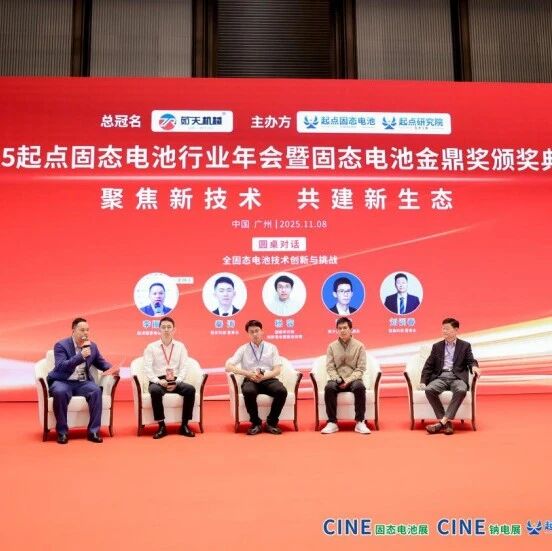
圆桌对话:全固态电池技术创新与挑战
起点锂电· 2025-11-08 12:40
Core Viewpoint - The 2025 Solid-State Battery Industry Annual Conference highlighted the rapid advancements and challenges in solid-state battery technology, emphasizing the need for innovation and collaboration within the industry to overcome existing barriers and achieve commercialization. Group 1: Industry Trends and Developments - The solid-state battery industry is experiencing significant technological advancements, with improvements in materials and battery processes noted in recent reports [5] - The industry is still facing challenges in achieving cost-effective mass production, as the current supply chain is not as mature as that of liquid batteries, necessitating collective efforts to reduce costs [6] - The timeline for mass production is projected between 2027 and 2030, with expectations for substantial commercial progress during this period [13] Group 2: Technical Challenges and Innovations - Key challenges for solid-state batteries include safety and energy density, with current materials like sulfide batteries still posing risks under certain conditions [7][8] - The industry recognizes that while solid-state batteries are perceived as a solution to many issues faced by lithium-ion batteries, they are not without their own set of challenges [9] - Innovations in polymer electrolytes are being pursued, with a focus on improving ionic conductivity and simplifying mass production processes [6][12] Group 3: Market Dynamics and Future Outlook - The solid-state battery market is expected to grow, driven by strategic national interests and the need for safer, more efficient energy storage solutions [13] - The industry is currently exploring various sulfide solid electrolyte routes, with no definitive consensus on the best approach, indicating ongoing research and development efforts [14] - The importance of environmental stability in battery production is emphasized, particularly for applications in aerospace and military sectors, which require high reliability [10][11]