硫化物固态电解质

Search documents
固态电池技术路线与商业化展望(附35页PPT)
材料汇· 2026-03-31 15:31
Group 1 - The core viewpoint of the article emphasizes the advantages of solid-state batteries over traditional liquid electrolyte lithium-ion batteries, particularly in terms of safety, energy density, and cycle life [3][5][6]. - Solid-state batteries utilize non-flammable solid electrolytes, which significantly reduce the risks of fire and explosion associated with liquid electrolytes [3][5]. - The article highlights that solid-state batteries can achieve over 10,000 charge cycles, making them suitable for applications in electric vehicles and energy storage systems [5][6]. Group 2 - The structure of solid-state batteries consists of five core components: cathode material, electrolyte, separator, anode material, and current collector, which collectively influence performance and manufacturing challenges [7]. - Various solid electrolyte technologies are compared, with sulfide-based electrolytes showing superior ionic conductivity and performance, while oxide-based electrolytes offer better stability [10][11]. - The article discusses the challenges in the industrialization of solid-state batteries, including material and interface issues, as well as manufacturing bottlenecks [28][31]. Group 3 - The article outlines the key trends in solid-state battery materials, indicating that sulfide materials are the main focus for high-performance batteries, while oxide materials are more suitable for engineering applications [23][24]. - It notes that high-nickel ternary materials are preferred for high-end applications, while lithium iron phosphate (LFP) is favored for its cost-effectiveness and safety in mass production [24]. - The article emphasizes the importance of policy support in driving the industrialization of solid-state batteries, highlighting initiatives aimed at fostering collaboration across the supply chain [58][63]. Group 4 - The article identifies leading companies in the solid-state battery sector, such as CATL and Guoxuan High-Tech, which are making significant advancements in technology and production capabilities [65][71]. - It mentions that companies like Qingtao Energy and BETTERRY are focusing on sulfide solid electrolytes and have made progress in achieving high energy densities and safety standards [65][77]. - The article concludes that the solid-state battery industry is evolving with diverse material paths and ongoing research, indicating a competitive landscape among various players [25][27].

固态电池跟踪报告:中试关键期,产业链迎机遇
Dongguan Securities· 2026-03-31 11:12
Investment Rating - The report maintains an "Overweight" rating for the lithium battery industry, highlighting a critical period for pilot testing and opportunities within the industry [1]. Core Insights - The report emphasizes the continuous policy support for solid-state battery development, with new national standards expected to be implemented by July 2026, which will drive the industry towards safer solid-state batteries [3][10][13]. - The diversification of downstream application scenarios is identified as a significant catalyst for the commercialization of solid-state battery technology, with applications in electric vehicles, high-end energy storage, eVTOL, humanoid robots, and commercial aerospace [14][18]. - The report notes that semi-solid batteries are entering mass production, while full solid-state batteries are in a critical pilot testing phase, with major automotive companies planning to validate solid-state battery integration by 2026 [28][32]. Summary by Sections 1. Policy Support for Solid-State Battery Development - Continuous policy reinforcement from the government is facilitating the rapid rise of the solid-state battery industry, with a focus on safety standards and industrial planning [10][11]. - The new national standard for electric vehicle batteries will enforce stringent safety requirements, pushing the industry towards solid-state technology [12][13]. 2. Diversification of Downstream Applications - Solid-state batteries exhibit superior performance metrics compared to traditional liquid batteries, including higher energy density and safety, making them suitable for various emerging fields [14][15]. - Major automotive manufacturers, both domestic and international, are planning to implement solid-state batteries in their vehicles by 2027, indicating a strong market demand [16][17]. 3. Production Progress of Solid-State Batteries - Semi-solid batteries have begun small-scale production, while full solid-state batteries are entering a critical verification phase, with several companies launching pilot projects [28][30]. - The report outlines the advancements in production technology, highlighting the need for new equipment and upgrades to existing production lines for solid-state batteries [35][36]. 4. Equipment and Material Systems Benefiting from Industrialization - The equipment sector is expected to benefit significantly from the industrialization of solid-state batteries, with the market for solid-state battery production equipment projected to reach approximately 108 billion yuan by 2030 [38][39]. - The materials used in solid-state batteries are undergoing upgrades, with sulfide electrolytes showing the most potential for application in solid-state technology [39][40].
恩捷股份:首次覆盖报告:盈利能力显著恢复,积极布局固态电池新技术-20260329
GUOTAI HAITONG SECURITIES· 2026-03-29 05:45
Investment Rating - The report assigns a rating of "Buy" for the company, with a target price of 82.95 CNY [4][11]. Core Insights - The company is positioned as a leader in the lithium battery separator segment, expected to benefit significantly from the current upcycle in the lithium battery industry, with a rapid recovery in profitability anticipated [1][11]. - The company is projected to achieve a substantial increase in shipment volume and profitability by 2025, with an estimated shipment volume of approximately 12 billion square meters, representing a year-on-year growth of 36% [11][13]. - The company has accelerated its layout in solid-state battery materials, with production capabilities already established for semi-solid battery separators and solid-state electrolytes [11][13]. Financial Summary - Total revenue is forecasted to be 12,042 million CNY in 2023, with a projected increase to 20,880 million CNY by 2027, reflecting a compound annual growth rate (CAGR) of approximately 20% [10][12]. - Net profit attributable to the parent company is expected to recover from a loss of 556 million CNY in 2024 to a profit of 2,957 million CNY by 2027 [10][12]. - The gross margin for the separator business is anticipated to improve significantly, reaching 30% by 2026 and remaining stable through 2027 [13][14]. Valuation and Comparables - The company is valued at a price-to-earnings (P/E) ratio of 35x for 2026, based on comparable companies in the industry, which supports the target price of 82.95 CNY [11][14]. - The report highlights comparable companies such as Xingyuan Material and China National Materials, providing a benchmark for valuation [14][15].
恩捷股份(002812):首次覆盖报告:盈利能力显著恢复,积极布局固态电池新技术
GUOTAI HAITONG SECURITIES· 2026-03-29 05:19
Investment Rating - The report assigns a rating of "Buy" for the company, with a target price of 82.95 CNY [4][11]. Core Insights - The company is positioned to benefit significantly from the current upcycle in the lithium battery industry, with expectations of rapid growth in shipment volume and profitability by 2025 [1][11]. - The company is a leading player in the lithium battery separator segment, maintaining a market share of approximately 35% and anticipating a shipment volume of around 12 billion square meters in 2025, representing a year-on-year growth of 36% [11][13]. - The company has accelerated its layout in solid-state battery materials, with production capabilities already established for semi-solid and all-solid-state battery materials [11][13]. Financial Summary - The total revenue for 2023 is projected at 12,042 million CNY, with a forecasted increase to 20,880 million CNY by 2027, reflecting a compound annual growth rate (CAGR) of approximately 20% [10][12]. - The net profit attributable to the parent company is expected to recover from a loss of 556 million CNY in 2024 to a profit of 2,957 million CNY by 2027 [10][12]. - The company’s gross margin for the separator business is expected to improve significantly, reaching 30% by 2026 and maintaining that level through 2027 [13][14]. Valuation and Comparables - The report suggests a valuation based on a price-to-earnings (P/E) ratio of 35x for 2026, aligning with the average valuation of comparable companies in the industry [11][14]. - The company is compared with peers such as Xingyuan Material and China National Building Material, with an average P/E ratio of 31.45 for 2026 [15].
6F价格翻三倍,天赐2025全年净利大增181%
高工锂电· 2026-03-12 10:30
Core Viewpoint - The significant growth in Tianqi Materials' performance is driven by the dual boost of both volume and price increases in its lithium battery materials business and the reversal of the industry's profit cycle [4]. Group 1: Financial Performance - In 2025, Tianqi Materials achieved a revenue of 16.65 billion yuan, a year-on-year increase of 33%, and a net profit of 1.362 billion yuan, a substantial increase of 181%, ending two consecutive years of performance decline [4]. - The core lithium battery materials business generated revenue of 15.051 billion yuan, a year-on-year growth of 37.14%, accounting for over 90% of total revenue, indicating a continued increase in business concentration [4]. - The gross profit margin for the entire year improved to 22.24%, an increase of 3.36 percentage points year-on-year, reflecting significant enhancement in profitability [4]. Group 2: Market Position and Demand - Tianqi Materials maintained a dominant market position, with GGII data showing that in 2025, China's electrolyte shipment volume reached 2.08 million tons, a year-on-year increase of 42%, while Tianqi's electrolyte sales exceeded 720,000 tons, with a growth rate of 44%, outperforming the industry average [4]. - The price of lithium hexafluorophosphate (6F) rebounded significantly, rising from 49,300 yuan/ton to 180,000 yuan/ton within six months, nearly tripling, which was crucial for Tianqi's profit elasticity [4][5]. Group 3: Strategic Agreements and Supply Chain - To secure long-term market share, Tianqi Materials signed four long-term supply agreements in 2025 with major clients, locking in approximately 2.945 million tons of electrolyte, corresponding to a demand for over 350,000 tons of lithium hexafluorophosphate, ensuring sufficient order support for future growth [5]. - The company is expanding its core raw material production capacity, with plans to increase the production capacity of liquid lithium hexafluorophosphate from 150,000 tons to 280,000 tons by February 2026, further strengthening its integrated cost advantage [6]. Group 4: Technological Advancements - Tianqi Materials is actively pursuing new technology avenues, with solid-state battery technology entering the kilogram-level trial production phase, and a pilot production line for hundreds of tons of lithium sulfide and solid-state electrolytes expected to be operational by Q3 2026 [6]. - The company has developed the capability to produce sodium-ion electrolytes and sodium hexafluorophosphate, allowing for flexible production adjustments based on market demand without significant additional investment [6].

天赐材料(002709) - 2026年3月10日投资者关系活动记录表
2026-03-11 00:52
Financial Performance - In 2025, the company achieved a revenue of CNY 16.65 billion, representing a year-on-year growth of 33% [1] - The net profit attributable to shareholders was CNY 1.362 billion, with a significant increase of 181.43% [1] - The net profit after deducting non-recurring gains and losses was CNY 1.36 billion, up by 256.32% [1] - Basic earnings per share reached CNY 0.71 [1] Product Sales and Market Trends - The sales volume of the core product, electrolyte, exceeded 720,000 tons, marking a year-on-year growth of approximately 44% [1] - The annual sales of daily chemical materials surpassed 120,000 tons, reflecting a 10% increase compared to the previous year [1] - The overall revenue from the daily chemical materials business grew by 10.69% [1] Production Capacity and Resource Management - The company plans to add 35,000 tons of new production capacity for lithium hexafluorophosphate, with production expected to commence in the second half of 2026 [2] - The company is actively diversifying its lithium resource layout, including mining and recycling operations, to optimize raw material costs [2] - The production capacity for iron phosphate is currently at 300,000 tons, with efforts to improve operational efficiency and reduce costs [2] New Material Development - The current addition ratio of LiFSI in electrolytes is approximately 2%-2.5%, with expectations for an increase due to rising demand for high-performance formulations [3] - The company is in the kilogram-level trial production phase for sulfide solid electrolytes, with a pilot production line expected to be operational in Q3 2026 [3] - The company has established production capabilities for sodium-ion electrolytes and will gradually increase production based on market demand [3] International Expansion and IPO Progress - Overseas projects in Morocco and the USA have commenced, with completion expected between late 2027 and mid-2028 [4] - The company submitted its Hong Kong IPO application in September 2025 and is currently awaiting approval from the China Securities Regulatory Commission, with a typical review period of 6-9 months [5]
2025全固态电池固态电解质出货48.9吨
起点锂电· 2026-03-09 02:11
Core Viewpoint - The article emphasizes the dominance of Chinese companies in the global all-solid-state electrolyte market, projecting significant growth in the shipment of sulfide solid electrolytes, which are expected to account for 98% of the market by 2025 and continue to be the main focus for the next 3-5 years [2][4]. Group 1: Growth Drivers - **Technological Breakthroughs**: The room temperature conductivity of sulfide electrolytes is approaching that of liquid electrolytes, making it the only feasible route for achieving high energy density and fast charging. Improvements in interface impedance and mechanical processing compatibility enhance mass production feasibility [2][6]. - **Industry Chain Scaling**: Domestic companies are overcoming challenges in producing high-purity lithium sulfide and other core materials, significantly reducing costs [3]. - **Policy Support**: The inclusion of all-solid-state batteries in the "14th Five-Year Plan" with a national investment of 6 billion yuan in R&D and local subsidies is expected to drive growth in sulfide solid electrolyte shipments [4]. - **Increasing Downstream Demand**: Companies like CATL and BYD are accelerating their adoption of sulfide solid-state batteries, which are becoming standard in high-end electric vehicles and specialized applications, further boosting demand [5]. Group 2: Future Development Trends - **Material System Evolution**: The focus will shift from single systems to high-stability, high-conductivity composite systems, with advancements aimed at increasing room temperature ionic conductivity and enhancing mechanical strength [6]. - **Overcoming Solid-Solid Impedance**: Addressing high interface impedance and improving compatibility between electrodes and electrolytes will be key, with efforts to reduce interface resistance significantly [7]. - **Cost Reduction and Scale Production**: Innovations in synthesis processes and the transition to thin-film production methods are expected to enhance production efficiency and reduce costs, facilitating the commercialization of solid-state batteries [8]. - **Collaborative Technological Routes**: The industry will pursue a dual approach, advancing sulfide-based electrolytes while also developing hybrid systems with halides and oxides, aiming for a clear path to commercialization by 2027-2030 [9].
固态电解质膜新进展追踪
高工锂电· 2026-02-23 09:56
Core Viewpoint - The article discusses the strategic moves of Enjie Co., Ltd. in the solid-state battery sector, highlighting its partnerships and product development efforts aimed at enhancing its position in the lithium battery industry [2][3]. Group 1: Strategic Partnerships - Enjie signed a strategic cooperation agreement with Enli Power on January 20, 2026, to jointly develop high-performance electrolyte separators for solid-state batteries, establishing a collaborative mechanism for process synergy and product application [2]. - Shortly after, Enjie’s subsidiary, Shanghai Enjie, signed another strategic cooperation agreement with Guoxuan High-Tech, focusing on technical collaboration for separators and solid-state electrolytes, and proposing joint efforts in building zero-carbon factories and intelligent mobile energy storage charging stations [2][3]. Group 2: Product Development and Production Capacity - Enjie has extended its focus beyond separators to include key materials in the sulfide system for solid-state batteries, with plans for high-purity lithium sulfide and solid-state electrolyte production [4]. - The company’s Yuxi base is advancing a pilot project for solid-state electrolyte with a planned capacity of thousands of tons, with an investment of approximately 250 million yuan [4]. - Enjie aims to validate its production process through a phased approach of small-scale verification, pilot amplification, and large-scale production lines to seize the market window for sulfide solid-state electrolyte materials [4]. Group 3: Order and Supply Framework - Enjie has signed a procurement framework agreement with Beijing Weilan New Energy, expecting to receive orders for no less than 300 million square meters of semi-solid and solid-state battery electrolyte separators and at least 100 tons of solid-state battery electrolytes from 2025 to 2030 [5]. - The agreement stipulates that 80% of Weilan's material procurement will be directed to Shanghai Enjie and its affiliates, indicating a strategic shift from traditional wet-process separators to new forms of materials in the solid-state system [5]. - The current agreements primarily outline cooperation directions and framework arrangements, with specific procurement scales, pricing terms, and delivery schedules yet to be disclosed, leaving the strength of future implementations dependent on actual orders and project progress [5].
聚力攻坚|第三届全固态电池创新发展高峰论坛召开
Xin Lang Cai Jing· 2026-02-13 03:32
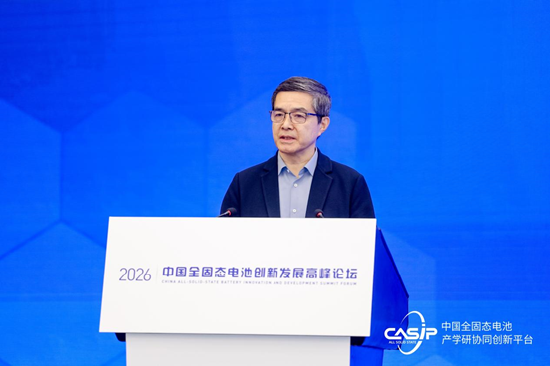
Core Insights - The third China All-Solid-State Battery Innovation Development Summit Forum was successfully held in Beijing, focusing on key issues in the all-solid-state battery industry and providing systematic support for technological breakthroughs and high-quality development [1][16]. Group 1: Strategic Direction and Collaboration - The Chinese battery industry is experiencing rapid growth and technological iteration, with applications expanding from vehicles and energy storage to robotics and low-altitude aircraft [2][17]. - The All-Solid-State Battery Collaborative Innovation Platform aims to address common industry challenges and promote interdisciplinary collaboration [2][17]. Group 2: Research and Breakthroughs - The demand for batteries is surging under carbon neutrality goals, with solid-state batteries facing challenges such as electrolyte performance and solid-solid interface compatibility [4][19]. - Innovations in interface design and molecular engineering have led to breakthroughs in reducing interface resistance and enhancing electrolyte performance [4][19]. Group 3: Material Innovations - Key materials research is focused on high-capacity, high-voltage cathodes, stable anodes, and electrolytes with high ionic conductivity [6][21]. - Various teams are exploring advanced materials and strategies to improve the performance and stability of solid-state batteries [22][23]. Group 4: Manufacturing and Standardization - The manufacturing of all-solid-state batteries faces challenges related to material systems and solid-solid interface science, requiring breakthroughs in engineering processes and cost-effectiveness [11][27]. - A comprehensive standard system for solid-state batteries is being developed to guide industry management and technological advancement [12][28]. Group 5: Safety and Interface Design - Achieving stable interfaces in solid-state batteries relies on multidimensional collaborative design, with a focus on balancing performance gains and stability risks [29][14]. - The safety risks and failure mechanisms of solid-state batteries differ significantly from liquid systems, necessitating collaborative efforts from academia and industry [29][14]. Group 6: Forum Outcomes - The forum identified key scientific and technological challenges, facilitating efficient collaboration between academia and industry to support the all-solid-state battery sector's development [15][30].
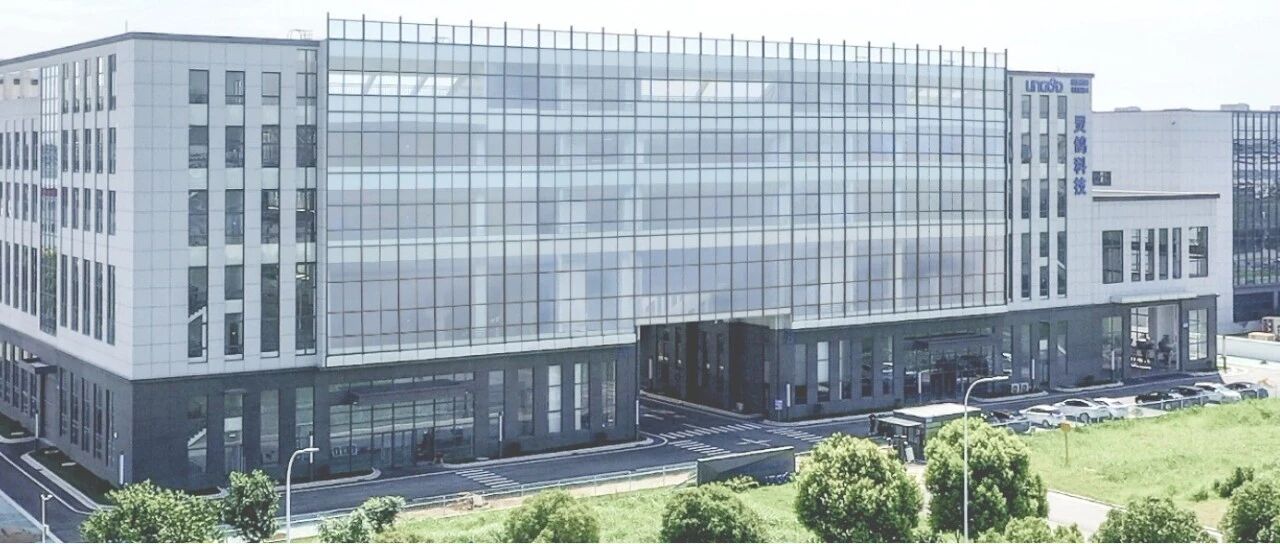
灵鸽科技中标首条百吨级硫化物固态电解质连续化整线项目
高工锂电· 2026-02-11 07:01
Core Viewpoint - Lingge Technology has overcome the challenges of mass production of sulfide solid electrolytes and has won a bid for a hundred-ton continuous production line project, establishing a solid foundation for the industrialization of solid-state battery equipment [1][2]. Industry Acceleration and Challenges - The industrialization of solid-state batteries is entering a critical phase, with sulfide routes becoming the mainstream technology due to their core performance advantages. Equipment breakthroughs are essential for scaling up production [2][3]. - According to GGII, global lithium battery shipments are expected to reach 10 TWh by 2035, with solid-state batteries potentially achieving a penetration rate of 5%-10%. The year 2027 is identified as a key node for small-scale vehicle deployment of sulfide solid-state batteries [3]. - Major companies like GAC Group and CATL are accelerating their production capacity, which is expected to drive demand for equipment, with projections indicating that the demand for solid-state battery equipment will exceed 10 billion yuan after 2030 [3]. Key Industry Bottlenecks - The production environment for sulfide solid electrolytes is extremely stringent, requiring low moisture conditions (dew point ≤ -60°C) to prevent performance degradation and safety risks [4]. - The material characteristics of sulfide powders present high adaptability challenges, necessitating specialized equipment that exceeds traditional material handling capabilities [4]. - There are common industry issues in engineering transformation, including fragmented processes and technical disconnection, making it difficult to transition from laboratory-scale to industrial-scale production [4]. - Safety hazards during production, such as pressure and temperature fluctuations, pose significant risks to continuous operation [4]. Lingge Technology's Solutions - Lingge Technology has developed a comprehensive solution for the mass production of sulfide solid electrolytes, integrating over 30 years of experience in material handling and engineering services [5][6]. - The company focuses on seamless coverage of the entire process from design to delivery, addressing efficiency and consistency issues during the transition from laboratory to industrial production [6]. - Customized technical designs have been implemented to mitigate core technical risks, including a fully enclosed, automated production system to prevent moisture and oxygen interference [7]. - Specialized equipment has been developed to tackle production challenges, such as high-viscosity powder handling systems and high-shear mixing devices to improve material uniformity [7]. Safety Measures - Lingge Technology prioritizes safety in production, implementing a comprehensive safety protection system that includes dual sealing technology and intelligent monitoring systems to ensure zero leakage and real-time parameter monitoring [8]. - The recently won project for a hundred-ton continuous production line is the first of its kind, with a design capacity of 100 tons per year, which can be modularly expanded to a thousand-ton scale [8]. Future Outlook - As the solid-state battery industry progresses towards the 2027 small-scale deployment node, the demand for mass production of sulfide solid electrolytes will continue to grow. Lingge Technology aims to deepen collaborations with partners like Saike Power to optimize production solutions and support the development of the solid-state battery industry [9].