
肉毒杆菌素

Search documents
冲刺万亿规模!广东生物制造“三箭齐发”,聚焦非粮利用、美妆原料、三新食品和医疗
合成生物学与绿色生物制造· 2026-01-11 13:00
Core Viewpoint - Guangdong Province aims to enhance the bio-manufacturing industry, targeting a total output value of approximately 500 billion yuan by 2027 and reaching a trillion yuan scale by 2035, focusing on key areas such as non-grain utilization, medical beauty raw materials, microbial proteins, and green processes in biopharmaceuticals [2][3][4]. Group 1: Policy Measures and Goals - The action plan specifies the development goals for the bio-manufacturing industry in Guangdong, aiming for a total output value of around 500 billion yuan by 2027 and a trillion yuan scale by 2035 [2][3]. - The measures address key bottlenecks in bio-manufacturing, including the need for improved standards and ecosystem development [4][6]. Group 2: Key Initiatives - The policy outlines detailed initiatives to tackle issues such as an incomplete industrial chain and lagging standard system construction, emphasizing the establishment of a comprehensive bio-manufacturing industry standard system [6]. - It encourages the establishment of innovation platforms and supports the construction of transformation bases for innovative achievements, promoting technology transfer and application [6]. Group 3: Focus Areas for Development - The measures focus on core technology breakthroughs, including strains, enzyme preparations, and reactors, as well as high-end platform construction and targeted R&D mechanisms [7]. - The policy emphasizes the importance of building a robust standard system that includes both domestic and international standards, facilitating market access and internationalization [7]. Group 4: Applications in Bio-Manufacturing - The initiative aims to advance non-grain bio-based materials, medical beauty products, and "new food" categories, promoting the use of microbial proteins and plant-based proteins [8][9]. - In the pharmaceutical sector, the policy encourages the application of bio-manufacturing in green process development for biopharmaceuticals and the synthesis of effective components from traditional Chinese medicine [9]. Group 5: Internationalization Strategies - The policy outlines strategies for internationalization, including aligning with international standards organizations and expanding overseas markets through e-commerce and overseas warehouses [10]. - It emphasizes the importance of attracting key domestic and international enterprises and high-end R&D institutions to build a global resource collaboration network [10]. Group 6: Regional Development and Innovation - Guangdong Province implements a "dual-core drive" strategy, focusing on Guangzhou and Shenzhen to accelerate the development of the bio-manufacturing industry in the Greater Bay Area [11]. - The policy supports the establishment of a comprehensive support system for bio-manufacturing, covering research, pilot testing, and industrialization [11].


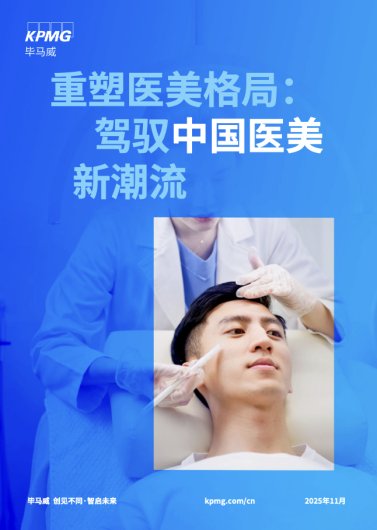
毕马威进博会发布医美行业报告,轻医美市场市场出现向非手术项目的显著转变
Cai Jing Wang· 2025-11-07 15:05
Core Insights - The report by KPMG highlights that China's medical aesthetics industry has reached a market size of over 100 billion RMB and is experiencing the fastest growth globally, with potential to reach 1 trillion RMB by 2030 [1] Market Demand - In 2024, over 50% of the market demand for medical aesthetics will come from Generation Z (born 1997-2012), who view these services as a form of daily self-care rather than corrective treatments [1] - There is a rising demand from male consumers for light medical aesthetic procedures such as hyaluronic acid injections, botulinum toxin, microneedling, and intense pulsed light treatments [1] Market Growth - The market size for light medical aesthetics grew from 50.2 billion RMB in 2018 to 146 billion RMB in 2023, with the number of consumers increasing from 7.4 million to 23.5 million [1] - The shift towards non-surgical procedures is significant due to their lower risks, shorter recovery times, and easier accessibility [1] Geographic Trends - Medical aesthetic demand is shifting from traditional first-tier cities like Shanghai and Beijing to emerging first and second-tier cities such as Chengdu, Chongqing, and Hangzhou, which have lower living costs and considerable disposable income [1]

毕马威进博会发布报告 解码颜值经济新赛道
Zhi Tong Cai Jing· 2025-11-07 03:52
Core Insights - The China medical beauty industry is rapidly rising, driven by a large market size, evolving technology, and increasing consumer demand, positioning it as a global focal point [3][4][9] - The industry is projected to reach a market size of 1 trillion RMB by 2030, with a significant shift in consumer demographics towards younger generations, particularly Generation Z [4][5][9] Market Overview - The medical beauty market in China has grown from 50.2 billion RMB in 2018 to 146 billion RMB in 2023, with the number of consumers increasing from 7.4 million to 23.5 million [5] - The demand for non-invasive procedures, such as botulinum toxin and hyaluronic acid fillers, is on the rise, particularly among younger consumers who view these treatments as part of their daily self-care routine [5][6] Consumer Demographics - Generation Z accounts for over 50% of the market demand for medical beauty services, contrasting with previous generations who viewed these services as corrective treatments [4][5] - There is a notable increase in male consumers seeking light medical beauty treatments, indicating a diversification of the consumer base [4] Growth Drivers - The growth of the medical beauty industry is supported by economic factors, with over 400 million middle-income individuals in urban areas and an aging population driving demand for anti-aging and skin repair services [6][7] - The industry is also benefiting from personalized service offerings and the adoption of advanced technologies, such as AI skin analysis tools [6] Geographic Trends - Demand for medical beauty services is expanding from traditional first-tier cities like Shanghai and Beijing to emerging second-tier cities such as Chengdu and Hangzhou, which offer lower living costs and substantial disposable income [7] Innovation and Challenges - Despite strong growth, the industry faces challenges such as safety compliance, talent shortages, and consumer retention [8] - Innovations in service models, including digital and remote consultations, are expected to drive future growth, alongside advancements in regenerative medicine [8] Future Outlook - The medical beauty industry in China is moving towards a more mature, regulated, and intelligent development phase, with opportunities for international collaboration and technology leadership [9] - The industry is anticipated to contribute to the "Healthy China 2030" strategy by enhancing domestic demand and injecting new growth momentum into the global beauty and health sector [9]
减肥药进口潮推高对美逆差,小国爱尔兰意外成为美国第二大贸易伙伴
Hua Er Jie Jian Wen· 2025-06-20 11:57
Group 1 - The core point of the article highlights the surge in demand for weight loss drugs and concerns over tariffs, which have propelled Ireland to become the second-largest source of the U.S. trade deficit [1] - In the first four months of this year, the U.S. imported $36 billion worth of hormone drug ingredients from Ireland, more than double the total imports from Ireland for the entire previous year [1] - Nearly 100% of these imports are destined for Indiana, where Eli Lilly, the manufacturer of weight loss drugs Zepbound and Mounjaro, is headquartered [1] Group 2 - The trade deficit has increased, but these drugs are transforming the healthcare landscape, with Novo Nordisk becoming the highest-valued company in Europe [1] - Novo Nordisk is investing billions of dollars to build factories in the U.S., which may alleviate trade imbalances in the long term [1] - Concerns over tariffs have led to a stockpiling trend, with companies rushing to ship goods to the U.S. before tariff deadlines [2] Group 3 - Ireland is at the center of a global stockpiling trend, as it is a major hub for U.S. pharmaceutical giants, partly due to favorable tax policies [2] - The demand for weight loss drugs is currently enormous, prompting companies to build safety stocks [3] - The trade imbalance has placed Ireland in a difficult position, as it was recently placed on the U.S. Treasury's currency manipulation monitoring list [3] Group 4 - Eli Lilly holds a significant position in the weight loss drug market, with sales of its GLP-1 drugs Mounjaro and Zepbound expected to nearly double this year to around $30 billion [4] - Maintaining the supply of weight loss drugs poses challenges for both Eli Lilly and its competitor Novo Nordisk, which manufactures Ozempic and Wegovy [4] - The demand for air logistics has surged, with transportation companies noting an increase in requests for drug shipments, which are typically transported by air due to their lightweight and high value [4]

