
能源管理系统(EMS)

Search documents
“十五五”微电网行业深度研究及趋势前景预测专项报告
Xin Lang Cai Jing· 2026-01-21 13:49
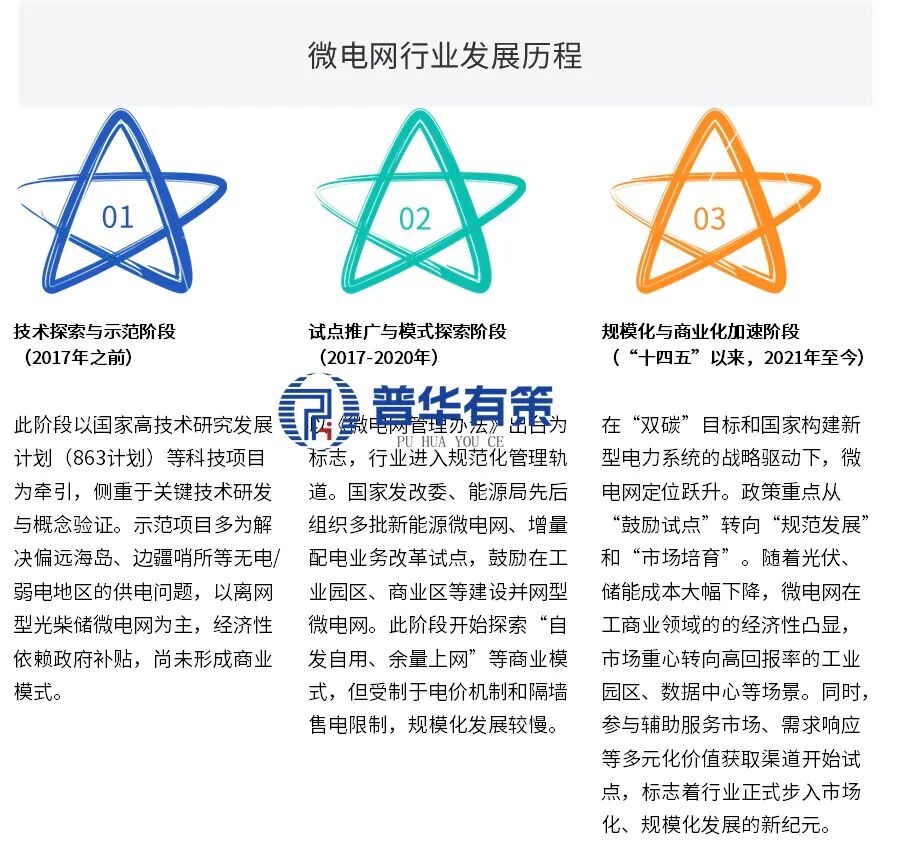
Core Insights - The microgrid sector is poised for significant growth, driven by the urgent need for energy security and the push for green, low-carbon development as emphasized in the 2025 Central Economic Work Conference [1][20] - The "14th Five-Year Plan" is expected to reinforce energy independence and green transformation, providing a stable policy outlook for the industry [1][20] Industry Development Overview - Microgrids are small-scale power systems that can operate independently or in conjunction with the main grid, consisting of distributed energy sources, loads, and control systems [2][21] - The Chinese microgrid industry is entering a phase of scale development, with rapid growth in installed capacity and diverse application scenarios [3][24] Industry Chain Summary and Impact - The microgrid industry chain is structured like a pyramid, with upstream, midstream, and downstream components that significantly influence costs, performance, and expansion speed [4][25] - Upstream includes distributed energy sources, storage systems, and core software, where recent cost reductions in photovoltaic components and lithium batteries have been pivotal for commercialization [4][25] - Midstream focuses on system integration and solution provision, where the ability to integrate various technologies and manage projects effectively is crucial for reliability and efficiency [5][26] - Downstream applications span various sectors, including industrial parks and public institutions, with distinct demands driving the need for customized and efficient products and services [6][27] Competitive Landscape - The Chinese microgrid market features a "four-pillar" competitive structure, with major players categorized into four camps: state-owned enterprises, renewable energy technology giants, specialized energy service providers, and international industrial leaders [7][28] - The first camp includes state-owned enterprises with strong grid integration capabilities, while the second camp consists of technology leaders providing integrated solutions [8][29] - The third camp focuses on specialized energy service providers that cater to specific market segments, and the fourth camp includes international brands leveraging AI and cloud computing [9][30] - The market remains fragmented, with no single dominant player, and future competition will hinge on creating or integrating into an open, collaborative ecosystem [10][31] Industry Opportunities and Trends - The microgrid sector is entering a strategic opportunity period, expected to become a model for integrated energy systems, driven by AI applications that enhance economic viability [11][32] - Key growth drivers include the demand for distributed solar energy storage, energy infrastructure in rural revitalization, and emergency power supply needs during extreme weather [11][32]

2025年终复盘:储能+虚拟电厂实战进度条
行家说储能· 2025-12-22 10:38
Core Viewpoint - The article emphasizes that the virtual power plant (VPP) sector is entering a significant growth phase, driven by supportive policies and market demand, with a projected market size of approximately 10.2 billion yuan by 2025 [4][7]. Group 1: Policy Support - The virtual power plant has moved beyond the conceptual stage, supported by strong national policy frameworks that set clear quantitative goals and funding mechanisms, indicating a visible market inflection point [4][7]. - Various government departments have introduced policies that position VPPs as new market entities, driving industry development and making them a key focus in local government documents and corporate financial reports [4][7]. Group 2: Market Dynamics - The electricity market is undergoing significant changes, with the gap in electricity supply expected to grow from 2.06 trillion kWh in 2023 to 3.01 trillion kWh by 2029, highlighting the substantial growth potential for VPPs [7]. - The increasing volatility in electricity prices, driven by the integration of renewable energy and the growth of AI data centers, is creating a demand for VPPs to provide flexible regulation capabilities [7]. Group 3: Company Strategies - Ronghe Yuanshu emphasizes the importance of aggregating distributed resources for market participation, developing a comprehensive service model that includes technology, assets, and operations [8]. - Weiheng Intelligent focuses on a hardware-software integrated approach to create sustainable revenue structures, converting existing customers into operational service users [9]. - Star Charging is implementing a "cloud-management-end" integrated model to optimize energy across various channels, having aggregated over 4,700 MW of adjustable load across 19 provinces [9]. - New Juneng aims to connect the electricity market with distributed energy resources, enhancing its role as a flexible resource integrator and trader [10]. Group 4: Technical and Operational Challenges - VPP operators face high entry barriers, requiring compliance with national and local regulatory standards, including obtaining necessary certifications for market participation [12]. - The "four capabilities" (observable, measurable, adjustable, controllable) are essential for VPPs, necessitating significant investment in technology and operational capabilities [15][16]. - The fragmentation of underlying equipment poses challenges for resource aggregation, which companies are addressing through compatibility and resource connection capabilities [16]. Group 5: Financial Performance and Growth - Companies like Ronghe Yuanshu have successfully aggregated approximately 130 MW of capacity and achieved significant operational milestones, including a 35% increase in daily revenue through optimized strategies [21]. - Star Charging projects substantial financial benefits from VPP integration, estimating a total revenue of approximately 2.39 million yuan over ten years for a 1 MWh user-side storage project [23]. - The article highlights that many companies have crossed the "hundreds of megawatts" threshold in capacity aggregation, indicating a shift in focus from feasibility to performance and profitability [24][30].
宁德时代拿下3GWh海外储能大单
鑫椤储能· 2025-08-25 07:09
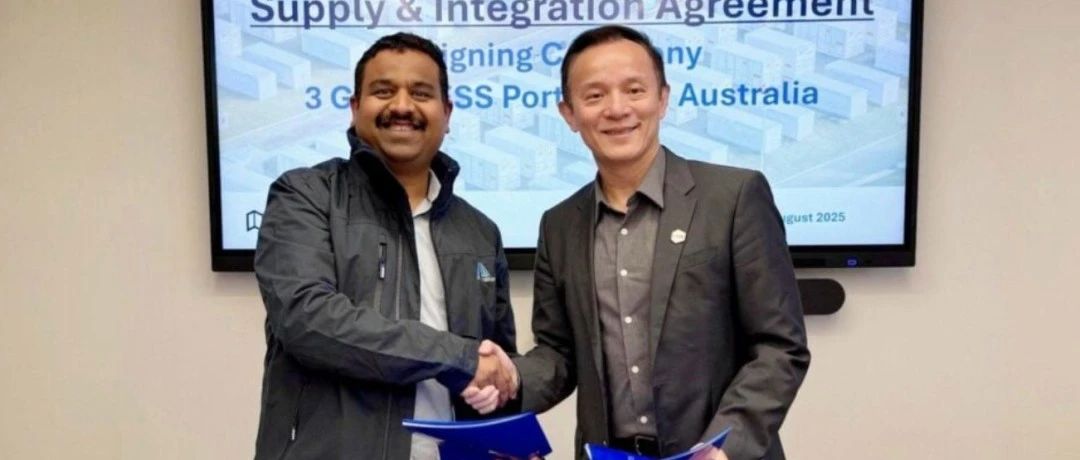
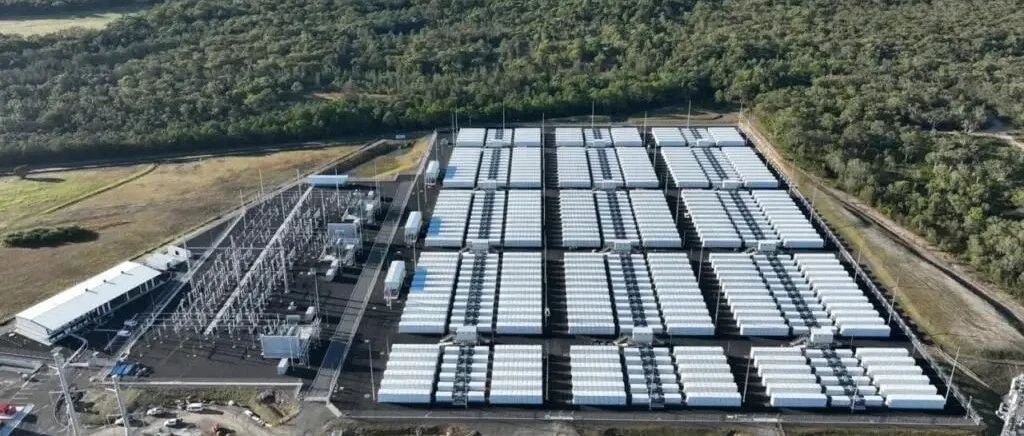
Group 1 - CATL has partnered with renewable energy developer ACEnergy to supply 3GWh of Battery Energy Storage Systems (BESS) in Australia [1][2] - The collaboration includes the design, supply, testing, commissioning, and integration services for BESS, Medium Voltage Power Stations (MVPS), inverters, Power Plant Controllers (PPC), Energy Management Systems (EMS), and Data Acquisition and Monitoring Systems (SCADA) [3] - The Yanco BESS project has a scale of 250MW/1100MWh, covering approximately 8 hectares, and is located 5 kilometers south of Litton, New South Wales [4] Group 2 - The Yanco project will store energy generated by a nearby large solar photovoltaic power station, with a construction cost of approximately 250 million AUD (equivalent to 160 million USD) [4]

全球头部储能系统集成商被正式收购
中关村储能产业技术联盟· 2025-08-10 15:10
Core Viewpoint - FlexGen has acquired the majority of Powin's business, including all intellectual property, spare parts inventory, and access to Powin's on-site projects, following Powin's Chapter 11 bankruptcy filing [2][4]. Group 1: Acquisition Details - The acquisition was completed through an auction at the end of July, with FlexGen designated as the "stalking horse bidder" offering $27.5 million for debtor-held assets [4][5]. - FlexGen's energy management system (EMS) and control software, HybridOS, will be made available to Powin's customers [4]. - Other bidders included Mainfreight, which proposed to purchase $3 million in secured notes, and Hitachi Energy, which sought to acquire the remaining 20% stake in EKS Energy, a converter manufacturer in Spain [5][6]. Group 2: Powin's Financial Situation - Powin had previously reported potential layoffs and operational shutdowns within two months before filing for Chapter 11 bankruptcy protection [4]. - The company faced financial difficulties exacerbated by industry headwinds affecting its U.S. operations, including ongoing U.S. import tariff negotiations [4]. Group 3: Industry Context - Powin was a pioneer in the battery energy storage system industry, deploying the first projects in the mid-2010s as a developer and system integrator [4]. - The company had exited the development business and was among the first to procure lithium-ion cells and package them into complete turnkey systems [4]. Group 4: Future Events - The 10th Western Energy Storage Forum is scheduled to be held in Hohhot, Inner Mongolia, on August 19-20, 2025, alongside various related events [6].
4年回本!又有2大工商业储能项目来了
行家说储能· 2025-07-10 05:01
Core Viewpoint - The recent commissioning of two commercial energy storage projects highlights the growing investment and economic viability of energy storage solutions in China, showcasing significant cost savings and returns on investment for businesses involved in these projects [1][6][7]. Group 1:量道储能 Project - The "Kaiping Keliang Weaving Storage" project, located in Jiangmen, Guangdong, has a capacity of 1.05MW / 2.329MWh and utilizes a liquid cooling series integrated machine provided by量道储能 [2][4]. - The project consists of ten 105kW / 232.9kWh liquid cooling units, which are compact and allow for flexible expansion through parallel connections [5]. - Over a 15-year operational period, the project is expected to save approximately 493,000 yuan annually in electricity costs, with a payback period of four years and an internal rate of return (IRR) of about 25% [6]. Group 2:远大玻纤 Project - The 500KW/1165KWh energy storage project by远大玻纤, with a total investment of 1.114 million yuan, has been successfully commissioned [7]. - This project, located in Xuzhou, consists of five high-performance outdoor energy storage units, each with a capacity of 100KW/233KWh, utilizing advanced lithium iron phosphate batteries and efficient liquid cooling technology [8]. - The project operates under a unified intelligent energy management system (EMS) that employs various charging and discharging strategies, ensuring rapid response capabilities [10]. Future collaboration with Xuzhou Virtual Power Plant Technology Co., Ltd. aims to enhance resource management and support regional green development [10].
ST易事特(300376) - 300376 ST易事特投资者关系管理信息20250702
2025-07-02 11:12
Group 1: Company Overview and Business Development - The company achieved steady growth in 2024 driven by industrial digitalization and the dual engines of new energy and energy storage [1][2] - The market share in the photovoltaic EPC business has increased due to competitive pricing and localized service capabilities [2] - The company has invested in R&D focusing on smart microgrids and integrated energy storage technologies [2] Group 2: Energy Storage Sector - The company has established a complete industrial chain in the energy storage sector, covering core equipment, system integration, and energy management [2][3] - The installed capacity of energy storage systems has exceeded 6.5 GWh, serving major state-owned enterprises [3][4] - Future strategies include enhancing the efficiency of sodium-ion battery technology and expanding the product matrix across various application scenarios [8][9] Group 3: Artificial Intelligence Integration - The development of AI has enabled the company to transition from a traditional equipment supplier to an "AI + New Energy" comprehensive service provider [5][6] - AI applications include battery safety operation diagnostics and intelligent scheduling for charging systems, improving efficiency and safety [5][6] - The company is implementing an intelligent identity management system to enhance data security and operational efficiency [6] Group 4: Future Strategic Planning - The new energy and energy storage segment currently accounts for nearly half of the company's total business and is positioned for significant growth [7][8] - The company plans to adopt a customized pre-purchase model for photovoltaic EPC business to mitigate operational risks [7][9] - The charging pile business strategy focuses on global expansion and collaboration with major energy companies to enhance service offerings [10][11] Group 5: Compliance and Market Image - The company is preparing to apply for the removal of risk warnings after meeting regulatory requirements by December 31, 2025 [12][13] - Ongoing communication with investors aims to maintain transparency and restore confidence in the company's market image [14]
