航运险

Search documents
华泰证券今日早参-20260304
HTSC· 2026-03-04 05:49
Macro Insights - The U.S. private credit market has experienced increased volatility since 2025, with some funds facing redemption waves, raising market concerns. Despite this, the expected recovery of the U.S. economy in 2026 may prevent these issues from escalating into systemic financial risks [3][4] - Post-Spring Festival, there has been a notable increase in travel and consumer spending, with a 5.9% year-on-year growth in cross-regional movement and a 19% increase in domestic tourism during the holiday period. The real estate market shows signs of stabilization, particularly in second-hand housing transactions [3][4] Market Strategy - The A-share market has seen a rebound with the Shanghai Composite Index rising nearly 2%. There was a net inflow of approximately 800 billion yuan in trading funds, indicating a recovery in market activity. Fund preferences have shifted towards sectors like AI and price-sensitive chains [4][5] - The geopolitical tensions, particularly the U.S.-Iran conflict, have led to significant fluctuations in asset prices, with Brent crude oil prices rising by 14% and European gas prices increasing by over 50%. This has heightened concerns about economic stagflation [5] Real Estate Sector - Data from January and February indicates a decline in new housing supply and demand, while second-hand housing transactions remain resilient. However, there are signs of weakening prices. The introduction of new policies in Shanghai may boost market confidence and facilitate inventory reduction [6][7] Insurance Sector - The escalating situation in the Middle East has created substantial risks for shipping in the region, leading to major insurers issuing cancellation notices for war risks. This is expected to significantly increase insurance premiums and shipping costs [7] Renewable Energy Sector - Wind power demand in 2025 exceeded expectations, with a total installed capacity of 130.8 GW, a 49.9% year-on-year increase. The growth in onshore wind capacity was particularly strong, while offshore wind demand is anticipated to be released gradually [8] Financial Sector - The brokerage sector has been underperforming, with a mismatch between earnings growth and valuations. However, there are opportunities for recovery, particularly as many brokerages are expected to achieve record profits in 2025 and continue this trend into 2026 [11]
半年内“将帅”先后就位,太保产险开启转型新阶段
2 1 Shi Ji Jing Ji Bao Dao· 2025-06-12 07:42
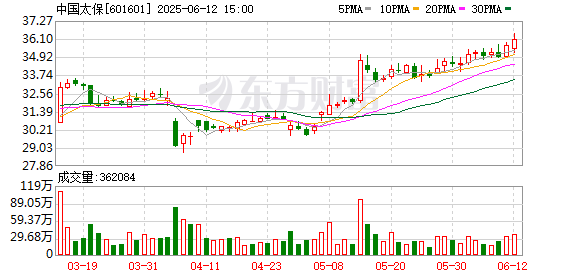
Core Viewpoint - China Pacific Insurance (Group) Co., Ltd. has appointed Yu Bin as the chairman of Pacific Insurance, with Chen Hui as the new general manager, establishing a leadership team focused on enhancing operational efficiency and embracing new opportunities in technology and sustainable development [2][3]. Management Changes - Yu Bin, born in August 1969, has nearly 30 years of experience in the core business of Pacific Insurance, having held various key positions that provide him with a comprehensive understanding of the insurance industry [3]. - The management structure has been adjusted to include a team led by General Manager Chen Hui, with a clear hierarchy of roles to support the company's strategic goals [4][5]. Business Performance - In 2024, Pacific Insurance achieved original insurance premium income of 201.24 billion yuan, a year-on-year increase of 6.8%, and a net profit of 7.38 billion yuan, up 12.2% [6]. - For Q1 2025, the company reported original insurance premium income of 63.11 billion yuan, a 1.0% increase, with a comprehensive cost ratio improving to 97.4%, down 0.6 percentage points year-on-year [6]. Strategic Focus - The company is focusing on three major strategies: "Great Health and Elderly Care," "AI+," and "Internationalization," aiming to enhance its core competitiveness and support national strategies [8][9]. - The "AI+" strategy emphasizes the integration of technology into core business operations, aiming to improve operational efficiency and explore new business models [8]. Future Outlook - The company plans to deepen its digital transformation and optimize its business structure while addressing challenges such as rising comprehensive cost ratios due to natural disasters and high-risk business segments [7][9]. - The leadership is committed to high-quality development and enhancing service capabilities to better support the economy and society [9].