
节水抗旱稻

Search documents
聚焦特色种养,广东这场研讨给出富民兴村“金点子”
Nan Fang Nong Cun Bao· 2026-02-24 11:34
Core Viewpoint - The seminar on "Development of Characteristic Planting and Breeding for Enriching People and Revitalizing Villages" in Guangdong focuses on promoting agricultural modernization and enhancing rural economies through innovative farming practices and policies [1][3][51]. Group 1: Policy and Support - The Guangdong Provincial Agricultural Office emphasizes increasing policy support, technological empowerment, and cultivating key players to enhance the quality and efficiency of green and efficient planting and breeding industries [10][11]. - The seminar aims to provide actionable strategies for rural revitalization and economic growth through characteristic agriculture [4][51]. Group 2: Innovative Practices - The "Land Custody" model introduced in Luhua County aims to address the issue of abandoned farmland by consolidating idle land for standardized agricultural practices, leading to the development of a more organized and efficient agricultural sector [14][21][27]. - The introduction of "water-saving and drought-resistant" rice varieties by South China Agricultural University represents a significant technological advancement, promoting resource-efficient agricultural development [28][30][32]. Group 3: Role of New Agricultural Entities - New agricultural operators play a crucial role in linking farmers to markets and enhancing agricultural productivity through mechanization and professional services [36][39]. - The experience of Guangdong Zhaohua Seed Industry Co., which successfully cultivates high-quality rice varieties and implements a unified supply and purchase model, demonstrates the potential for increased farmer income and sustainable agricultural practices [41][48][50].


校地企村携手!1300亩节水抗旱稻落地南雄湖口
Nan Fang Nong Cun Bao· 2026-02-14 13:32
Core Viewpoint - The signing ceremony for the water-saving and drought-resistant rice industry in Nanhua, Huokou Town, marks a collaborative effort among government, academia, enterprises, and villages to promote agricultural development through technology and innovation [2][5][9]. Group 1: Event Overview - The signing ceremony took place on February 12 in Huokou Town, Shaoguan, focusing on the establishment of the water-saving and drought-resistant rice industry [2][8]. - Key attendees included officials from the Shaoguan Agricultural and Rural Bureau, local government representatives, and experts from the South China Agricultural University [3][4]. Group 2: Technological Insights - The water-saving and drought-resistant rice is a new crop that combines high yield and quality with water-saving and drought-resistant characteristics, achieving over 50% water savings and reducing methane emissions by over 90% [10][11]. - This crop can maintain stable yields even under dry conditions, making it suitable for the drought-prone resources of Huokou Town [12]. Group 3: Collaborative Framework - A collaborative platform was established, integrating technology support, government guidance, enterprise operation, and community participation [9][10]. - The partnership between the South China Agricultural University and Huokou Town government aims to leverage research capabilities to enhance local industry and provide ongoing technical guidance and talent support [15][16]. Group 4: Implementation and Future Plans - The agreement includes a commitment to the large-scale planting of 1,300 acres of water-saving and drought-resistant rice, laying a solid foundation for collaboration [17][21]. - Future discussions among participants will focus on key issues such as variety selection, technology promotion, and the extension of the industrial chain, aiming to create a replicable model for agricultural development in the region [20][22].
广州市协作办公室赴华南农大调研节水抗旱稻,达成合作推广意向
Nan Fang Nong Cun Bao· 2025-12-22 12:02
Core Insights - The Guangzhou Collaborative Office organized a research visit to South China Agricultural University to explore the promotion of drought-resistant rice, aiming to drive agricultural green transformation through technological innovation and contribute to rural revitalization and food security [2][3][4]. Group 1: Technological Innovation - The research team presented a report on "Drought-Resistant Rice Theory and Practice," highlighting four major challenges in rice production: reduced arable land, water resource scarcity, non-point source pollution, and carbon emissions [9][10]. - The development and application of drought-resistant rice are seen as key measures to address these challenges, with a focus on integrating high-yield characteristics of modern rice with drought resistance [11][12]. - Drought-resistant rice varieties can save over 50% water compared to traditional rice while maintaining stable yields of 500-600 kg per mu, demonstrating resilience to drought conditions [15][16]. Group 2: Local Adaptation and Practices - The team shared successful experiences in promoting drought-resistant rice in Guangdong, including the use of biodegradable film for planting in challenging conditions, which has led to replicable solutions [23][24]. - In Meizhou, drought-resistant rice achieved yields exceeding 450 kg per mu, significantly above the provincial average, showcasing its adaptability to marginal lands [25][27]. - The team is collaborating with Fujian to explore "dry transplanting" technology for high-yield cultivation in sandy soils, with the rice variety also being promoted in saline-alkali areas and drought regions globally [28][29][30]. Group 3: Collaborative Efforts and Future Goals - Discussions during the meeting led to a preliminary agreement on promoting drought-resistant rice, focusing on practical issues such as planting techniques and market strategies [34][36]. - The South China Agricultural University will provide technical support and assist in developing standardized planting guidelines, ensuring effective implementation of technological advancements [40][41]. - The team aims to achieve a national increase of 50 billion kg of grain and expand the planting area by 10 million mu, while promoting 5 million mu internationally, positioning Guangdong's practices as a model for nationwide application [42][43][44].
“狙击”非二氧化碳温室气体,中国在行动
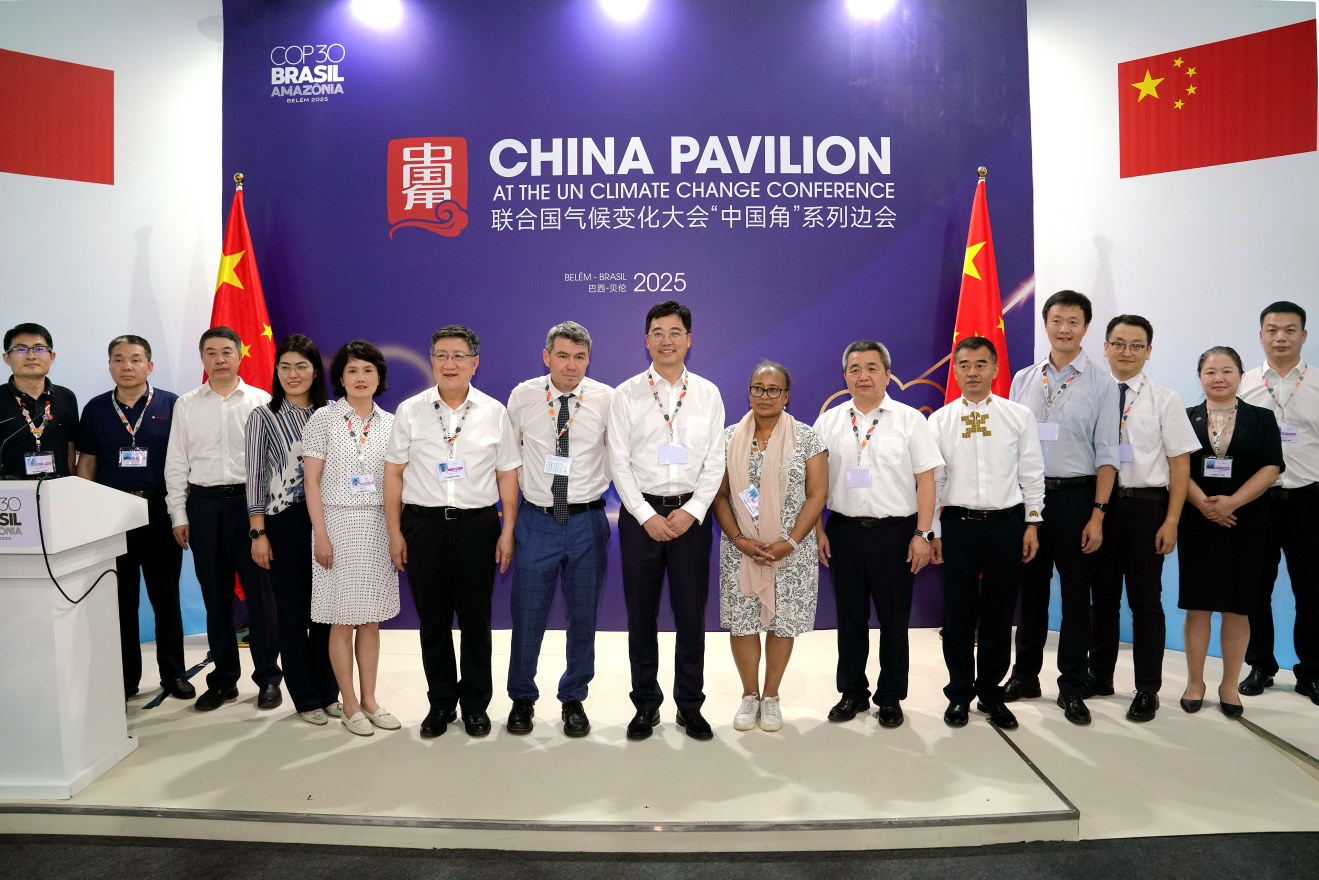
Ke Ji Ri Bao· 2025-12-11 06:39
Core Viewpoint - The reduction of methane and nitrous oxide emissions is crucial for mitigating global warming, as methane has a warming effect over 80 times that of carbon dioxide in the first 20 years, and nitrous oxide is 273 times more potent over a century [1][2]. Group 1: Non-CO2 Greenhouse Gases - Non-CO2 greenhouse gas emissions have become a new focus in climate change and environmental governance, encompassing gases such as methane, nitrous oxide, and hydrofluorocarbons [1]. - In China, non-CO2 greenhouse gas emissions account for 21% of total greenhouse gas emissions, with agriculture contributing approximately 40% of methane and 45% of nitrous oxide emissions [2]. Group 2: Agricultural Emission Reduction Efforts - China is actively promoting the reduction of methane and nitrous oxide emissions in agriculture, with significant progress reported [3]. - The "Methane Emission Control Action Plan" outlines measures for controlling methane emissions from rice paddies and utilizing livestock manure [3]. - New water-saving planting techniques have achieved an average methane reduction rate of 97% and a comprehensive greenhouse gas reduction of 92% [3]. Group 3: Livestock and Fertilizer Management - Methane emissions in livestock primarily stem from enteric fermentation and manure management, with resource utilization rates for livestock waste in regions like Hebei reaching 84% [4]. - Nitrogen fertilizer usage is a major source of nitrous oxide emissions, with innovative practices in various regions reducing fertilizer application while increasing crop yields [5][6]. Group 4: Collaborative Efforts and Technological Innovations - Effective reduction of agricultural emissions requires cross-departmental collaboration and a comprehensive industry chain approach, balancing food security with climate goals [7]. - The optimization of energy structures and process upgrades in nitrogen fertilizer production, along with the promotion of new fertilizers and precision fertilization techniques, are key strategies for reducing nitrous oxide emissions [7].
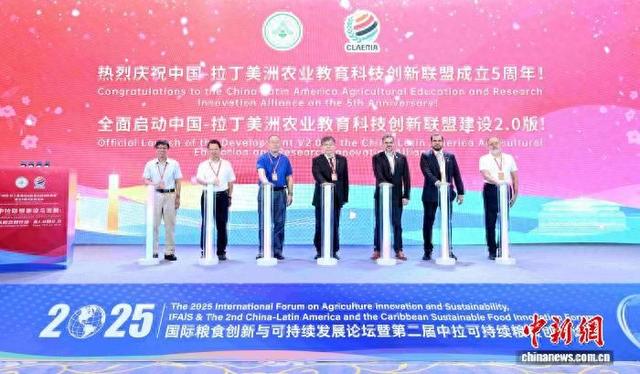
中拉联盟已覆盖15国汇聚78家成员单位
Zhong Guo Xin Wen Wang· 2025-12-11 06:26
Group 1 - The "China-Latin America Agricultural Education and Technology Innovation Alliance" (hereinafter referred to as "the Alliance") has formed a robust ecosystem covering 15 countries and gathering 78 member units, with over 200 inter-institutional cooperation agreements signed [1][2] - The Alliance, initiated by South China Agricultural University, is a non-governmental, non-profit, open, and international multilateral cooperation platform aimed at promoting collaboration in talent cultivation, scientific research, technology promotion, cultural exchange, and policy research between China and Latin American countries [2] - The Alliance has established two sub-alliances: the China-Brazil Agricultural and Forestry Education Technology Innovation Alliance and the China-Latin America Soybean Industry Technology Innovation Alliance, along with four overseas technology stations in Colombia, Ecuador, and Cuba [2] Group 2 - The Alliance has launched six overseas joint research bases or demonstration gardens, including the China-Cuba Rice Joint Research Center and the Brazil Longping Soybean Breeding Base, and has signed a memorandum of cooperation with the National University of Colombia to initiate the construction of the "China-Latin America International Joint College" [2] - The Alliance aims to address global challenges such as food security and climate change by enhancing integrated construction and promoting the deep integration of the "education chain, innovation chain, industry chain, and talent chain" [3] - The focus will be on food security and sustainable development, creating replicable and scalable "comprehensive solutions," while strengthening standardized and institutionalized construction to enhance the Alliance's cohesion and international influence [3]
节水稻改写种田剧本,撂荒地亩产超600公斤
21世纪经济报道· 2025-11-22 15:16
Core Viewpoint - The introduction of the "Drought-resistant 78" water-saving rice variety in Guangdong's Luo Yuan Town represents a significant advancement in agricultural technology, achieving a 50% reduction in water usage and a 90% decrease in methane emissions compared to traditional rice varieties [1][2]. Group 1: Innovation and Development - The "Drought-resistant 78" rice was developed by a team led by Luo Lijun, focusing on integrating drought resistance, water-saving, and ease of cultivation into a new rice type, breaking traditional planting barriers [1][4]. - The rice variety has been planted across over 30 million acres in China, including regions with challenging conditions, such as Yunnan at an altitude of 2000 meters [1][2]. Group 2: Global Impact and Expansion - This innovative rice variety has entered over 20 countries along the Belt and Road Initiative, including several African nations, contributing to food security and climate change mitigation [2][10]. - The goal is to expand the planting area to 100 million acres globally, with a target of increasing rice production by 50 billion kilograms while reducing irrigation water usage and carbon emissions significantly [10]. Group 3: Environmental and Economic Benefits - The "Drought-resistant 78" rice can be cultivated with minimal irrigation, achieving yields of over 600 kilograms per acre with only three irrigation events during critical growth stages [5][8]. - The rice variety has shown resilience against extreme weather conditions, such as flooding, maintaining its yield while other crops suffered significant losses [9]. Group 4: Agricultural Practices and Future Goals - The introduction of this rice variety aligns with the "Blue Revolution" concept, promoting sustainable agricultural practices that reduce reliance on water and minimize greenhouse gas emissions [1][5]. - The establishment of demonstration bases and the promotion of this rice in Guangdong aim to reclaim 1 million acres of abandoned land and increase rice production by 400 million kilograms within five years [2][7].
节水稻改写种田剧本 撂荒地亩产超600公斤
2 1 Shi Ji Jing Ji Bao Dao· 2025-11-22 10:36
Core Viewpoint - The introduction of the "Drought-resistant 78" water-saving rice variety in Guangdong's Luo Yuan Town marks a significant advancement in agricultural innovation, achieving a 50% reduction in water usage and a 90% decrease in methane emissions compared to traditional rice varieties [2][3][6]. Group 1: Agricultural Innovation - The "Drought-resistant 78" rice variety was developed by a team led by Luo Lijun from South China Agricultural University, integrating drought resistance, water-saving, and ease of cultivation into a new type of rice [2][5]. - This new rice variety has been planted across over 30 million acres in China, including regions with challenging conditions such as the 2000-meter elevation in Yunnan [2][3]. Group 2: Global Impact - The rice variety has been introduced to over 20 countries along the Belt and Road Initiative, including several African nations, contributing to food security and climate change mitigation [3][10]. - Luo Lijun aims to expand the planting area to 100 million acres globally, with a target of increasing rice production by 500 billion kilograms while reducing irrigation water usage and carbon emissions [11] . Group 3: Environmental Benefits - The "Drought-resistant 78" rice can be cultivated in both wet and dry conditions, achieving a water-saving rate of over 50% and significantly reducing greenhouse gas emissions [6][8]. - The unique cultivation method of this rice variety allows for a reduction in chemical fertilizer usage by 30%, contributing to lower environmental pollution [6][8]. Group 4: Economic Viability - The rice variety is not only easy to plant but also offers substantial economic benefits, with potential profits exceeding 600 yuan per acre [9][10]. - The successful cultivation of this rice in marginal lands demonstrates its potential to enhance food production without competing for existing arable land [7][10].
非二氧化碳温室气体如何协同治理?
Zhong Guo Huan Jing Bao· 2025-11-19 03:30
Group 1: Non-CO2 Greenhouse Gas Control Efforts - China is actively promoting the control of non-CO2 greenhouse gases, with methane and nitrous oxide being the second and third largest greenhouse gases globally, respectively [4] - The Ministry of Ecology and Environment has introduced a series of policies and actions, including the "Methane Emission Control Action Plan" and revised coalbed methane emission standards, to effectively manage emissions [4][5] - The country has established a national greenhouse gas emission factor database to support localized research on methane and sulfur hexafluoride emissions [5] Group 2: Technological Innovations and Achievements - The Soil Center of the Ministry of Ecology and Environment has developed drought-resistant rice cultivation techniques that achieve an average methane reduction rate of 97% and a comprehensive greenhouse effect reduction of 92% [1] - State Grid Corporation of China has developed a technology for the recovery and purification of sulfur hexafluoride, achieving a recovery rate of 97% [1] - Henan Shennong Carbon Reduction Technology Co., Ltd. has built a reduction device that achieves an annual reduction of 11.6 million tons of nitrous oxide equivalent, with a reduction rate of 98% [1] Group 3: Industry Collaboration and Future Directions - Various sectors, including government, enterprises, and research institutions, are collaborating to explore control practices for methane, nitrous oxide, and sulfur hexafluoride emissions [1][4] - The China Oil and Gas Methane Control Alliance aims to translate national policies into actionable corporate strategies, focusing on monitoring, reporting, and verification (MRV) systems [8] - Experts emphasize the need for further research on emission scenarios and cost-effectiveness analysis to support China's long-term low greenhouse gas emission development strategy [6]
肇庆怀集:打好“三手”组合拳,推进建设高标准农田
Nan Fang Nong Cun Bao· 2025-11-17 09:31
Core Viewpoint - The article highlights the achievements and ongoing efforts of Zhaoqing Huaiqi County in constructing high-standard farmland, emphasizing the importance of agricultural modernization and food security through innovative practices and strategic planning [4][11]. Group 1: High-Standard Farmland Construction - By 2025, Huaiqi County plans to establish 20,000 acres of new high-standard farmland and upgrade 6,800 acres, with a total investment exceeding 900 million yuan [2][3]. - The county has implemented 67 high-standard farmland projects, covering 19 towns and achieving a total of 432,000 acres of high-standard farmland and 31,800 acres of upgrades [3][4]. - The construction of high-standard farmland is viewed as a foundational project for ensuring food security, promoting agricultural modernization, and facilitating rural revitalization [22][24]. Group 2: Innovative Models and Mechanisms - Huaiqi County has explored a "state-owned enterprise + land transfer + N" model to address challenges in land transfer, establishing a state-owned enterprise to coordinate land consolidation and village collective economic development [16][17]. - The land transfer area has exceeded 20,000 acres, transforming small plots into larger ones, which has increased economic benefits for local farmers [19]. - A comprehensive work mechanism has been established, involving county-level coordination, departmental collaboration, and village participation, ensuring that construction tasks are integrated into annual performance assessments [28][30]. Group 3: Agricultural Practices and Techniques - The county prioritizes scientific planning and strict quality control in farmland construction, focusing on six major projects including land leveling and soil improvement to create modern farmland that is resilient to drought and flooding [31][33]. - The introduction of purple vetch as a green manure crop has significantly improved soil fertility, with average yields of drought-resistant rice increasing by 30% compared to conventional varieties [40][41]. - Deep plowing practices have been implemented to enhance soil structure, increasing soil layer thickness from less than 20 cm to 25-28 cm, which improves water retention and crop root growth [57][59].
十大优秀品种出炉!肇庆首届节水抗旱稻新品种评选活动举办
Nan Fang Nong Cun Bao· 2025-08-09 00:03
Core Viewpoint - The first "I Choose, I Show" new variety selection event for water-saving and drought-resistant rice was held in Zhaoqing, showcasing innovative achievements in the industry and promoting high-quality development of the sector [12][10]. Group 1: Event Overview - The event took place on August 8, 2025, and included a field observation meeting to promote the application of water-saving and drought-resistant rice varieties [3][4]. - Representatives from 23 alliance units gathered to evaluate 83 new rice varieties, with assessments based on yield, resistance to lodging, industry potential, and rice quality [13][14]. Group 2: Selected Varieties - The top ten outstanding varieties selected included "Jieyou 136" and "Drought Resistant 761," which excelled in various performance metrics [15][16]. - Experts noted that varieties like "Drought Resistant 73," "Drought Resistant 3015," and "Drought Resistant 761" are suitable for early and late planting in South China [20][21]. Group 3: Future Goals and Applications - The selected varieties will be key targets for demonstration and promotion, with a goal to achieve 1 million acres of planting in Guangdong over the next 3-5 years [22][24]. - A field observation of marginal land reclamation demonstrated the successful application of drought-resistant rice, achieving a yield of 640.9 kg per acre on previously abandoned land [27][28]. Group 4: Research and Development Insights - Reports presented during the event highlighted the ecological advantages and practical applications of water-saving and drought-resistant rice, laying a theoretical foundation for further innovation [32][33]. - The potential of these rice varieties in reducing carbon emissions aligns with national carbon reduction strategies, expanding their green value [36][38]. Group 5: Industry Development and Future Directions - The event emphasized the importance of smart agriculture and the role of unmanned farming in the future of water-saving and drought-resistant rice cultivation [46][48]. - Water-saving and drought-resistant rice is increasingly recognized as a vital force in ensuring national food security and promoting sustainable agricultural development [49][51].