英伟达先进AI芯片

Search documents
英伟达(NVDA.US)黄仁勋:对OpenAI千亿美元投资“并非承诺” 将逐轮考虑任何融资
智通财经网· 2026-02-01 23:06
Group 1 - Nvidia's CEO Jensen Huang stated that the proposed investment of up to $100 billion in OpenAI is "never a commitment" and will be considered "step by step" [1] - The investment aims to support the construction of data centers with a power capacity of at least 10 gigawatts, equivalent to New York City's peak power demand, using Nvidia's advanced chips for AI model training and deployment [1] - Reports indicate that the investment plan has stalled due to internal doubts at Nvidia, with Huang privately emphasizing that the $100 billion agreement is non-binding and expressing concerns about OpenAI's business discipline and competitive landscape [1] Group 2 - Huang described the potential investment in OpenAI as "huge" and possibly "the largest investment in our history," but clarified that Nvidia's contribution to the current funding round would not approach $100 billion [2] - Nvidia and OpenAI are reportedly reassessing their partnership, considering equity investment in OpenAI's new funding round rather than a strategic partnership tied to orders [2] - Nvidia's recent investment plans include an additional $2 billion investment in cloud provider CoreWeave, another key customer [2] Group 3 - OpenAI is reportedly conducting a new funding round with a maximum target of $100 billion, which could raise its valuation to $830 billion [3] - Amazon is also in talks for a potential investment of up to $50 billion, which could make it the largest investor in this funding round [3] - SoftBank is negotiating for an additional investment of up to $30 billion, with previous investments exceeding $40 billion through its Vision Fund and joint investments [3] Group 4 - OpenAI's CFO Sara Frier announced that the company's recurring revenue is projected to exceed $20 billion in 2025, a significant increase from $6 billion in 2024, with computing capacity rising from 0.6 gigawatts in 2024 to 1.9 gigawatts in 2025 [4] - OpenAI is on track to release its first hardware device in the second half of the year, marking its entry into the AI hardware market [4]

还记得去年“AI大崩盘”的导火索吗?Coreweave有了“显著进展”,股价应声大涨
美股研究社· 2026-01-13 12:16
Core Viewpoint - CoreWeave has made significant progress in its AI infrastructure by successfully delivering the first batch of chips for its data center project in Denton, Texas, which is being built for OpenAI [5][6]. Group 1: Company Progress - CoreWeave's GPU delivery increased from several racks in mid-November to over 16,000 GPUs by the end of December, with a peak daily addition of over 2,000 GPUs [5]. - The recent developments have led to a stock price increase of over 12% and a cumulative rise of over 20% this year [6]. Group 2: Challenges Faced - The company faced a trust crisis in the AI infrastructure sector due to delays caused by data center suppliers, which resulted in a significant revenue impact [6]. - The Denton project experienced a 60-day delay due to severe weather conditions, affecting the construction schedule and the company's business model [7]. Group 3: Financial Situation - Despite the recent delivery progress, CoreWeave is still facing severe financial challenges, with a reported revenue of nearly $1.4 billion in the last quarter, but a net loss of $110 million [10]. - Analysts have described CoreWeave's balance sheet as one of the most concerning in the tech industry [10].


本轮AI股大崩盘--一场暴雨引发的全球股市惨案
Hua Er Jie Jian Wen· 2025-12-16 09:58
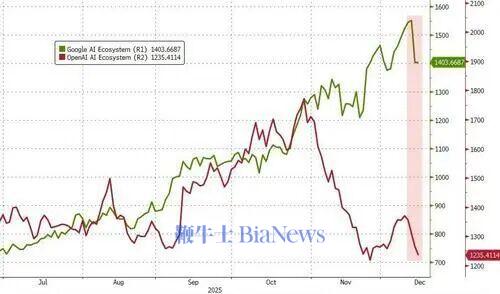
Core Viewpoint - The market is experiencing significant concerns regarding the AI bubble, as evidenced by CoreWeave's market value plummeting by $33 billion, over 60%, within six weeks, alongside declines in Broadcom and Oracle's stock prices by more than 17% in three trading days [1][14]. Group 1: CoreWeave's Operational Challenges - CoreWeave's construction of a major AI data center cluster in Denton, Texas, has been delayed by approximately 60 days due to severe summer weather, impacting its ability to deliver 260 megawatts of computing power to OpenAI [3][6]. - The CEO's contradictory statements during the November earnings call heightened investor panic, as he initially downplayed the issue, only to be corrected by the CFO, indicating a broader problem affecting the entire data center supply chain [4][9]. - The construction delays have exposed systemic risks within the AI infrastructure industry, highlighting a widening gap between rapid construction and actual delivery capabilities, with significant valuations already priced in [5][11]. Group 2: Financial and Debt Concerns - CoreWeave's financial situation is precarious, with a recent quarterly revenue doubling to nearly $1.4 billion, yet the company reported a loss of $110 million, and its operating profit margin of about 4% is insufficient to cover debt interest payments [10]. - The company recently completed a $2.25 billion convertible bond issuance, which, while having a lower interest rate than typical asset-backed financing, poses risks of shareholder dilution and further stock price pressure [10]. - The cost of debt default insurance for CoreWeave has surged to 7.9 percentage points, reflecting growing concerns about its financial stability [10]. Group 3: Industry-Wide Implications - The turmoil at CoreWeave has raised broader questions about the AI industry's rapid growth and the timing and manner of significant capital investments yielding healthy profits [11][12]. - Delays in construction and supply chain bottlenecks are threatening to postpone spending plans worth hundreds of billions of dollars, which have already been factored into valuations across the industry [17]. - Oracle and Broadcom have also faced stock price declines due to concerns over delayed capital expenditures, indicating that the issues affecting CoreWeave are resonating throughout the entire tech sector [14][15].
本轮AI股大崩盘:一场暴雨引发的全球股市惨案
Hua Er Jie Jian Wen· 2025-12-16 04:20
Core Insights - A severe storm has caused a significant market disruption in the AI infrastructure sector, leading to a loss of $33 billion in market value for CoreWeave and over 17% declines for Broadcom and Oracle, indicating growing concerns about an AI bubble [1][8] - The crisis originated from construction delays at a CoreWeave data center in Denton, Texas, which was set to provide 260 megawatts of computing power for OpenAI but has been delayed by approximately 60 days due to adverse weather conditions [1][2] Company-Specific Issues - CoreWeave's CEO, Michael Intrator, made contradictory statements during an earnings call, initially downplaying the impact of the delay but later acknowledging broader issues affecting multiple data center suppliers, which heightened investor anxiety [4][5] - The company's business model relies heavily on high-interest debt to acquire advanced AI chips from NVIDIA, making it vulnerable to construction delays and financial instability [3][5] Financial Performance and Debt Concerns - CoreWeave reported a revenue increase of nearly 100% to approximately $1.4 billion in the last quarter, yet it remains unprofitable, with a loss of $110 million, raising concerns about its ability to generate future profits [5][6] - The company recently completed a $2.25 billion convertible bond issuance, which, while having a lower interest rate than typical financing, poses risks of shareholder dilution and declining stock prices [6] Industry-Wide Implications - The turmoil at CoreWeave reflects broader issues within the AI sector, as rapid growth raises questions about the timing and viability of significant capital investments [7][8] - Concerns over construction delays and supply chain bottlenecks are affecting the entire industry, with major players like Oracle and Broadcom experiencing double-digit percentage declines in stock prices due to revised spending expectations [8]
沙漠上崛起的芯片新贵
投中网· 2025-05-27 02:21
Core Viewpoint - The global semiconductor industry is undergoing significant restructuring due to rising protectionism, with countries implementing policies to strengthen local supply chains and attract investments [3][4]. Group 1: Global Semiconductor Landscape - The U.S. has introduced the CHIPS and Science Act with $52 billion in subsidies, while the EU has launched the Chips Act with €43 billion for industry development [3]. - Emerging markets like India, Malaysia, and Vietnam are becoming new hotspots for industry relocation due to their cost advantages and favorable policies [3]. Group 2: UAE's Strategic Positioning - The UAE is emerging as a key player in the global semiconductor and AI sectors, leveraging its unique resources and strategic vision [4]. - A recent agreement allows the UAE to import 500,000 advanced AI chips from NVIDIA annually, significantly exceeding previous limits [6]. Group 3: Investment and Technology Exchange - The UAE will invest $1.4 trillion in the U.S. over the next decade, covering AI infrastructure, semiconductors, and manufacturing, in exchange for technology access [6][7]. - The agreement includes a stipulation for the UAE's G42 to build data centers in the UAE and mirror facilities in the U.S., ensuring technology transfer and reducing U.S. concerns about technology leakage [6][7]. Group 4: AI and Semiconductor Development - The UAE aims to build one of the largest AI data center parks globally, supported by the imported chips, to enhance its AI capabilities [8]. - The MGX fund, a $100 billion initiative, is set to drive AI and semiconductor advancements, targeting a 20% contribution of AI to the UAE's non-oil GDP by 2031 [21][22]. Group 5: Talent and Education Initiatives - The UAE is focusing on education to address talent shortages in AI and semiconductor sectors, establishing a comprehensive training system from K-12 to higher education [23][24]. - Partnerships with leading institutions like MIT and NVIDIA are being formed to enhance research and development capabilities in AI and semiconductor technologies [25]. Group 6: Challenges and Future Outlook - The UAE faces challenges in establishing a semiconductor manufacturing base, including reliance on desalinated water for chip production and the need for a skilled workforce [19][32]. - Despite these challenges, the UAE's strategic investments and partnerships position it to potentially transform into a significant player in the global semiconductor and AI landscape [32].

“接受赠机”在美引强烈反对,外交举措被疑难有突破,特朗普中东行在争论声中收尾
Huan Qiu Shi Bao· 2025-05-15 23:02
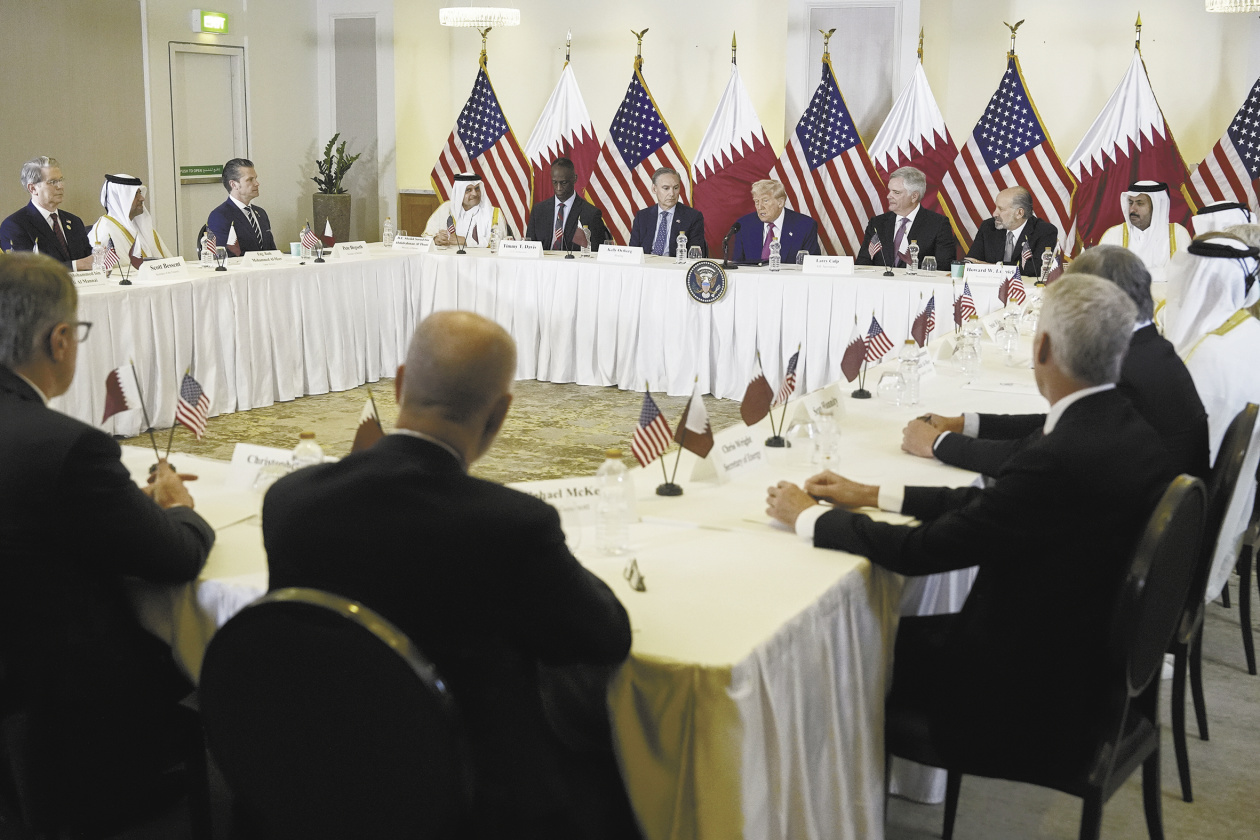
Group 1 - The core focus of Trump's Middle East visit is on economic investments rather than traditional diplomatic agreements or arms sales, with potential transactions amounting to trillions of dollars [1][3] - A significant agreement was reached with Qatar, involving economic exchanges valued at $1.2 trillion, including a $960 billion deal for 210 Boeing aircraft [3][4] - The visit has raised questions about the sustainability and fairness of the deals, with some analysts suggesting that short-term benefits may outweigh long-term interests [3][7] Group 2 - The U.S. government is considering allowing the UAE to import over 1 million advanced AI chips from Nvidia, indicating a focus on technology in the region [3] - The discussions during the visit included a $100 billion investment by Qatar in the U.S. military base at Al Udeid [3] - The meeting between U.S. and Syrian leaders, the first in 25 years, is seen as a significant diplomatic move, although its effectiveness remains uncertain [5][6] Group 3 - The absence of Israel from Trump's itinerary has led to concerns about U.S.-Israel relations, with Israeli officials feeling sidelined by recent U.S. actions [6][7] - Trump's approach to the Middle East is characterized by a lack of a coherent strategy, focusing instead on specific priorities and issues [7] - The administration's pragmatic approach may yield results, but the effectiveness of U.S. influence in the region could be hampered by domestic political issues and insufficient diplomatic resources [7]