苹果iOS

Search documents
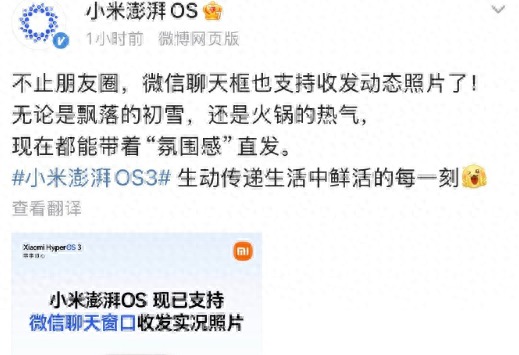
小米澎湃OS官宣:微信聊天框已支持收发实况照片
Huan Qiu Wang· 2025-12-10 07:50
Core Viewpoint - Xiaomi's Surge OS now supports sending and receiving live photos in WeChat chat boxes, enhancing user experience and functionality [1] Group 1 - Users must upgrade to the latest version of Surge OS and WeChat app version 8.0.65 or above to utilize this feature [2] - WeChat announced the ability to post live photos in Moments in September last year, gradually rolling out to iOS version 8.0.51 and above [2] - In April this year, WeChat confirmed that Android users could also post live photos in Moments [2]



荣耀IPO前夜的“临门一脚”:用折叠屏撕开苹果iOS的生态铁幕
Mei Ri Jing Ji Xin Wen· 2025-07-03 13:03
Core Insights - The foldable smartphone industry has transitioned from "usable" to "well-functioning" over the past six years, with significant technological advancements addressing challenges such as hinge design, weight, battery life, and durability [1][3][4] - The next growth driver for the foldable smartphone market is targeting iPhone users, a high-spending demographic with high expectations for product quality and experience [1][9] - Domestic manufacturers are adapting their ecosystems to facilitate cross-device compatibility, with brands like Honor and Vivo leading the way in supporting interoperability with iOS and Huawei's HarmonyOS [1][11] Industry Developments - Foldable smartphone technology has matured, with flagship models like OPPO Find N5 weighing around 229 grams and Honor Magic V5 at 217 grams, making them lighter than the iPhone 16 Pro Max [4][5] - Innovations in battery technology, such as the new generation of Qinghai Lake blade batteries with 25% silicon content, have achieved an energy density of 901Wh/L and a capacity of 6100mAh, addressing the challenge of balancing thinness and battery life [5][6] - Structural strength and durability remain key challenges, with advancements in materials like aerospace-grade fibers and high-strength alloys enhancing the robustness of foldable devices [6][9] Market Dynamics - The foldable smartphone market is experiencing a slowdown in growth, with expectations that the release of Apple's first foldable iPhone in 2026 will intensify competition for high-end users [9][10] - Analysts predict that the initial pricing for the foldable iPhone will be between $2000 and $2500, with expected annual sales in the millions by 2027 and 2028 [10] - Android brands are focusing on technological upgrades and ecosystem integration to attract iPhone users, emphasizing the importance of cross-system collaboration and user experience [11][12] Company Strategies - Honor is currently in the IPO preparation phase, working on governance and operational improvements as part of the listing process [12]


鸿蒙生态又攻下重要一城
华尔街见闻· 2025-05-12 07:11
Core Viewpoint - The launch of Harmony OS-based computers by Huawei marks a significant milestone in the Chinese electronic information industry, establishing a domestically controlled computer operating system and aiming to reshape the global operating system market [1][2][3]. Group 1: Product Launch and Market Position - Huawei officially introduced Harmony OS computers, transitioning its terminal products into the Harmony era, competing with Windows and macOS in the computer operating system market [1]. - As of March 2025, Windows holds over 70% market share, while macOS exceeds 10%, indicating a highly concentrated market dominated by these two systems [2]. - The introduction of Harmony OS aims to fill the gap in the domestic computer operating system market, which has been largely vacant in the consumer sector [2]. Group 2: Technological Advancements - Harmony OS has achieved a breakthrough in creating a self-controlled operating system within a decade, a feat that took Western counterparts over 30 years [3]. - The operating system supports "one-time development, multi-end deployment," allowing for seamless integration across devices and enhancing user experience [4][8]. - The system-level AI capabilities embedded in Harmony OS enhance user interaction and functionality, such as the AI smart key and intelligent assistant [4]. Group 3: Ecosystem Development - Huawei's "1+8+N" strategy aims to create a comprehensive ecosystem centered around Harmony OS, integrating various smart devices and applications [7]. - The launch of Harmony OS computers is expected to accelerate the development of the Harmony ecosystem, enhancing its market presence and application diversity [7][12]. - Over 150 dedicated computer applications are in the process of adaptation, with expectations to support over 2000 applications by the end of the year, covering various user scenarios [11]. Group 4: Industry Collaboration - Harmony OS promotes an open collaboration model, allowing third-party developers to leverage its capabilities, thus reducing development costs and enhancing application efficiency [11][12]. - Partnerships with leading manufacturers like HP, Canon, and Lenovo facilitate compatibility with over 1000 external devices, broadening the ecosystem's reach [11]. - The ongoing development of Harmony OS is creating a positive feedback loop between technology, ecosystem, and market growth, attracting more developers and enriching the application landscape [12][14].