
莲子酒

Search documents
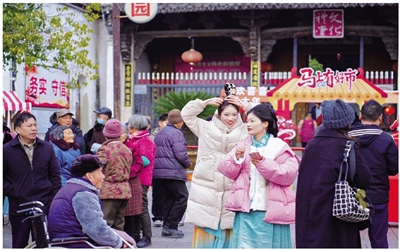
“荷风市集”三地联办 年货节成共富协作新窗口
Hang Zhou Ri Bao· 2026-02-03 03:35
Core Viewpoint - The "Lotus Wind Market" in Li Village, Dajiangyan Town, showcases a collaborative effort among three regions to promote local specialties and cultural integration, highlighting the success of cross-regional cooperation for common prosperity [2][3] Group 1: Event Overview - The "Lotus Wind Market" features over 40 stalls selling local agricultural products, traditional cultural creations, and authentic cuisine from Dajiangyan, Lanxi, and Longyou [2] - The event serves as a platform for cultural exchange, with activities such as writing Spring Festival couplets and watching folk performances, enhancing the festive atmosphere [2] Group 2: Collaborative Efforts - The collaboration among Dajiangyan, Zhuge, and Hengshan towns is driven by joint party building and the "Zhexi Lian" brand, achieving significant results in industry development, cultural integration, and shared governance [2][3] - The initiative aims to transform the regions from "boundary lowlands" to "common prosperity highlands" through various collaborative measures, including talent attraction and public service improvements [3] Group 3: Talent Development - A "Talent Service Zone" was established at the market to facilitate job opportunities and entrepreneurial policy consultations, promoting a two-way engagement between local talent and their hometown [3] - The "Qing Cheng Ji He Partners Program" was launched to invite professionals from outside to return and contribute to the regions' development, injecting expertise into the collaborative efforts [3]

中国消费名品!湘潭湘莲走俏市场
Sou Hu Cai Jing· 2026-01-14 05:16
Core Viewpoint - Xiangtan County's lotus industry, known for its historical significance and quality, has been recognized as a key consumer brand in China, reflecting the successful integration of policy, technology, and industry for high-quality development [3][12]. Group 1: Industry Development - Xiangtan County has a long history of lotus cultivation, dating back over 2,000 years, with the lotus being recognized as a national geographical indication product since 1995 [2]. - The Xiangtan lotus deep processing industry cluster has become the leading industry, with the Huashi Lotus Industrial Park developing into the largest lotus seed distribution center in China, handling over 100,000 tons annually and accounting for more than 70% of the national market [5]. - The county's lotus industry development plan (2019-2030) includes a special leadership group and funding to enhance resource allocation, with over 8 million yuan in loans for chain enterprises by 2025 [7]. Group 2: Economic Impact - The total output value of the lotus industry cluster is projected to reach 8.398 billion yuan by 2025, representing a year-on-year growth of 1.9%, with a national market share of 82.7% and exports exceeding 70% [7]. - The industry supports over 100,000 jobs and generates nearly 500 million yuan in annual wages, contributing to local economic benefits [5]. Group 3: Innovation and Technology - By 2025, the lotus deep processing industry cluster will have 95 enterprises, with 74.74% being large-scale industrial companies, and has nurtured 11 provincial specialized and innovative enterprises and 31 national high-tech enterprises [9]. - Significant investment in research and development, totaling 252 million yuan, has led to 53 invention patents and the establishment of various technical standards, reinforcing the industry's foundation [7][9]. Group 4: Product Diversification and Market Expansion - The industry has transitioned from selling raw materials to offering processed products, with innovations such as lotus seed soup and lotus seed wine, some of which have won awards and are exported to 21 countries [9]. - Digital transformation has improved production efficiency, with automated production lines achieving a daily output of over 50 tons and cost savings of 2 million yuan annually [9]. Group 5: Sustainable Development and Cultural Integration - The promotion of green development practices, such as the "lotus and crab co-cultivation" model, has led to a 40% reduction in pesticide and fertilizer use and a 30% increase in per-acre income [9]. - The integration of cultural tourism with the lotus industry has created attractions that draw visitors, enhancing local dining and agricultural experiences [10].
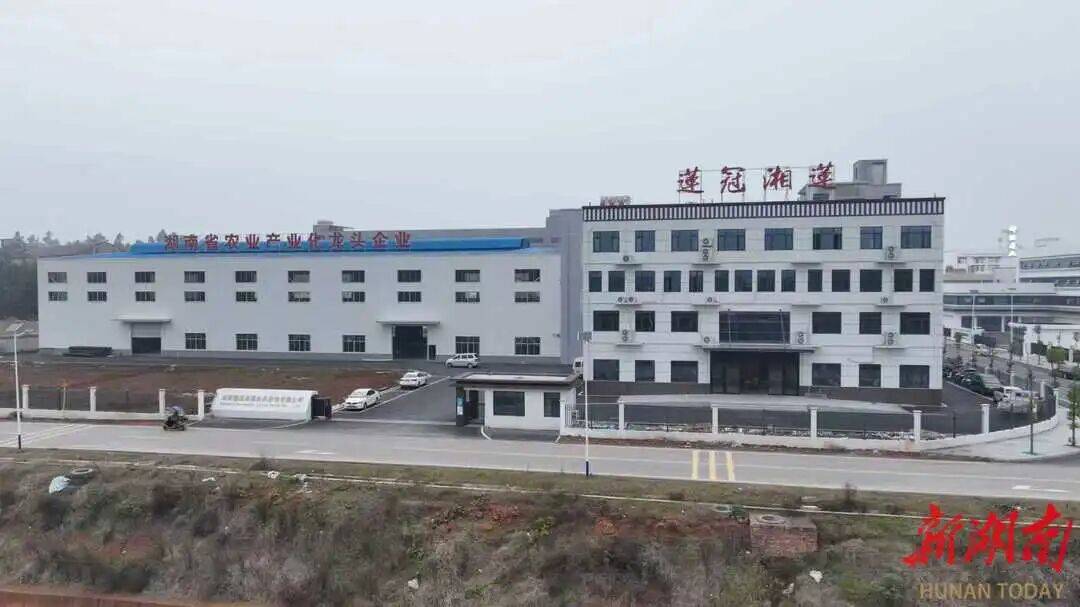
浙江龙游农商银行创新融资模式 支持“土特产富”全链发展
Jin Rong Shi Bao· 2025-12-25 04:18
Core Insights - The article highlights the innovative financing solutions provided by Longyou Rural Commercial Bank to support local agricultural enterprises, particularly in the production of selenium-rich lotus seed liquor [1][2] Group 1: Financial Support Initiatives - Longyou Rural Commercial Bank has introduced inventory pledge loans, providing 5 million yuan in credit to Longyou Yuxi Liquor Co., which faced liquidity issues despite having quality products [1] - The bank has launched a series of credit products, including "Lotus Farmer Credit Loan," offering significant interest rate discounts to support the lotus seed industry [1][2] Group 2: Agricultural Development Strategy - The bank is actively involved in the "土特产富" (Specialty Products Prosperity) initiative, which aims to enhance the quality and pricing of local agricultural products [1] - By the end of November 2025, the bank aims to have a total agricultural loan balance of 13.673 billion yuan, with a focus on supporting village-level collective economic development through the "Happiness Village Loan" program [2] Group 3: Community Engagement and Ecosystem Building - Longyou Rural Commercial Bank has established a regular platform for business and financial interactions, conducting monthly visits to collect dynamic funding needs from local enterprises [1] - The bank's efforts reflect its commitment to serving the local agricultural sector and facilitating the transformation of the lotus seed industry towards professionalization and scaling [1][2]